
Antique Cane Dining Chairs
These antique cane dining chairs span walnut, mahogany, oak and rosewood, bringing woven texture and period form directly to the table.
Antique Cane Dining Chairs
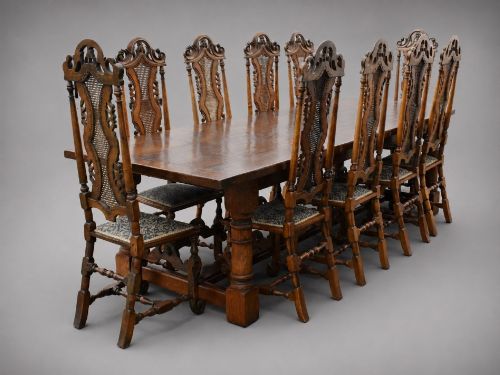
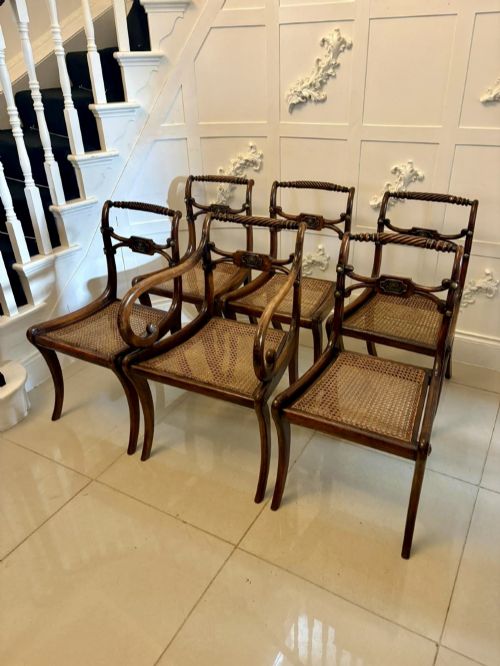
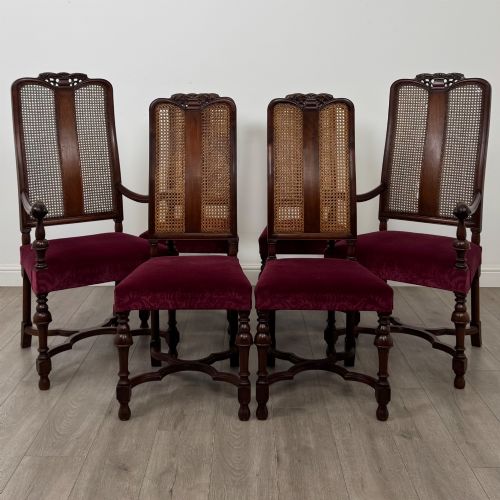
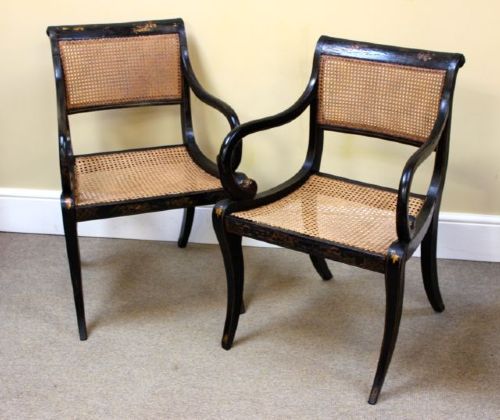
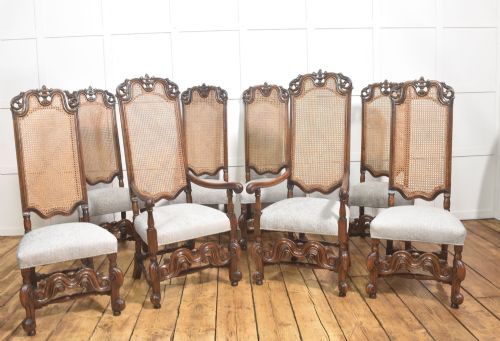
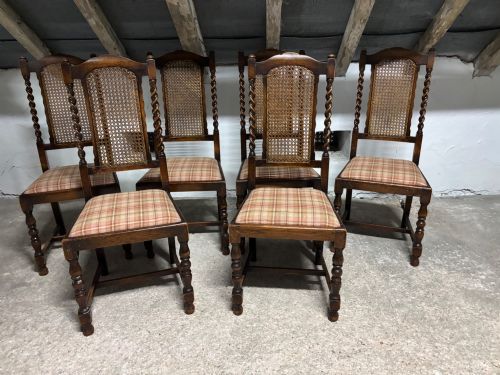
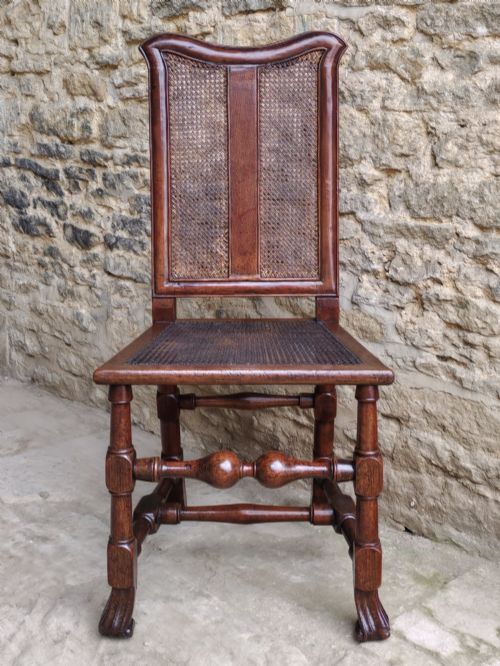
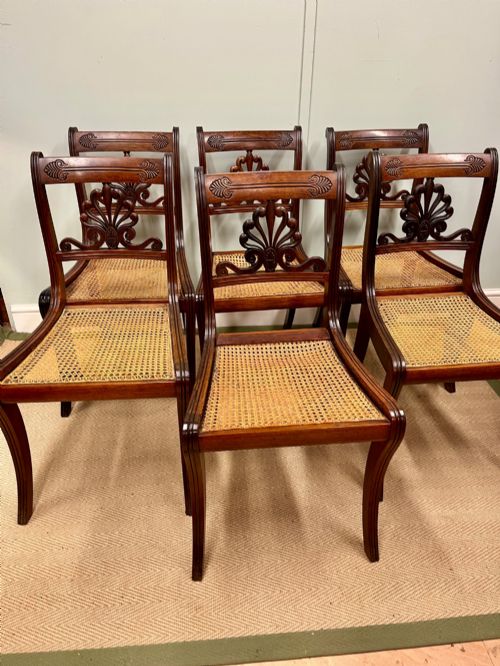
Antique cane dining chairs encompass a broad chronological spread, from seventeenth-century walnut and oak high-back forms to nineteenth-century Regency mahogany, rosewood and painted sets.
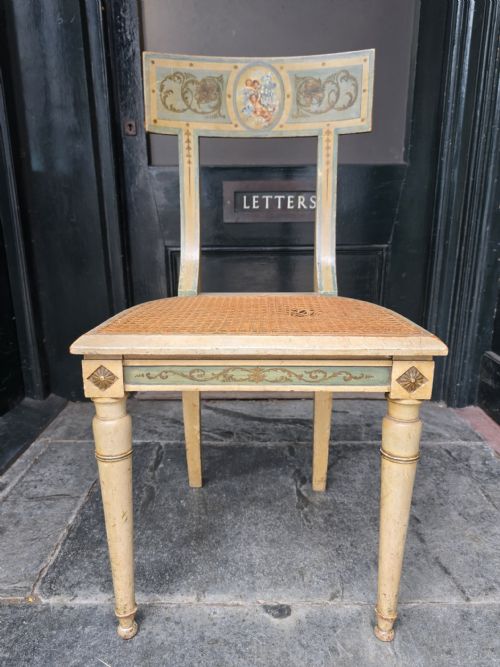
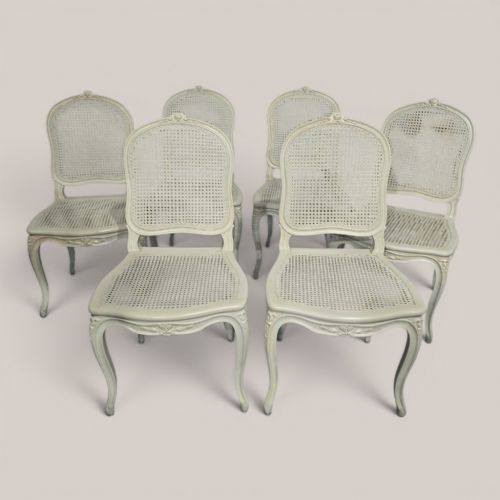
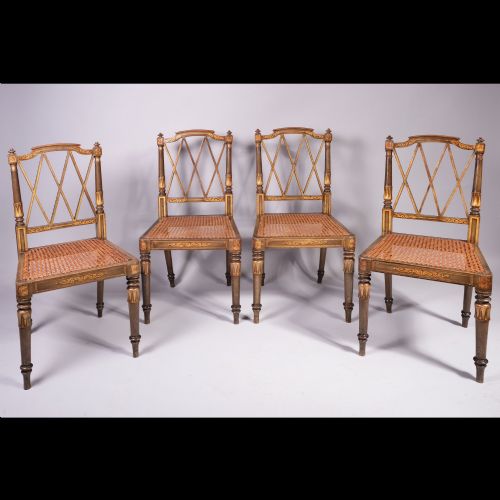
You will encounter single side chairs, carvers, armchairs and matching dining sets originating across Georgian, Regency and Victorian periods, alongside later revival pieces.
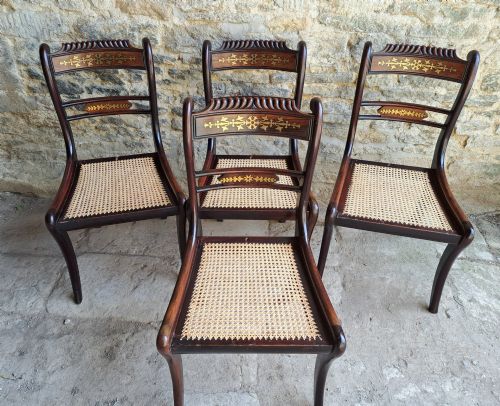
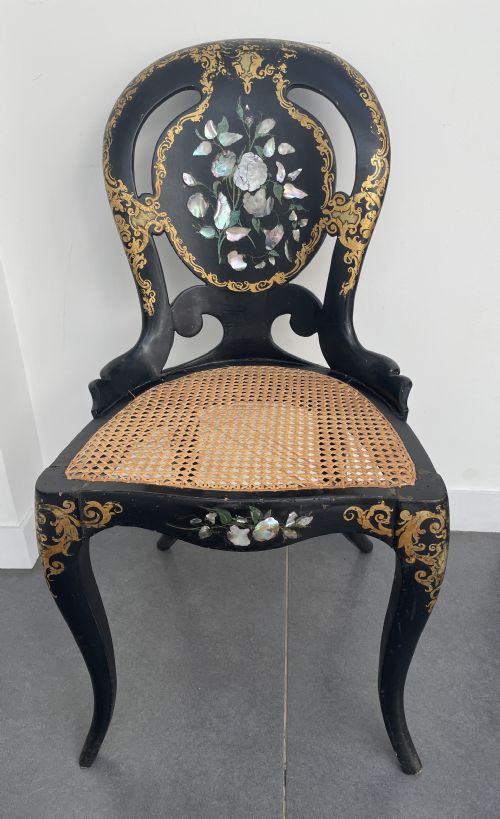
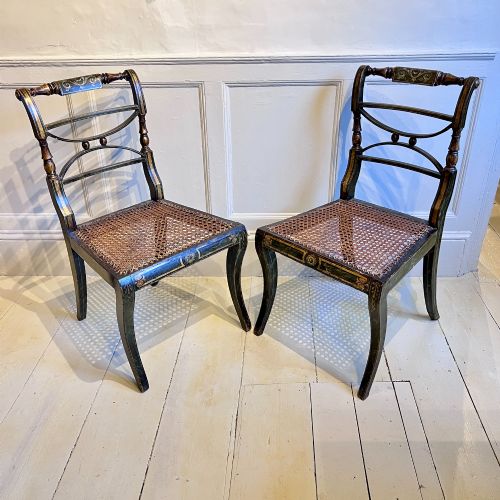
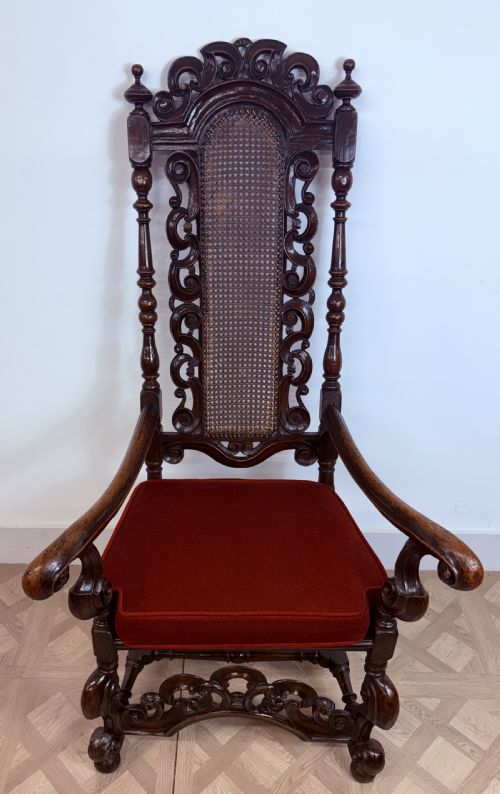
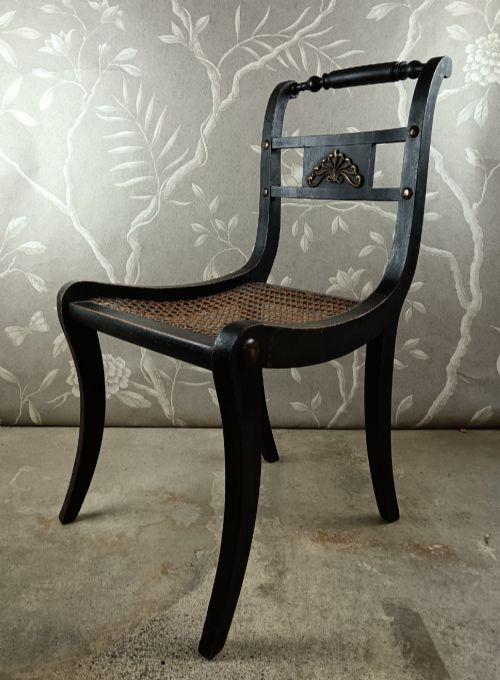
Forms range from ebonised Trafalgar sabre leg designs and brass inlaid seats to towering carved oak frames with woven panels.
How they were made
Frames rely on traditional cabinet timbers including solid mahogany, walnut, oak and rosewood, sometimes finished with paint, gilding or ebonisation.
Seating and back panels utilise natural cane or bergere woven tightly through drilled frame holes, occasionally paired with secondary materials like fabric or leather.
Certain dining sets secretly include one lone carver among a sea of singles, ensuring whoever sits at the end commands immediate authority.
What varies in quality
Quality rests upon the crispness of the timber carving, the structural integrity of the joinery across legs and rails, and the tightness of the cane weaving.
Original finishes, period brass inlays and matching sets command higher regard than assembled groupings or later revival interpretations with replacement webbing.
Waring & Gillow·Liberty of London
The Antique Cane Dining Chairs Glossary
- Cane
- Woven material made from the peeled bark of rattan palms, utilised for flexible and breathable chair seats and backs. It requires careful tension during installation.
- Carver
- An armchair designed with elbow supports, traditionally placed at the head of a dining table. They match the simpler side chairs in a larger set.
- Sabre leg
- A curved, outwardly tapering chair leg inspired by classical furniture forms, commonly found on Regency examples. It provides a distinct sweeping profile.
- Bergere
- An upholstered or caned armchair featuring enclosed wooden sides, often appearing in eighteenth-century French and later revival styles. The cane is typically woven in a dense mesh.
- High-back
- A chair style featuring an elevated vertical back panel, frequent in seventeenth-century Carolean and Edwardian revival oak pieces. This form emphasises carved woodwork.
Antique Cane Dining Chairs: Frequently Asked Questions
How do I clean cane seats?
Wipe the woven surface gently using a damp cloth with mild soap, avoiding excess moisture that might weaken the natural fibres.
Allow the cane to dry completely before regular use to maintain its tension.
Can I use these for daily dining?
Sturdy hardwood frames handle regular seated use well, provided the joints remain tight and secure.
Inspect older woven panels periodically to ensure the natural cane stays resilient under weight.
Are replacement cane seats obvious?
Freshly woven cane typically appears lighter in colour and tighter than aged surrounding timber frames.
Patina develops over time, helping newer repairs blend gradually with the original antique structure.
How do I spot a revival piece?
Revival chairs often display machine-woven cane mesh rather than hand-drilled individual strands seen on earlier models.
Timber tool marks and construction methods generally reveal whether a piece dates to the original period or later revivals.