

French Carved Side Chairs
French carved side chairs bring continental elegance to a room, offering versatile seating shaped by centuries of stylistic revival.
French Carved Side Chairs
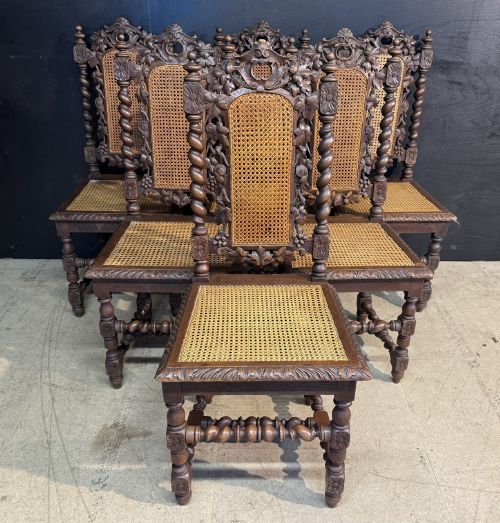
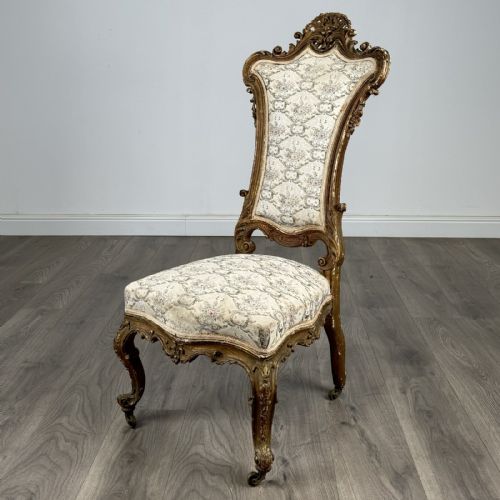
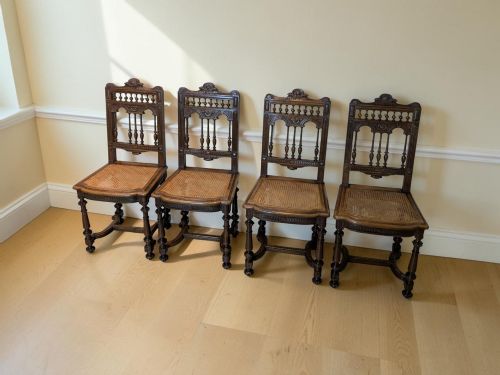
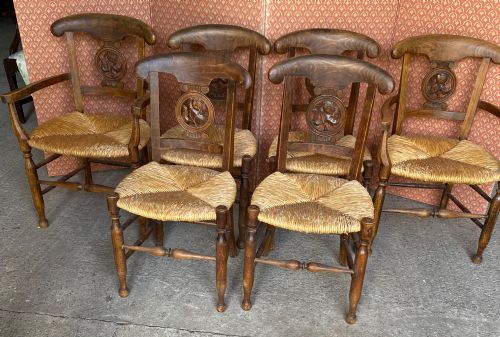
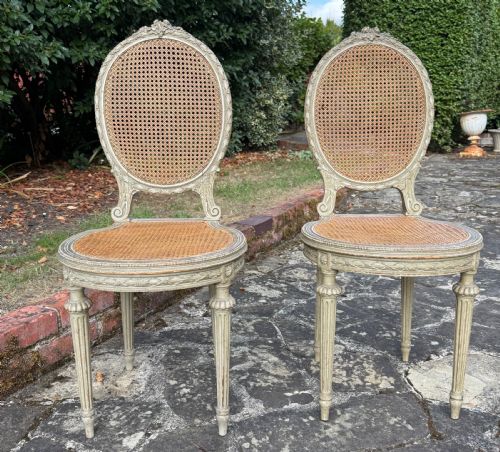
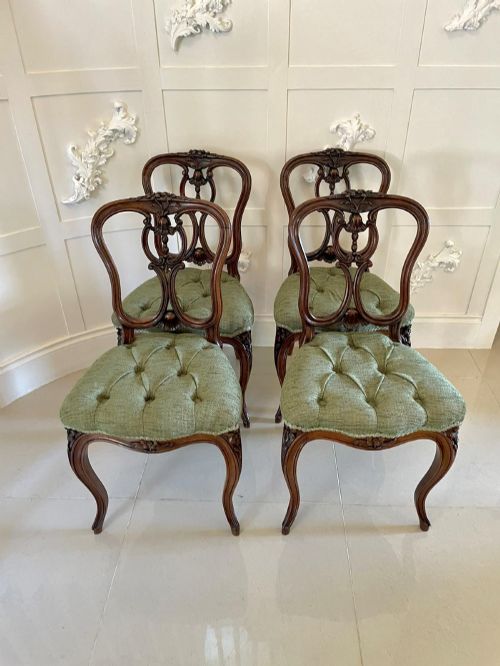
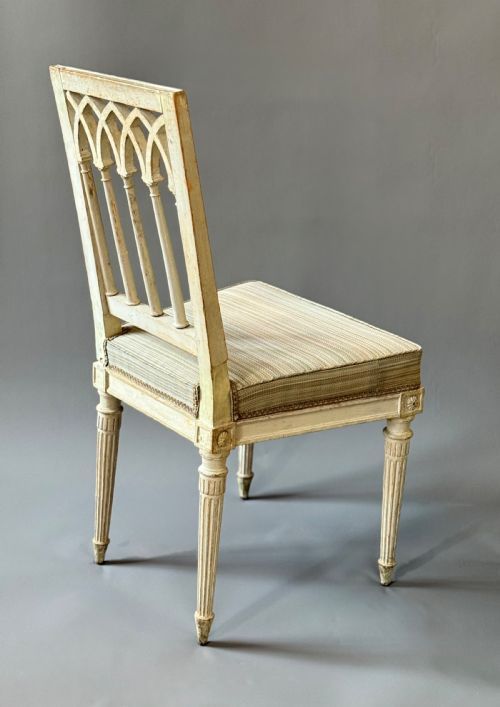
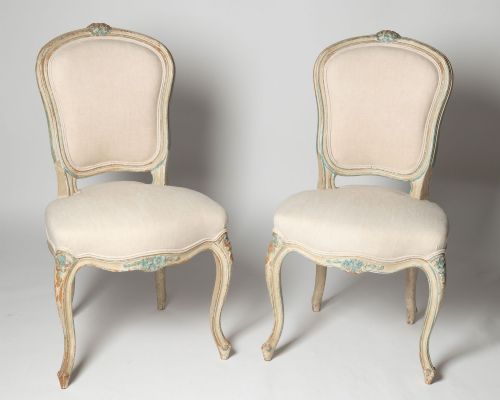
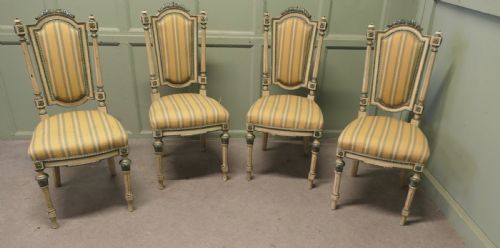
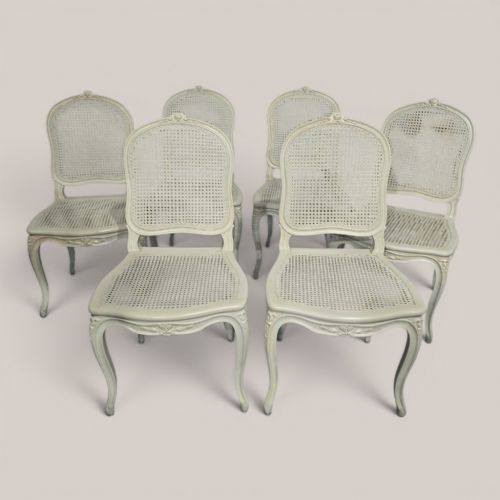
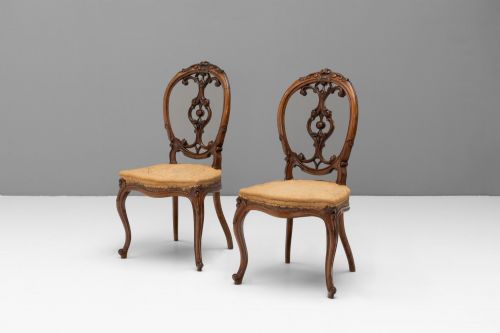
French carved side chairs encompass a variety of seating forms designed without arms, including dining chairs, salon chairs, and occasional pieces. These items draw on historical aesthetics such as the Louis XV and Louis XVI styles, alongside Victorian interpretations and French Provincial designs.
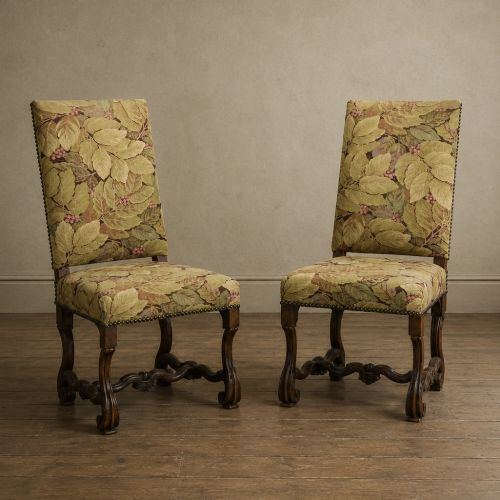
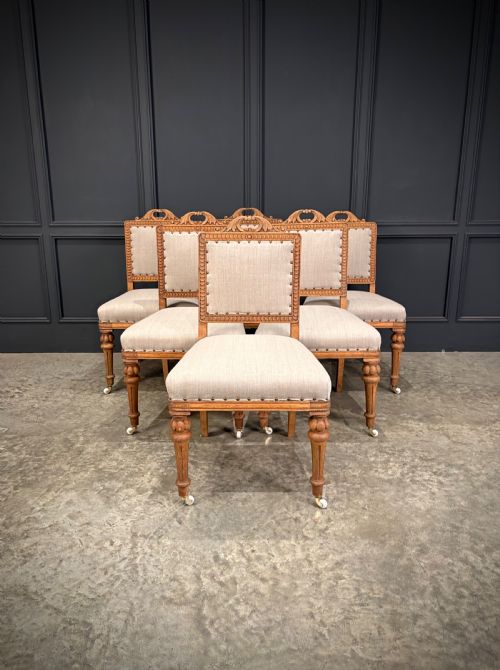
The pieces appearing here date predominantly from the nineteenth and early twentieth centuries, reflecting both formal chateau tastes and more rustic country traditions. Buyers encounter single items, pairs, and larger matched sets suited for dining rooms, bedrooms, and studies.
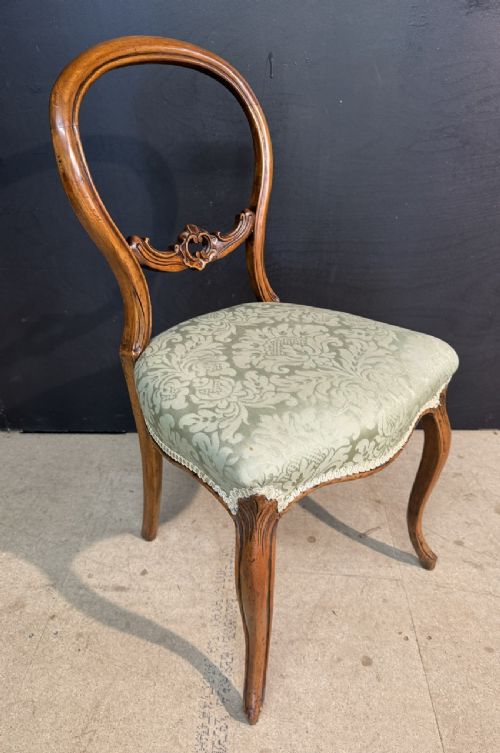
The selection ranges from giltwood and painted finishes to exposed walnut and oak frames. Many incorporate traditional seating details like cabriole legs, cane panels, and various fabric or leather upholsteries.
Determinants of Quality
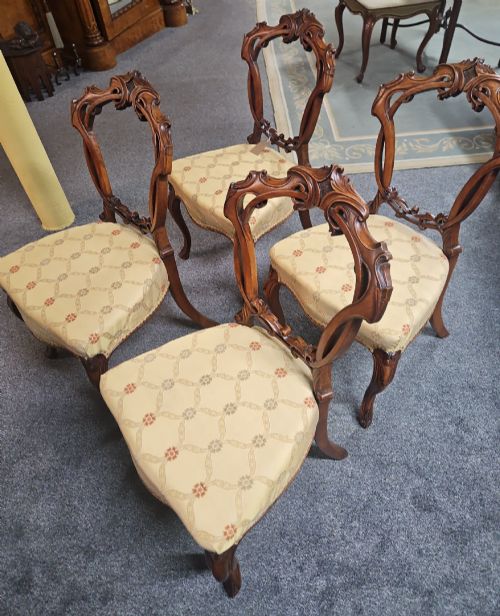
The crispness and depth of the hand-carving distinguish finer pieces from simpler commercial output, with superior examples showing deliberate undercut details and smooth contours. The choice of primary timber, such as dense figured walnut rather than secondary woods, elevates the construction standard.
Integration of design elements, such as properly proportioned cabriole legs and balanced frame symmetry, marks the work of more skilled workshops. Original surface treatments, whether patinated giltwood or undisturbed painted finishes, carry greater integrity than later alterations.
Simulated bamboo frames let Victorian makers bring exotic botanicals indoors without stepping outside the parlour.
The French Carved Side Chairs Glossary
- Cabriole leg
- A furniture leg that curves outward at the knee and tapers inward to an ankle, mimicking animal limbs. This form is common in Louis XV and Rococo revival designs.
- Giltwood
- Wood that has been coated with gold leaf or gold paint to simulate solid gold. It appears frequently on formal nineteenth-century salon and hall seating.
- Cane
- Woven rattan or similar material utilised for chair seats and back panels. It offers a lightweight, breathable surface seen on various period dining and side chairs.
- Bergere
- An enclosed upholstered armchair or side chair with wooden frames and upholstered sides. These pieces often feature exposed wood surrounds and padded seat cushions.
- Louis XVI style
- A neoclassical design vocabulary characterised by straight tapered legs, geometric symmetry, and classical motifs. It contrasts with the earlier curved lines of the Louis XV aesthetic.
French Carved Side Chairs: Frequently Asked Questions
How do I use side chairs in a modern room?
French carved side chairs function well as supplementary seating around a dining table, in a hallway, or beside a dressing desk. Their decorative frames allow them to sit effectively as standalone accent pieces against neutral walls.
Mixing these chairs with simpler contemporary tables creates a deliberate contrast in textures and historical periods. Pairs can frame a window or fireplace without crowding the floor space.
What is the difference between Louis XV and Louis XVI styles?
Louis XV pieces embrace the Rococo revival taste, featuring asymmetric ornamentation, flowing curves, and prominent cabriole legs. The overall silhouette prioritises organic movement and soft contours.
Louis XVI furniture reflects neoclassical restraint, employing straight lines, fluted columns, and symmetrical geometric forms. Legs on these chairs are typically straight and tapered rather than curved.
How should I care for antique wood and gilt surfaces?
Antique walnut and oak frames benefit from occasional light dusting with a dry, soft cloth to prevent particulate buildup. Avoid harsh chemical polishes that can degrade nineteenth-century wax or oil finishes.
Giltwood and painted surfaces require particular care to prevent flaking or loss of the metallic leaf. Keep these chairs away from direct sunlight and fluctuating radiator heat to protect the wood and glue joints.