

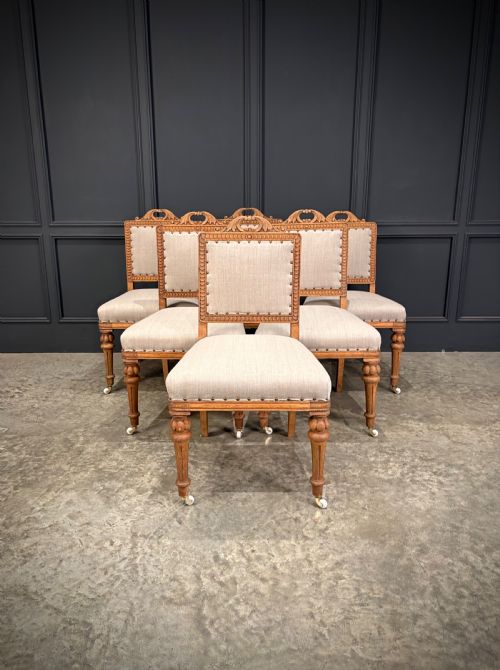


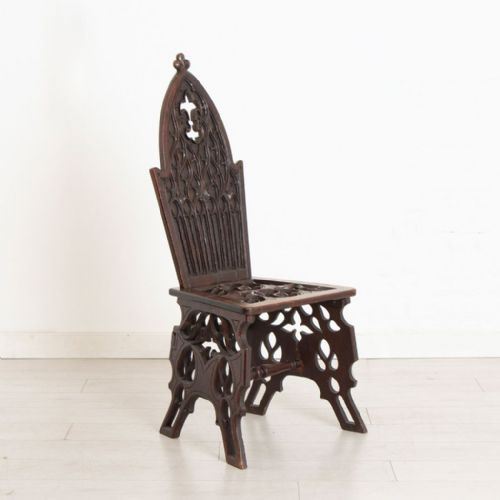


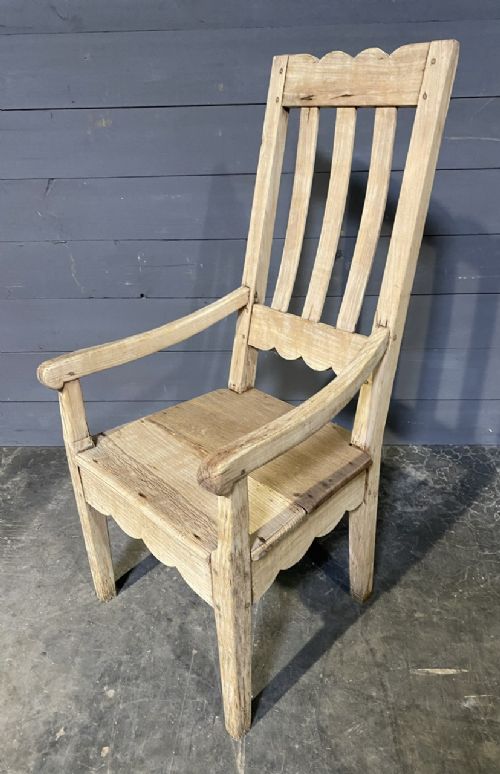


Oak French Dining Chairs
Oak french dining chairs bring robust character and regional charm to a room, offering sturdy seating grounded in traditional craftsmanship.
Oak French Dining Chairs
When buyers search for oak french dining chairs, they encounter substantial seating built primarily from solid oak with strong regional roots. These pieces frequently emerge in styles such as Louis XV Revival, French Provincial, and French Country, often taking the form of ladder back chairs with rush seats.
The selection ranges from country side chairs and kitchen chairs to larger sets originating from the nineteenth century and the 1920s. Many examples reflect provincial traditions, utilising local timbers and straightforward forms designed for daily use around a farmhouse table.
Armchairs and side chairs appear alongside larger matched sets, providing options for both formal dining spaces and relaxed country kitchens. The construction typically relies on native hardwoods, presenting a distinct silhouette defined by regional woodworking customs.
Materials and Construction
Construction relies heavily on solid oak, selected for its density and durability, while supplementary materials such as rush feature prominently in seat weaving. Artisans shaped the frames using traditional joinery, occasionally incorporating carved details or bleached finishes to alter the appearance of the timber.
Seating areas often utilise woven rush, creating a textured surface that contrasts with the rigid oak framework. Additional elements like brass, fabric, linen, and leather appear on specific upholstered or padded variations recorded in the archive.
The listings show oak, rush, fabric, brass, linen, ceramic, velvet, and fruitwood utilised across various nineteenth-century and early twentieth-century forms.
Assessing Quality and Character
Quality in these chairs rests upon the integrity of the oak frame and the tightness of the joinery. Hand-carved detailing and the uniformity of woven rush seats distinguish finer examples from simpler provincial pieces.
The consistency within a set alters its desirability, as matched groups spanning six, eight, or twelve chairs demand greater uniformity in timber tone and wear. Patina accumulated through age adds depth to the surface, separating well-preserved regional seating from heavily altered items.
The Oak French Dining Chairs Glossary
- Ladder Back
- A chair back characterised by horizontal wooden slats between the upright posts. This traditional form appears frequently in regional seating.
- Rush Seat
- A seating surface woven from dried marsh grasses twisted into cords. It provides a durable and flexible base for daily use.
- Louis XV Revival
- A style drawing inspiration from the ornamentation and curved lines of the mid-eighteenth-century French court. It often manifests in swept legs and subtle carving.
- French Provincial
- A style reflecting the domestic furniture of French regions outside Paris. These pieces adapt urban designs into simpler, sturdier forms.
Oak French Dining Chairs: Frequently Asked Questions
How do I care for rush seats?
Keep rush seats dry and clean them gently with a soft brush to remove dust. Avoid excess water, which can weaken the natural fibres over time.
Applying a light wax to the surrounding oak frame helps maintain the timber while keeping moisture away from the woven seat.
Are these chairs suitable for daily use?
Solid oak construction provides the structural strength needed for regular dining. Most examples were originally built for practical kitchen or dining room environments.
Checking the joints periodically ensures the frame remains stable under everyday weight and movement.
How can I date an oak chair?
Dating relies on examining tool marks, timber preparation methods, and stylistic cues such as provincial carving patterns. Nineteenth-century pieces often show hand-planed surfaces and traditional peg joinery.
Comparing the construction details with documented examples from similar periods helps narrow down the decade of manufacture.
What is bleached oak?
Bleached oak refers to timber treated to lighten its natural dark tone, creating a softer finish. This treatment appears on several farmhouse and provincial dining chairs.
The process alters the colour of the grain while preserving the underlying texture and durability of the hardwood.