



Oak Cane Back Chair
An oak cane back chair brings natural timber and woven texture together, offering both robust support and traditional British craftsmanship for daily seating.
Oak Cane Back Chair
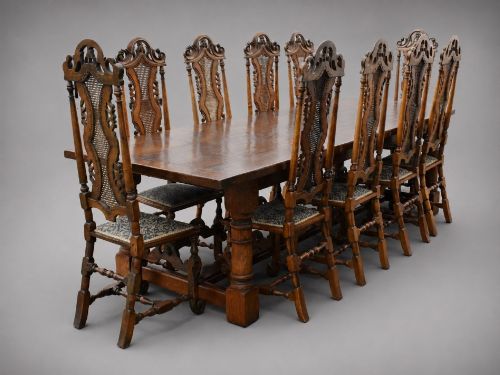
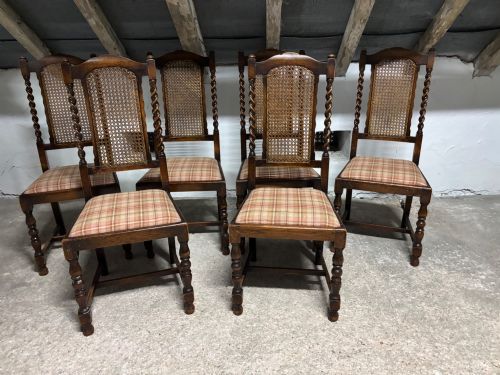
An oak cane back chair combines solid timber framing with woven plant material to create durable seating with a distinctive visual lightness. Buyers seeking an oak cane back chair will encounter diverse forms ranging from individual side chairs and dining sets to substantial armchairs and rocking chairs.
The selections span several periods and revivals, most notably Victorian examples alongside pieces from the nineteen-twenties and earlier decades. Revival movements heavily influence the design, yielding numerous interpretations of Carolean and Jacobean styles alongside rustic country pieces.
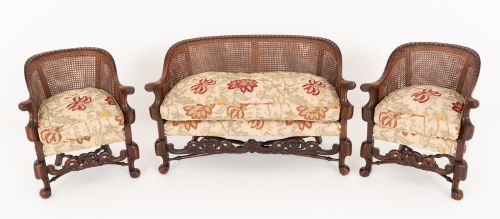
Most examples function as dining chairs or fireside armchairs, occasionally appearing in larger suites or as single throne chairs. The integration of woven cane provides flexibility and breathability within a rigid wooden structure.
Materials and Construction
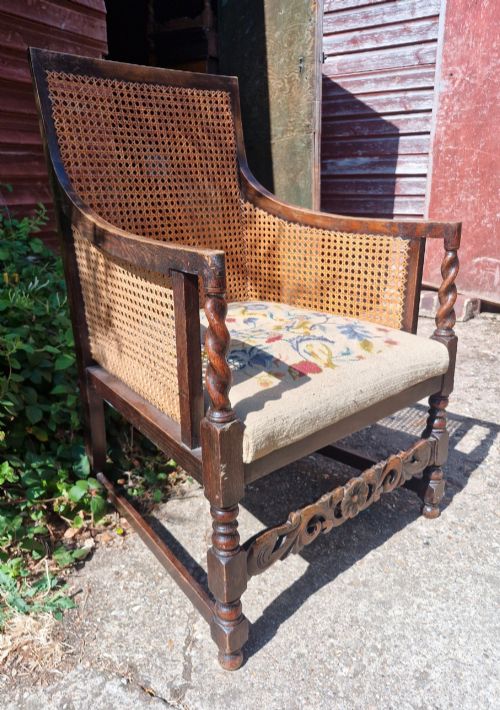
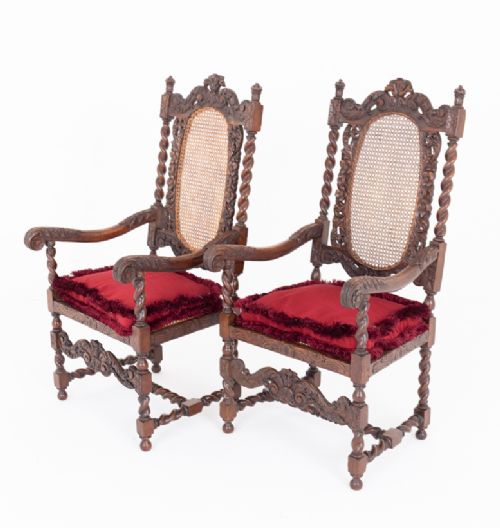
Makers utilised solid oak for the primary structural frames, sometimes incorporating walnut alongside secondary materials like brass or leather for upholstery and hardware. Frames frequently display detailed carving, bobbin turning, or barley twist legs that demonstrate traditional carpentry techniques.
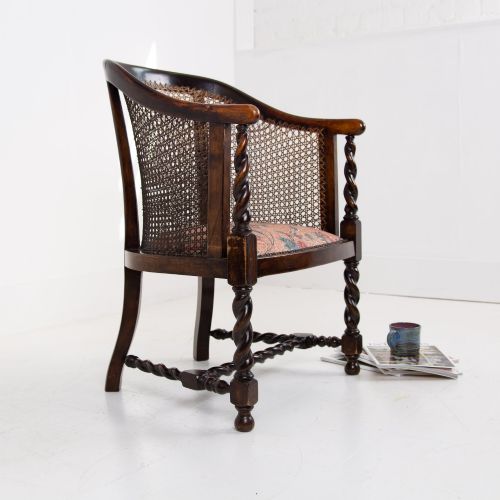
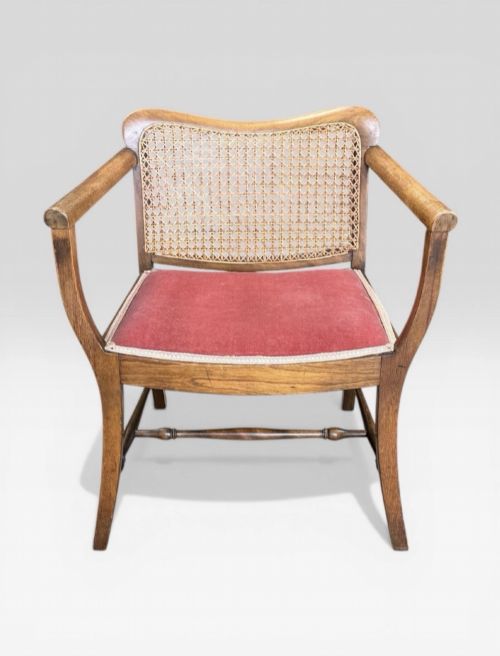
Seat and back panels employ cane or rattan cane woven tightly through drilled holes or channeled frames to distribute weight evenly. Additional comfort is achieved through loose cushions upholstered in fabric or velvet placed directly over the woven base.
Childs bergere chairs prove that even the smallest household members required miniature woven seating during the Victorian era.
Assessing Quality and Craftsmanship
Quality rests upon the crispness of the timber carving and the structural integrity of the frame joints rather than mere age. Superior examples exhibit tightly woven cane without loose strands, alongside dense, well-figured oak that shows minimal shrinkage or past repair.
The balance between the rigidity of the wooden framework and the tension of the woven panels dictates the durability of each piece. Finer seating integrates robust joinery with harmonious proportions, particularly in revival pieces that emulate seventeenth-century models.
James Shoolbred·Heals of London
The Oak Cane Back Chair Glossary
- Cane
- A material derived from the peeled outer bark of rattan palms, woven to form flexible panels for chair backs and seats. It provides a lightweight yet strong support surface.
- Bergère
- An enclosed upholstered armchair featuring a solid wooden frame with cane sides and back panels. These seats frequently include a loose squab cushion for added comfort.
- Barley Twist
- A turned wooden furniture leg or stretcher carved in a helical spiral resembling twisted barley sugar. This decorative detail appears frequently on seventeenth-century revival seating.
- Carolean Style
- A British furniture design movement originating from the reign of Charles II, characterised by rich carving, scrolling foliage, and tall cane backs. Revival versions emerged strongly during the nineteenth and early twentieth centuries.
- Bobbin Turning
- A method of turning wood on a lathe to produce a series of spherical or cylindrical shapes resembling a string of bobbins or spools. This technique creates rhythmic texture along chair legs and stretchers.
Oak Cane Back Chair: Frequently Asked Questions
How do I care for cane chair seats?
Keep woven cane panels hydrated by occasionally wiping them with a damp sponge to prevent the natural material from becoming brittle. Avoid placing these chairs directly next to intense heat sources.
Support the woven areas with suitable cushions if used daily, as excessive concentrated weight can stretch or snap the individual strands over time.
Are these chairs comfortable for daily use?
Many models feature ergonomic angles and supportive high backs designed for dining or fireside relaxation. The natural give in woven cane also offers a degree of flexibility absent in solid wood panels.
Adding a loose fabric or velvet cushion provides extra padding for prolonged seating periods without obscuring the structural design.
How do I distinguish original periods from revival pieces?
Examine the tool marks, timber ageing, and construction methods used in the frame joints. Machine-cut elements and uniform turning often point towards later revival periods.
Many listings originate from nineteenth-century or nineteen-twenties revivals of earlier seventeenth-century styles, combining historical aesthetics with subsequent manufacturing techniques.
What rooms suit an oak cane back chair?
Dining rooms accommodate sets of side chairs or armchairs surrounding a matching table. Alternatively, single bergère or rocking chairs function well in studies, bedrooms, and sitting rooms.
The neutral tones of oak and woven cane integrate easily into both traditional interiors and modern spaces requiring texture.