
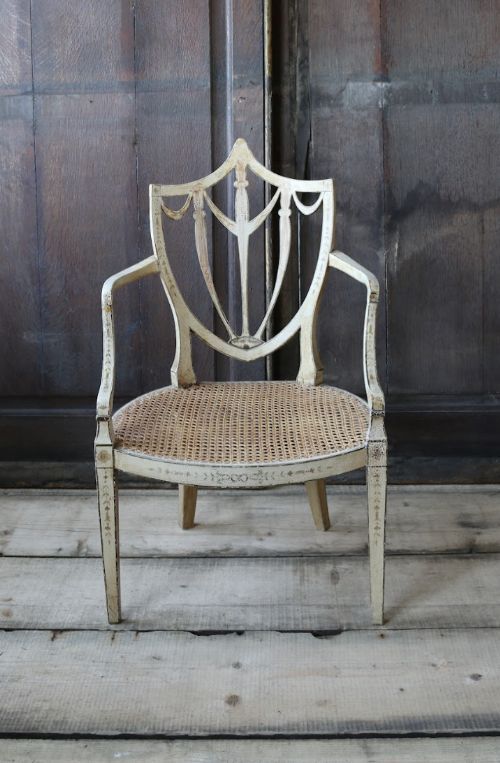


Wooden Cane Armchair
A wooden cane armchair brings tactile woven texture and supportive framing into a room, spanning revival styles from the nineteenth century onwards.
Wooden Cane Armchair
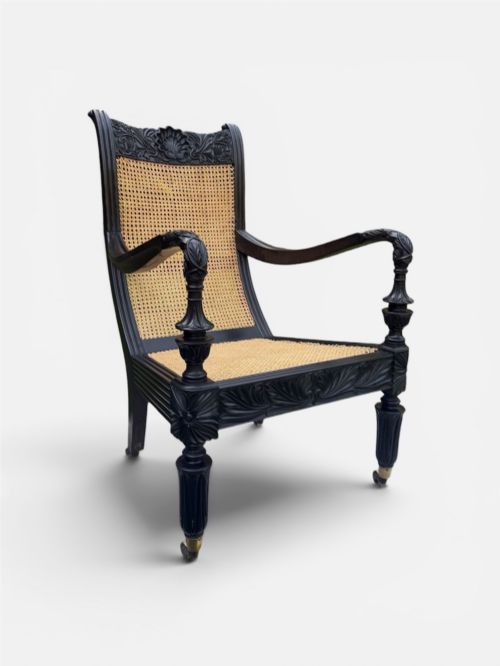
A wooden cane armchair provides sturdy seating framed in timber with woven cane panels to the backrest or seat. When you search for a wooden cane armchair, you encounter diverse forms ranging from nineteenth-century Victorian library seating to early twentieth-century French Louis XV style bergères.
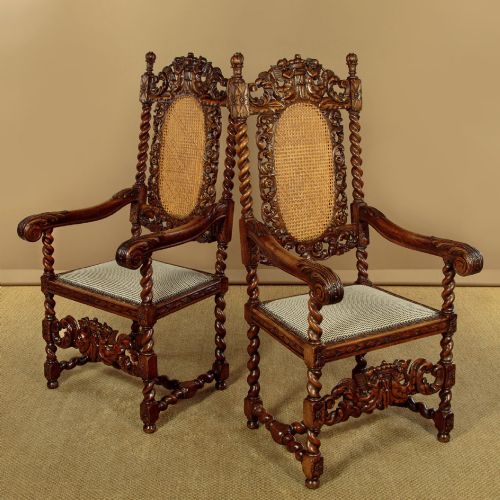
The selection includes regional interpretations such as Anglo-Indian planters chairs alongside revival pieces adopting Carolean and Regency idioms. Most examples date from the Victorian era up through the nineteen-twenties, incorporating oak, walnut, beech, and mahogany frames.
Materials and construction
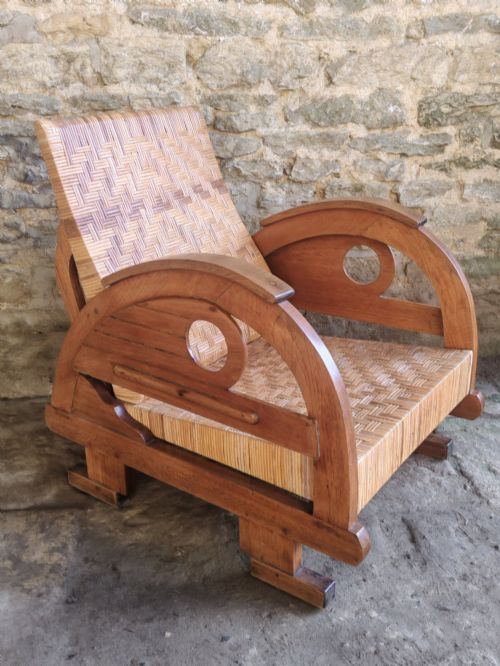
Frames rely on hardwoods like walnut, oak, mahogany, and beech, shaped through turning, carving, or steam-bending into structural supports. Caning is woven by hand through pre-drilled holes in the wooden frame, utilising natural rattan to create resilient mesh surfaces.
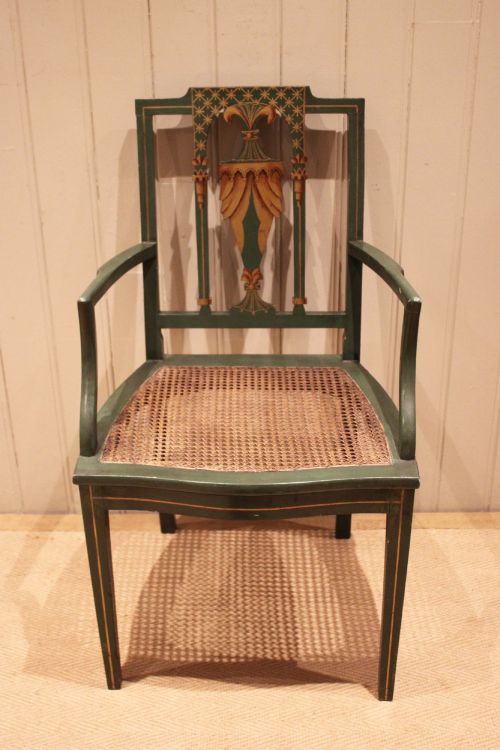
Surface treatments vary from polished natural timber grains to painted finishes, parcel gilt accents, and lacquered details. Additional elements such as brass fixtures, fabric upholstery pads, and turned spindles complete the construction of these chairs.
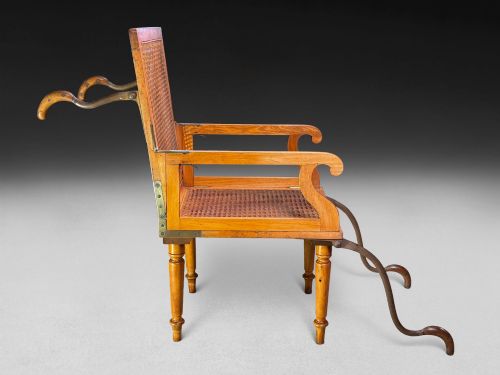
Several pieces double as musical accompaniment seats or folding library steps for ambitious readers.
Assessing the craftsmanship
Quality rests in the precision of the timber joinery and the tightness of the hand-woven cane work. Superior frames display crisp carving on walnut or oak, whereas simpler versions utilise straightforward turned members in beech.
The finesse of the decorative paintwork, the integrity of structural pins, and the proportional harmony between the wooden armature and the caned panels distinguish finer studio outputs from everyday seating.
Gillows
The Wooden Cane Armchair Glossary
- Bergere
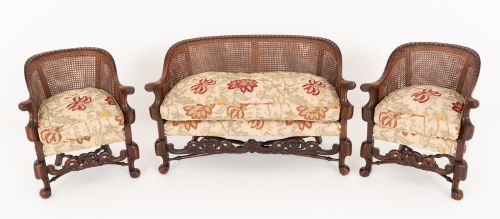
- An enclosed upholstered armchair with wooden framing, often featuring caned back and side panels. These seats frequently appear in French styles dating from the late nineteenth and early twentieth centuries.
- Caning
- A weaving technique utilising thin strips of peeled rattan to create openwork mesh for chair backs and seats. This flexible material offers resilient support while maintaining visual lightness.
- Carolean
- A seventeenth-century English design style revived during the Victorian era, characterised by rich scrollwork, turned uprights, and carved crowns. Chairs in this taste typically combine walnut or oak frames with cane panels.
- Elbow chair
- A traditional term for an armchair with low armrests designed to support the user's elbows. These pieces often serve as desk or dining accompaniments.
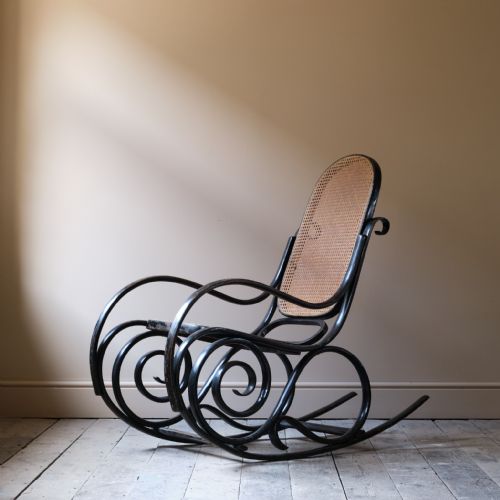
- Bentwood
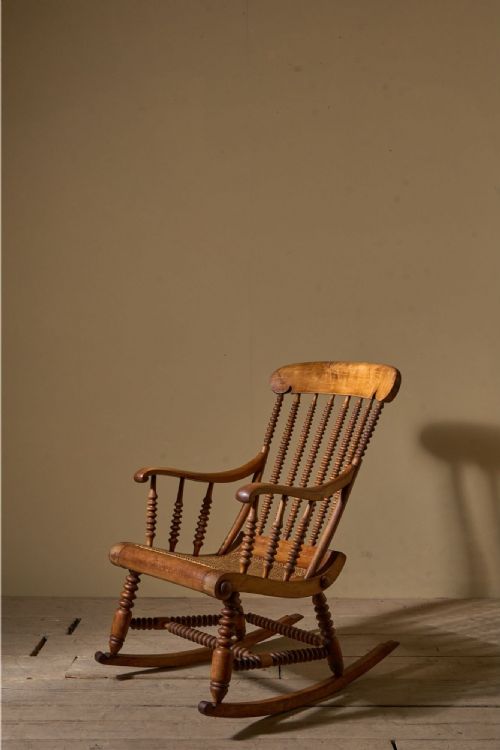
- A furniture-making method where wooden rods are moistened with steam and bent into curved structural forms. This technique creates continuous frames for nineteenth and twentieth-century rocking and lounge chairs.
Wooden Cane Armchair: Frequently Asked Questions
How do I care for cane seating?
Keep cane panels clean by gently dusting them with a soft brush and wiping occasionally with a slightly damp cloth to prevent the natural rattan from drying out.
Avoid placing these chairs near direct heat sources or in overly dry rooms, which can cause the woven fibres to become brittle and split over time.
Are these chairs suitable for daily use?
Most wooden cane armchairs are structurally robust enough for regular sitting, provided the woven mesh and wooden joints remain sound and stable.
For heavy daily lounging, ensure the cane has adequate tension and consider adding a loose cushion to distribute weight evenly across the seat.
How do I distinguish revival styles from original periods?
Revival pieces often utilise machine-sawn timber uniformity and specific hardware clues that point toward nineteenth or twentieth-century workshops rather than seventeenth-century joinery methods.
Examining the tool marks on the frame, the wear patterns on the wood, and the gauge of the cane helps clarify the actual age of the piece.