

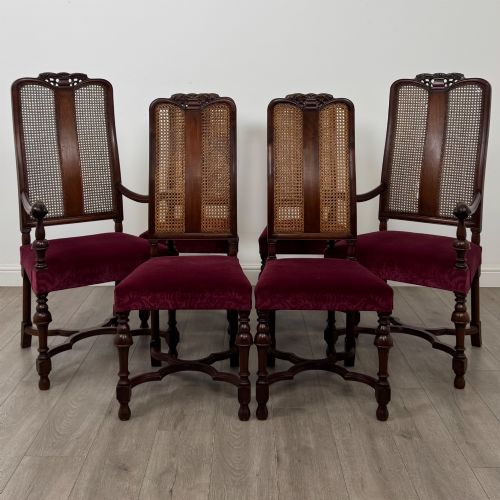
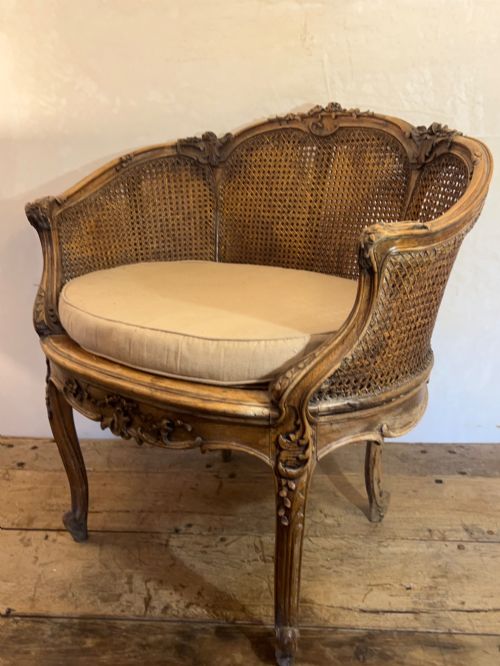
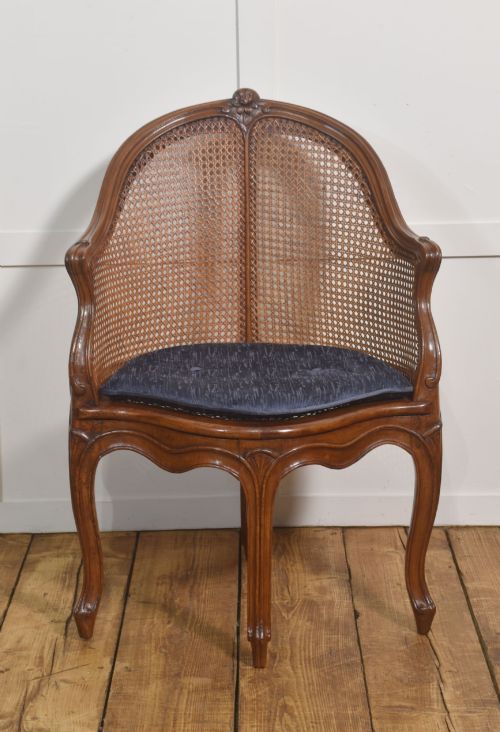
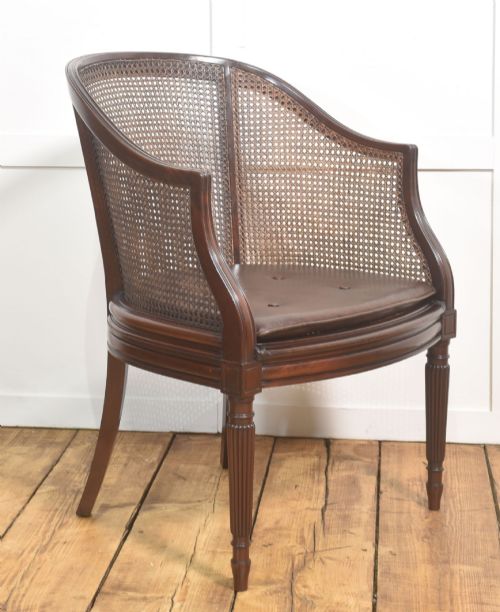
Cane Seat Armchair
When you seek a cane seat armchair, you look for a seating design that unites timber framing with woven plant material for light, resilient support.
Cane Seat Armchair
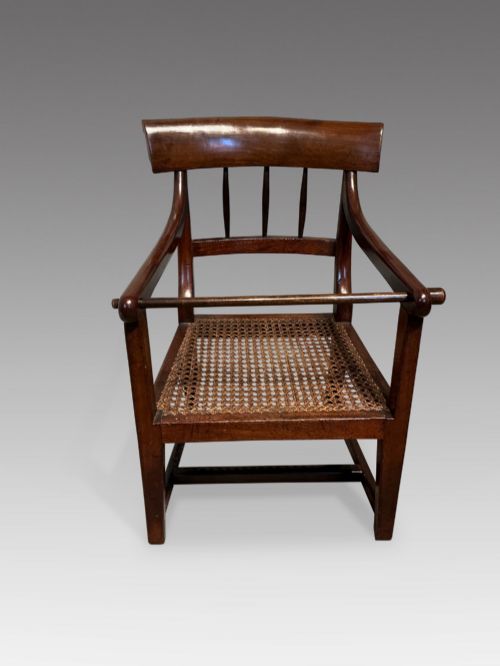
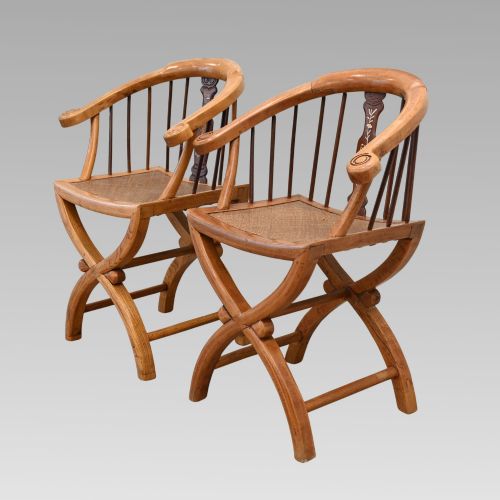
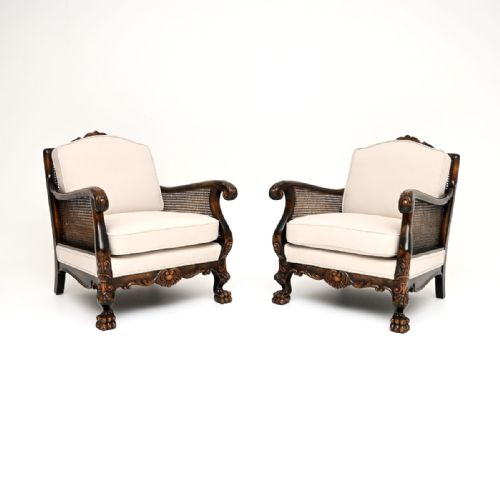
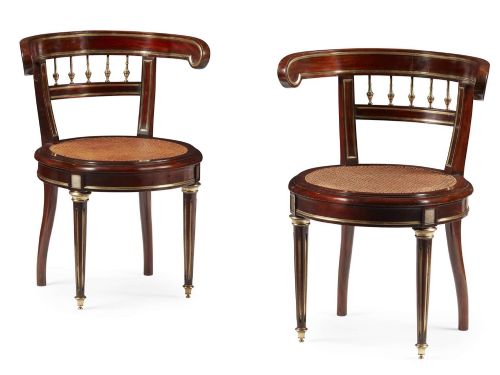
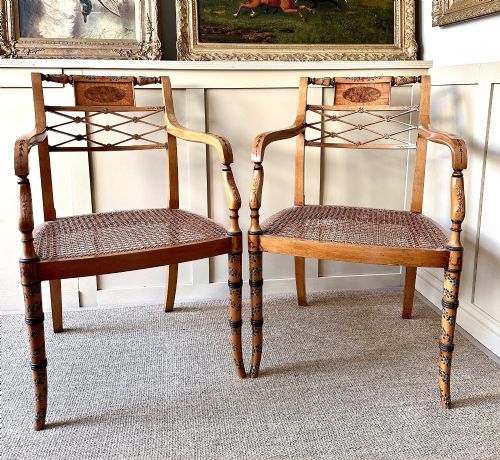
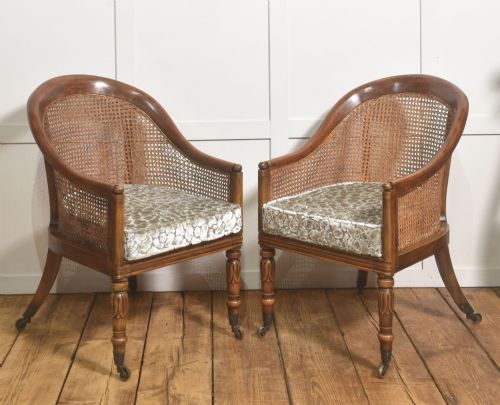
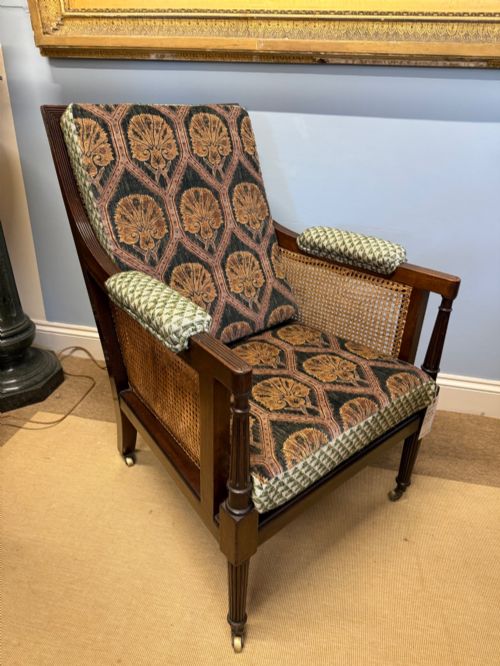
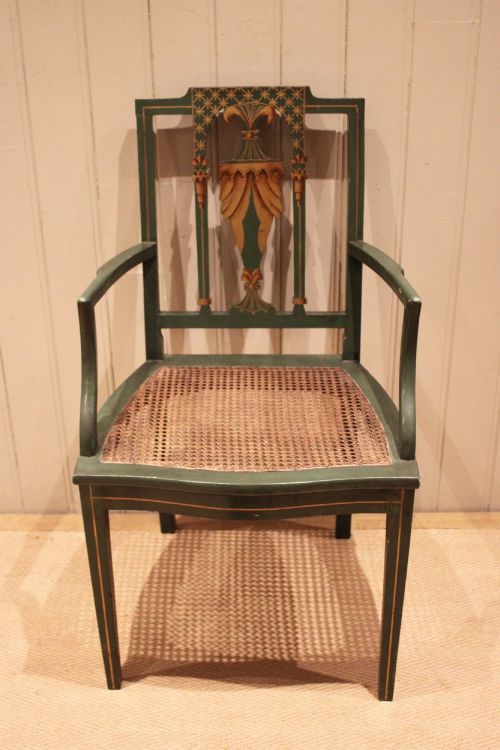
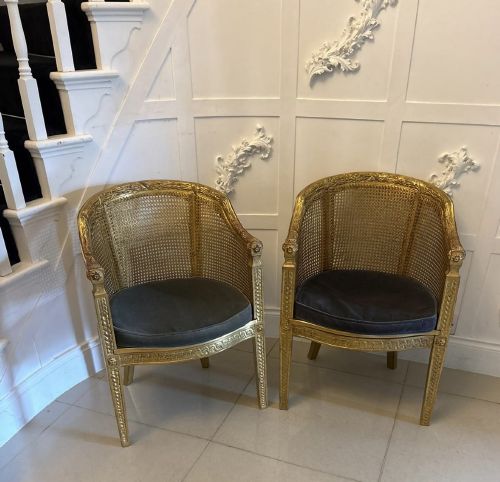
A cane seat armchair relies on a woven woven plant seat set within a wooden frame, offering a springy surface that lighter than solid upholstery. You will encounter various incarnations across this selection, spanning formal library pieces to simpler country house seating.
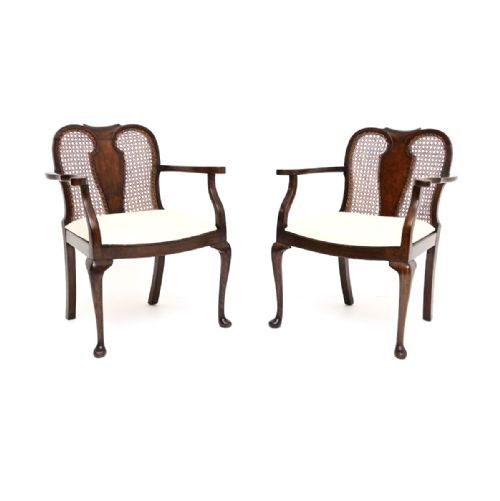
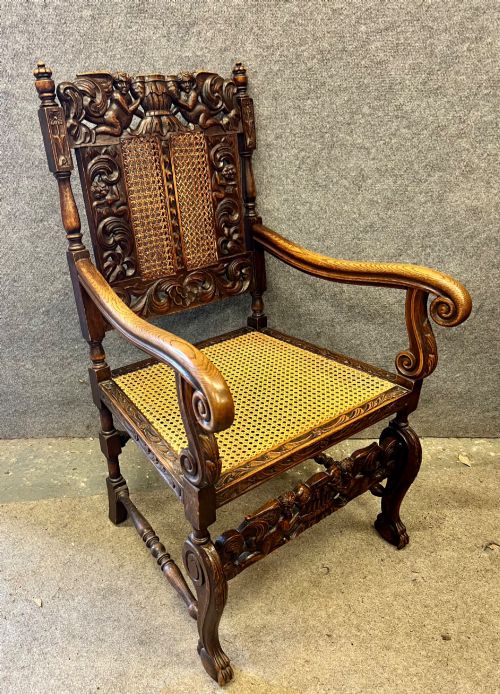
The materials span mahogany, walnut, oak, and satinwood, often shaped into styles like Regency, Edwardian, and Carolean Revival. Many pieces incorporate caning in both the backrest and seat, creating an open, airy silhouette.
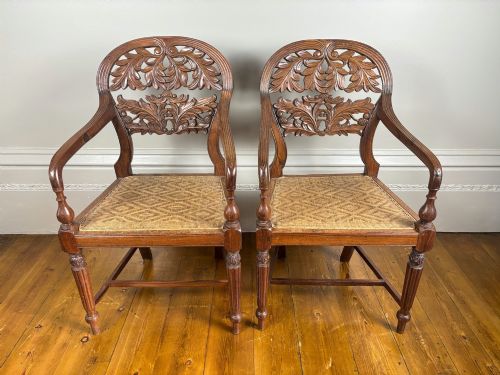
Origins stretch from English workshops to French ateliers and Anglo-Indian production, reflecting changing tastes in domestic comfort. These chairs served variously as desk seating, library reading chairs, and drawing room elbow chairs.
How they were made
Frames are constructed from hardwoods such as mahogany, walnut, and oak, joined with traditional mortise and tenon methods. Cabinetmakers shaped arms and legs through turning, carving, and steam bending.
The characteristic seating surface is formed by hand-weaving split rattan cane through holes drilled around the inner perimeter of the wooden seat rail. Some variations utilise split cane panels secured in a groove rather than traditional multi-strand hand-caning.
Cane Seat Armchair Retail Price Guide 2026
Typical asking prices for cane seat armchair among the pieces listed under this phrase on Sellingantiques today, from the lower quarter to the upper quarter. They describe what is for sale here now, not the wider market.
Some Victorian desks chairs feature concealed revolving mechanisms, allowing readers to pivot between bookshelves without disturbing the cat.
What varies in quality
Quality rests in the tightness and regularity of the cane weave, alongside the crispness of the timber carving and joinery. Finer examples retain tight, even strands with properly plugged holes, whereas lesser pieces show loose or machine-pressed substitutes.
The selection of timber grain and the integrity of the frame dictate durability. Superior chairs combine robust secondary woods with well-figured primary veneers or solid timbers that remain rigid at the joints.
James Shoolbred·Thonet·ZPM Rodomsko·Liberty·Dryad and Co
The Cane Seat Armchair Glossary
- Bergere
- An enclosed upholstered armchair with wooden framing, frequently featuring caned back and sides. This form originated in France during the eighteenth century and remained popular in later revival periods.
- Caning
- A method of weaving plant material, typically split rattan, to create a porous, supportive surface. It provides flexibility and airflow.
- Regency
- A British design period spanning the early nineteenth century characterised by classical motifs, ebonised finishes, and Greco-Roman influences. Furniture from this era often exhibits clean lines and restrained ornamentation.
- Tub chair
- An armchair with a curved, continuous back and arms forming a semicircular enclosure. This design wraps around the sitter for increased comfort.
Cane Seat Armchair: Frequently Asked Questions
How do I care for cane seating?
Keep caned panels hydrated by occasionally wiping them with a damp sponge to prevent the material from becoming brittle. Avoid placing these chairs near direct heat sources or in overly dry rooms.
Weight distribution matters greatly for longevity. Using a suitable loose cushion helps distribute pressure evenly across the woven strands.
Can broken cane seats be repaired?
Traditional hand-caned panels can be completely rewoven by a skilled artisan using matching rattan strands. The process involves threading the material through existing holes in the frame.
Modern replacement uses pre-woven sheet cane inserted into a groove with spline. Hand-caned antique chairs require traditional multi-strand repair to preserve their construction.
Were these chairs used at desks?
Many examples function as library or desk seating, particularly swivel models with revolving bases. Their compact frames and open backs suited study environments.
Writing armchairs often featured wider elbow rests to support reading materials. They bridged the gap between formal parlour seating and functional office furniture.
How do I distinguish revival styles from original periods?
Revival pieces built around nineteen-hundred often exhibit modern hardware, machine-cut joints, and standardised timber preparation. Construction methods and secondary woods reveal the true manufacturing era.
Comparing turnings and joinery details against documented historical examples clarifies whether a piece is an eighteenth-century original or a later revival.