


Victorian Faux Bamboo Chair
These victorian faux bamboo chair examples bring whimsical nineteenth-century design to a room, offering clever imitation woodwork alongside practical seating.
Identifying these pieces
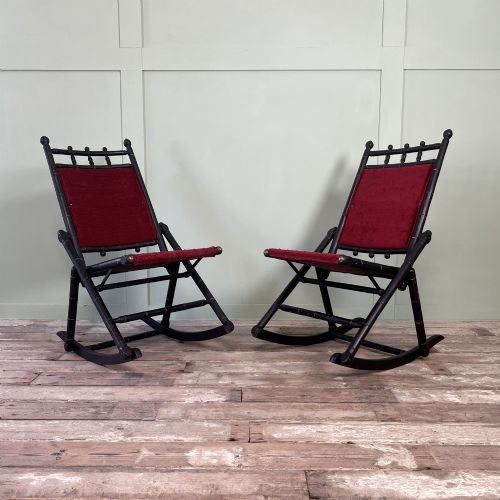
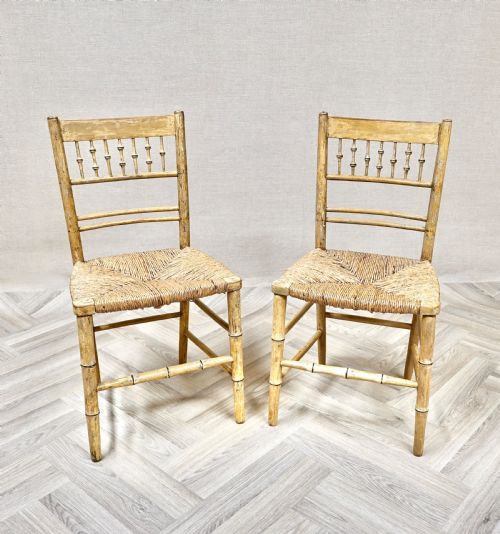
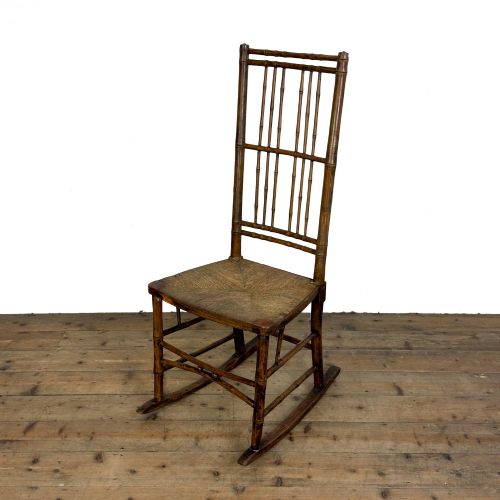
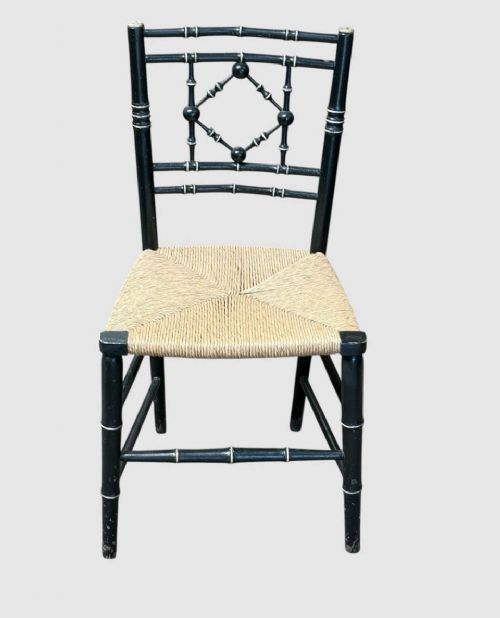
A victorian faux bamboo chair mimics the jointed stems of real bamboo through carved or turned woodwork, capturing the nineteenth-century fascination with exotic forms. The evidence shows these pieces appearing across the late nineteenth century, specifically in eighteen eighty and eighteen ninety.
Buyers encounter distinct forms in this category, ranging from standard armchairs to childs high chairs and rocking chairs with deep buttoned backs. These seating options combine playful historicist styling with the sturdy construction typical of the period.
Makers drew on Chinoiserie and Victorian Faux Bamboo styles to create visually striking seating. The surviving examples demonstrate how cabinetmakers adapted eastern aesthetics for British domestic interiors.
Materials and construction
Workshops relied on beech and general wood as the primary structural materials for carving the simulated bamboo nodes. Caning also appears in the construction, providing lightweight and flexible seating surfaces.
Surface finish plays a crucial role in the aesthetic, with paint applied to enhance the imitation bamboo effect. Some pieces retain their original schemes while others display later paint applications.
Listings and archive records for this category span the nineteenth century, specifically featuring pieces dated eighteen forty, eighteen eighty, and eighteen ninety.
Judging the standard
Quality rests upon the fidelity of the turned woodwork and the precision of the carved bamboo joints. Finer examples display crisp node rings and convincing proportions that mimic living cane closely.
The integrity of the painted surface and the condition of integrated materials like cane separate standard utilitarian items from more accomplished decorative works. Later decorative interventions alter the character of the piece compared to untouched historic finishes.
The Victorian Faux Bamboo Chair Glossary
- Faux bamboo
- Simulated bamboo woodwork carved or turned from standard timber to imitate oriental plant stems. This technique became popular during the nineteenth century for decorative furniture.
- Chinoiserie
- European artistic style reflecting Chinese artistic influences. It frequently appears alongside faux bamboo motifs in Victorian fancy furniture.
- Cane
- Woven material made from peeled bamboo or rattan plant stems. It provides a breathable and lightweight seat panel on period chairs.
- Beech
- Hardwood commonly utilised by nineteenth-century chair makers for its strength and suitability for turning. It takes paint and simulated grain finishes exceptionally well.
Frequently Asked Questions
What is a faux bamboo chair?
A faux bamboo chair is a nineteenth-century seating piece carved or turned from wood to resemble natural bamboo stalks. Makers used this technique to tap into the era's appetite for exotic, travel-inspired interior decoration.
These chairs range from standard armchairs to children's high chairs and rocking chairs. They blend solid structural timber with playful, imitation plant forms.
How old are these chairs?
The available evidence places these seating pieces in the late nineteenth century, specifically around eighteen eighty and eighteen ninety. Earlier examples occasionally appear from around eighteen forty.
Stylistic markers and material analysis help connect individual chairs to these Victorian decades. Cabinetmakers of the period produced them using traditional turning and painting methods.
Were these chairs painted originally?
Many examples feature painted surfaces designed to mimic natural bamboo colouring or to provide a decorative lacquer effect. Over the decades, some pieces received later paint layers to refresh their appearance.
Distinguishing between original pigment and subsequent coats involves examining the wear patterns and underlying preparation layers. Paint choices often reflect changing interior design tastes across different eras.
How do I live with one?
Living with a victorian faux bamboo chair involves placing it out of direct sunlight to protect painted surfaces and delicate cane work. Regular dusting with a dry cloth keeps the turned nodes free of buildup.
These characterful seats function well as decorative accent pieces in bedrooms or studies. Their lightweight construction makes them easy to reposition within a room.