


Ebonised Library Chair
An ebonised library chair offers deep dark wood finishes and robust seating designed for long hours among books.
What an ebonised library chair is
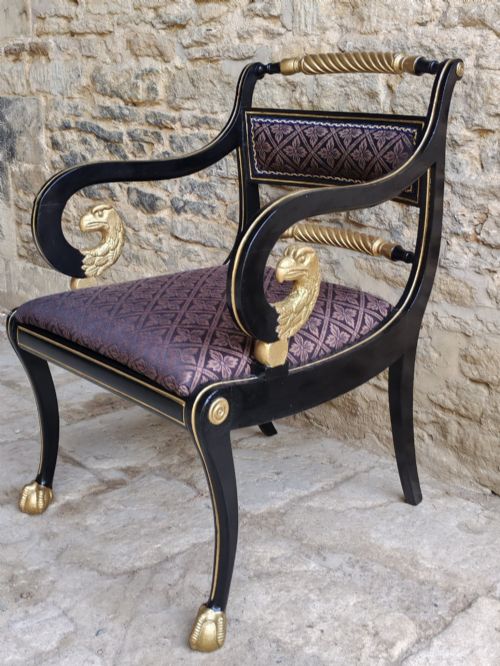
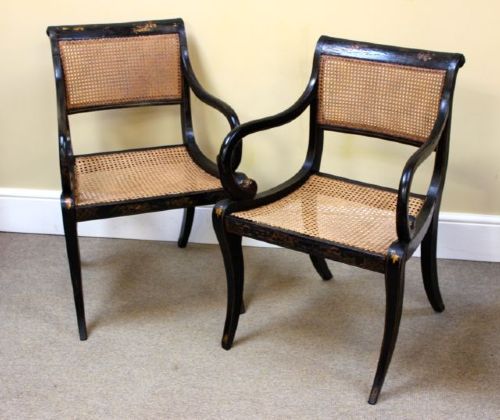
An ebonised library chair is a sturdy seating option designed for study and reading rooms, finished in a dark, simulated ebony coat. These pieces span several eras, originating from earlier Georgian and Regency designs through to later Victorian and Aesthetic Movement interpretations.
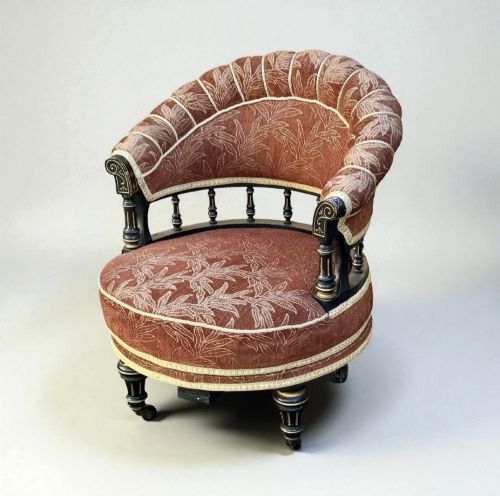
The most common examples encountered on this page date from the nineteenth century, including Victorian models, 1880 pieces, and mid-nineteenth century reclining forms. They appear as armchairs, desk chairs, and revolving armchairs, often incorporating brass castors and rich textile upholstery.
Regional variations also emerge within the records, with Anglo-Indian colonial examples and Scottish George IV pieces sitting alongside standard English workshop productions. Collectors will find both upright reading seats and more relaxed bergere or reclining formats within the selection.
How they were made
Construction relies upon dense hardwoods treated with dark lacquer, paint, or chemical staining to achieve the signature ebonised finish. Artisans frequently added gilding highlights to carved details, accentuating the crisp lines of nineteenth-century frames.
Upholstery forms an integral part of the manufacturing process, utilising various historic textiles and fabrics secured over supportive sprung or padded seats. Movement is often facilitated by brass components, including inset castors that allow easy repositioning across study floors.
Retail Price Guide 2026
Typical UK retail prices for ebonised library chair, calculated from the Sellingantiques database of over a million retail prices indexed since 2003. This retail price guide relies exclusively on Sellingantiques data; no external sources or auction records are used, so the figures do not describe the wider market.
Several chairs include small brass wheels to help nineteenth-century readers silently glide across parquet floors.
What varies in quality
The refinement of the carving and the depth of the ebonised finish set finer examples apart from simpler utilitarian seating. Crisp detailing on nineteenth-century frames and the inclusion of decorative gilding indicate higher workshop ambition.
Mechanical complexity also defines the upper tiers, where functional revolving actions, reclining mechanisms, or matching pairs demonstrate superior original design. The integration of quality brass castors and substantial hardwood frames ensures enduring structural integrity.
The Ebonised Library Chair Glossary
- Ebonised wood
- Timber treated to resemble expensive ebony through staining, painting, or lacquering. This finish became particularly fashionable during the nineteenth century for achieving a sleek, dark aesthetic.
- Library bergere
- An enclosed armchair featuring cane or upholstered sides. These provide a comfortable, substantial seat suited to long periods spent reading in private studies.
- Reclining library armchair
- A movable seat with an adjustable back designed for relaxation. Mid-nineteenth-century examples often combine this function with mechanical adjustments.
- Aesthetic Movement
- A late nineteenth-century design style prioritising visual beauty over narrative content. Pieces from this period often feature ebonised surfaces paired with subtle gilding.
- Brass castors
- Small wheel attachments fixed to the feet of heavy furniture. They assist mobility across carpets and wooden floorboards in traditional libraries.
Frequently Asked Questions
What periods do these chairs date from?
The available pieces predominantly date from the nineteenth century, including Victorian examples and items from around 1880.
Earlier archival pieces trace the form back through the George IV and Regency eras.
Are these chairs comfortable for daily use?
These chairs were originally built for reading rooms and studies, featuring padded textile upholstery and supportive armrests.
Reclining and revolving variants offer additional adjustments for sustained seating.
How do I identify an Aesthetic Movement piece?
Aesthetic Movement items from the nineteenth century typically display clean ebonised surfaces accented with gilding.
They reflect a focus on artistic design rather than heavy historical revival motifs.
What materials are used in the frames?
Makers utilised hard timber foundations finished with dark lacquers or stains to imitate costly exotic woods.
Fittings often include brass for castors and structural support hinges.
Do these chairs come in matching sets?
While most items are individual armchairs, pairs do occasionally appear within the nineteenth-century selection.
Single desk chairs and revolving models form the majority of the current listings.