




Ebonised Wooden Armchair
An ebonised wooden armchair brings dark, dramatic form to a room, turning everyday seating into a deliberate design statement.
Ebonised Wooden Armchair
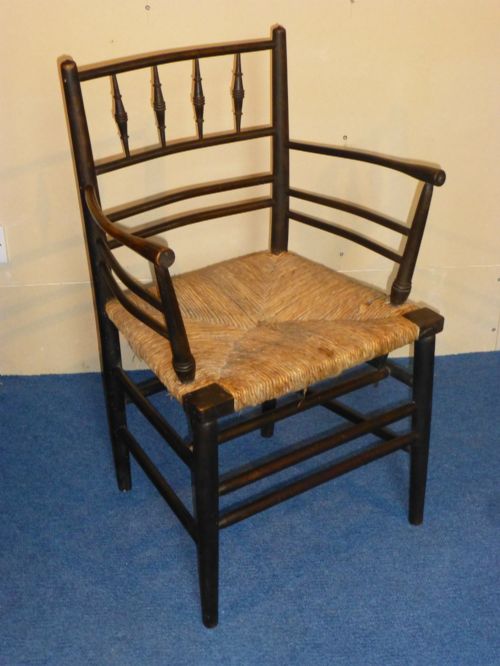
When you search for an ebonised wooden armchair, you are looking at seating finished to imitate costly ebony, a practice common across the nineteenth and twentieth centuries. The pieces on this page span several eras, from eighteenth-century country examples to elaborate Victorian salon chairs and Aesthetic Movement designs.
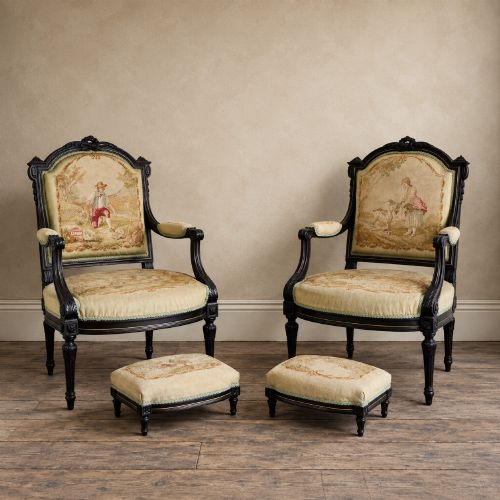
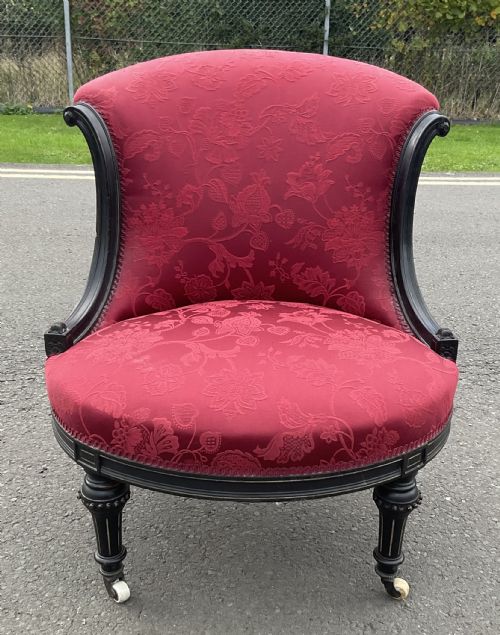
The most common version you will meet here is the Victorian ebonised armchair, often linked to the Aesthetic Movement or produced as a nursing chair and rocking chair. These chairs frequently combine ebonised surfaces with contrasting details like gilding, brass fittings, and upholstered seats in velvet or fabric.
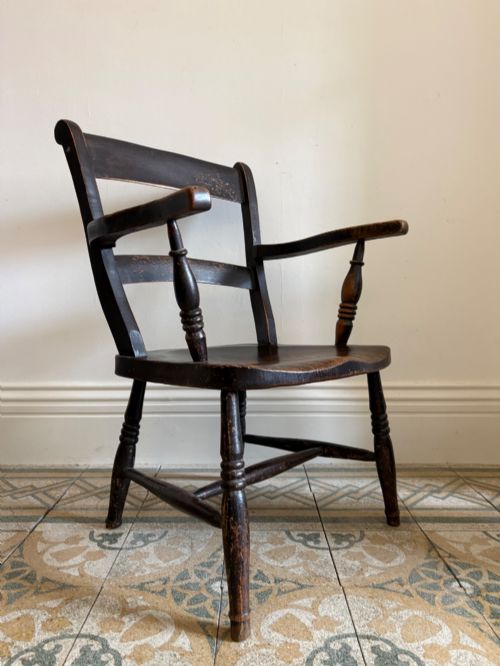
Other notable forms appearing in the inventory include Windsor chairs built from ash, beech, and elm, alongside revival pieces drawing on Louis XVI, Chippendale, and George III styles. Swedish Biedermeier and regional British workshop pieces also add variety to the selection.
Materials and construction methods
The foundation of these chairs relies on native and imported timbers, including beech, ash, elm, birch, and fruitwoods. Makers applied black paint, stain, or polish to simulate solid ebony, sometimes pairing the dark finish with gilt highlights or contrasting light woods.
Upholstery materials such as velvet and woven fabric appear across the nineteenth-century examples, whilst regional vernacular pieces utilise woven rush for seats. Structural details range from turned spindles and bentwood techniques to substantial carved frames and block feet.
Ebonised Wooden Armchair Retail Price Guide 2026
Typical asking prices for ebonised wooden armchair among the pieces listed under this phrase on Sellingantiques today, from the lower quarter to the upper quarter. They describe what is for sale here now, not the wider market.
Current listings span the eighteenth, nineteenth, and early twentieth centuries, featuring materials like ebonised wood, velvet, rush, brass, and painted finishes.
Distinctions in quality and execution
Quality in these chairs rests upon the crispness of the turning and carving, together with the depth and durability of the ebonised finish. Finer pieces demonstrate careful joinery that keeps the frame rigid without relying on heavy modern adhesives.
The choice of secondary woods and the refinement of decorative elements, such as gilding or brass mounts, separate standard production items from distinguished workshop outputs. The integrity of the original surface treatment significantly influences the character of each piece.
Morris & Co·Philip Webb·Collier and Plucknett·Maple & Co
The Ebonised Wooden Armchair Glossary
- Ebonised
- Wood finished with black stain, paint, or polish to imitate genuine ebony. This treatment gained immense popularity during the Victorian and Aesthetic Movement periods.
- Aesthetic Movement
- A late nineteenth-century design style emphasising visual beauty over narrative content, frequently featuring ebonised furniture with Japanese-inspired details.
- Windsor Chair
- A traditional form featuring a solid wooden seat into which the legs and back spindles are separately inserted. Regional variants often use ash, elm, or beech.
- Nursing Chair
- A low-seated Victorian armchair designed to allow comfortable sitting while tending to infants, typically upholstered and easily movable.
- Cockpen Chair
- An open armchair with a lattice-work Chinese Chippendale style back, popular in British country houses during the eighteenth and early twentieth centuries.
Ebonised Wooden Armchair: Frequently Asked Questions
What is an ebonised wooden armchair?
An ebonised wooden armchair is a chair made from standard timbers like beech or ash that has been stained, painted, or polished black to resemble expensive ebony wood. This finish was widely adopted during the nineteenth century to achieve a sleek, dramatic look.
These chairs appear in various forms, from decorative salon seating to sturdy rocking chairs and low nursing chairs. The dark finish served as a versatile backdrop for gilt highlights, brass details, and colourful upholstery fabrics.
How do I care for an ebonised finish?
Caring for an ebonised surface requires gentle dusting with a soft cloth and protection from direct sunlight and excessive moisture. Avoid harsh modern cleaning products that can strip or dull the black polish.
If the finish shows minor scuffs over time, appropriate wax polish can help maintain the sheen. Treating the wooden frame with care preserves the historic surface treatment.
Where were these chairs used in a home?
Victorian ebonised chairs were typically placed in drawing rooms, parlours, and bedrooms where refined interior decoration mattered. Their dark frames added a fashionable, contemporary accent to domestic spaces.
Windsor and regional turned variants found their place in country houses, libraries, and cottage interiors. Lower nursing chairs were kept near fireplaces or in nurseries for comfortable daily seating.
How do I distinguish an Aesthetic Movement chair?
Aesthetic Movement chairs are characterised by slender ebonised frames, clean structural lines, and often subtle Japanese-inspired decorative motifs. They frequently feature contrasting gilt details and original velvet or patterned fabric upholstery.
These pieces reflect a distinct late nineteenth-century philosophy focused on artistic design. They differ from heavier Victorian revival styles through their restrained ornamentation and linear elegance.