


Black Painted Armchair
A black painted armchair brings deep tone and strong line to a room, offering both sculptural presence and historical character.
Black Painted Armchair
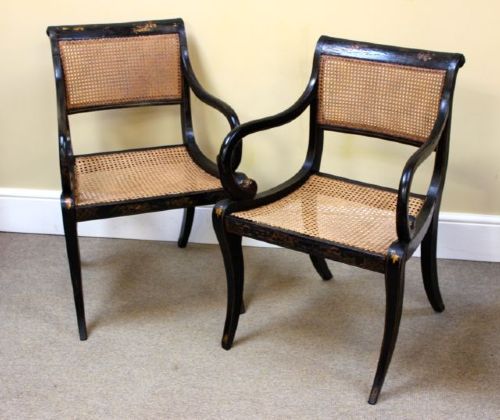
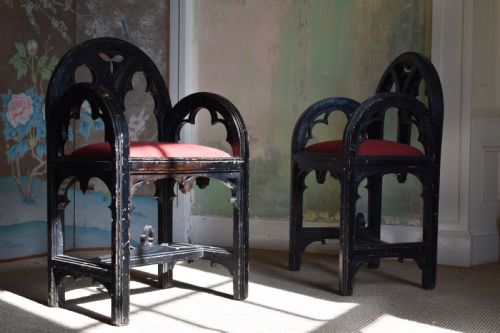
A black painted armchair encompasses seating forms stretching from the eighteenth century through the twentieth century, uniting diverse stylistic roots beneath dark surface finishes. You encounter regional vernacular pieces alongside formal revival designs, each offering a distinct silhouette rooted in historical tradition.
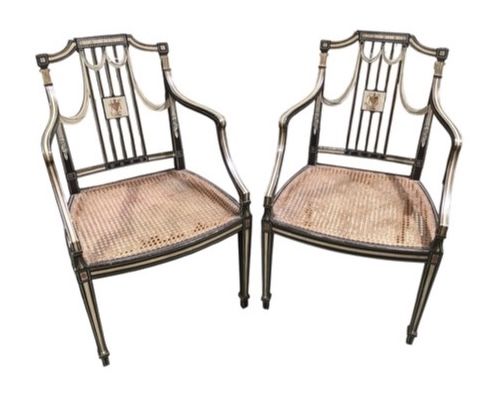
The selection on this page centres heavily upon nineteenth and early twentieth century interpretations, alongside robust Regency and eighteenth century examples. These seating options range from cane-seated country chairs to elaborate gilded and japanned elbow chairs.
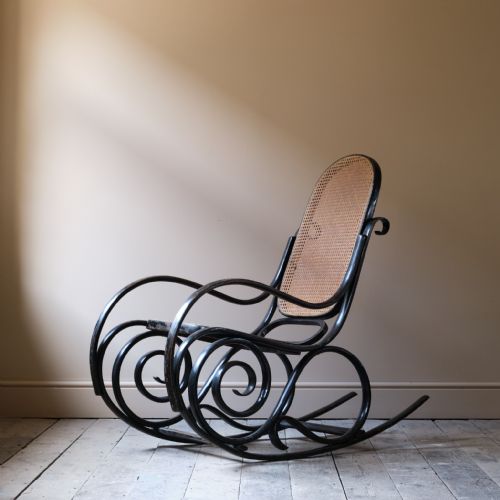
Makers utilised various regional forms, resulting in profiles that include Windsor structures, shield backs, and rocking variants. The unifying thread remains the dark painted, lacquered, or ebonised surface treatment applied to wood.
Materials and construction methods
Constructed primarily from sturdy timbers like beech, these chairs rely on traditional joinery combined with applied surface decoration. Craftsmen layered paint, ebonised finishes, and occasionally gold leaf over prepared wooden frames to achieve depth and lustre.
Seating areas frequently incorporate woven cane or upholstered pads covered in fabric and velvet. Decorative techniques extend to hand-painted motifs, japanning, and lacquering, reflecting both vernacular and high-style workshop practices.
Some chairs spent centuries being rocked so enthusiastically that their runners developed distinctive flat spots from wooden floors.
Distinctions in craftsmanship and finish
Quality rests in the integrity of the wooden frame and the originality of the surface treatment. Chairs retaining their earliest painted or lacquered layers hold greater architectural and historical honesty than later overpainted examples.
Refinement of turnings, the tightness of cane or joinery work, and the subtlety of decorative details separate standard vernacular seating from ambitious workshop creations.
The Black Painted Armchair Glossary
- Ebonised wood
- Timber stained or painted to imitate ebony. This finish gained popularity during the nineteenth century for its sleek, formal appearance.
- Japanning
- European imitation of East Asian lacquering techniques. Artisans built up layers of varnish and paint, frequently incorporating raised metallic motifs.
- Bergere
- An enclosed upholstered armchair with wooden framing. The sides are traditionally filled with cane work.
- Cockpen
- A Chinese Chippendale style chair design featuring an open lattice fretwork back. These chairs often appear in polite nineteenth-century interiors.
- Windsor chair
- A wooden seat construction where the legs and back spindles are pegged directly into a solid sculpted seat plank.
Black Painted Armchair: Frequently Asked Questions
How do I care for original painted surfaces?
Dust gently with a soft, dry cloth and avoid harsh modern cleaning chemicals that might strip aged pigment. Keep the chair away from direct sunlight and dramatic moisture shifts.
Applying a microcrystalline wax can protect fragile painted finishes if recommended by a specialist restorer. Regular gentle maintenance preserves the historic integrity of the wood and paint.
Are these chairs suitable for daily seating?
Many sturdy examples function well for everyday use, provided the joints remain tight and stable. Vernacular and heavier framed pieces generally offer robust support for regular placement.
Lighter decorative or finely caned models require more mindful placement and gentler handling. Assessing the structural soundness helps determine whether a chair belongs in a quiet corner or active room.
What defines the Regency style in these chairs?
Regency seating draws inspiration from classical Greek and Roman forms, featuring clean lines and saber legs. Painted finishes, often accented with gilding, were typical of this period.
Revival pieces from later centuries frequently emulated these exact proportions and decorative schemes. Recognising the interplay of classical restraint helps identify this distinct aesthetic lineage.
Can I mix these chairs with modern decor?
Dark painted and ebonised frames act as visual anchors that contrast effectively against neutral modern walls. Their strong silhouettes bring graphic weight and historic texture to contemporary spaces.
Placing an antique armchair among clean-lined modern furniture highlights the sculptural qualities of the piece. The neutral darkness of the paint bridges historical form and modern interior design.