

Dark Wood Elbow Chair
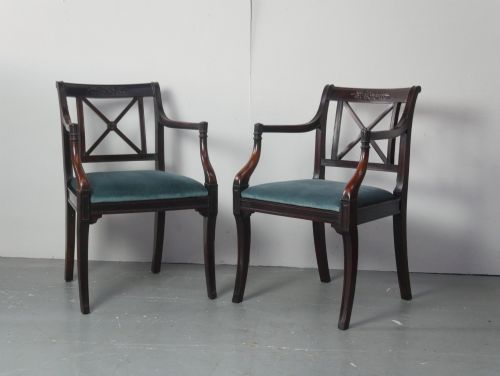
A dark wood elbow chair offers a sturdy seat and useful armrests, spanning formal mahogany carvers to rustic ash and elm Windsors.
Dark Wood Elbow Chair
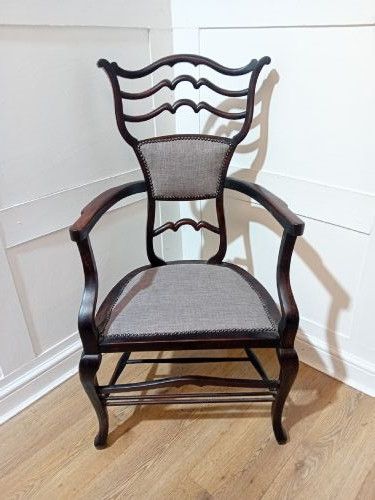
When you search for a dark wood elbow chair, you encounter a wide selection of seating designed with armrests for added comfort at desks, dining tables or reception rooms. These pieces range from formal urban carvers to rustic vernacular seating.
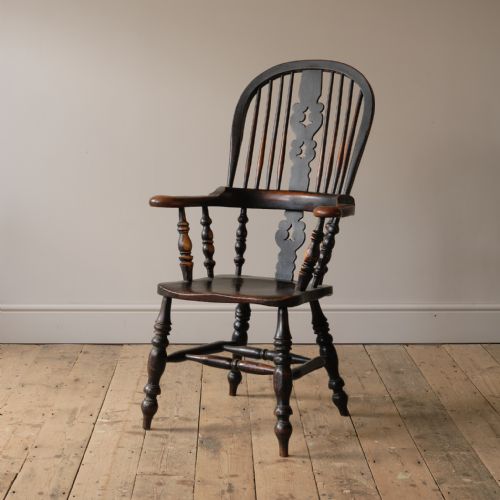
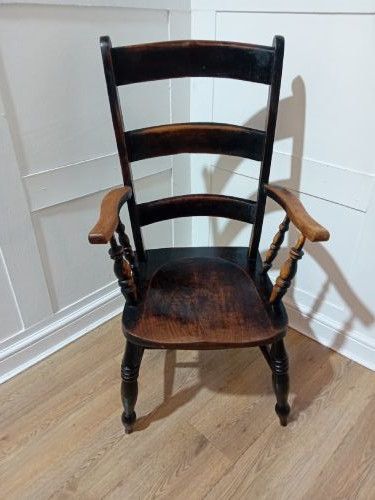
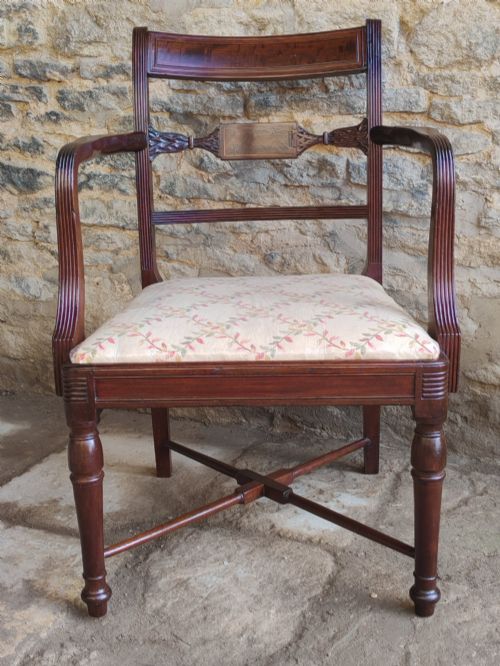
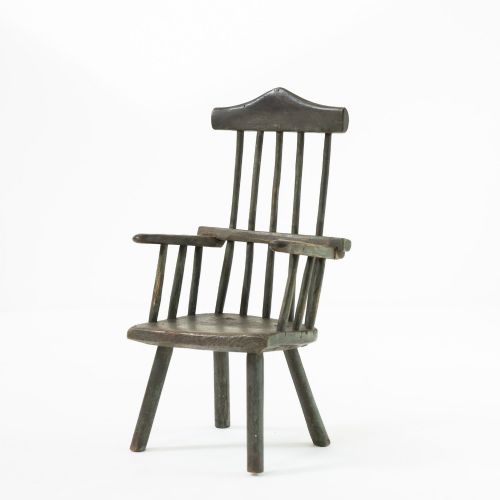
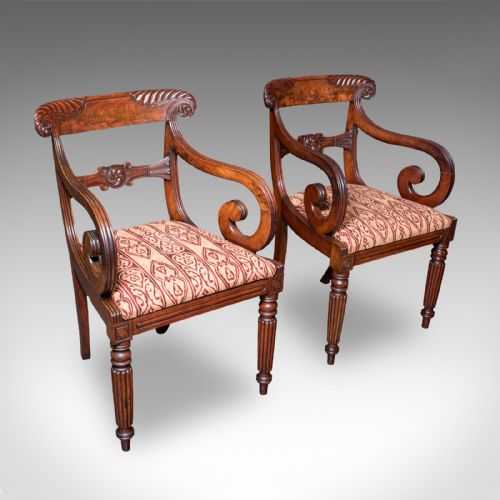
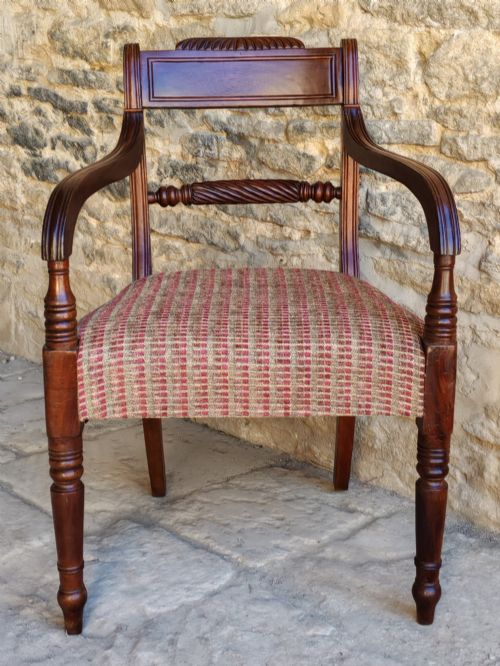
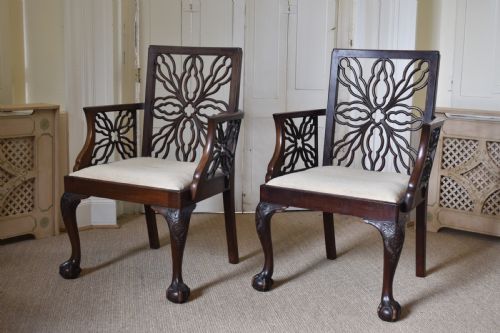
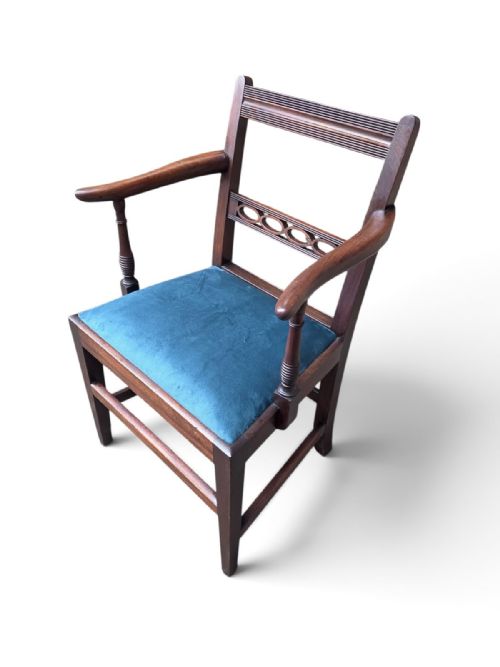
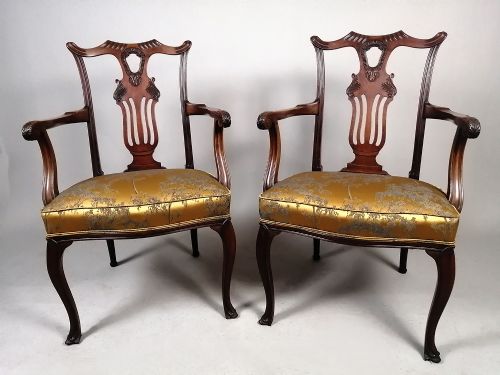
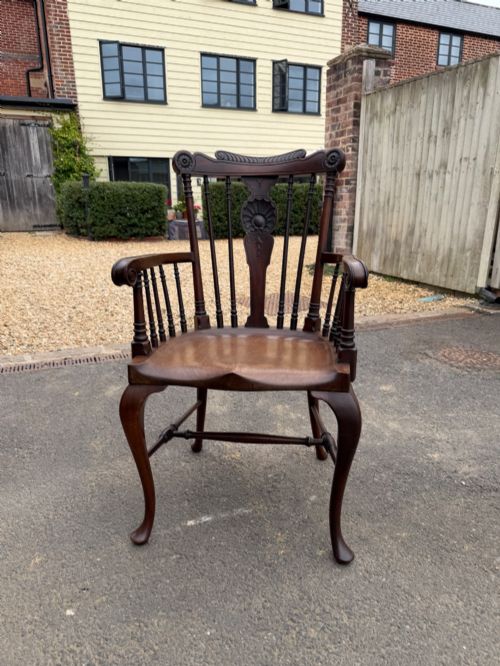
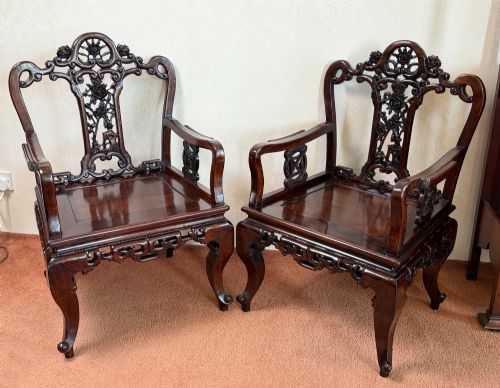
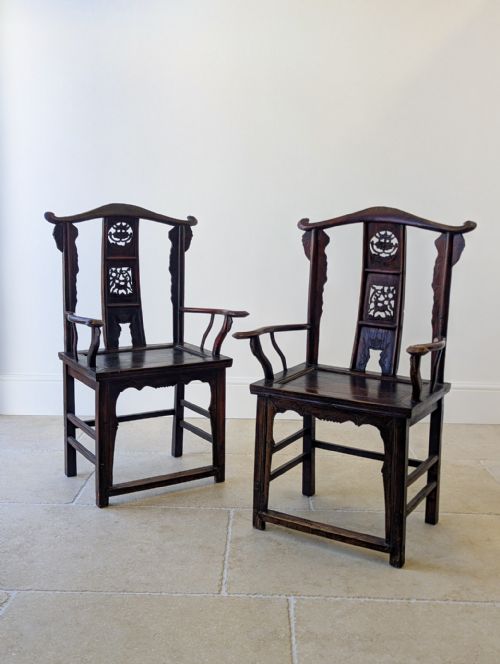
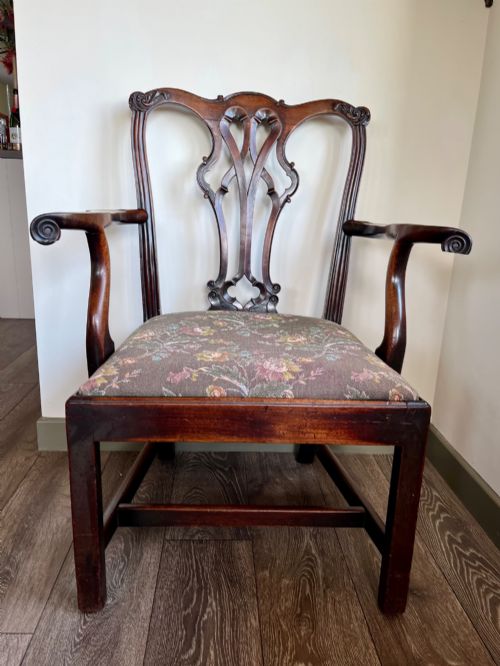
The most common examples on this page are mahogany carvers from the Georgian, Regency and Victorian periods, alongside regional Windsor armchairs constructed from ash and elm. Other forms include Chinese hardwood chairs, spindlebacks and low children's armchairs.
Origins stretch across English country workshops, formal cabinet makers, and international centres, incorporating styles from Chippendale revivals to Qing Dynasty designs.
How They Were Made
Makers utilised dense timbers such as mahogany, oak, rosewood and padouk for formal urban seating, whilst rural makers turned to local woods including ash, elm, yew and beech. These materials dictated whether a piece received a polished finish or a simpler waxed surface.
Joinery methods varied according to the function and origin, ranging from traditional mortise and tenon joints in cabinet-made chairs to steam-bent elements and spindle construction found in Windsor forms.
Listings feature woods such as mahogany, elm, ash, oak, yew, rosewood and padouk across periods spanning the eighteenth, nineteenth and early twentieth centuries.
What Varies in Quality
Quality rests on the crispness of carved detail, the selection of timber figures, and the integrity of the original construction. Chairs retaining their early surface and structural tightness command greater appreciation than those altered over time.
Proportion and comfort also set examples apart, as skilled makers balanced the rake of the back and the curve of the elbow rests to create harmonious proportions.
E W Godwin
The Dark Wood Elbow Chair Glossary
- Carver
- An armchair designed to match a set of dining chairs, usually placed at the head of a table.
- Windsor
- A chair built with a solid wooden seat into which the legs, back sticks and arm bow are directly inserted.
- Elbow chair
- A general term for any chair equipped with armrests, providing a comfortable seat for a desk or parlour.
- Vernacular
- An object made by local rural craftspeople following traditional regional patterns rather than urban academic styles.
- Padouk
- A heavy tropical hardwood prized for its rich reddish colour and dense grain, seen in Anglo-Indian furniture.
Dark Wood Elbow Chair: Frequently Asked Questions
What is a carver chair?
A carver chair is an armchair traditionally made to match a set of single dining chairs, positioned at the head of a dining table or used independently as a desk seat.
These pieces share the stylistic traits of their dining set counterparts but provide the added comfort of armrests.
How do I identify a Windsor chair?
A Windsor chair is characterised by a thick wooden saddle seat into which the legs and back spindles are driven directly, without a traditional frame.
They often combine different timbers, such as ash for the bent parts and elm for the solid seat.
Where were these chairs used?
These chairs served multiple domestic and public functions, appearing in formal reception rooms, libraries, studies and dining areas.
Country versions functioned as farmhouse seating, while refined mahogany examples furnished polite urban interiors.
How do I care for dark wood?
Maintain dark wood surfaces by keeping them away from direct heat sources and strong sunlight, which can dry out the timber and fade the polish.
Apply a traditional beeswax polish occasionally and buff gently with a soft cloth to preserve the finish.