
Rustic Wooden Elbow Chair
A rustic wooden elbow chair brings honest vernacular character to a room, offering sturdy arms and a comfortable seat shaped by generations of country makers.
Rustic Wooden Elbow Chair
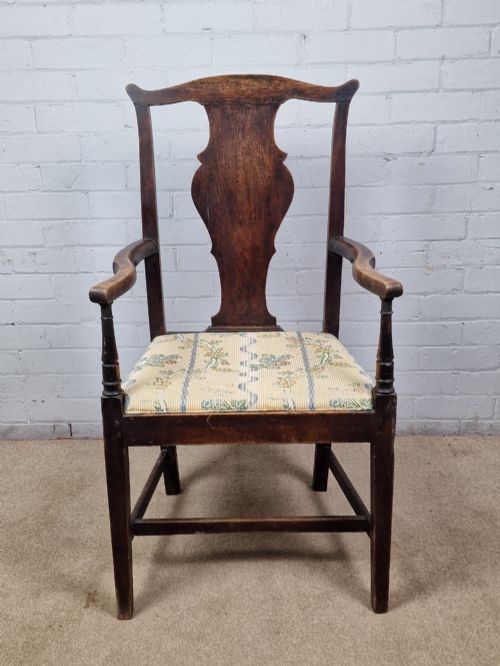
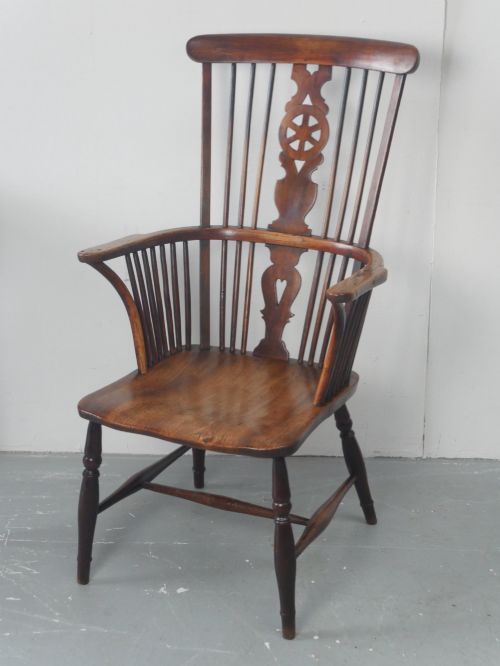
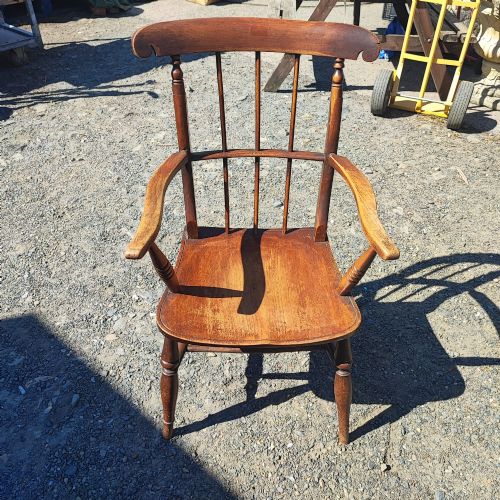
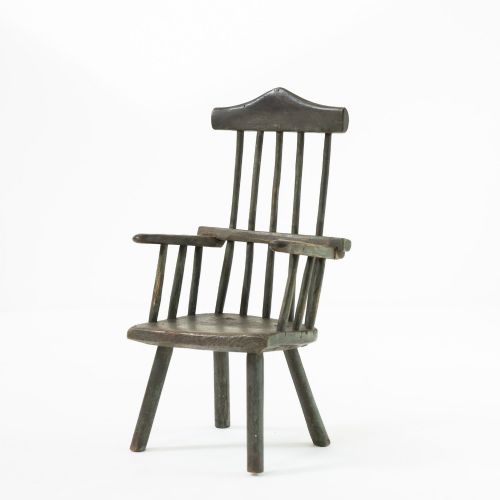
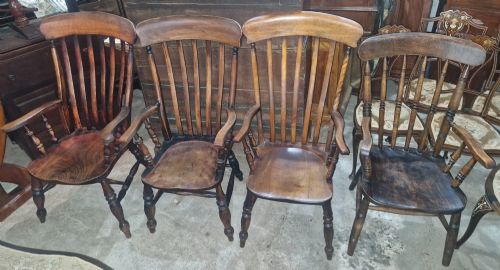
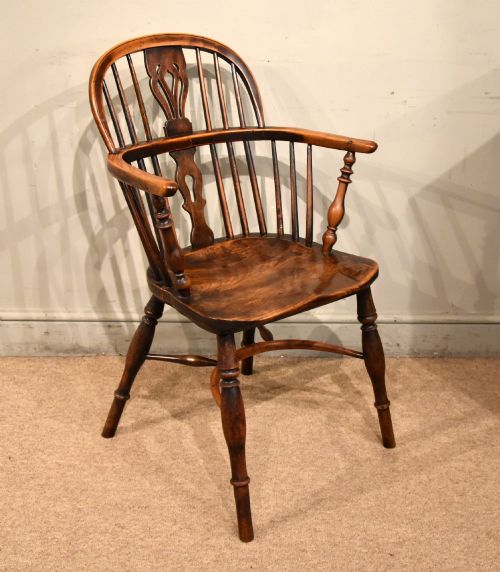
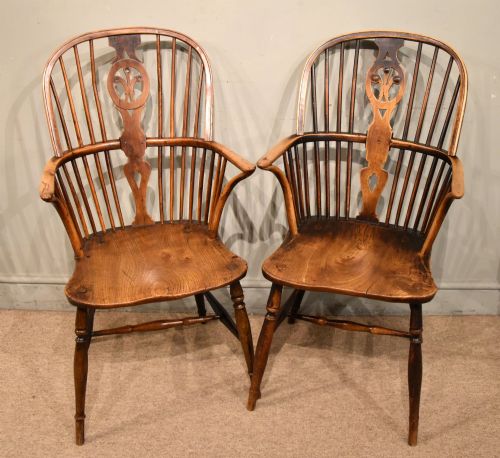
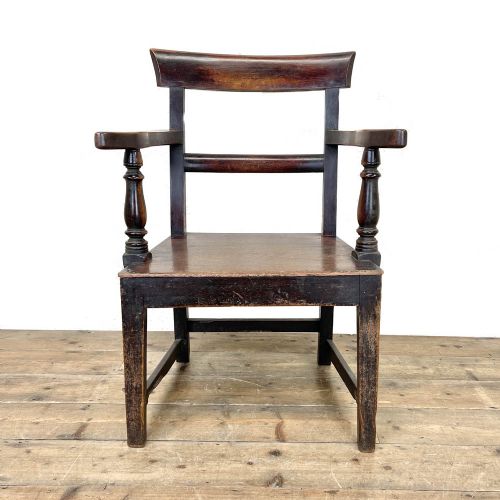
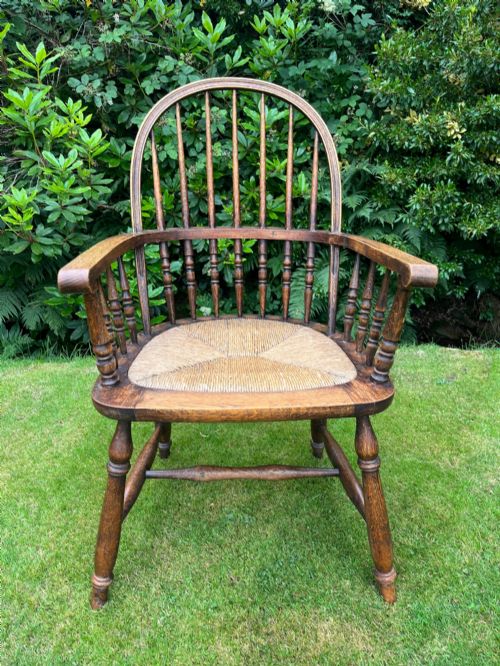
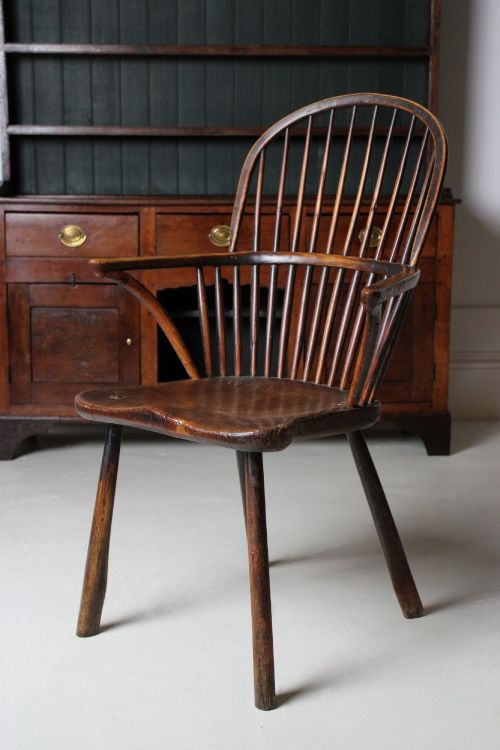
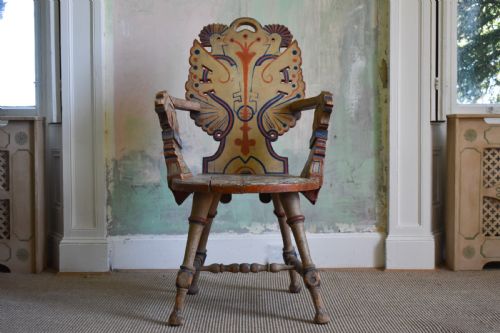
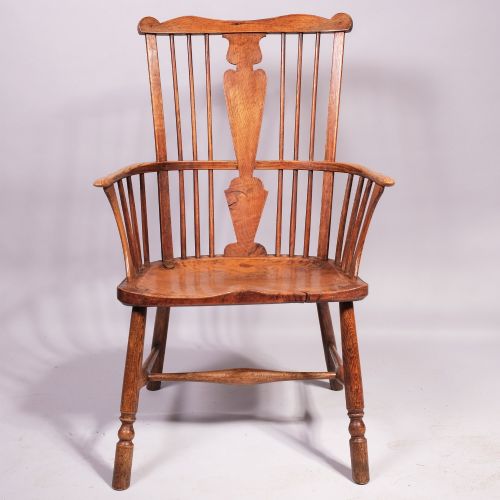
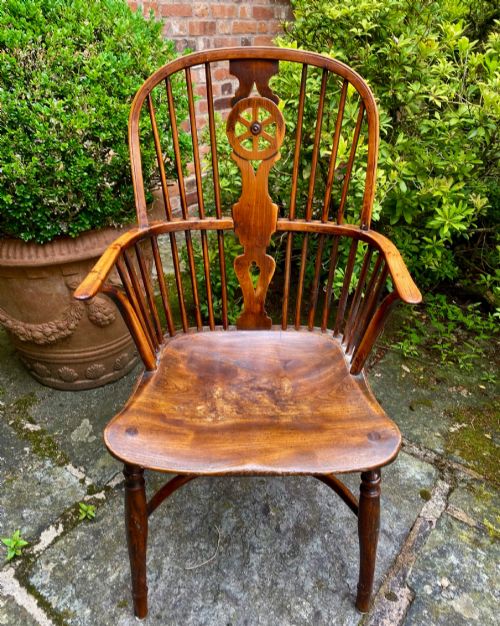
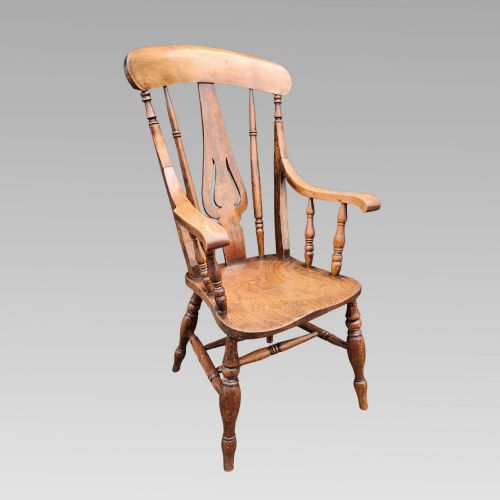
A rustic wooden elbow chair is a traditional seating form created for everyday use in farmhouses, cottages, and country homes. You will frequently encounter Windsor designs featuring spindles, curved backs, and solid timber seats shaped for comfort. The selection spans armchairs, carver chairs, children's armchairs, and low stick-back variants.
The pieces on this page originate from various periods including the 18th century, Georgian era, Victorian period, and early 20th century. Styles range from English country vernacular and primitive vernacular to Arts and Crafts and regional Windsor traditions. These chairs served practical roles around the hearth, at the dining table, or in the workshop.
How they were made
Maker-craftsmen utilised local hardwoods suited to specific structural demands, combining bendable timbers with rigid supports. Elm frequently provided the heavy, non-splitting solid seats, while ash, oak, and beech formed the turned legs, spindles, and bow backs. Yew, fruitwood, and laburnum appear in more ambitious regional pieces for their rich grain and colour.
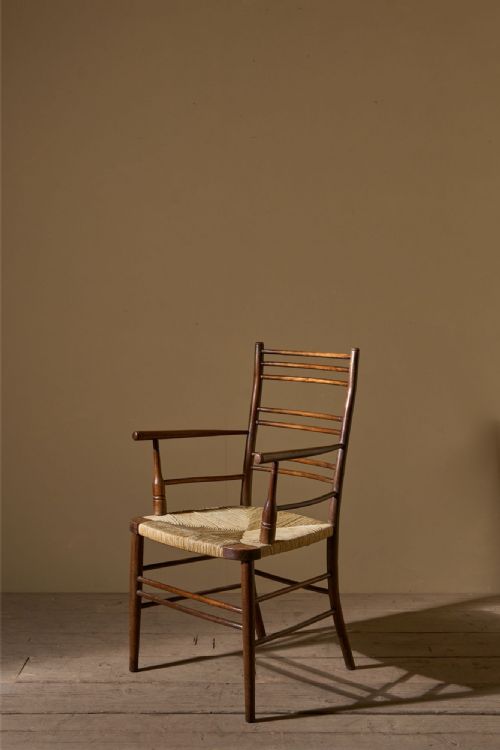
Construction relied on traditional green woodworking and joinery techniques rather than mass production. Component parts were turned on pole lathes or shaped with drawknives, then fitted together using wedged tenons and through-joints. Rush seating also appears, woven tightly over wooden frames to provide a resilient platform.
Several chairs incorporate rush seating, offering a soft, woven perch for weary country elbows.
What varies in quality
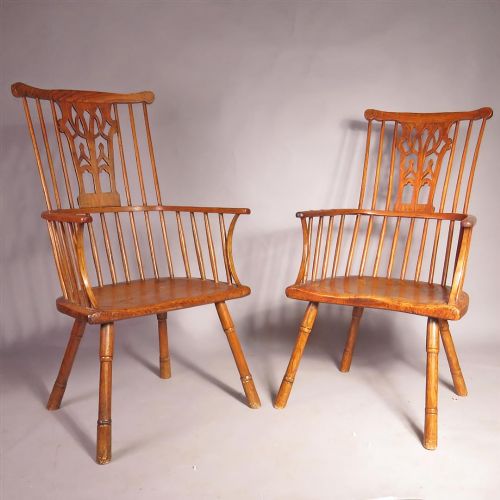
The quality of a country elbow chair rests upon the selection of timber and the harmony of its proportions. Superior examples display carefully chosen contrasting woods, such as yew bows paired with elm seats, demonstrating deliberate aesthetic choices by the maker. Integrated grain patterns and balanced stick placements elevate a functional seat into an engaging sculpture.
Wear and patina accumulated through generations of honest domestic use separate exceptional surviving pieces from ordinary ones. The retention of original surface treatments, whether aged bare wood or early paint, preserves the integrity of the object. Subtle details like refined comb backs or sculpted arm rests indicate the skill of the regional workshop.
The Rustic Wooden Elbow Chair Glossary
- Windsor chair
- A chair built with a solid wooden seat into which the legs and back spindles are directly inserted. This construction method creates a sturdy, lightweight frame characteristic of rural vernacular furniture.
- Carver chair
- An armchair traditionally placed at the head of a dining table or used as a principal seat in a parlour. These chairs match the simpler side chairs in a set but include arms.
- Smokers bow
- A low-backed Windsor armchair with a continuous curved arm rail resting on short spindles above a solid wooden seat. They were widely used in country inns and domestic smoking rooms.
- Vernacular furniture
- Domestic objects made by local tradesmen using regional materials and traditional methods without academic architectural influence. These pieces prioritise utility and local resourcefulness.
Rustic Wooden Elbow Chair: Frequently Asked Questions
How do I date an old wooden chair?
Dating relies on observing construction methods, tool marks, and timber choices used by the maker. Georgian and 18th-century examples often display deep saddle seats and thicker component turnings.
Victorian and later pieces introduce machine-sawn elements and different spindle arrangements while retaining traditional country forms.
What woods were used for these chairs?
Makers selected local timber based on the specific structural requirements of each chair part. Elm was the preferred choice for solid, crack-resistant seats.
Ash, beech, and oak provided strong legs and spindles, while yew and fruitwood added decorative grain patterns to the backs.
Where were these chairs originally used?
These chairs served utilitarian roles throughout the home, particularly around the hearth or kitchen table. Their robust construction suited daily domestic labour and farmhouse life.
Some smaller variants were specifically made as children's armchairs or reading chairs for fireside use.