
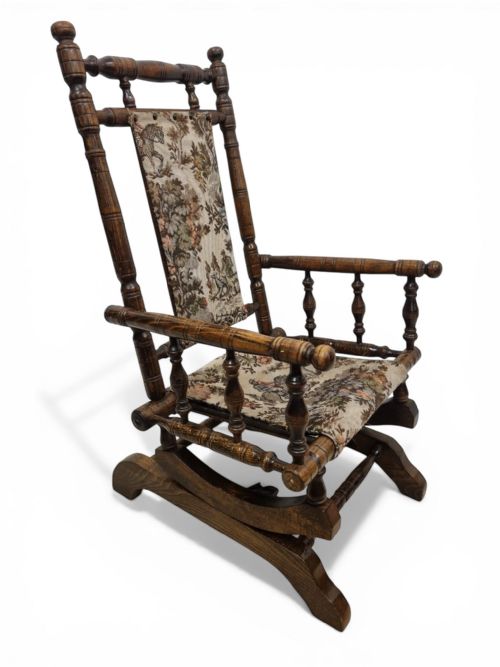


Edwardian Rocking Chair
The edwardian rocking chair brings together comfort and domestic craft, offering a gentle motion that collectors prize for everyday seating.
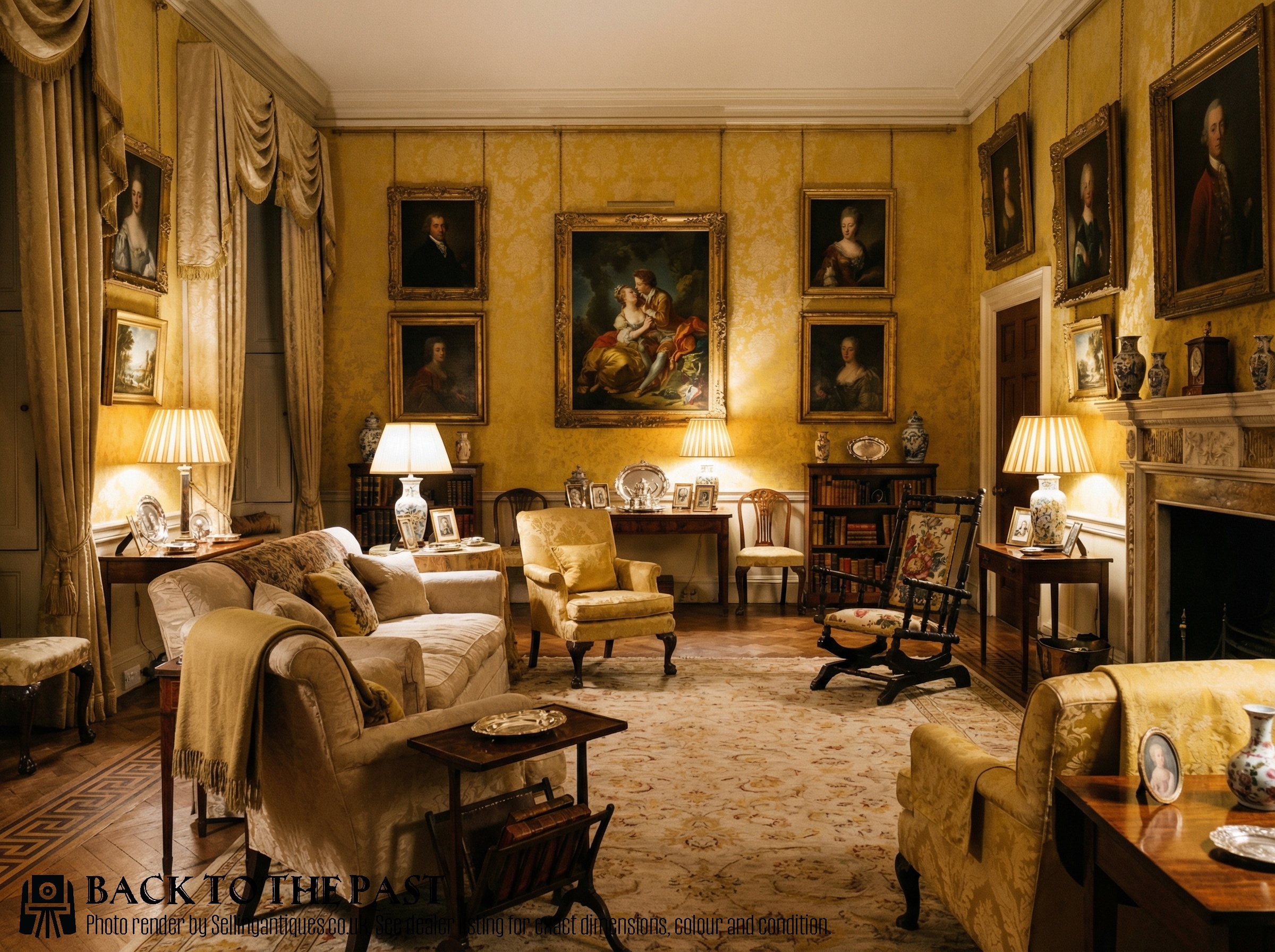
Forms and Origins
When you search for an edwardian rocking chair, you encounter a variety of seating forms spanning the early twentieth century. The selection ranges from light occasional chairs to robust armchairs designed for relaxation.
You are most likely to meet mahogany and walnut frames alongside lighter beech and bentwood versions. Many examples incorporate traditional styles such as Arts and Crafts or Windsor stick backs.
Regional variations appear across the archive, including American Shaker models and pieces bearing London maker marks. Children's versions also emerge in ash, elm, and beech.
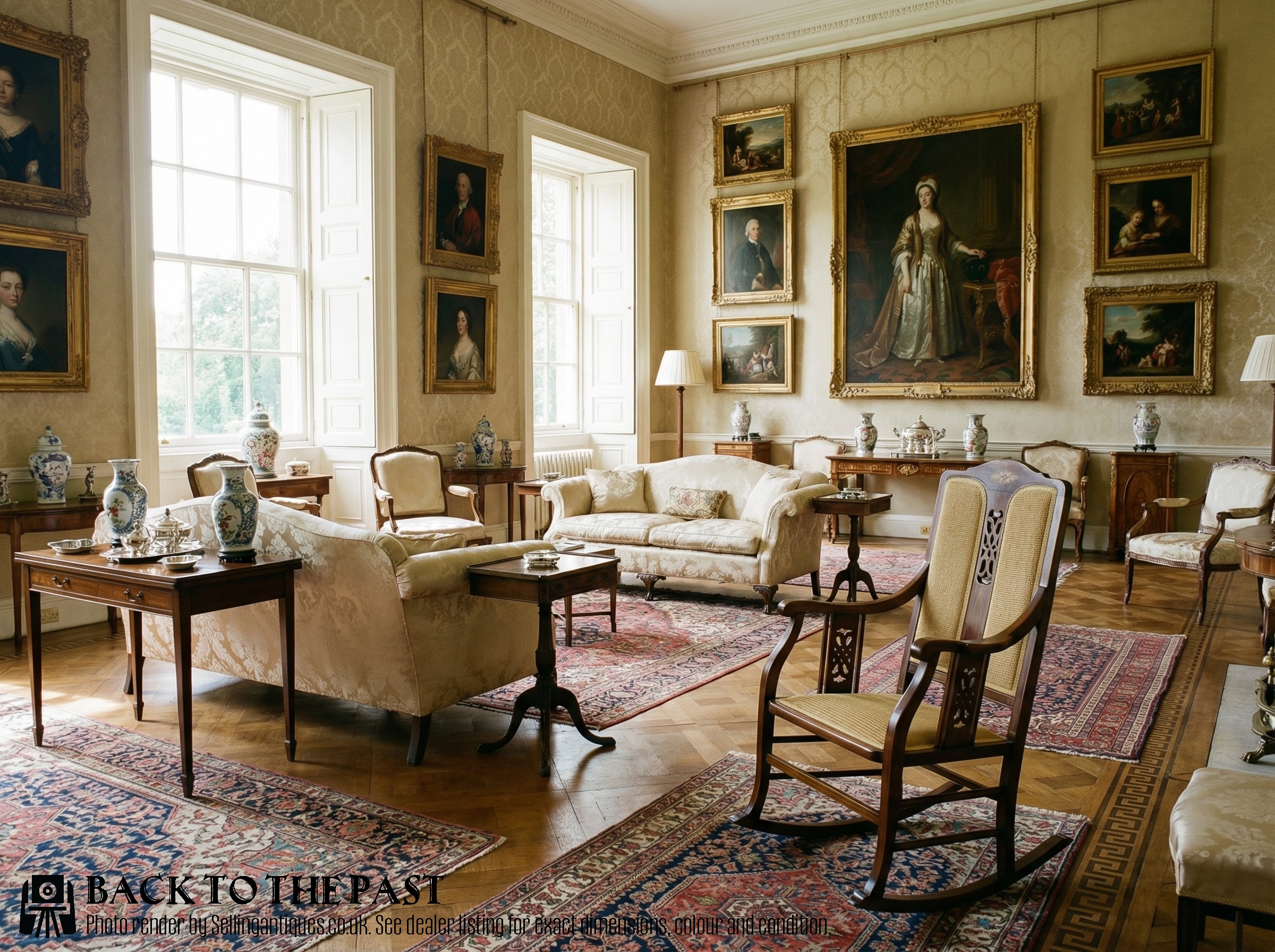
Materials and Technique
Makers utilised a wide palette of timbers, selecting mahogany, walnut, satinwood, oak, beech, ash, elm, and birch for the frames. Metal and brass components sometimes appear alongside these woods.
Upholstery techniques varied from plain leather and embossed leather to textured fabric and rush seating. Inlaid details and turned spindle backs demonstrate the decorative methods of the period.
Retail Price Guide 2026
Typical UK retail prices for edwardian rocking chair, calculated from the Sellingantiques database of over a million retail prices indexed since 2003. This retail price guide relies exclusively on Sellingantiques data; no external sources or auction records are used, so the figures do not describe the wider market.
The listings show Edwardian and Victorian styles alongside Arts and Crafts influences, constructed from mahogany, walnut, oak, beech, and birch.
Evaluating Quality
The distinction between tiers of the range lies in the choice of timber and the complexity of the frame construction. Solid mahogany and walnut examples with intricate inlay or detailed turning represent higher workmanship than simpler utility pieces.
The integrity of the rocking mechanism and the retention of original upholstery materials dictate the standing of an individual piece. Refined carving and balanced proportions separate exceptional specimens from standard production.
Angus and Co London·Lutyens
The Edwardian Rocking Chair Glossary
- Bentwood
- Wood shaped by steaming into curved forms. This technique created lightweight, durable frames popular in the period.
- Spindleback
- A chair back filled with thin, turned wooden rods. These provide support while keeping the upper section light.
- Inlay
- Contrasting wood or metal set flush into the surface of the primary timber for decoration. Mahogany examples frequently feature this delicate work.
- Rush seat
- A seating surface woven from dried marsh plants. This traditional method appears on country kitchen styles.
Frequently Asked Questions
What is an edwardian rocking chair?
An edwardian rocking chair is a domestic seat produced around nineteen hundred, featuring curved rockers attached to the base of the legs. These chairs were built for parlours, bedrooms, and nurseries.
They combine traditional cabinetmaking methods with the comfort of upholstered or rush-seated designs, reflecting the domestic habits of the period.
How do I identify an edwardian rocking chair?
You can identify these pieces through characteristic timber choices such as mahogany, walnut, and beech, alongside stylistic touches like inlay or spindle backs. Many reflect Arts and Crafts or Windsor influences.
Examination of the frame construction and the wear on the wooden rockers helps confirm the manufacturing era around nineteen hundred.
Were children's rocking chairs common?
Makers produced smaller rocking chairs specifically for children, utilising ash, elm, and beech. These smaller versions mirror the full-sized stick back and Windsor designs.
They served as functional nursery furniture rather than mere toys, constructed with the same sturdy joinery as adult seating.
Can I use an edwardian rocking chair daily?
These chairs are suitable for daily use provided the frame joints remain sound and the rocking mechanism is stable. Checking the structural integrity ensures safe movement on modern flooring.
Upholstered versions may require attention to internal padding over time, while wooden and rush seats handle regular sitting with ease.