



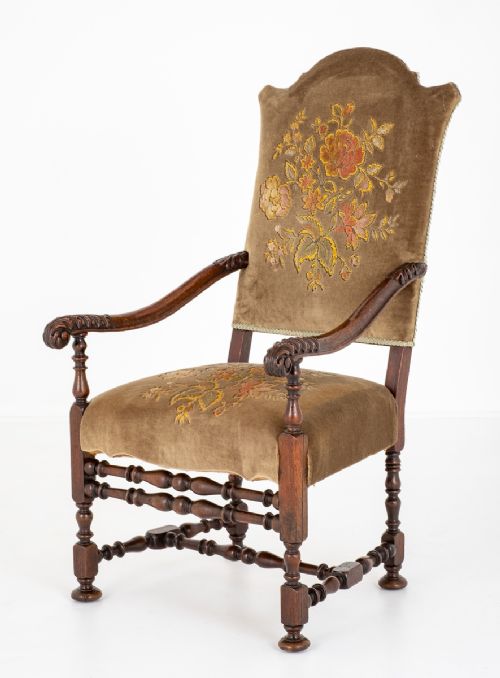
Bobbin Back Armchair
A bobbin back armchair is a seating choice defined by turned spool woodwork, offering sturdy vernacular charm for traditional interiors.
Bobbin Back Armchair
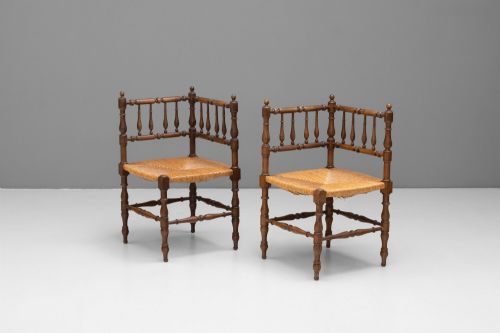
A bobbin back armchair is a distinctive seating form defined by its spool-turned framing, appearing across nineteenth-century and earlier periods. When you search for a bobbin back armchair on this page, you encounter pieces spanning the seventeenth century through the Victorian era.
Oak and wood predominate as primary construction materials, often complemented by cane seats, velvet, leather, or textile upholstery, alongside brass details.
How They Were Made
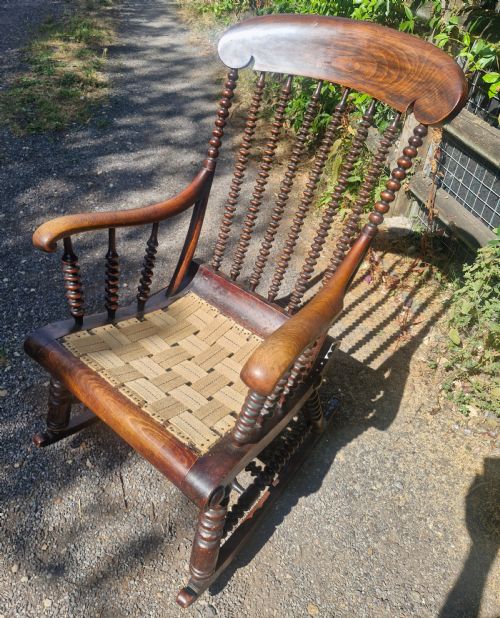
Carpenters constructed these armchairs using solid timbers like oak, walnut, birch, and mahogany, shaped with lathe turnings to create the characteristic bobbin or spool motifs. Simulated rosewood finishes also appear alongside painted surfaces in folk traditions.
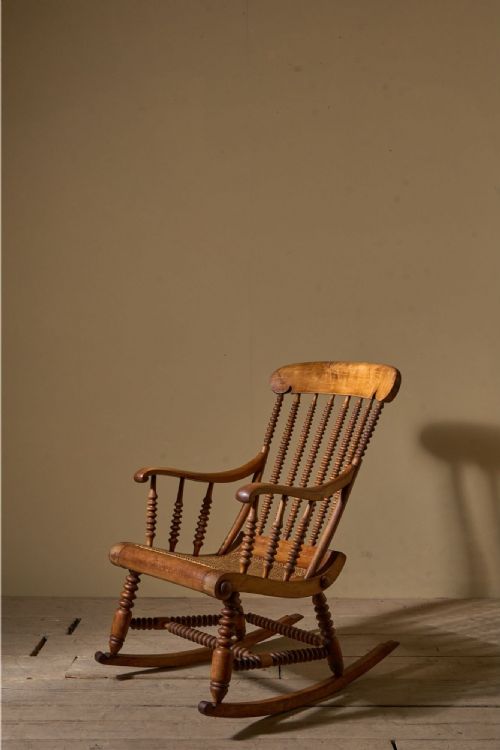
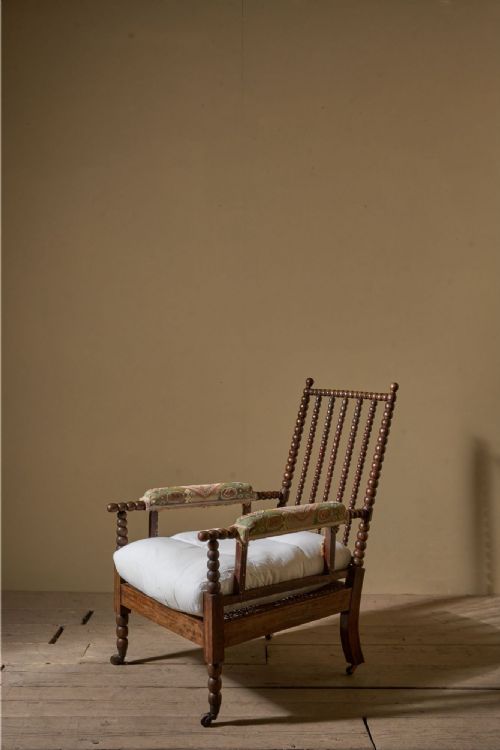
Seating areas rely on diverse methods, incorporating woven cane panels, solid wooden seats, or frames prepared for velvet, leather, and textile upholstery. Structural joinery secures the turned components, sometimes integrating brass hardware or cushions for comfort.
The documented periods span from the seventeenth century through the Victorian era and into the early twentieth century.
What Varies in Quality
The distinction between standard examples and finer pieces rests in the crispness and consistency of the lathe work along the bobbin frame. Sharp, well-defined turnings reflect greater joinery skill than softer or heavily worn profiles.
Original material integrity also defines the standard, particularly where cane seats, textile upholstery, or paint finishes survive in authentic condition rather than undergoing extensive replacement.
The Bobbin Back Armchair Glossary
- Bobbin turning
- A form of woodturning that creates a series of rounded, spool-like shapes along the length of a spindle. This technique defines the architectural framework of the chairs.
- Wainscot chair
- An early wooden armchair constructed primarily from panelled oak with solid arms and a high back. These sturdy seats date to the seventeenth century.
- Bergere
- An enclosed upholstered armchair featuring a wooden frame and woven cane sides or back panels. These chairs often include loose cushions.
- Turners chair
- A heavy armchair constructed entirely from turned wooden spindles and members, historically associated with domestic craft traditions.
- Jacobean style
- A heavy, formal English aesthetic from the seventeenth century characterised by dark oak and geometric turned decoration.
Bobbin Back Armchair: Frequently Asked Questions
What is a bobbin back armchair?
A bobbin back armchair is a chair featuring structural woodwork turned on a lathe to resemble a string of bobbins or spools. These pieces draw on seventeenth-century traditions and nineteenth-century revivals.
They serve as accent seating or fireside chairs in traditional interiors, combining turned wooden frames with wooden, cane, or upholstered seats.
How do I date a bobbin chair?
Dating relies on timber species, joinery methods, and the style of the turnings. Seventeenth-century examples typically use heavy oak with wainscot elements, while nineteenth-century versions often feature walnut, birch, or simulated rosewood.
Examining the wear patterns and upholstery remnants helps distinguish original period construction from later revivals.
Are these chairs comfortable for daily use?
Many examples include cane seats, leather pads, or textile cushions designed to provide adequate support. Rocking chair formats offer movement, while standard armchairs function well as reading or fireside seats.
Adding a loose cushion can increase seating comfort without altering the historic frame.
Where were bobbin turned chairs made?
Turned chairs were produced across British and European workshops, reflecting regional vernacular styles. English country pieces sit alongside Swedish folk art thrones and Victorian revival designs.
Local timber availability often determined whether the maker used oak, birch, or walnut for the turned spindles.