
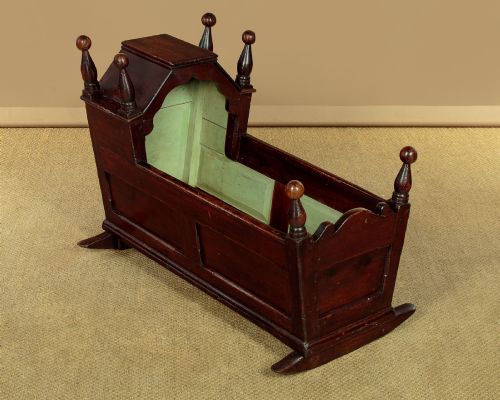


Antique Wooden Crib Hood
These antique wooden crib hood pieces are historic rocking beds designed to shelter infants, sought by collectors for their rich domestic heritage.
Antique Wooden Crib Hood
An antique wooden crib hood encompasses early infant sleeping furniture designed with protective canopies or hooded structures over rocking bases. Buyers exploring this phrase find an array of historic cradles spanning the seventeenth century through to the Victorian era.
The pieces appearing on this page lean heavily towards solid timber construction, ranging from rustic country pine to formal oak panelled designs. Rocking mechanisms form an integral part of these forms, utilising curved runners or rockers to soothe infants.
Origins stretch across various British stylistic traditions, including William and Mary, Georgian, and Victorian country aesthetic. Many examples incorporate panelled structures or painted surfaces that reflect the domestic utility of their respective periods.
Construction and Materials
Makers relied primarily on native timbers such as oak and pine, shaping panels and framing joints with traditional hand tools. Mahogany and cane also appear in later Victorian examples, demonstrating shifts towards softer upholstered and woven elements.
Surface treatments range from original blue paint to exposed wood finishes showing natural grain and patination. Structural integrity depends on panel construction and secure joining of the rocking bases to the main body.
One versatile Victorian oak rocking cradle carries a candid suggestion to repurpose it as a log basket.
Evaluating Quality
Quality rests upon the integrity of the timber panels and the survival of original surface finishes like early paint or polish. Examples displaying period joinery and untouched patination command greater attention from discerning collectors.
The sophistication of the stylistic detailing, from William and Mary panelling to Victorian carved motifs, separates standard utility items from finer decorative works. Proportions and the retention of original rocking components further define the standing of each piece.
The Antique Wooden Crib Hood Glossary
- Hood
- A protective canopy or upper covering attached to a crib to shield the infant from drafts. This architectural feature defines the silhouette of the piece.
- Rocking cradle
- A child's bed mounted on curved wooden members that allow it to sway back and forth. These mechanisms were standard across country and period examples.
- Field panel
- A raised or recessed central section within a wooden frame, typical of seventeenth and eighteenth century cabinetwork. This technique added structural strength and visual depth.
- Caning
- Woven rattan material used for panels in later nineteenth century cribs. It provided breathable sides for the infant enclosure.
Antique Wooden Crib Hood: Frequently Asked Questions
What is an antique wooden crib hood?
These items are historic infant beds featuring protective canopies or hooded upper structures built to shield sleeping babies from drafts in early homes.
They combine practical domestic utility with period cabinetmaking techniques spanning several centuries.
How were these cradles used?
Parents placed infants inside the enclosed wooden bodies, often utilising the integrated rocking base to gently sway the child to sleep.
The protective hood offered shelter in draughty historical rooms before central heating existed.
How do I date an antique wooden crib?
Dating relies on examining the timber species, joinery methods, and stylistic characteristics such as panel moulding or painted finishes.
Seventeenth century pieces often display heavy oak framing, while Victorian examples introduce mahogany, pine, and cane.
Can these cribs still be used for babies?
Historical cribs do not meet modern safety standards regarding slat spacing, side heights, and structural stability for sleeping infants.
Collectors generally appreciate them as decorative historical objects or imaginative storage solutions within a home.