
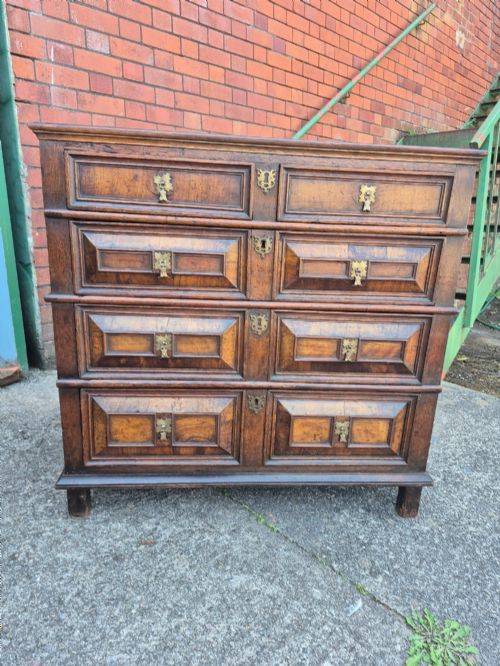
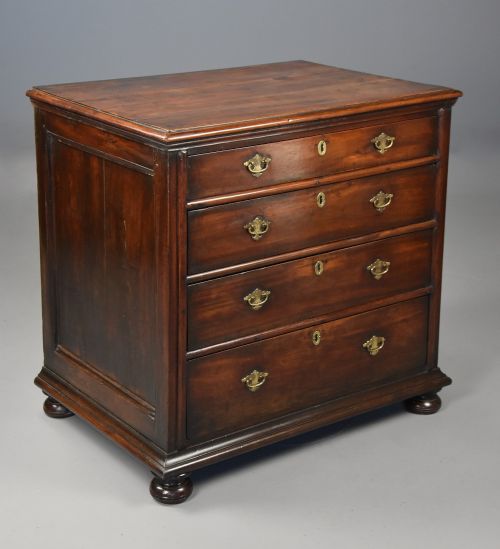
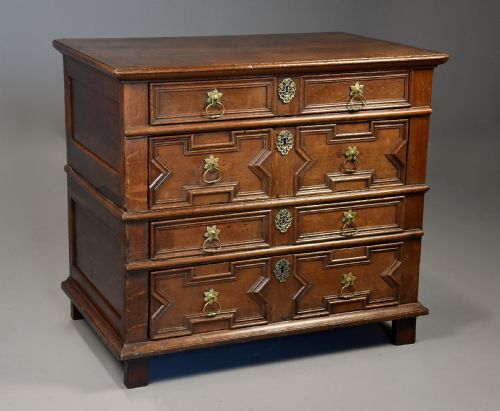
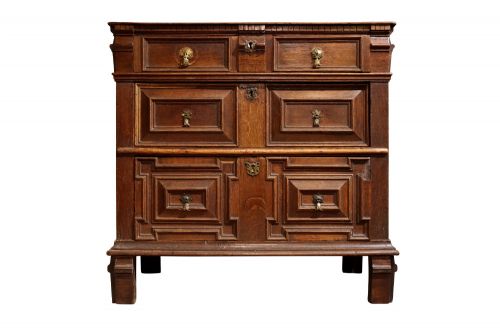


Carolean Chest of Drawers
A carolean chest of drawers brings substantial seventeenth-century presence into a room, offering deep timber drawers built to last generations.
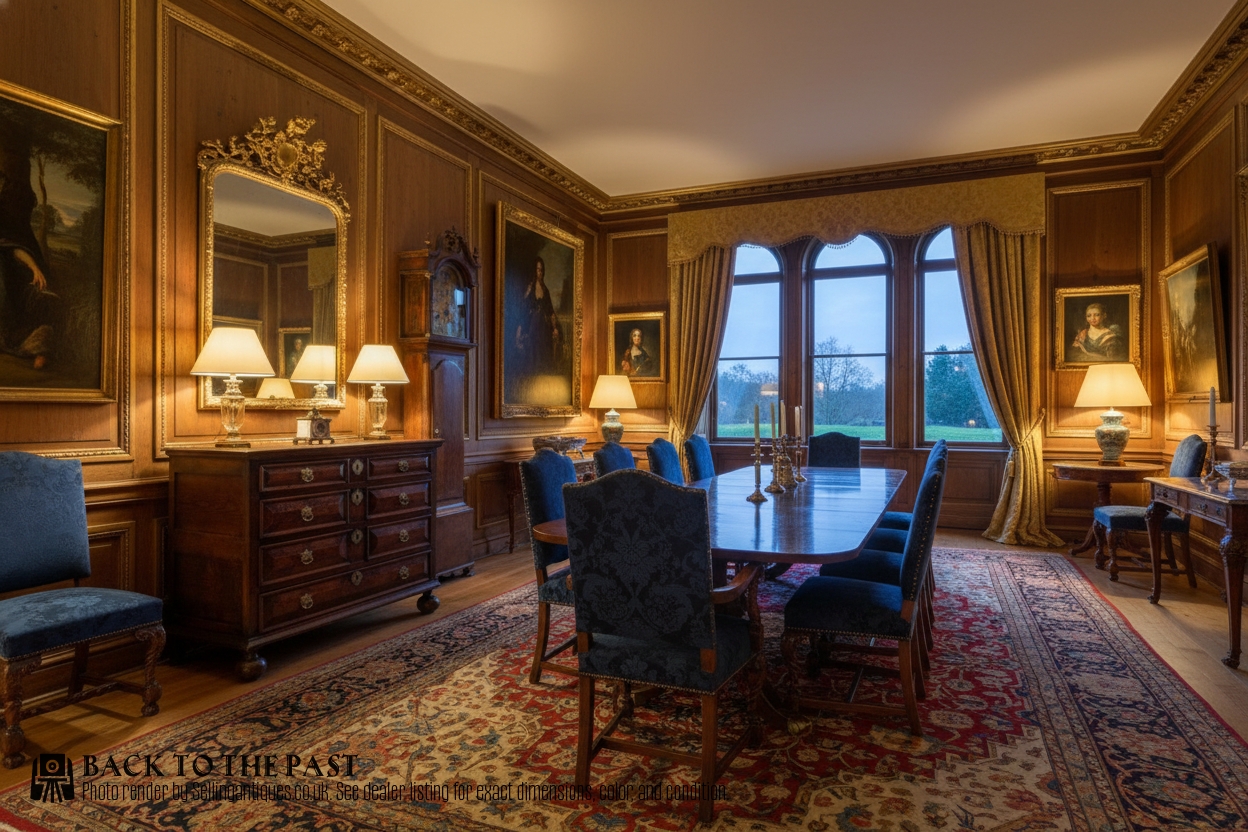
Carolean Chest of Drawers
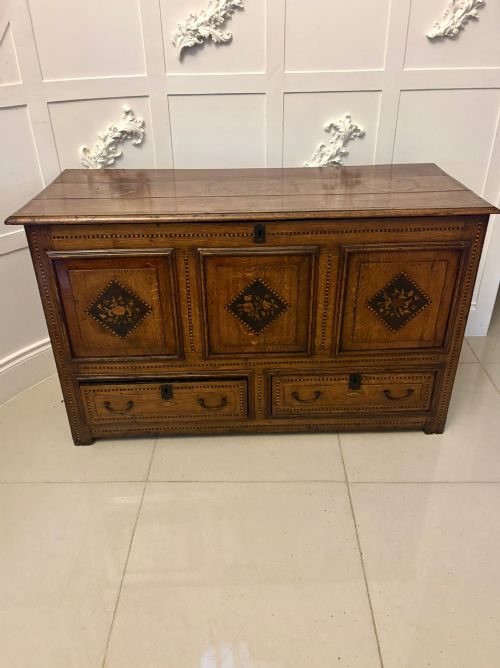
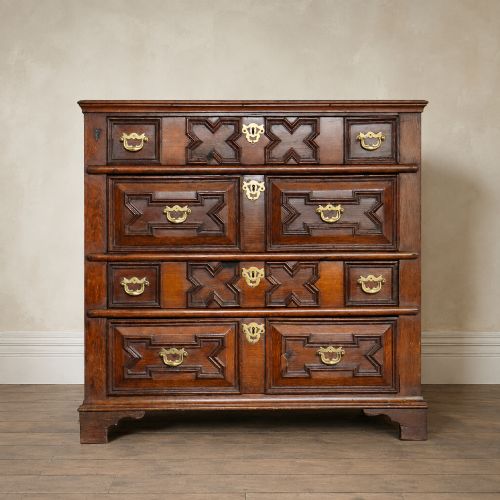
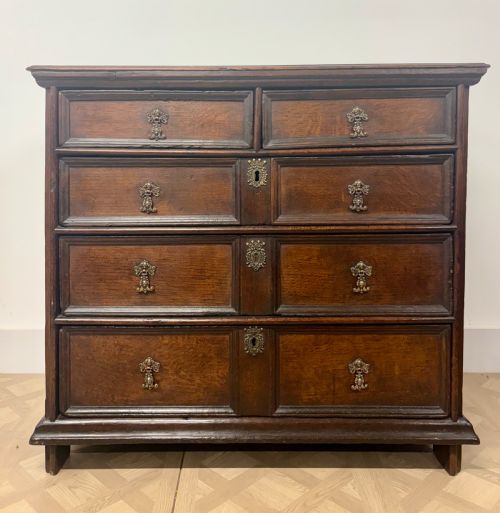
When you search for a carolean chest of drawers, you encounter sturdy storage pieces predominantly originating from the seventeenth century and the William and Mary period. These pieces frequently manifest as oak or walnut moulded-front chests, two-part chests, and occasional mule chests.
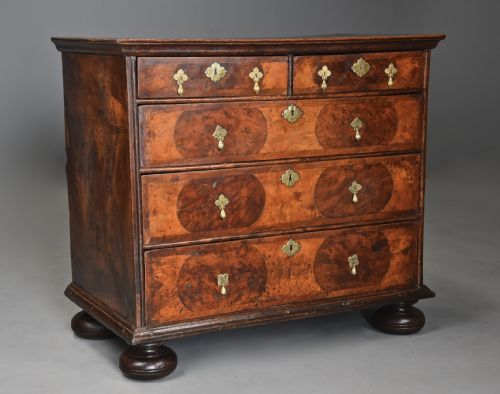
The dominant material across these examples is solid oak, often paired with walnut, fruitwood, yew, and decorative oyster veneers. Surviving specimens range from plain geometric moulded fronts to pieces finished with marquetry inlay and snakewood decoration.
How they were made
Cabinet makers constructed these pieces primarily using solid oak and fruitwoods, employing heavy timber framing to support deep drawer structures. Surfaces often display geometric mouldings built directly into the framework rather than applied as simple trim.
Finishing techniques rely heavily on natural grain exposure, incorporating oyster veneer sections and intricate marquetry inlay. Brass hardware such as drop handles and escutcheons punctuate the dark timber surfaces.
Snakewood decoration occasionally makes an appearance, offering curious serpentine grain patterns straight from the seventeenth-century cabinet maker's toolkit.
What varies in quality
The degree of surface preservation sets individual pieces apart, particularly the depth of the patina accumulated on the timber over centuries. Original hardware and undisturbed drawer linings signal a higher level of historical integrity.
Complexity in construction also differentiates examples, with geometric mouldings, oyster veneering, and snakewood decoration representing more ambitious cabinet making than plain panelled fronts.
The Carolean Chest of Drawers Glossary
- Oyster Veneer
- Thin circular or oval slices of branch wood arranged in decorative patterns across a surface. This technique creates a distinctive rippled appearance popular in late seventeenth-century cabinet work.
- Geometric Moulding
- Raised wooden mouldings applied to drawer fronts in rectilinear or intersecting patterns. They create strong shadow lines characteristic of the period.
- Mule Chest
- A storage chest fitted with one or two drawers beneath the main compartment. It bridges the transition between traditional blanket boxes and modern drawer chests.
- Patina
- The surface sheen and colour acquired by timber through age, handling, and waxing. A desirable patina shows depth without looking stripped or overly polished.
Carolean Chest of Drawers: Frequently Asked Questions
What is a carolean chest of drawers?
A carolean chest of drawers is a heavy timber storage unit dating from the seventeenth century, typically built from oak or walnut with geometric drawer fronts.
These pieces reflect the furniture design of the reign of Charles II and the subsequent William and Mary period.
How do I care for seventeenth-century oak?
Maintain these surfaces by applying traditional beeswax sparingly and avoiding modern chemical polishes that strip the historic finish.
Keep the timber away from direct heat sources and dramatic humidity shifts to prevent wood movement and splitting.
Are these chests made in two parts?
Certain examples are constructed as two separate sections stacked together, a design that aided transport in seventeenth-century households.
This two-part format typically appears on larger chest configurations from the period.
What distinguishes walnut from oak pieces?
Walnut pieces often allow for finer decorative treatments like oyster veneering and marquetry, whereas oak provides a heavier, more rustic structural grain.
Both timbers were utilised during the seventeenth century, with walnut generally reserved for more fashionable commissions.