
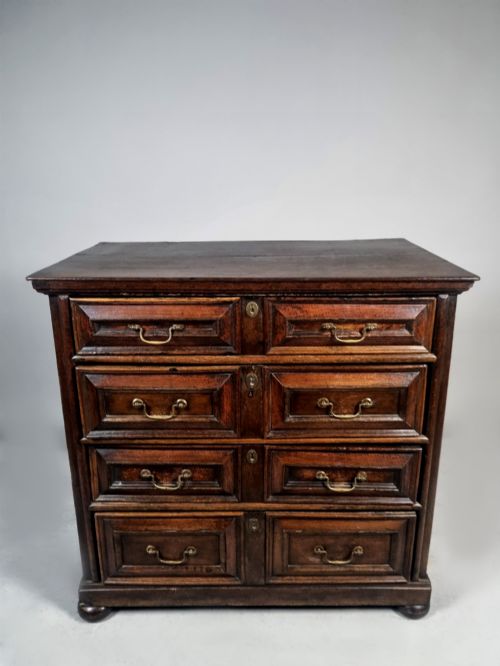
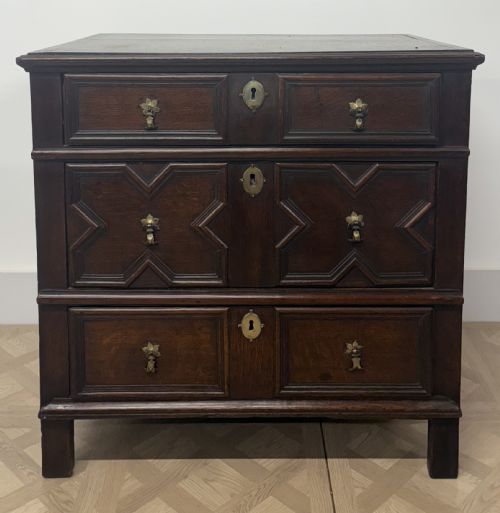
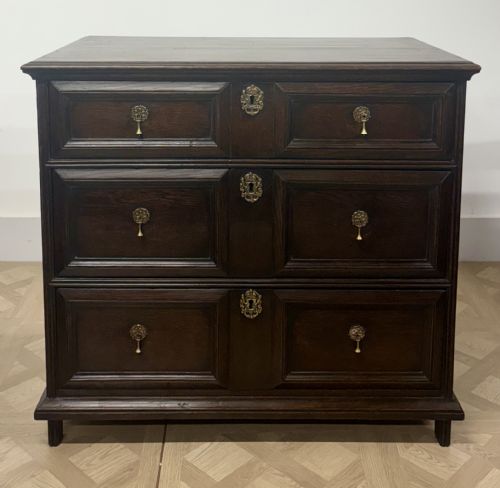
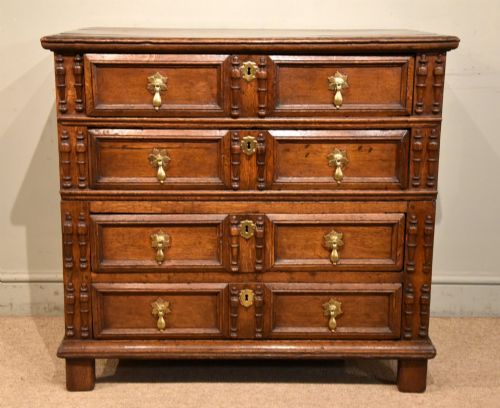


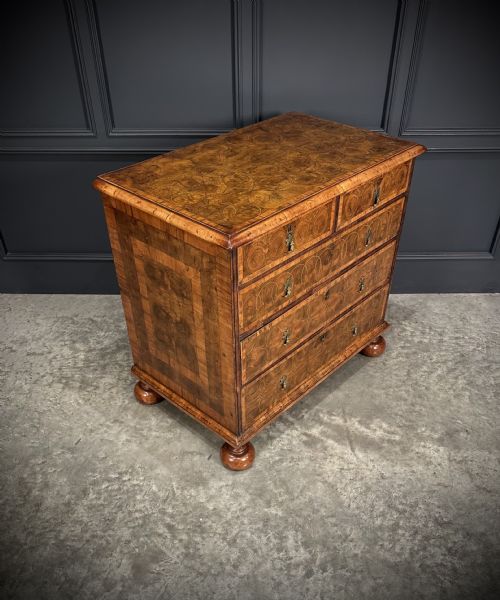


Restoration Era Chest Drawers
These restoration era chest drawers are heavy seventeenth-century timber pieces built for storage and display.
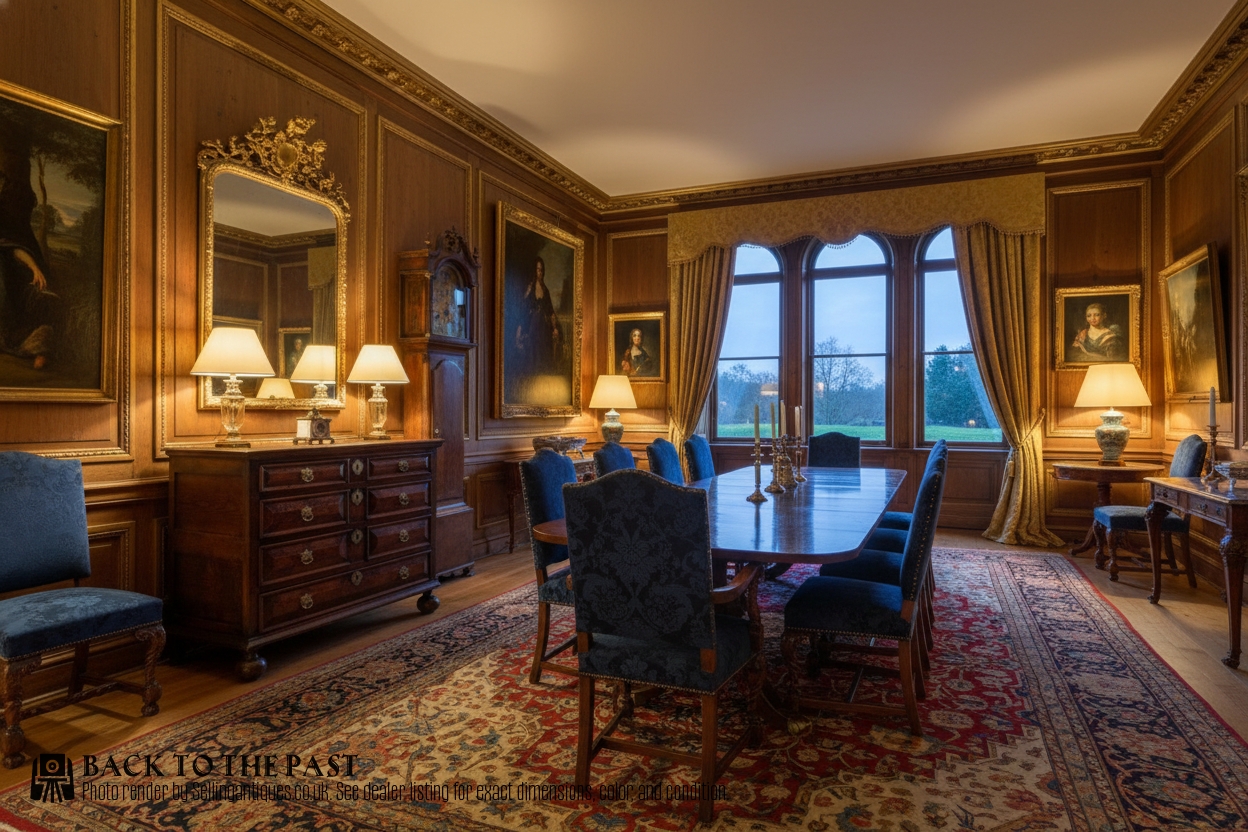
Restoration Era Chest Drawers
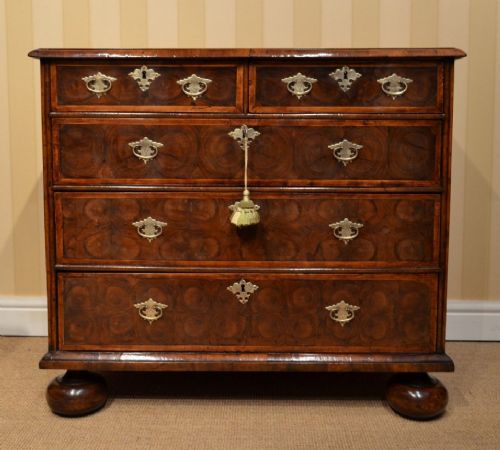
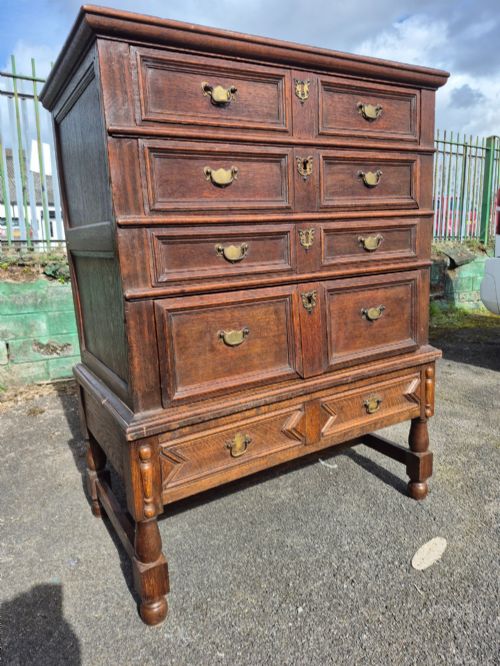
Restoration era chest drawers include sturdy oak examples alongside walnut pieces finished with decorative veneers.
The inventory on this page shows chests from the seventeenth century, spanning the Charles II, Carolean, and William and Mary styles.
Buyers encounter two-part chests, chests on stands, and geometric panelled designs originating from this period.
How they were made
Carpenters constructed these pieces using solid oak, walnut, yew wood, and fruitwood, often building them as two-part modules.
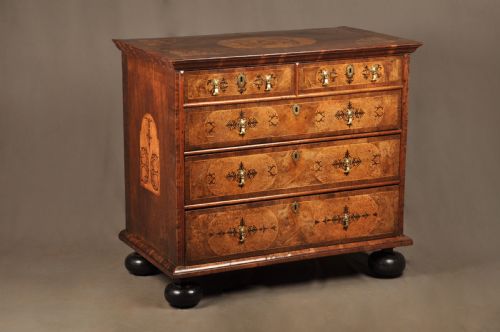
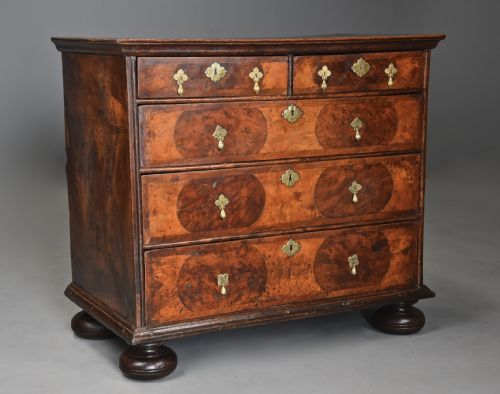
Surface decoration relies on oyster veneer, marquetry inlay, and ebonised wood details, complemented by brass hardware.
Listings rely entirely on seventeenth-century pieces, featuring oak and walnut woods alongside brass fittings.
What varies in quality
The choice of surface treatment distinguishes basic utilitarian items from high-end cabinet work decorated with arabesque marquetry or elaborate oyster veneers.
Complex geometric mouldings and the preservation of original timber patination dictate the visual strength of individual examples.
The Restoration Era Chest Drawers Glossary
- Oyster veneer
- Slices of branch wood cut across the grain to produce circular or oval patterns resembling oyster shells. This technique defined many high-end seventeenth-century cabinet interiors and fronts.
- Marquetry inlay
- Elaborate patterns formed by fitting contrasting veneers into a prepared wooden ground. Arabesque designs are common on pieces from this era.
- Geometric mouldings
- Raised wooden mouldings applied to drawer fronts in repeating symmetrical patterns. These created strong shadow lines on early oak and walnut furniture.
- Two-part chest
- A large storage unit built in an upper and lower section to ease transport. This construction form is typical of heavy seventeenth-century chests.
Restoration Era Chest Drawers: Frequently Asked Questions
How do I identify a Charles II chest?
Charles II chests typically feature solid oak construction with geometric mouldings or simple panelled drawer fronts. They often utilise a two-part format for easier moving.
These pieces frequently display the robust proportions and darker timber tones characteristic of the mid to late seventeenth century.
What is an oyster veneered chest?
An oyster veneered chest uses cross-cut branch wood to cover the primary surfaces in repeating circular wooden patterns. Walnut was the standard timber chosen for this decorative method.
Cabinetmakers arranged these roundels symmetrically across the drawer fronts to create rich visual texture.
How were seventeenth century chests used?
These chests served primarily for storing clothing, household linens, and valuables in domestic chambers. Their heavy construction suited the permanent arrangement of wealthy seventeenth-century homes.
Some elevated forms, such as chests on stands, also provided a display surface for decorative items.
What is a chest on stand?
A chest on stand combines a traditional drawer section set upon a separate supporting base with legs. This configuration lifted the storage space higher off the floor.
Such examples from the William and Mary period introduced lighter proportions to seventeenth-century furniture design.