
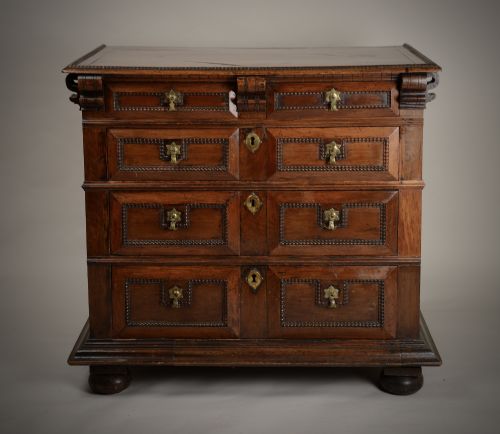


William and Mary Commode
A william and mary commode represents the architectural precision of late seventeenth-century cabinet-making, offering serious collectors monumental walnut timber and intricate geometric decoration.
William and Mary Commode
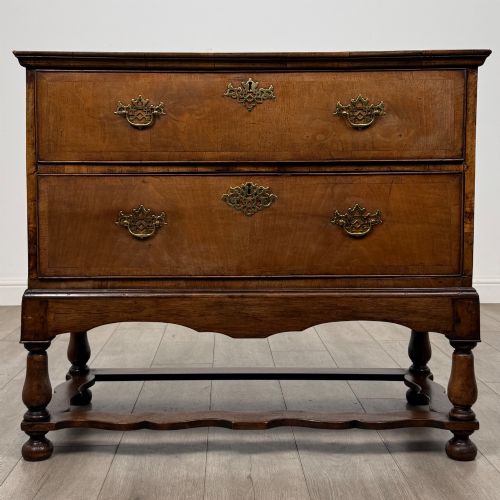
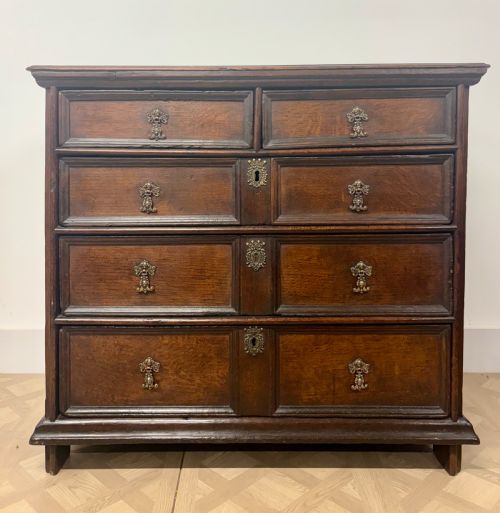
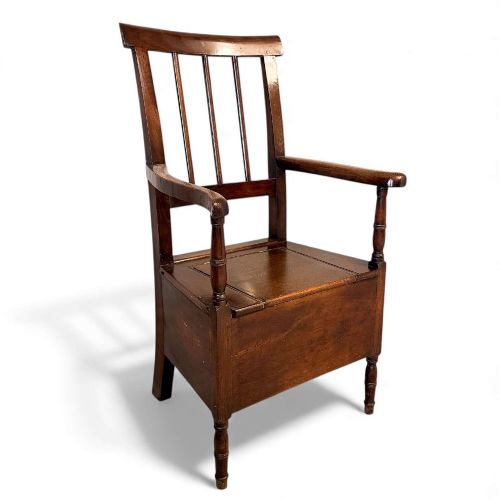
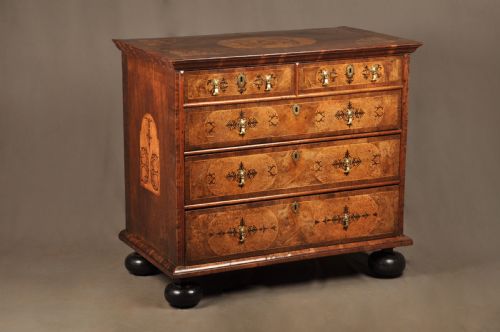
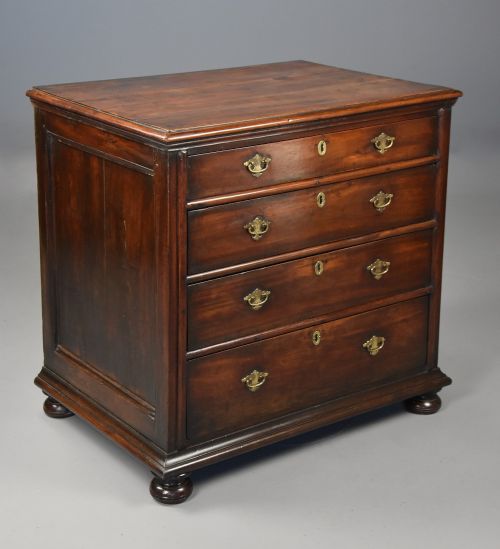
A william and mary commode in this selection typically takes the form of a substantial chest of drawers or a specialised commode stool dating primarily from the late seventeenth century, alongside related examples from the eighteenth and nineteenth centuries.
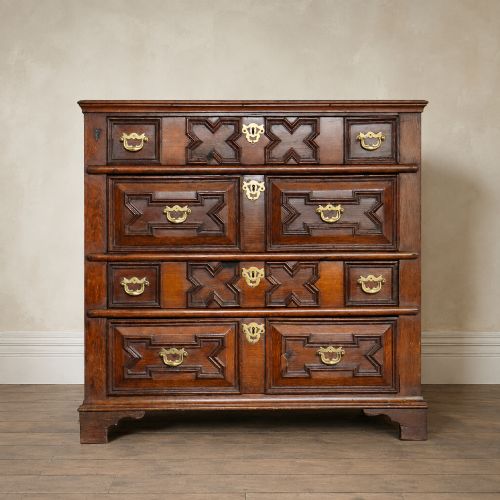
Makers of this era constructed these pieces using dense native timbers, forming case furniture with pronounced geometric drawer fronts and low, sturdy proportions designed for formal domestic interiors.
Materials and Construction
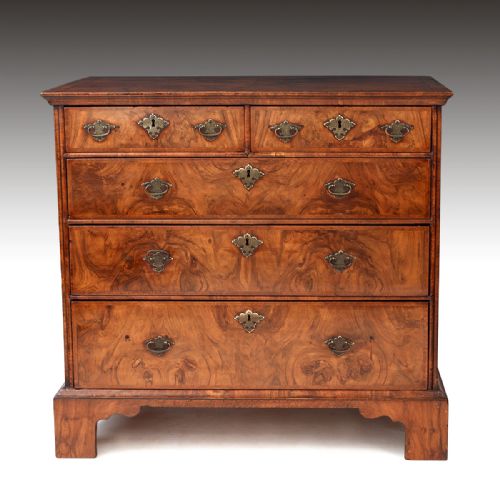
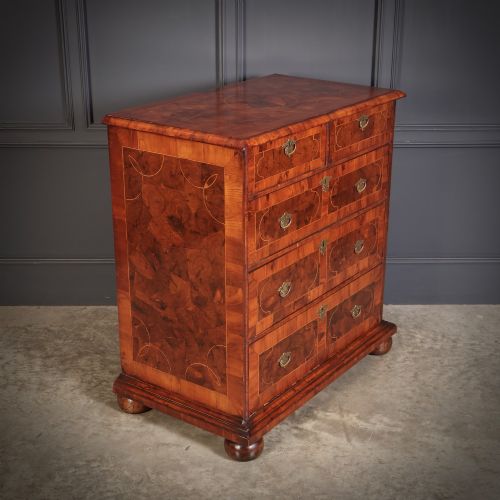
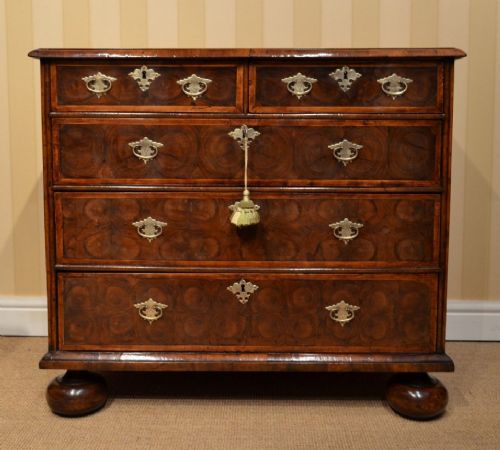
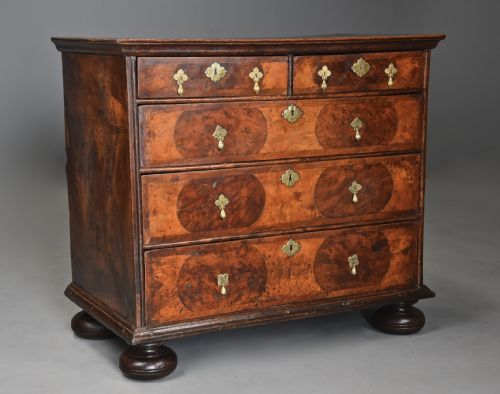
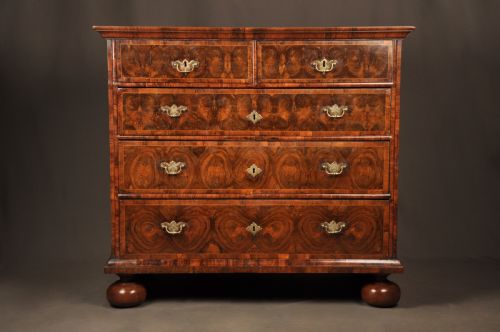
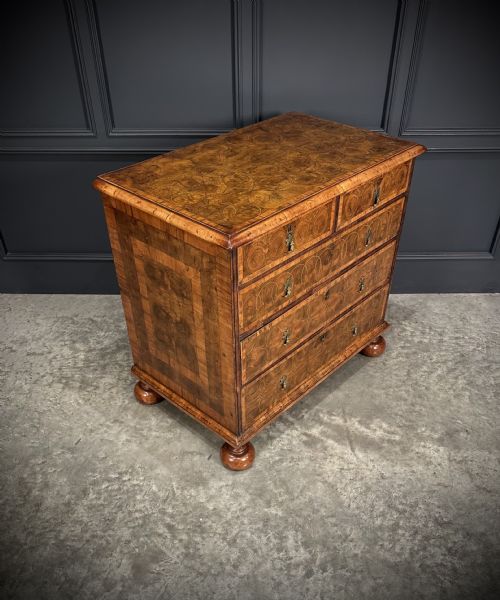
Cabinet-makers relied heavily on walnut, oak, and fruitwoods, frequently applying decorative veneers sliced into circular oyster patterns from small branches or arranged in complex marquetry panels.
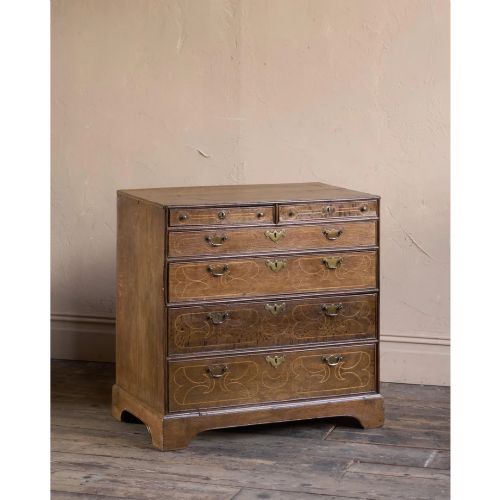
Surfaces often incorporate boxwood and fruitwood inlay, geometric mouldings, and brass drop handles mounted on backplates to complement the figured grain of burr walnut and olive wood.
Branch wood yielded circular oyster veneers that gave formal walnut chests the unexpected appearance of a sprawling seafood platter.
Gradations in Quality
The standard of a piece rests upon the complexity of its surface ornamentation, distinguishing plain oak carcasses from highly developed burr walnut and floral marquetry examples.
Superior execution shows in the precision of the oyster veneering across the entire drawer front and the preservation of original timber surfaces rather than heavy modern restoration.
The William and Mary Commode Glossary
- Oyster Veneer
- Thin slices of branch wood cut transversely to reveal circular or oval grain patterns resembling oyster shells. This technique defined late seventeenth-century decorative woodwork.
- Marquetry
- Elaborate inlaid patterns using various coloured woods to form floral or arabesque designs on the surface of the carcase. Craftsmen carefully fitted these pieces together before gluing them to the primary wood foundation.
- Geometric Moulding
- Raised wooden profiles applied to drawer fronts in rectilinear patterns to create depth and shadow. Such work is characteristic of late seventeenth-century oak and walnut case furniture.
- Commode Stool
- A specialised seated piece of furniture housing a concealed chamber vessel beneath a removable top or seat. These items share the joinery methods and stylistic details of standard chests from the same period.
William and Mary Commode: Frequently Asked Questions
What is a william and mary commode?
A william and mary commode is a piece of case furniture from the late seventeenth or early eighteenth century, characterised by rich wood veneers and rectilinear proportions.
These items primarily include chests of drawers and commode stools finished in walnut, oak, and olive wood.
How do I identify a period piece?
Authentication relies on examining the construction methods, timber selection, and decorative techniques specific to the late seventeenth century.
Look for hand-cut dovetails, oyster veneer patterns, and secondary woods such as oak that match the manufacturing standards of the period.
How do I care for walnut veneer?
Maintaining walnut veneer requires keeping the furniture away from direct sunlight and fluctuating humidity levels to prevent the wood from splitting.
Apply traditional wax sparingly and polish with a soft cloth to preserve the natural lustre of the historical surface.