
Antique Inlaid Drawers
Antique inlaid drawers unite structural timber with contrasting veneers, bringing geometric stringing and botanical marquetry into daily storage.
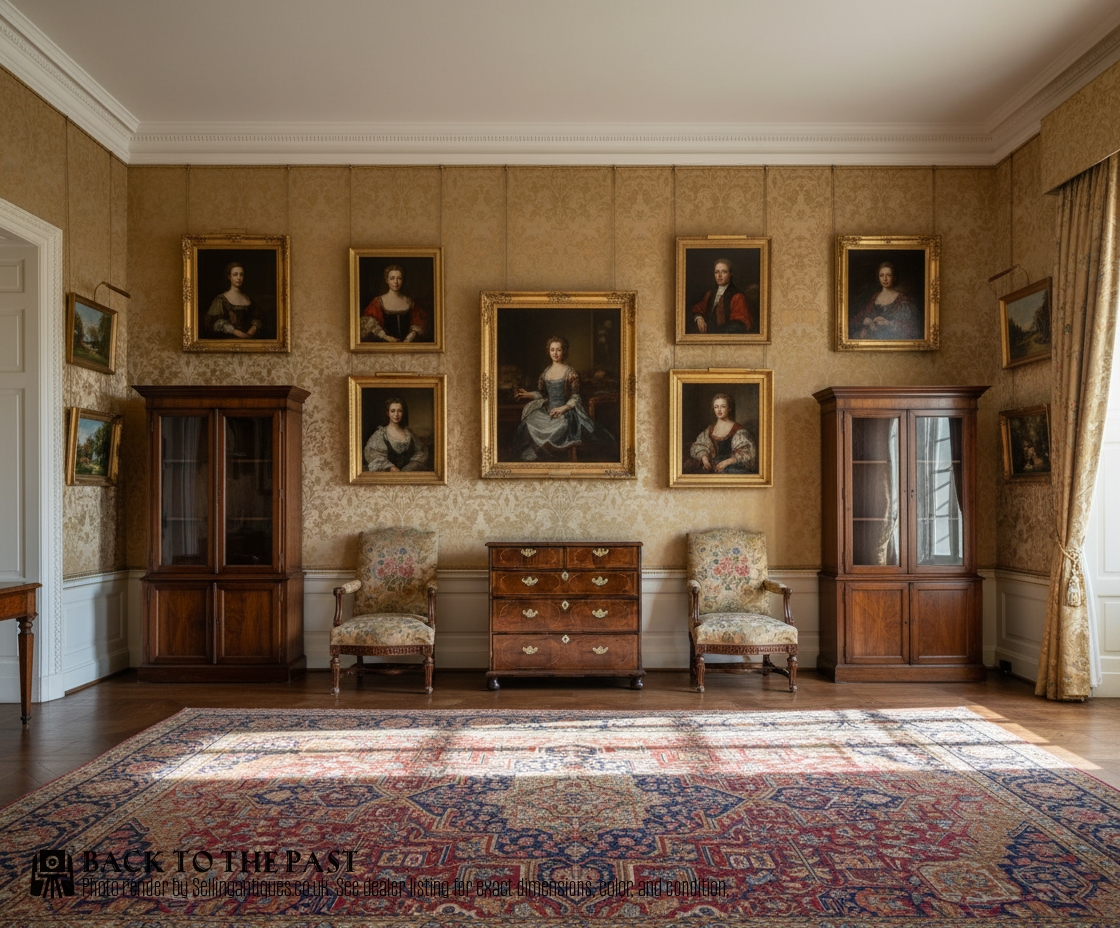
Antique Inlaid Drawers
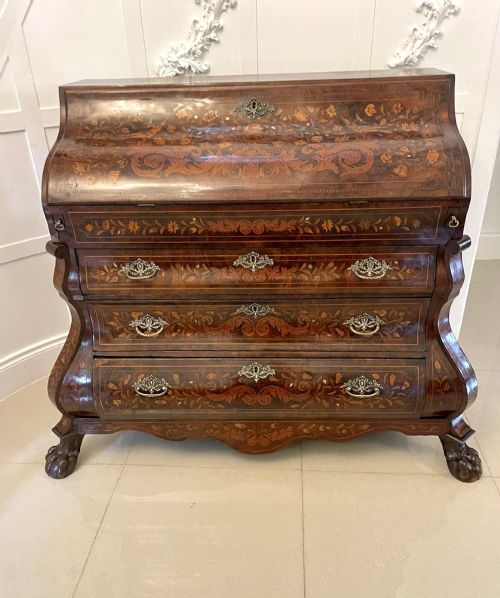
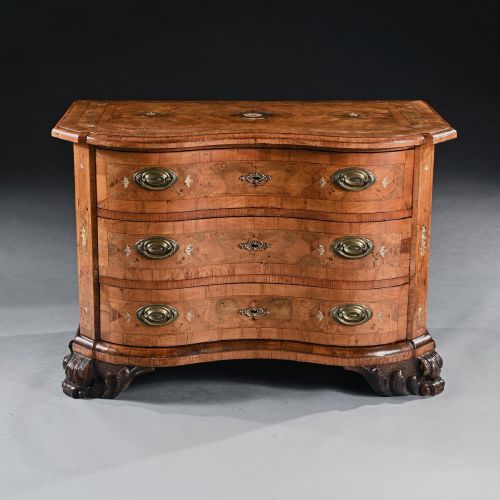
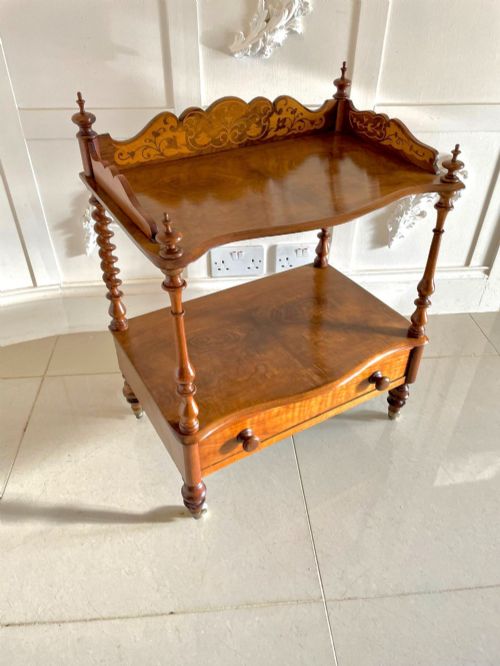
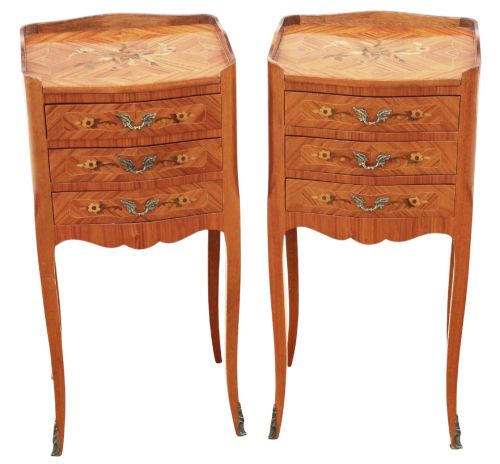
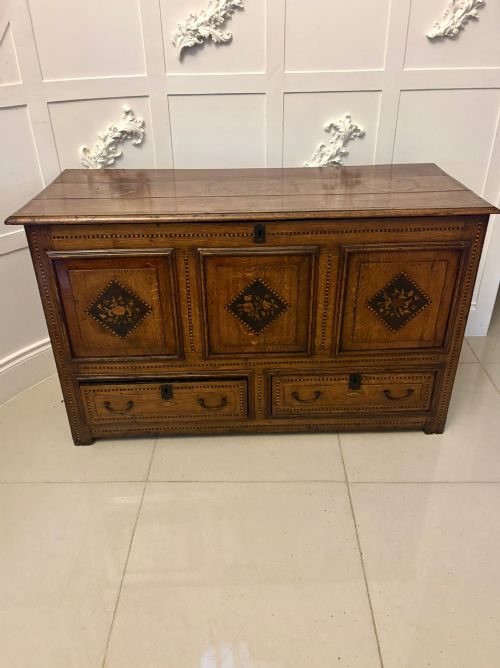
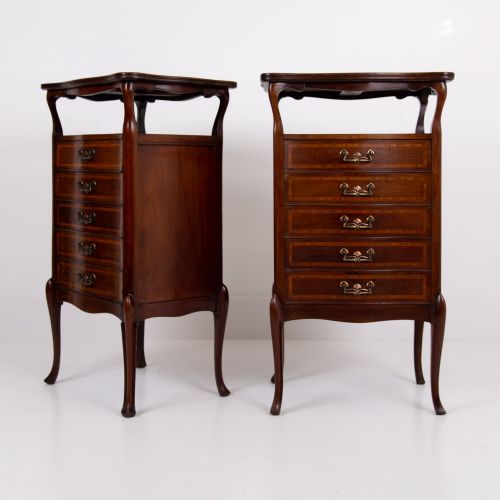
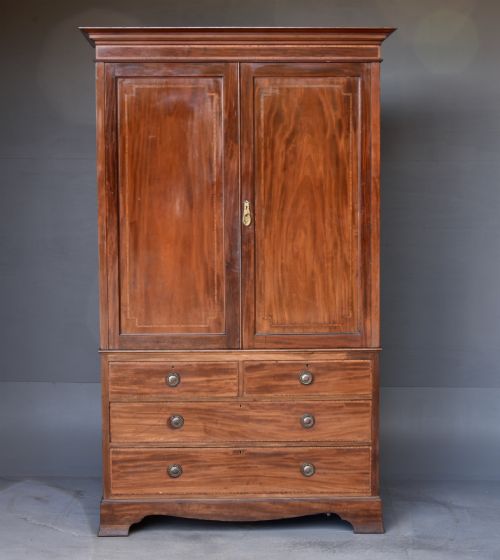
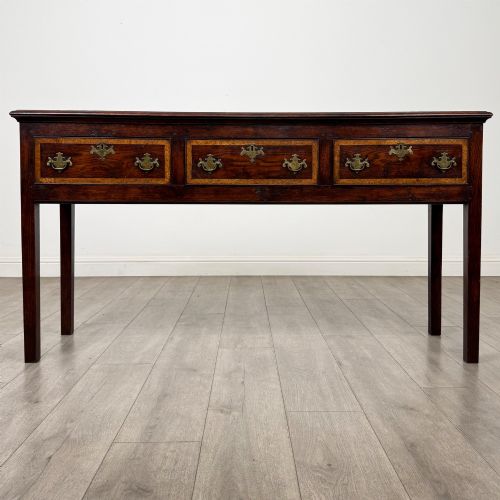
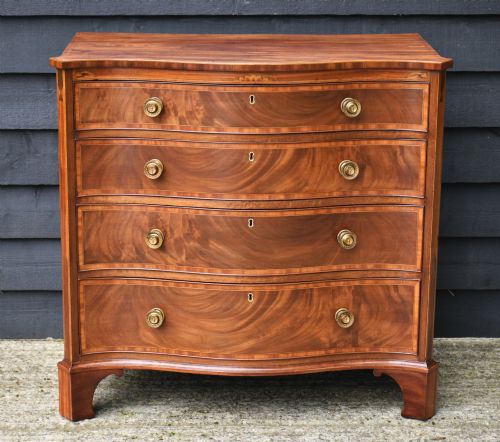
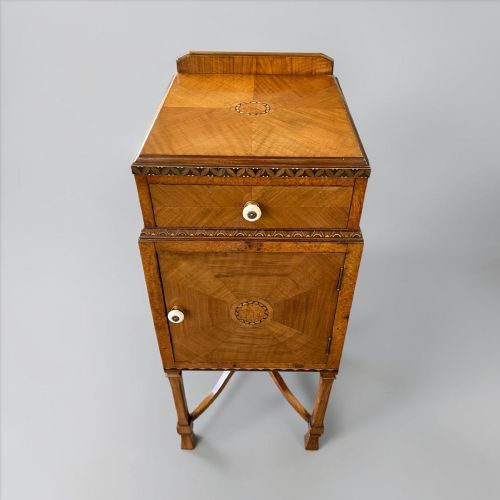
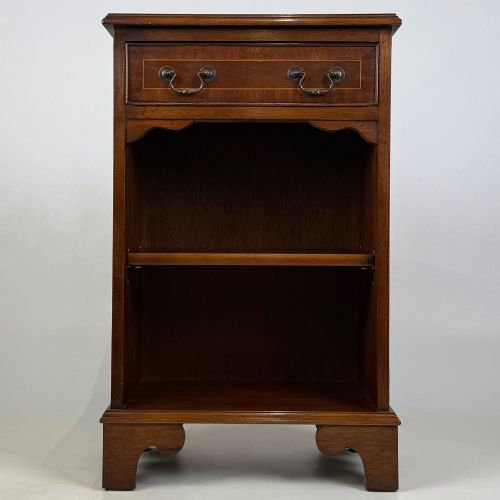
When searching for antique inlaid drawers, collectors encounter everything from compact bedside chests to grand Georgian and Victorian upright storage pieces. Mahogany and walnut provide the primary carcass structures, frequently enriched with satinwood, kingwood, and lighter wood stringing.
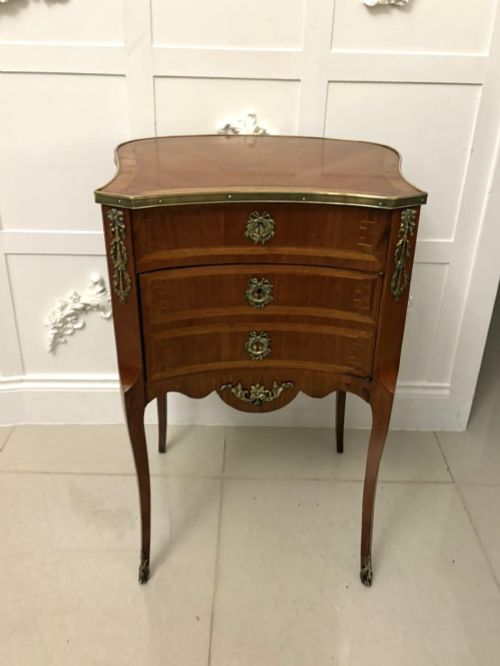
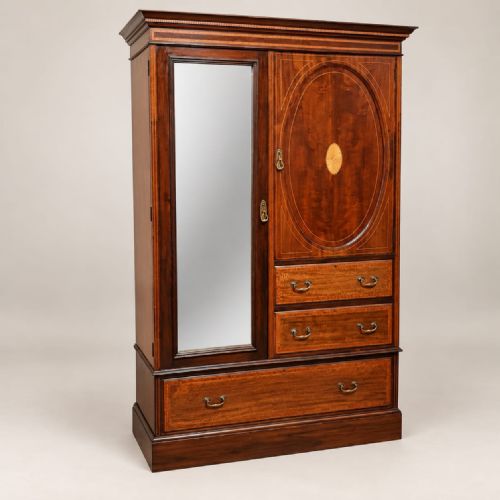
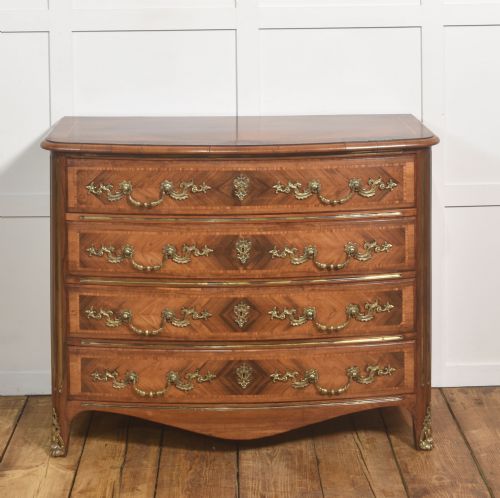
The selection ranges across formal English Georgian models, French commodes with marble tops, and lighter Edwardian bedroom pieces. Chests of drawers dominate the offerings, accompanied by bureaus, secretaires, and occasional cabinets incorporating subsidiary drawers.
Pieces span from the seventeenth century through to the early twentieth century, taking in Dutch marquetry tall chests and Louis XV style serpentine shapes. Walnut versions often display early burr graining, whilst later Victorian and Edwardian examples lean toward figured mahogany.
How they were made
Cabinetmakers constructed the main carcases from solid native timbers like oak, mahogany, and walnut, applying thinner decorative veneers and decorative wood inlay to the exterior surfaces. Marquetry compositions frequently integrated contrasting woods, pewter, and ivory to delineate floral and geometric motifs.
Surface ornamentation relied on precision cutting where stringing, banding, and parquetry geometric patterns were fitted directly into recesses within the primary timber. Ormolu mounts and cast brass handles were subsequently added to accentuate the corners and drawer fronts of continental commodes and English chests alike.
Some nineteenth-century desks hide secret compartments designed for private correspondence behind dummy book spines.
What varies in quality
The distinction between tiers rests upon the botanical selection of the veneers and the precision of the inlay work. Finer items exhibit continuous grain matching across drawer tiers and intricately detailed floral marquetry without gaps in the surrounding timber.
Secondary wood selection and internal drawer construction also determine the grade, with oak drawer linings and original handles indicating higher workshop standards. Continental commodes with integrated marble tops and finely cast ormolu mounts occupy the upper tier of execution.
maples & co·Edwards & Roberts
The Antique Inlaid Drawers Glossary
- Marquetry
- Decorative veneer patterns arranged in pictorial or floral designs. Craftsmen cut thin slices of various woods and assembled them into intricate scenes before gluing them to the carcase.
- Parquetry
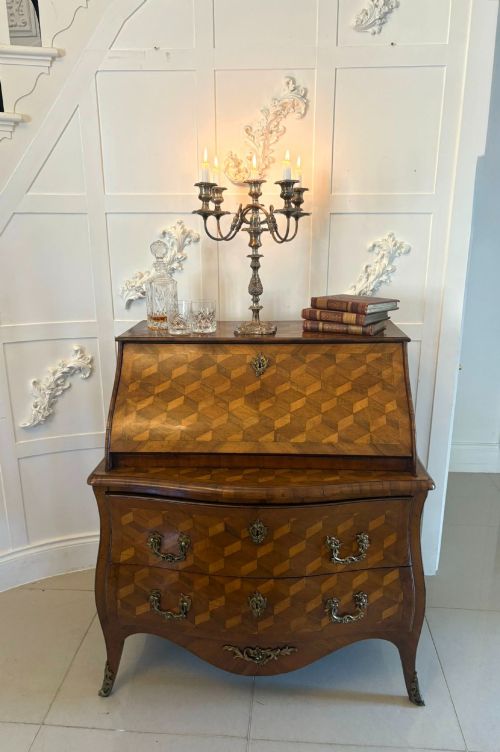
- Geometric mosaic woodwork formed by small pieces of veneer arranged in repeating patterns. It frequently covers the tops and drawer fronts of continental commodes.
- Stringing
- Thin lines of contrasting wood inlaid into grooves on drawer fronts or table edges. This technique frames the primary timber panels and adds linear definition.
- Commode
- A low French chest of drawers or cabinet originating in the seventeenth century. They often feature serpentine fronts, marble tops, and elaborate ormolu mounts.
- Banding
- A border strip of veneer running along the edges of tabletops and drawer fronts. The grain of the band usually runs perpendicular to the main panel.
Antique Inlaid Drawers: Frequently Asked Questions
How do I clean antique inlaid drawers?
Dust surfaces regularly with a soft, dry cloth to protect delicate veneer edges and historical finishes. Avoid modern liquid polishes that can seep beneath lifting wood inlay.
Apply a microcrystalline wax sparingly once or twice a year to nourish the timber and maintain a soft protective barrier. Buff gently with a clean cloth after application.
Are these drawers suitable for daily bedroom use?
Most antique chests and cabinets offer deep, practical storage that functions well in contemporary bedrooms. The timber frames remain robust after centuries of domestic service.
Care should be taken not to overload shallow drawers, particularly on older bureau or secretaire models. Maintaining stable room humidity prevents the veneers from shrinking or cracking.
How do I date an inlaid chest of drawers?
Examine the secondary woods inside the drawers, such as oak or pine, alongside the construction methods used for the drawer sides and backs. Hand-cut dovetails and timber characteristics help narrow down the period.
The style of the inlay, brass handle hardware, and overall carcass proportions also provide strong chronological indicators matching Georgian or Victorian manufacturing standards.
What is the difference between marquetry and parquetry?
Marquetry utilises varied wood veneers to create pictorial, floral, or curvilinear compositions across drawer fronts and tops. Artisans assemble these organic shapes to form elaborate decorative scenes.
Parquetry relies strictly on geometric and angular shapes such as cubes, triangles, and squares to build repeating mathematical patterns. Both techniques enhance the visual depth of antique furniture.