
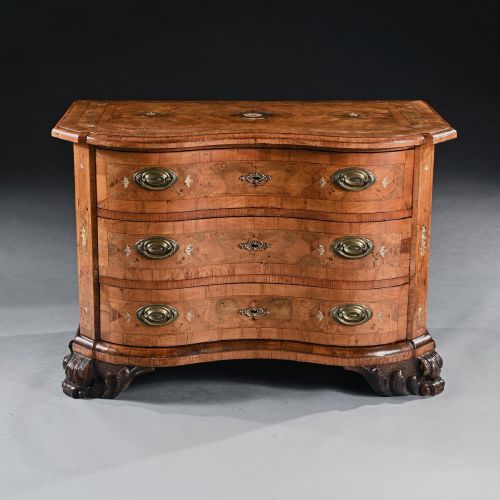
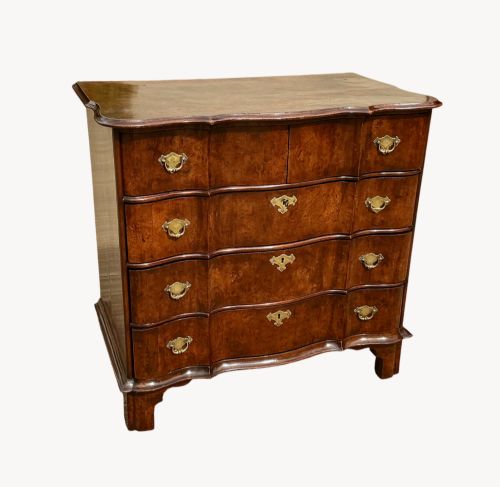
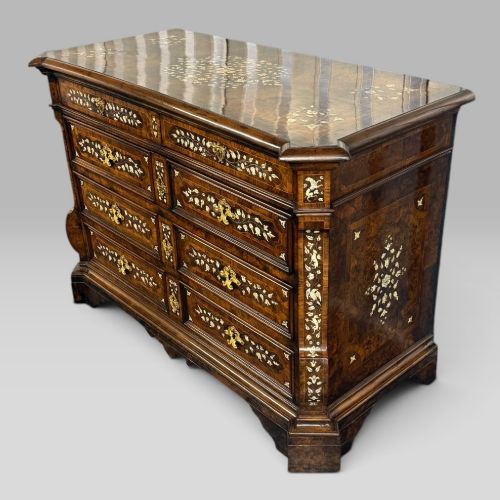
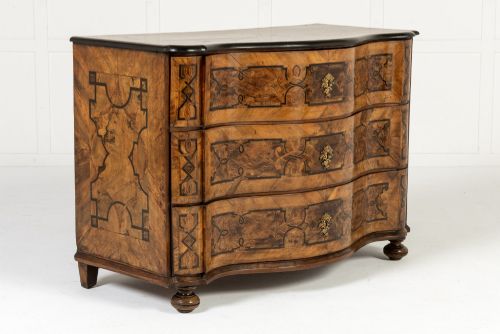
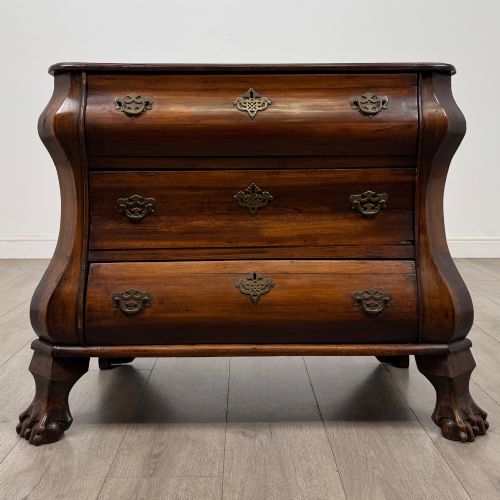
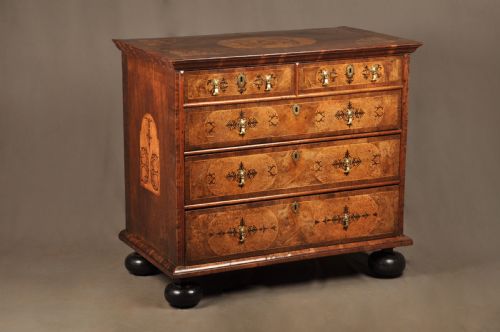
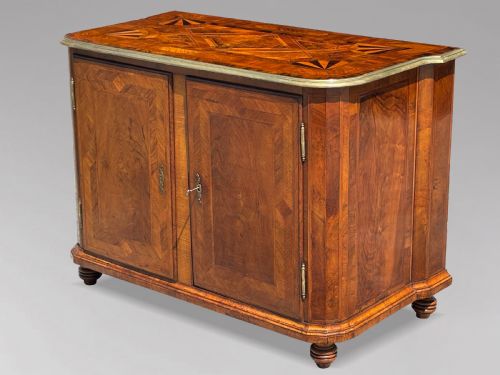
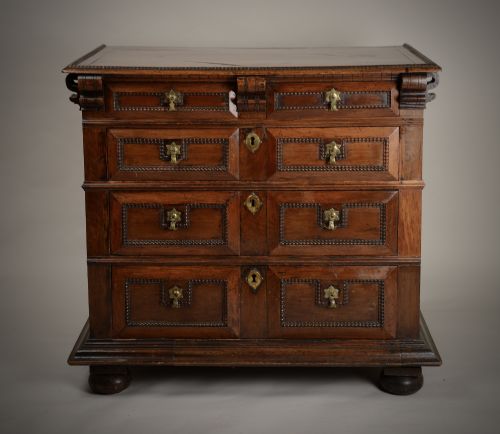


Baroque Walnut Commode
A baroque walnut commode is a substantial storage piece defined by rich timber and grand proportions, offering serious presence for a traditional interior.
What they are
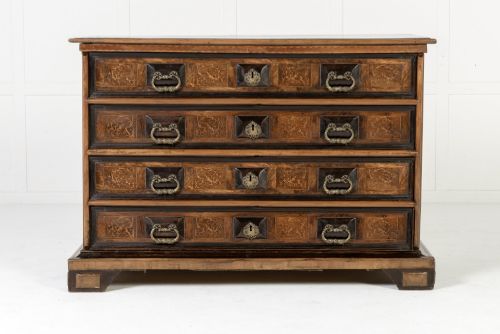
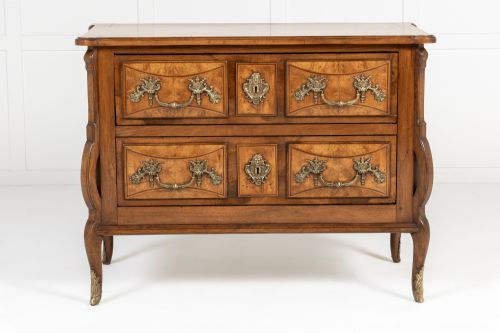
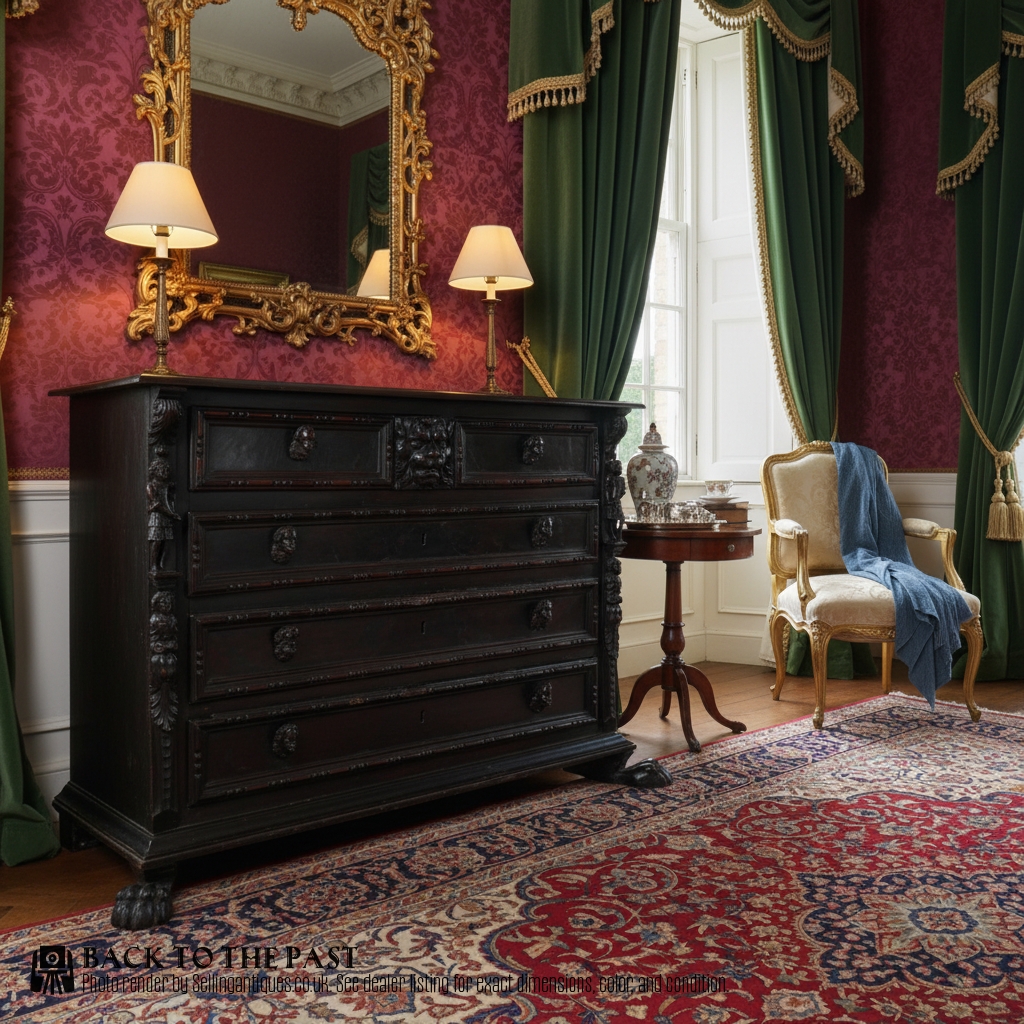
A baroque walnut commode brings substantial presence to a room, functioning primarily as a grand storage chest of drawers. Buyers searching this phrase encounter pieces predominantly from the seventeenth and eighteenth centuries, originating from regions such as Germany and Italy.
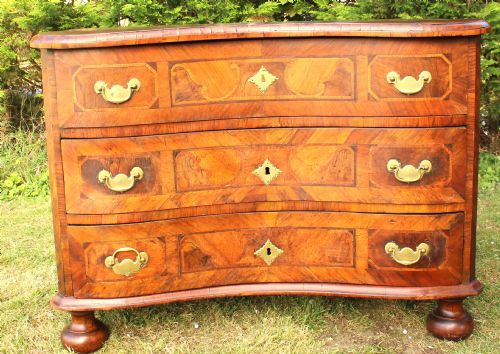
The physical form varies between straight fronts and undulating serpentine profiles. These chests of drawers serve as principal decorative furniture, combining utility with distinct period craftsmanship.
How they were made
Cabinetmakers utilised primary woods such as walnut, burr walnut, and fruitwood, often supported by secondary timbers like oak. Surfaces frequently feature intricate inlay work utilising contrasting materials including pewter and ivory.
Construction techniques rely on traditional joinery methods suited to heavy timber. The incorporation of marquetry panels demonstrates meticulous hand-cutting and fitting of disparate woods.
Retail Price Guide 2026
Typical UK retail prices for baroque walnut commode, calculated from the Sellingantiques database of over a million retail prices indexed since 2003. This retail price guide relies exclusively on Sellingantiques data; no external sources or auction records are used, so the figures do not describe the wider market.
Current listings include seventeenth and eighteenth-century pieces spanning German Baroque, German Rococo, Italian Baroque, and William and Mary styles.
What varies in quality
The calibre of a baroque walnut commode depends heavily on the complexity of its surface decoration. Pieces featuring detailed marquetry and varied timber selections sit above simpler iterations.
Structural configuration also dictates distinction, with serpentine fronts requiring greater skill from the cabinetmaker than straight silhouettes. The choice of secondary woods and the precision of the inlay further separate standard examples from superior ones.
The Baroque Walnut Commode Glossary
- Baroque
- A style of European architecture, music, and art of the 17th and 18th centuries that followed Mannerism and is characterised by ornate detail. In furniture, it manifests in grand scale and dramatic movement.
- Commode
- A type of chest of drawers originating in France during the late 17th century. It typically stands lower than a traditional tallboy.
- Serpentine
- A shape involving a wavy line or contour, curving outward then inward. This profile demands advanced woodworking skill.
- Marquetry
- Decorative inlay where pieces of material are applied to a structure to form designs. It transforms a plain wooden surface into a pictorial scheme.
- Burr walnut
- A prized wood veneer showing swirling, knotty grain patterns. Cabinetmakers select this figure for high-status panels.
Frequently Asked Questions
What is a baroque walnut commode?
It is a heavy storage chest dating from the seventeenth or eighteenth century, constructed primarily from walnut and featuring decorative elements characteristic of the period.
These pieces were built to function as grand storage furniture in formal rooms.
Where were these commodes made?
The available examples originate from European workshops, specifically in regions such as Germany and Italy.
Craftsmen in these areas utilised local timbers and regional design traditions.
How do I live with a baroque commode?
Place the chest against a principal wall in a room with stable temperature and humidity to protect the antique wood and marquetry.
Keep the surface free from excess moisture and direct sunlight to preserve the finish.
How can I tell the periods apart?
Dating relies on observing structural characteristics, decorative styles, and joinery methods associated with the seventeenth versus the eighteenth century.
Specific regional traits, such as German Rococo or William and Mary influences, also help identify the era.