

William and Mary Drawers
William and Mary drawers bring structured late seventeenth-century craftsmanship into domestic spaces, offering distinctive veneered surfaces and solid proportions.
William and Mary Drawers
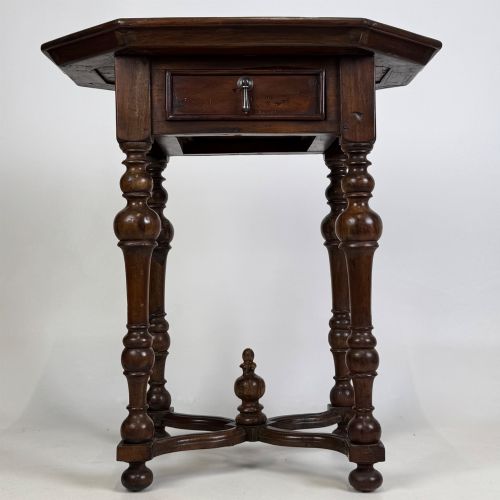
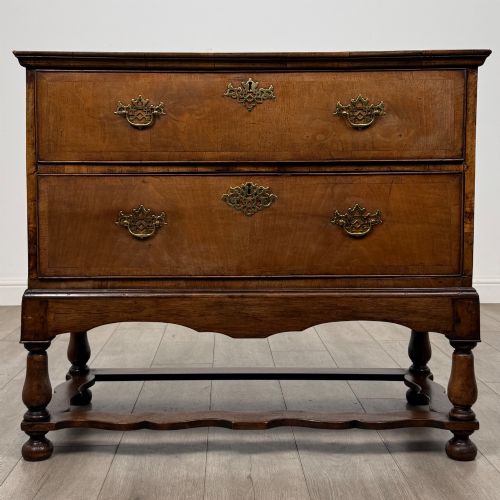
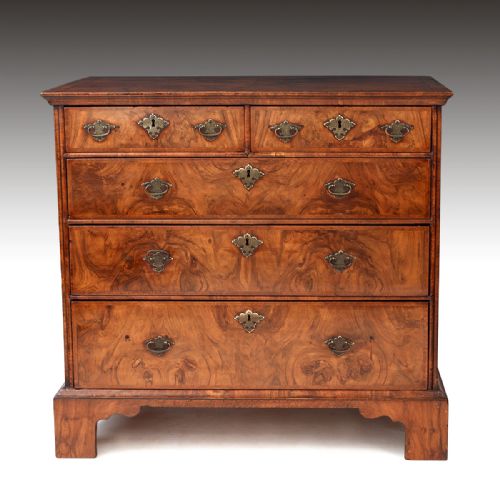
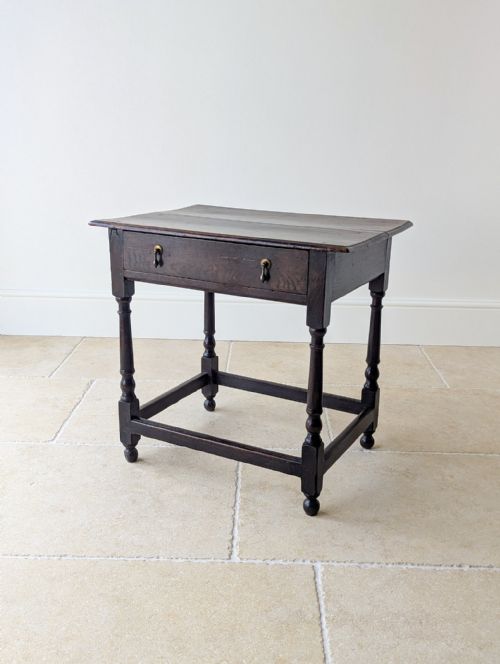
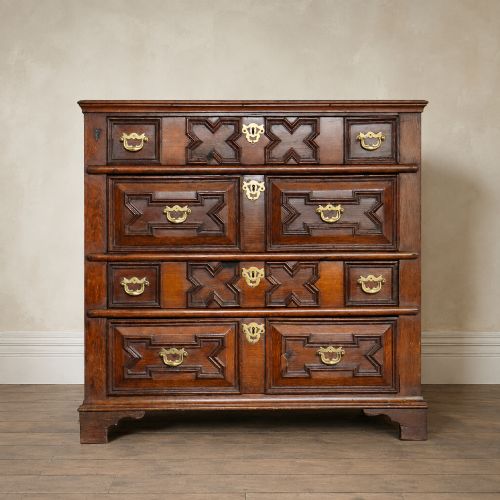
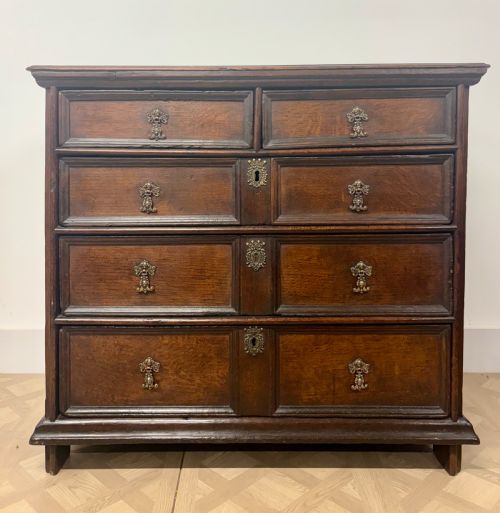
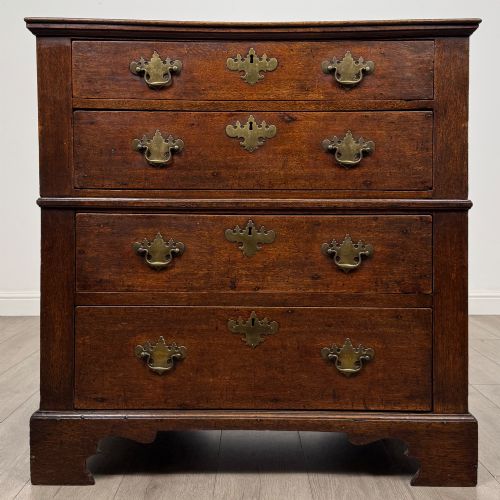
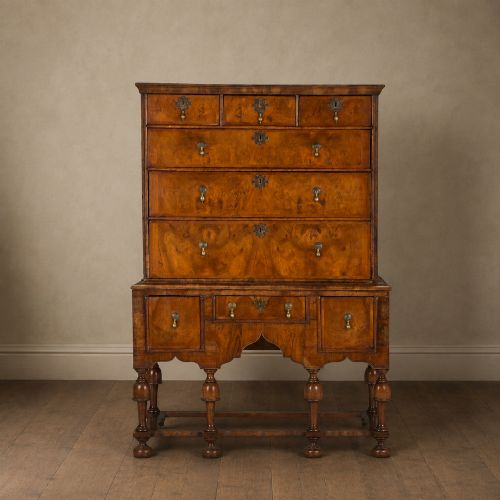
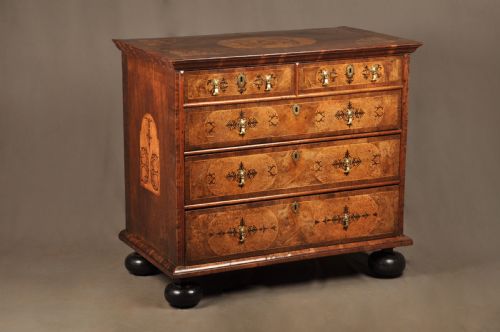
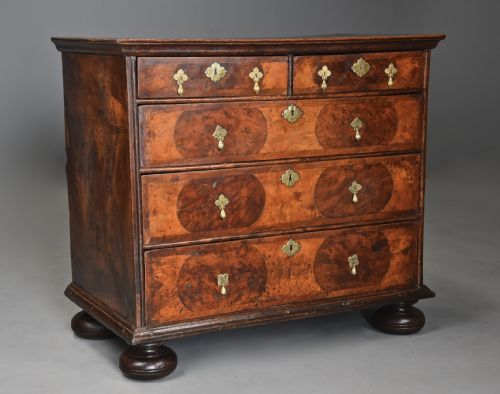
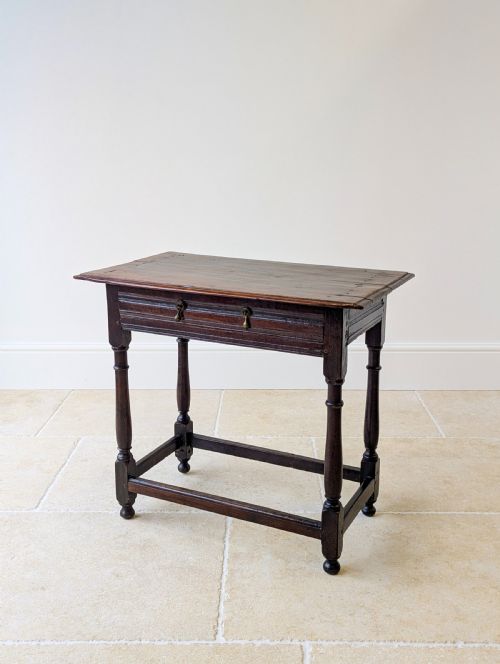
William and Mary drawers encompass case furniture built during the late seventeenth century and subsequent revival periods, typically taking the form of chests, chests on stands, and lowboys. These pieces generally feature multi-tiered drawer arrangements, elevated stands, or geometric moulding that reflects the aesthetic of the turn of the eighteenth century.
Buyers examining this selection frequently encounter walnut, oak, and burr walnut examples alongside later Edwardian and Victorian interpretations. The primary form remains the chest of drawers, though side tables and cabinets on chests appear regularly across the inventory.
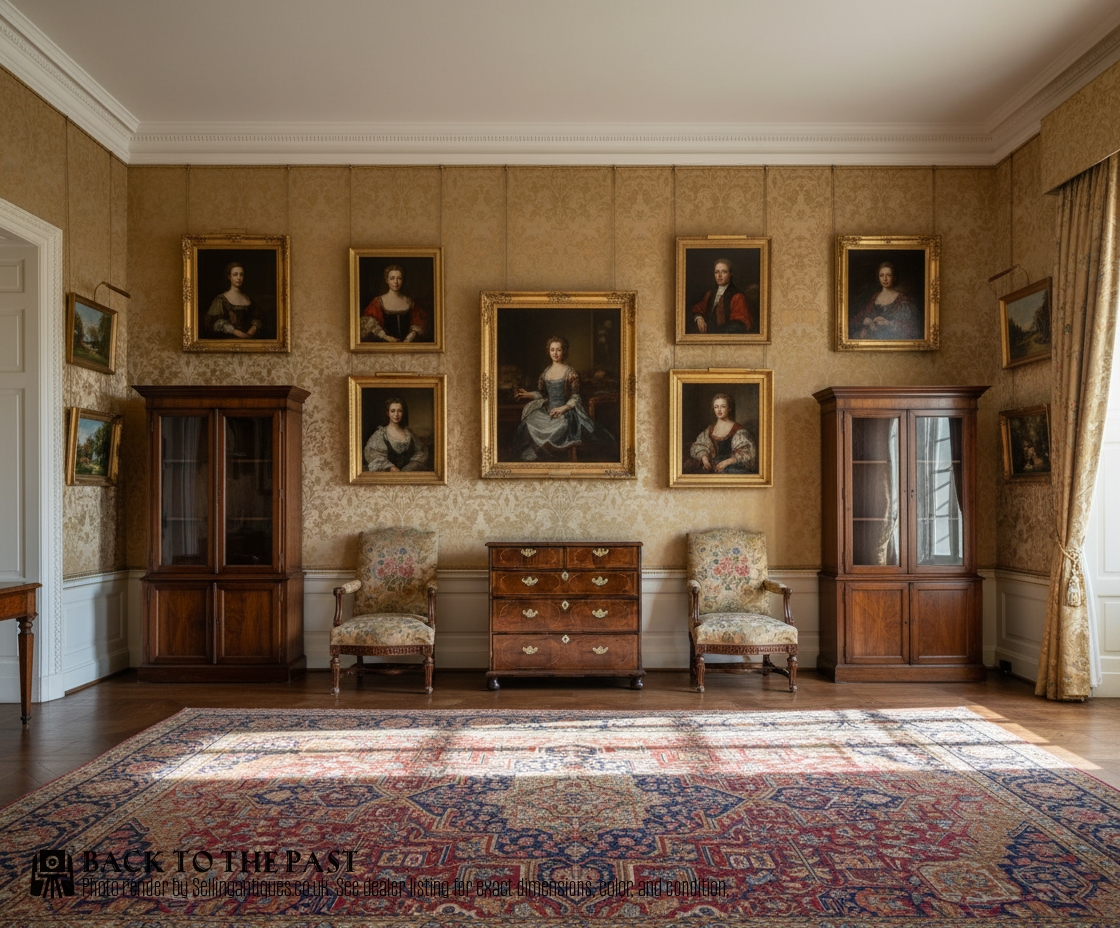
Construction and Materials
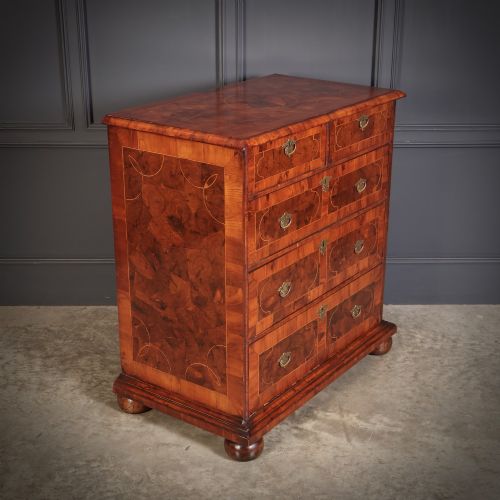
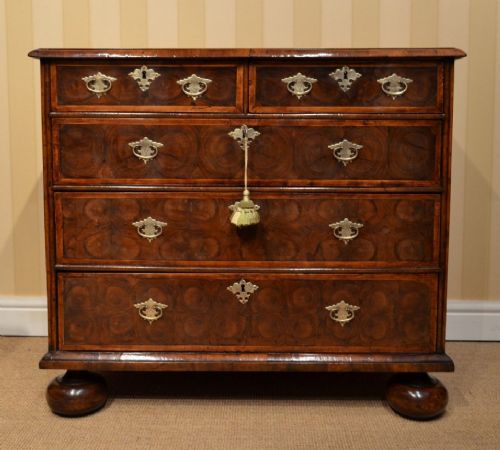
Cabinet makers utilised native timbers like oak alongside newly fashionable decorative woods such as walnut, yew, and fruitwood. Surfaces were frequently embellished with oyster veneer, cutting small branch sections across the grain to produce circular patterns.
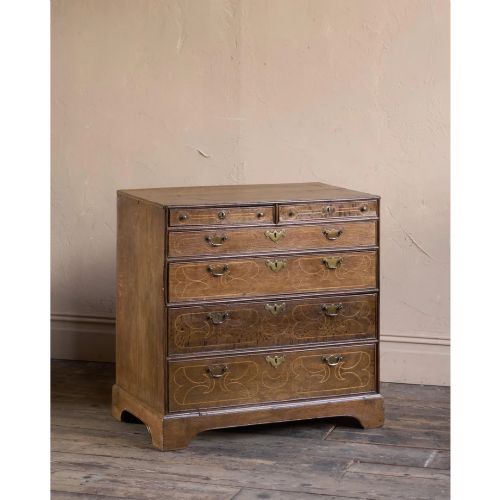
Inlay techniques incorporated boxwood, maple, and fruitwood to create geometric banding, arabesques, or floral marquetry. Carcase construction relied on solid timber framing, hand-cut dovetails for drawer boxes, and applied mouldings to define the facade.
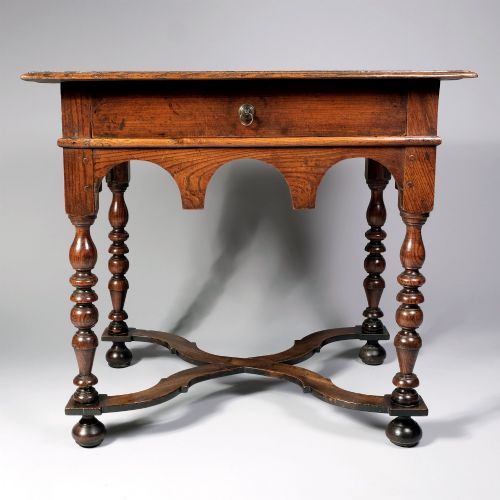
Common forms include chests of drawers, side tables, lowboys, chests on stands, and cabinets.
Assessing Quality
Quality rests upon the preservation of surface texture, the crispness of applied geometric mouldings, and the selection of decorative veneers. Pieces retaining a soft, faded patina on walnut or oak demonstrate greater integrity than those with heavily refinished surfaces.
The complexity of decorative work also separates examples, from simple moulded oak fronts to intricate seaweed marquetry and cross-grained oyster veneers. Structural cohesion, original drawer linings, and minimal timber replacement further distinguish superior survivals.
Shoolbred and Co
The William and Mary Drawers Glossary
- Oyster veneer
- Slices of branch wood cut transversely to show concentric annual rings resembling oyster shells. This technique defined late seventeenth-century case furniture.
- Marquetry
- Elaborate decorative veneer patterns inlaid into the carcase using various contrasting timbers. Floral and seaweed designs are typical of the period.
- Chest on stand
- A case of drawers elevated on a separate framed base with legs. This form lightened the visual weight of large storage pieces.
- Geometric moulding
- Raised wooden mouldings applied to drawer fronts in rectilinear patterns. It created depth and shadow on otherwise plain surfaces.
- Patina
- The surface sheen and colour developed by wood through age, handling, and light exposure over centuries. Original finishes display a softer texture.
William and Mary Drawers: Frequently Asked Questions
What defines william and mary drawers?
These pieces originate from the late seventeenth and early eighteenth centuries, characterised by structured drawer configurations and elevated stands. They typically employ rich veneers or moulded geometric drawer fronts.
Craftsmen built them using solid oak carcases faced with walnut, olive, or laburnum, often incorporating elaborate marquetry or banding details.
How were these chests used?
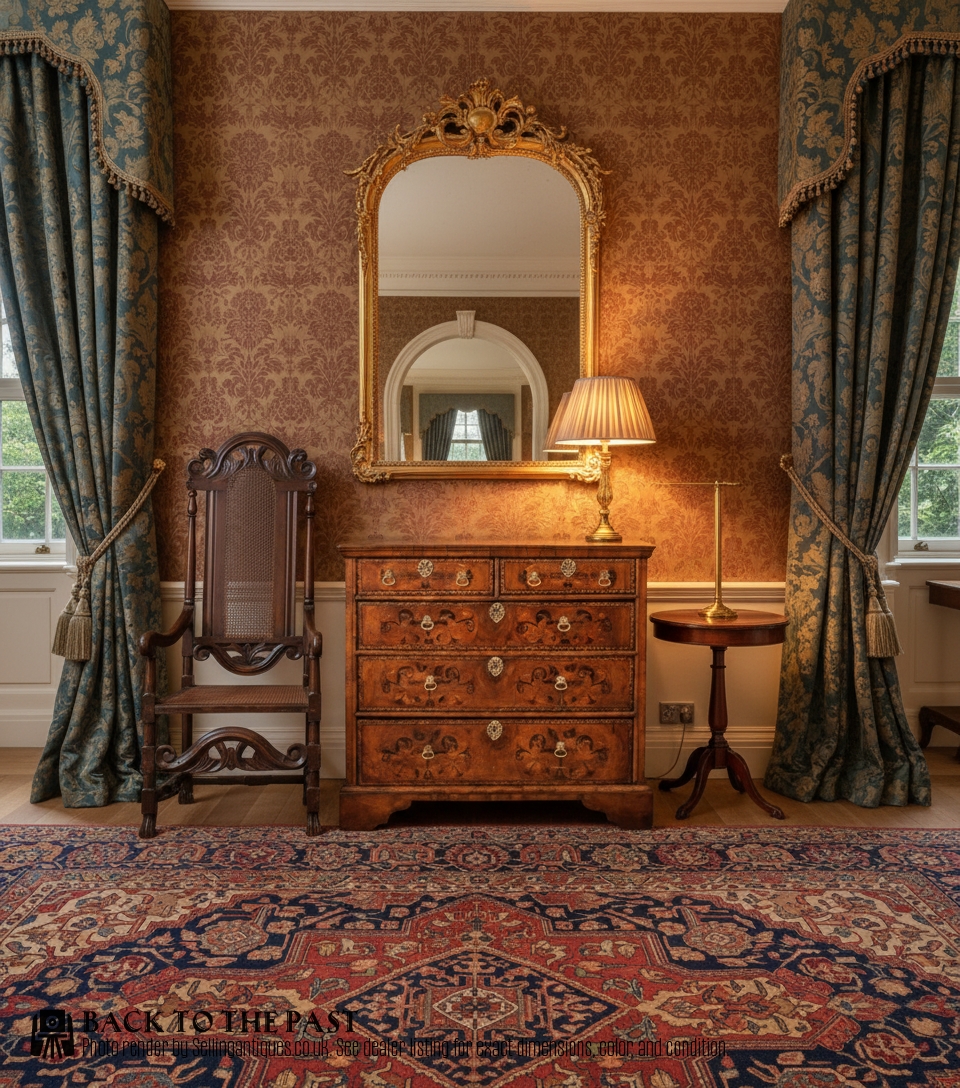
Households utilised them primarily for storing clothing, linens, and valuables within bedchambers or private parlours. The surface provided space for displaying decorative objects or lighting.
Smaller formats like chests on stands or lowboys served supplementary storage functions in various rooms of the home.
How do I live with antique walnut furniture?
Placing walnut pieces away from direct heat sources and strong sunlight protects delicate veneers from drying and cracking. Maintaining stable indoor humidity preserves the structural stability of old timber.
Routine dusting with a dry cloth keeps the surface clean without requiring heavy chemical polishes.
How can I distinguish period pieces from later copies?
Period examples exhibit construction methods consistent with late seventeenth-century joinery, including hand-cut dovetails and timber shrinkage appropriate to age. Materials match historical availability, such as native oak and early walnut veneers.
Revival pieces from the Victorian or Edwardian eras often display machine tooling, different secondary woods, or surface treatments characteristic of the nineteenth century.