
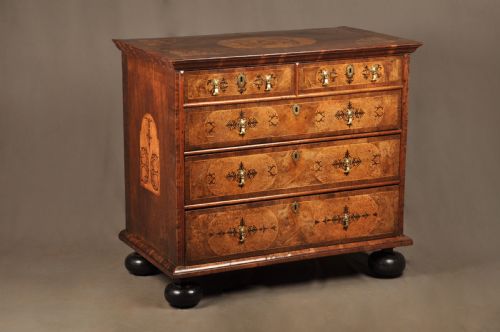

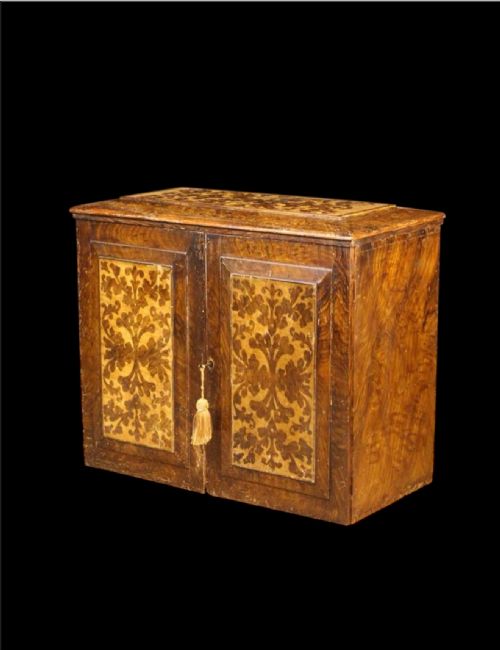


Seaweed Marquetry Chest
Seaweed marquetry chests are intricate masterpieces of seventeenth and eighteenth century craftsmanship that bring extraordinary patterned walnut surfaces into any room.
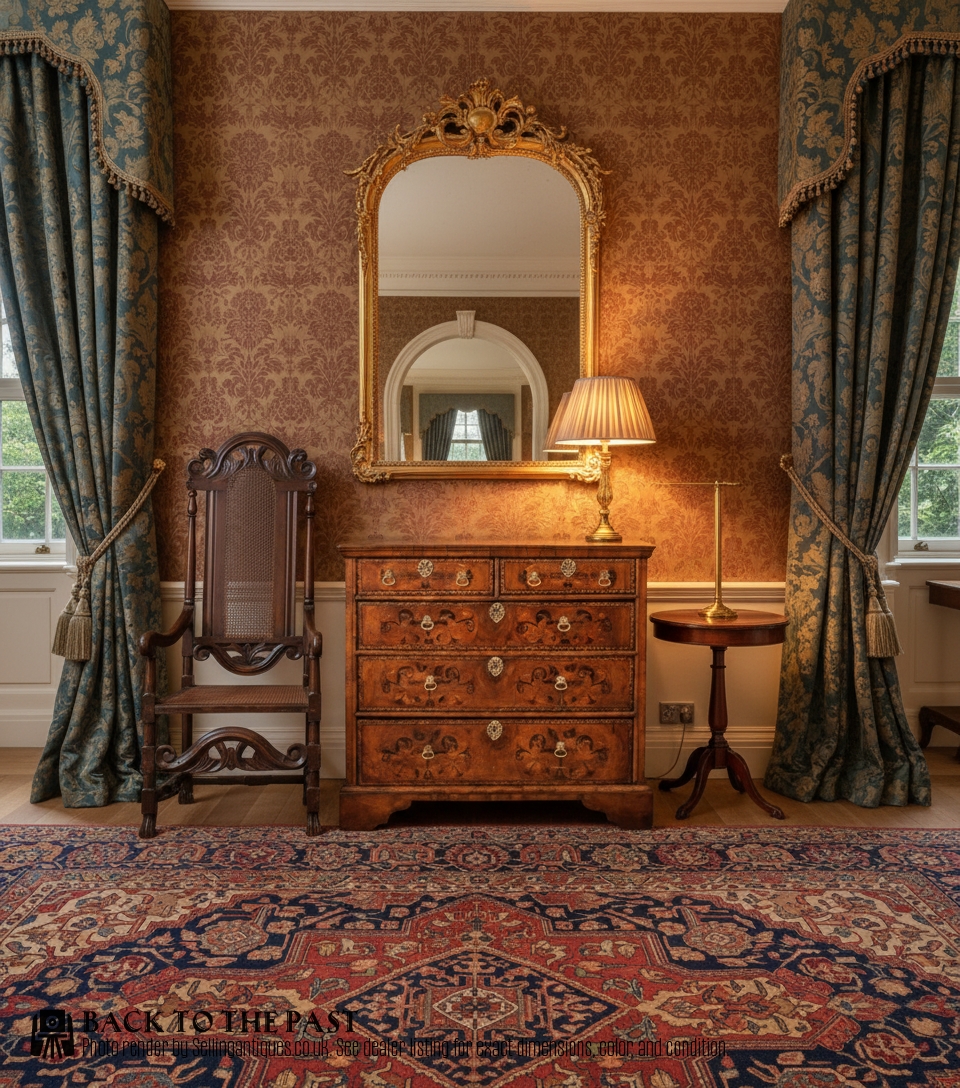
Seaweed Marquetry Chest
A seaweed marquetry chest is an elaborate storage piece defined by dense, scrolling inlay work resembling seaweed or fine foliage across its primary surfaces. These items predominantly date from the seventeenth century and the William and Mary period, representing the pinnacle of English and continental cabinet making.
Buyers will most frequently encounter chests of drawers and cabinets on stands built during the seventeenth century or the wider William and Mary era. Walnut and burr walnut serve as the foundational woods for these forms, displaying complex marquetry inlay patterns on their drawer fronts and tops.
The inventory also includes related collectors cabinets and standard walnut chests that share the period aesthetic. Each piece demonstrates the distinct decorative ambition of seventeenth and eighteenth century workshops through intricate wood matching.
How they were made
Craftsmen built these cabinets using oak and walnut as structural timbers, applying fine veneers of burr walnut and fruitwood across the exterior faces. Marquetry inlay was then meticulously cut and fitted into the contrasting background woods to create the signature seaweed patterns.
Makers utilised contrasting woods like fruitwood and ebonised wood alongside intricate marquetry inlay to achieve the characteristic two tone seaweed design. Brass hardware such as drop handles and escutcheons completed the construction, fastened securely to the drawer fronts.
Seaweed Marquetry Chest Retail Price Guide 2026
Typical asking prices for seaweed marquetry chest among the pieces listed under this phrase on Sellingantiques today, from the lower quarter to the upper quarter. They describe what is for sale here now, not the wider market.
What varies in quality
The visual success of a seaweed marquetry chest depends entirely on the precision of the veneer cutting and the complexity of the scrollwork. Finer examples display continuous, unbroken patterns across drawer divisions where lesser pieces show misalignment or clumsy filler timber.
Selection of the base wood dictates much of the visual depth, with highly figured burr walnut commanding greater appreciation than plain walnut. The integrity of the surviving marquetry inlay and the harmony of the contrasting fruitwood elements separate standard workshop output from exceptional cabinet making.
The Seaweed Marquetry Chest Glossary
- Marquetry Inlay
- The art of applying decorative pieces of veneer to a structural surface to form intricate pictorial designs. This technique defines the seaweed patterns seen on period walnut furniture.
- Burr Walnut
- A specialised wood grain obtained from the wart or growth on a walnut tree, prized for its swirling patterns. It forms the rich background on which seaweed marquetry is displayed.
- Cabinet On Stand
- A raised storage form consisting of a main cabinet body elevated on a separate underframe or legs. This architectural arrangement was particularly popular during the seventeenth century.
- Ebonised Wood
- Timber treated with a dark chemical stain or finish to imitate ebony. Cabinet makers utilised this material to create sharp visual borders around marquetry panels.
- William and Mary
- The decorative style spanning the late seventeenth and early eighteenth centuries, characterised by Dutch influence and elaborate marquetry. Furniture from this period exhibits sophisticated veneering techniques.
Seaweed Marquetry Chest: Frequently Asked Questions
What is seaweed marquetry?
Seaweed marquetry is a specialised form of wood inlay featuring dense, intricate scrolls and stems that resemble seaweed or fine marine foliage. Craftsmen cut contrasting veneers into the background wood to produce these detailed, tapestry like patterns.
This decorative technique reached its height during the late seventeenth century, predominantly on walnut furniture produced in England and the Netherlands. The resulting patterns cover entire drawer fronts and top surfaces with rhythmic, flowing designs.
How do I date a seaweed marquetry chest?
Dating these chests relies on examining the construction methods, timber choices, and overall form alongside stylistic markers of the period. Most authentic examples originate from the seventeenth century or the William and Mary era, utilising solid oak carcases and walnut veneers.
Hardware placement, dovetail construction, and the specific style of the marquetry inlay provide further clues to the decade of manufacture. Comparing the secondary woods inside the drawers helps confirm the historical context of the piece.
Where were these chests placed originally?
These prominent storage pieces stood in principal rooms and bedchambers of wealthy households to display both possessions and status. Their intricate burr walnut and marquetry surfaces were designed to catch the candlelight in formal reception spaces.
Collectors cabinets and chests of drawers served both a practical storage function and acted as showpieces for visiting guests. Their elevated status meant they occupied central positions in seventeenth century domestic interiors.
How should I care for a walnut marquetry chest?
Preserving these surfaces requires maintaining stable indoor humidity and temperature levels to prevent the delicate walnut veneers from lifting. Direct sunlight should be avoided to protect the natural tones of the fruitwood and marquetry inlay.
Applying occasional conservative applications of traditional wax polish helps nourish the historic wood finish without building up heavy residues. Gentle dusting with a soft, dry cloth is sufficient for routine maintenance.