
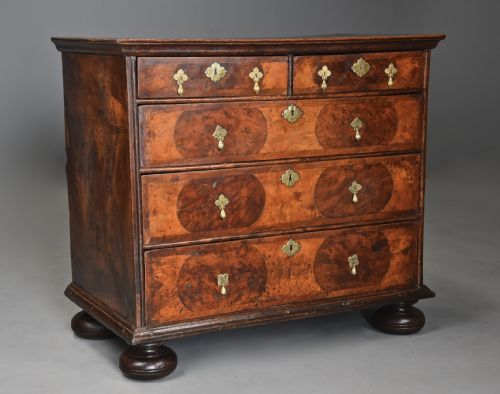
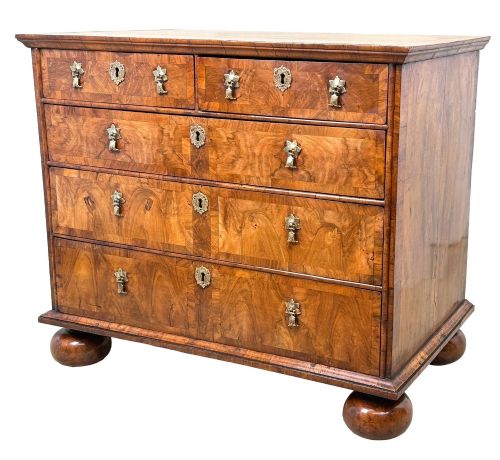
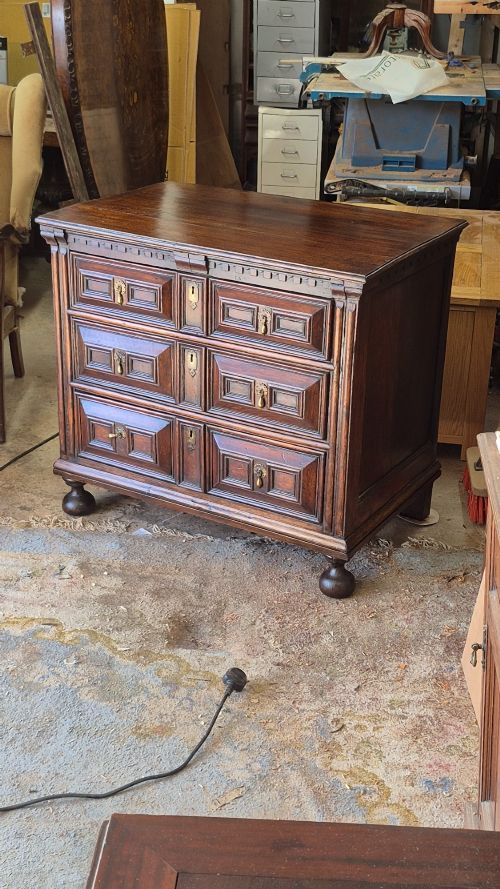
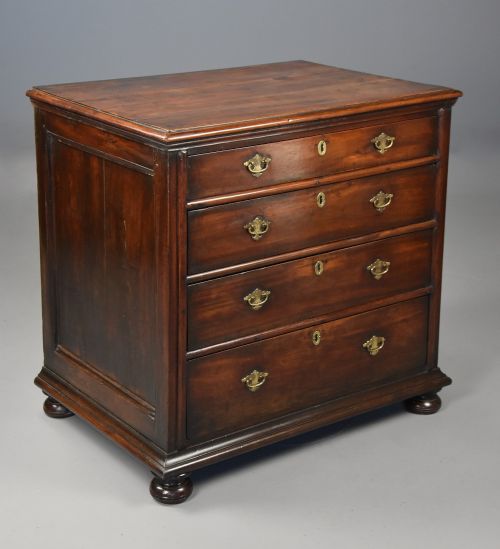
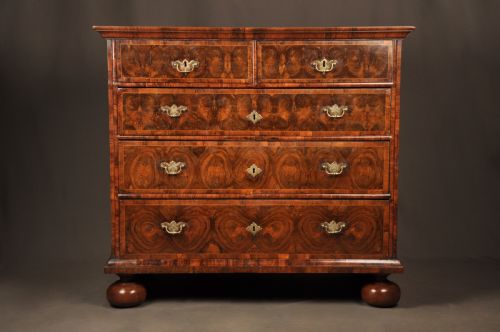


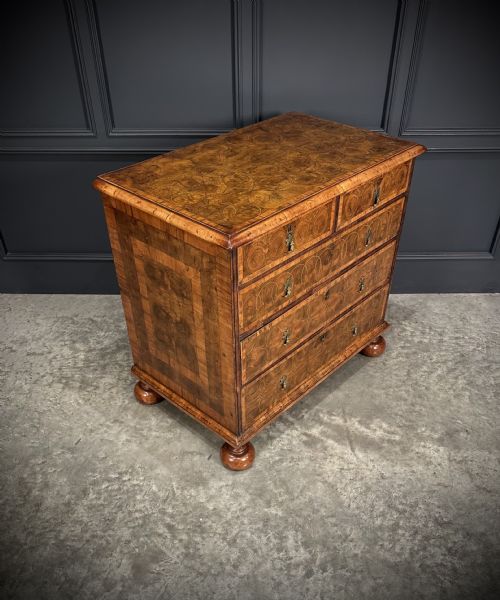


Antique Bun Foot Chest
An antique bun foot chest brings substantial storage and distinct early timber grain into a room.
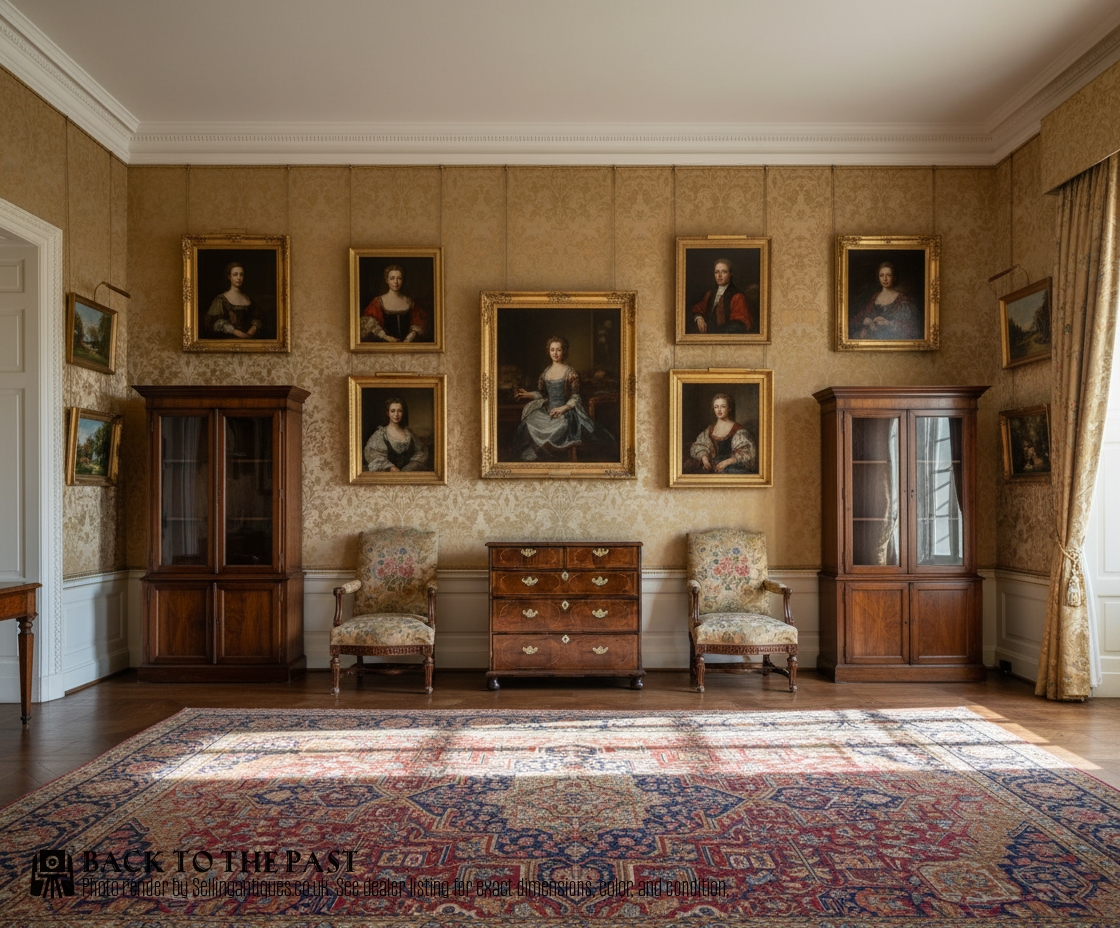
Antique Bun Foot Chest
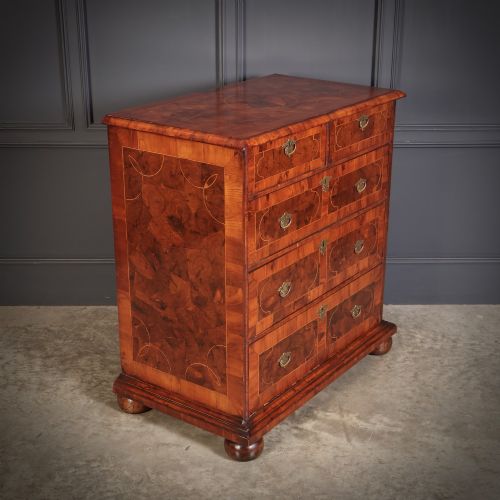
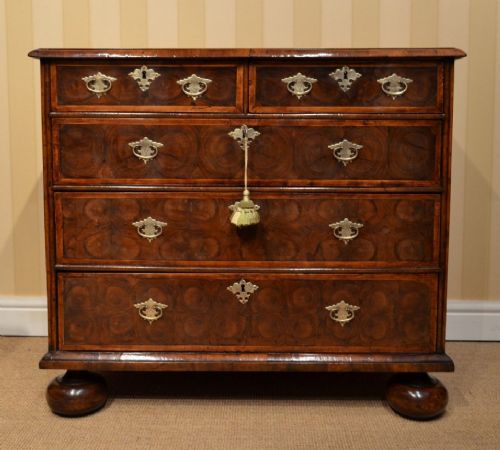
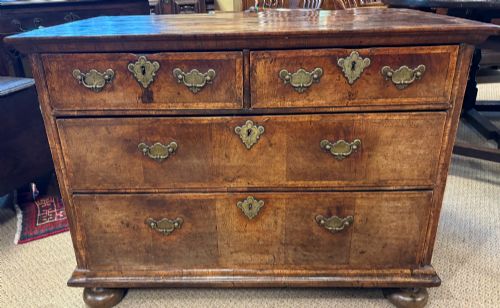
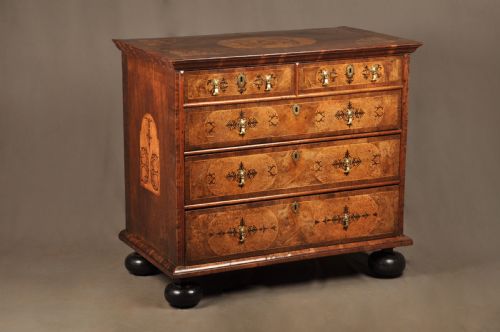
An antique bun foot chest provides sturdy domestic storage, typically appearing as chests of drawers, blanket boxes, or cabinets spanning the seventeenth and eighteenth centuries alongside later Victorian interpretations. These forms include geometric oak pieces, walnut designs, and elaborate marquetry surfaces resting on characteristic rounded feet.
The versions most common in this selection belong to the William and Mary and Queen Anne periods, constructed in richly figured timbers such as walnut, burr walnut, and oak. Buyers encounter pieces finished with oyster veneers, floral marquetry, or plain timber boards that highlight the natural grain of the wood.
Materials and construction methods
Cabinetmakers utilised solid native timbers like oak alongside decorative sliced veneers of walnut, yew, fruitwood, and olive laid over secondary woods. These veneers were arranged in geometric patterns, circular oyster motifs, or complex floral marquetry compositions.
Brass hardware such as drop handles and escutcheons complemented the dark wood tones, while structural joinery relied on traditional framing methods, pegged tenons, and dovetailed drawer construction to support the heavy timber bodies.
Materials span solid oak and fruitwood alongside decorative veneers of yew, olive, laburnum, and intricate marquetry inlay.
Distinguishing quality across the range
Quality rests upon the intricacy of the surface decoration and the preservation of the original timber veneers. Examples featuring complex arabesque marquetry, laburnum oyster work, or burr walnut figure demand higher regard than plain vernacular pieces.
The integrity of the structural elements, the retention of period brassware, and the crispness of the mouldings and bun feet dictate the standing of an individual chest within the wider selection.
The Antique Bun Foot Chest Glossary
- Bun foot
- A spherical or slightly flattened wooden foot turned on a lathe, commonly found supporting seventeenth and eighteenth-century case furniture.
- Oyster veneer
- Slices of branch wood cut transversely to produce circular or oval patterns resembling oyster shells, popular in the late seventeenth century.
- Marquetry
- Inlaid patterns of contrasting wood veneers or other materials assembled to create pictorial or geometric designs on furniture surfaces.
- Escutcheon
- A protective plate surrounding the keyhole of a drawer or cabinet door, frequently cast in brass on period pieces.
- Secretaire
- A desk form incorporating a drop-front writing flap that conceals smaller internal drawers and pigeonholes.
Antique Bun Foot Chest: Frequently Asked Questions
What is an antique bun foot chest?
An antique bun foot chest is a storage piece raised on turned rounded feet, originating primarily in the seventeenth and eighteenth centuries.
These items range from oak geometric drawer chests to walnut and marquetry pieces designed for domestic storage.
How do I identify a William and Mary chest?
William and Mary chests typically feature striking veneer work, such as walnut oysters or floral marquetry, combined with geometric mouldings.
They often display rich timber figuring and stand upon the characteristic rounded bun feet associated with the period.
Where were these chests used?
These chests served as primary storage furniture in domestic bedchambers, parlours, and hallways throughout large households.
Their substantial drawer capacity and durable timber construction made them suitable for holding linens, garments, and valuables.
How do I care for walnut veneer?
Walnut veneer requires stable room conditions away from direct sunlight and excessive heat sources to prevent timber movement.
Regular dusting with a dry cloth helps preserve the polished finish without risking moisture damage to the old glues.
Are all bun feet original?
Foot survivals vary across early pieces because floor dampness and heavy loads frequently caused wear to the lowest timbers.
Turned feet are often evaluated for their match to the primary wood and the consistency of the surrounding wear.