

Vintage Marquetry Furniture
Vintage marquetry furniture brings patterned wood into daily rooms through tables, cabinets and desks shaped by centuries of craft.
Vintage Marquetry Furniture
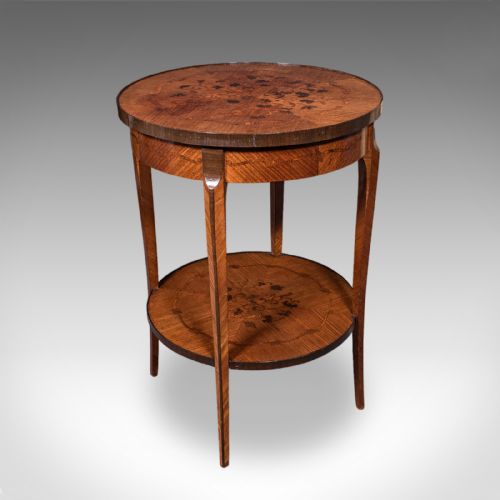
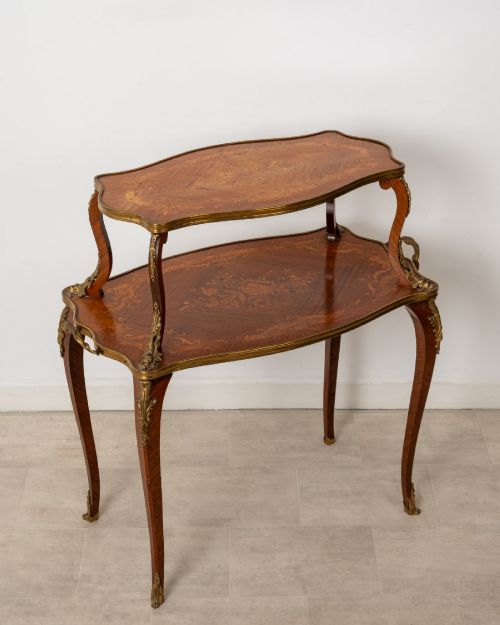
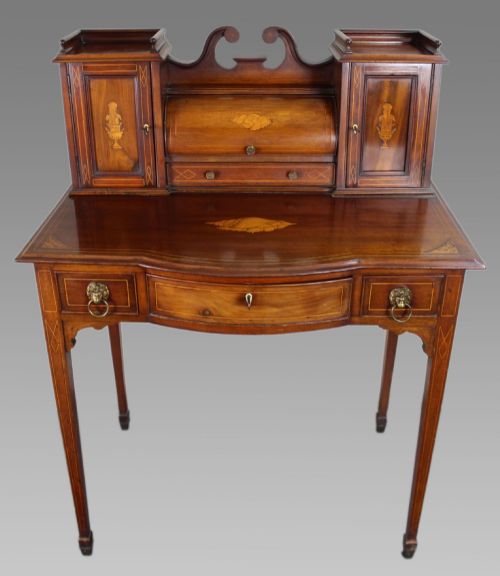
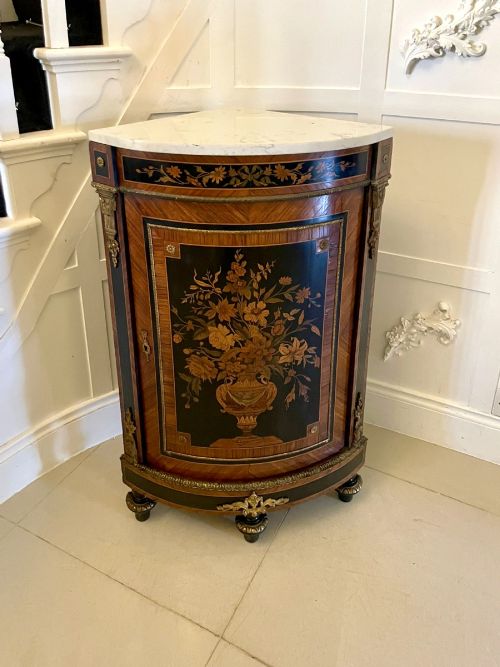
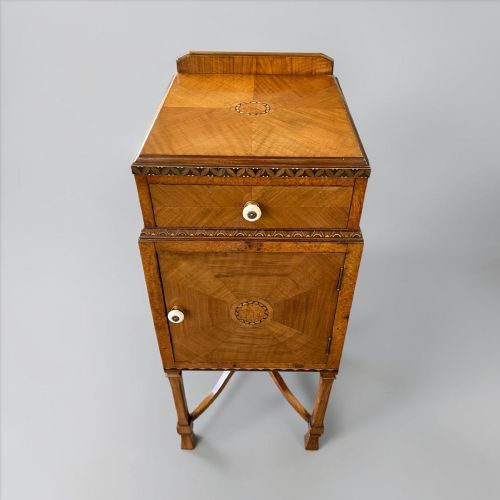
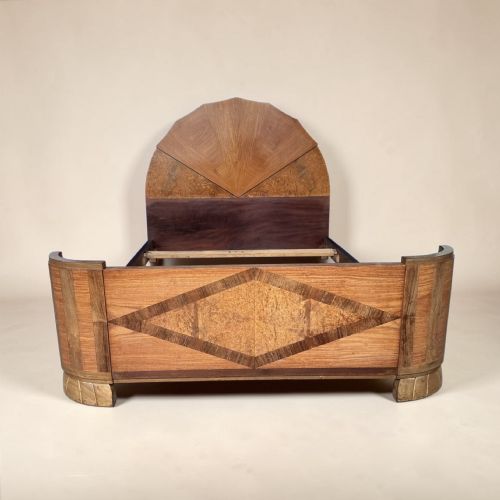
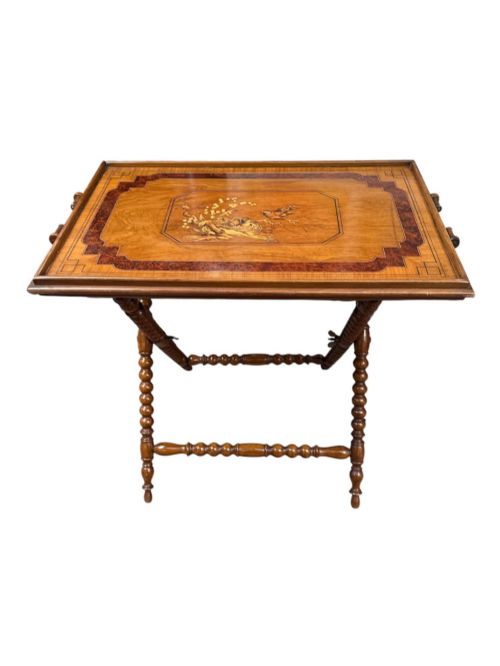
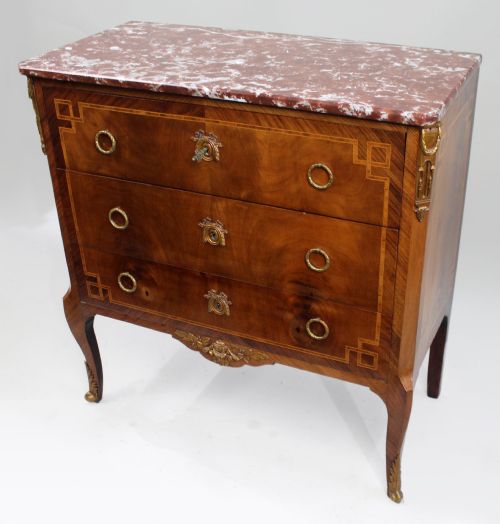
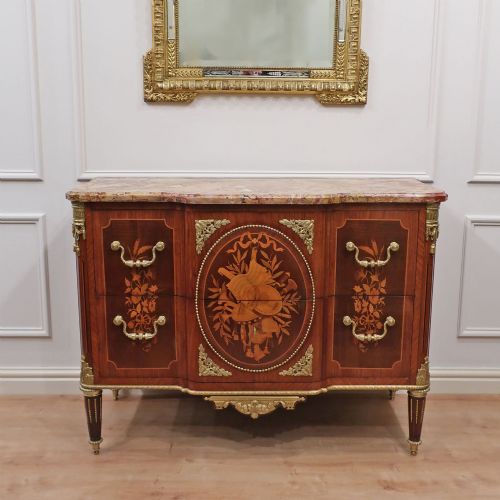
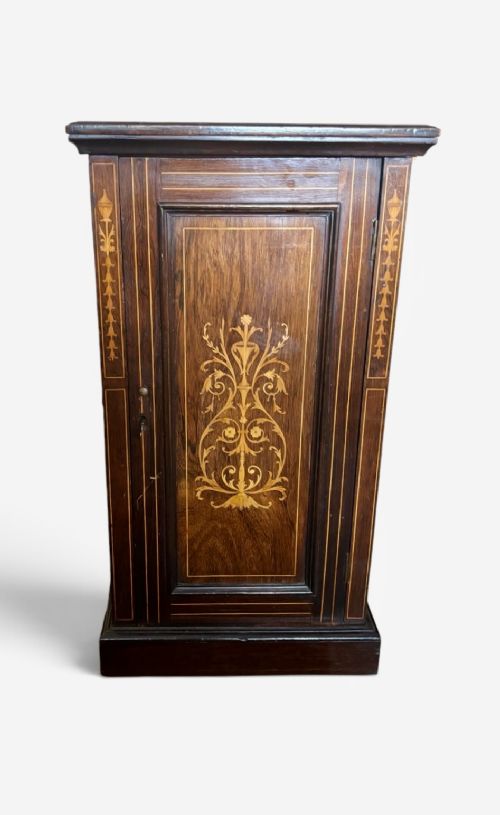
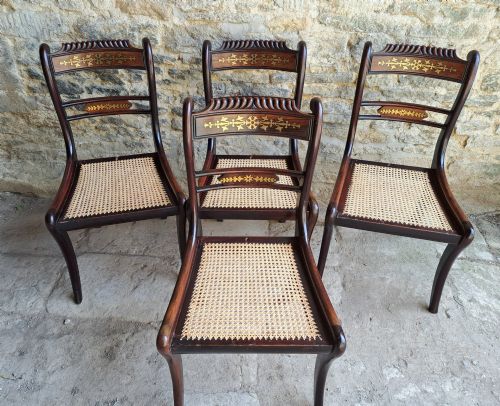
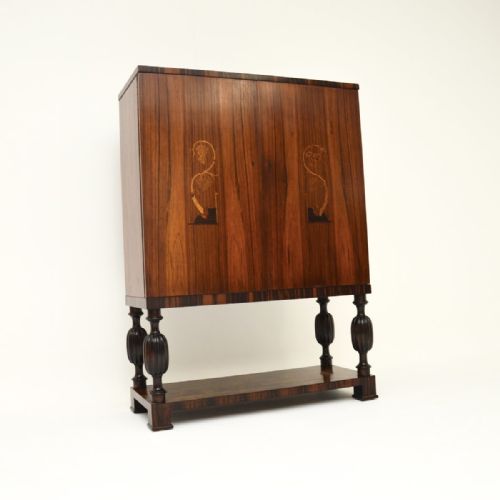
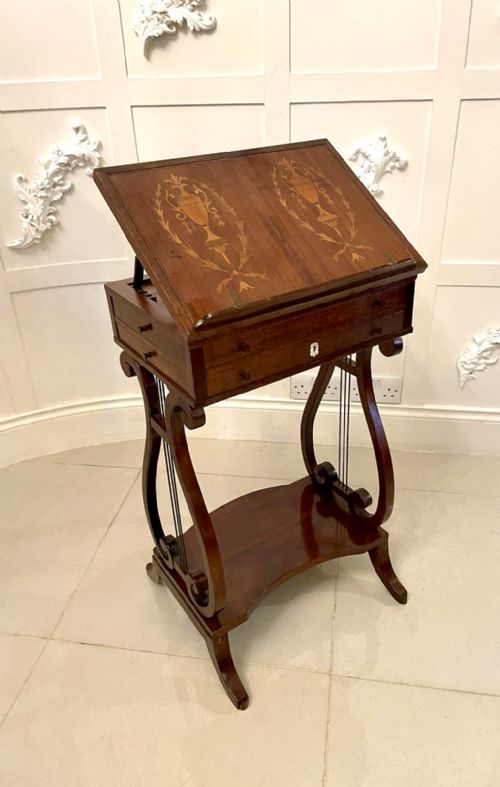
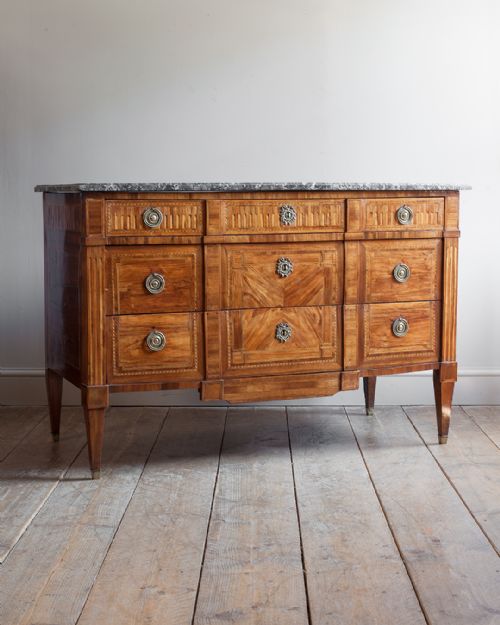
Vintage marquetry furniture encompasses small occasional pieces, storage cabinets and larger bedroom suites produced across multiple European centres. Buyers seeking vintage marquetry furniture frequently encounter Edwardian and Victorian creations alongside French Louis-style commodes and Art Deco designs. These pieces range from compact bedside tables and lamp tables to substantial side cabinets, desks and dining chairs.
The material vocabulary spans native timbers like walnut, mahogany and rosewood combined with exotic veneers such as kingwood and satinwood. Many items incorporate contrasting details in brass, ormolu mounts and marble tops that elevate the utilitarian function of a chest of drawers or writing desk. Forms remain rooted in traditional domestic use, offering specialised surfaces for reading, dining and display.
Assessing Merit
Design complexity and precision in veneer cutting determine the distinction between standard production and exceptional examples. Finer items display meticulous alignment in geometric patterns or pictorial inlay alongside superior choice of secondary timbers. Integration of luxury elements such as heavy ormolu mounts, figured burr walnut and genuine marble tops further separates distinguished pieces from simpler utilitarian furnishings.
Proportion and stylistic coherence dictate the visual success of each item within its period context. Pieces adhering strictly to recognised historical revivals or progressive Art Nouveau and Art Deco movements demonstrate deliberate artistic intent. The integrity of the underlying cabinet work and the preservation of the original veneer surface remain central to overall merit.
The listings feature pieces spanning the 18th, 19th and early 20th centuries, including Edwardian, Victorian, Art Deco and Louis XVI styles.
Maple & Co.·Émile Gallé·François Linke·Epstein
The Vintage Marquetry Furniture Glossary
- Marquetry
- The decorative craft of applying thin slices of wood veneer to a structural carcase to form pictorial or geometric patterns. This technique differentiates inlaid furniture from simple carved or painted surfaces.
- Kingwood
- A dense, richly figured timber utilised extensively in fine cabinet-making for contrasting veneers. Its dark brown colouring and pale golden streaks suit decorative surface designs.
- Ormolu
- Gilded bronze ornamentation applied to furniture corners, feet and mounts. It provides metallic contrast against polished wood surfaces on formal commodes and tables.
- Satinwood
- A luminous hardwood yielding a pale, yellow-gold appearance with a satin-like sheen. Cabinet-makers employed it frequently for banding and stringing across mahogany furniture.
- Commode
- A low standing cabinet or chest of drawers designed for formal living spaces and bedrooms. Many examples incorporate shaped marble tops and gilt bronze mounts.
Vintage Marquetry Furniture: Frequently Asked Questions
How do I clean vintage marquetry furniture?
Maintain surfaces using a dry, soft cloth to remove dust without disturbing the delicate timber veneers. Avoid excessive moisture and chemical cleaning agents that might degrade the polish.
Apply a microcrystalline wax sparingly when the wood appears dry to protect the finish. Buff gently along the grain to preserve the original lustre of the marquetry pattern.
Where should I place these pieces at home?
Position items away from direct sunlight and heat sources to prevent timber shrinkage and veneer lifting. Stable indoor humidity protects both the wood and the structural joinery.
Occasional tables and small cabinets suit living rooms and hallways where traffic remains moderate. Larger desks and commodes function effectively as focal points in studies or bedrooms.
How do I distinguish Edwardian from Victorian marquetry?
Victorian examples often favour heavier proportions and darker timbers like rosewood and burr walnut with robust construction. Decoration tends toward formal floral motifs and substantial brass or ormolu embellishments.
Edwardian pieces frequently display lighter satinwood and mahogany grounds influenced by Sheraton Revival aesthetics. Proportions appear more slender, with refined stringing and delicate geometric inlay work.
What is Sorrento Ware?
Sorrento Ware refers to inlaid wooden items produced in the Italian coastal town of Sorrento during the nineteenth century. These pieces feature characteristic micro-mosaic marquetry depicting architectural scenes or local figures.
Craftsmen applied these pictorial veneers to trays, boxes and small tables destined for the European export market. The intricate imagery distinguishes them from standard domestic furniture inlay.