




Inlaid Walnut Storage Chest
An inlaid walnut storage chest brings architectural warmth and intricate timber patterning into a room, offering both substantial utility and distinct period character.
Inlaid Walnut Storage Chest
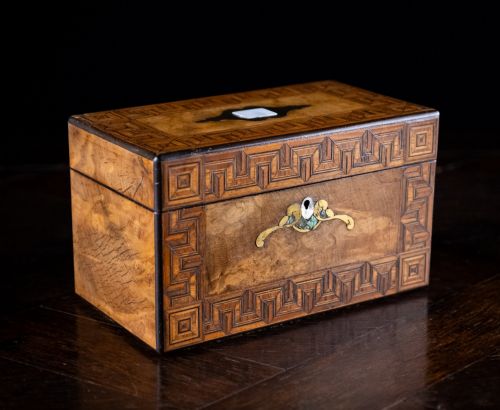
When you search for an inlaid walnut storage chest, you encounter a diverse group of case furniture spanning from the seventeenth century through to the early twentieth century. These pieces range from substantial linen presses, tallboys and commodes to smaller table-top tea caddies, games boxes and trinket boxes.
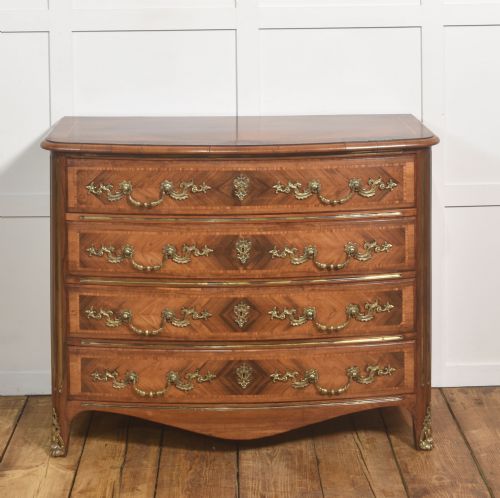
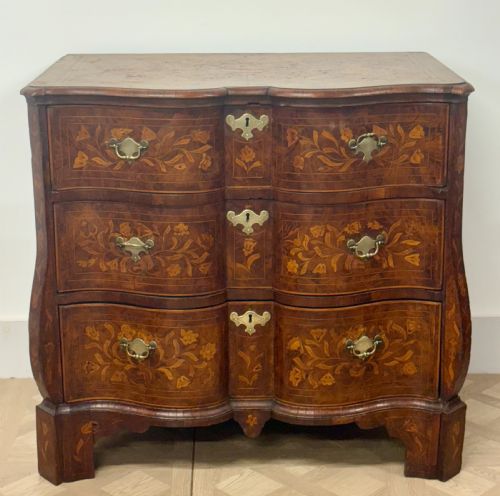
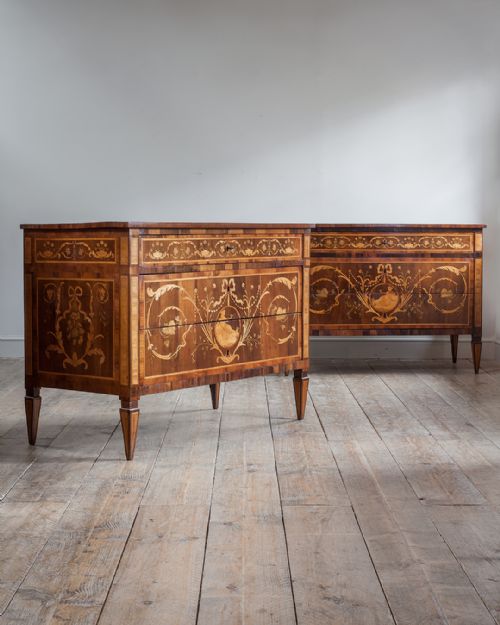
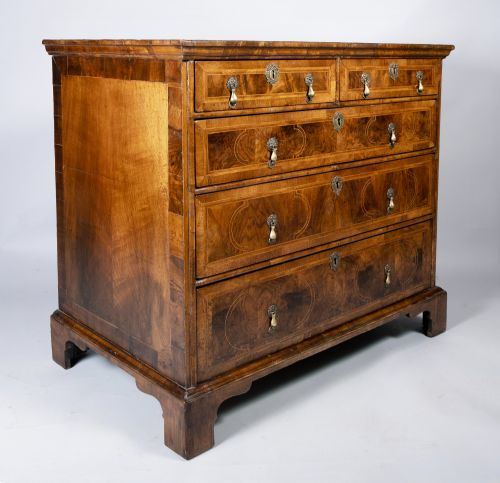
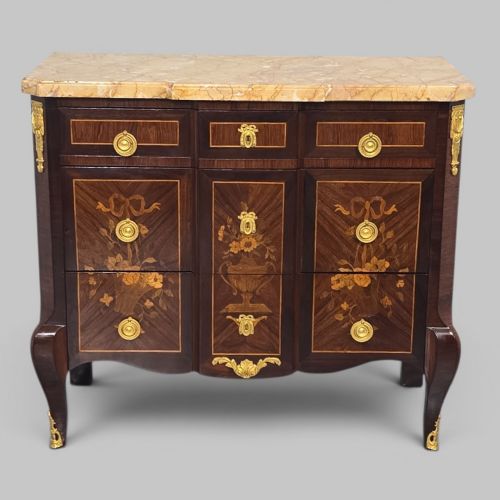
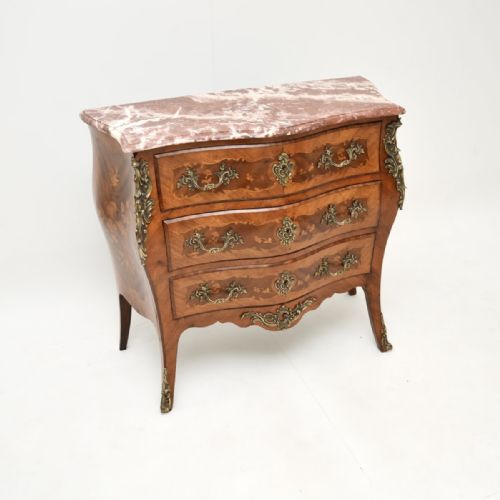
The version most commonly met on this page is the drawer-based commode or chest of drawers, often drawing upon seventeenth-century William and Mary origins, eighteenth-century Dutch marquetry traditions or nineteenth-century French revival styling.
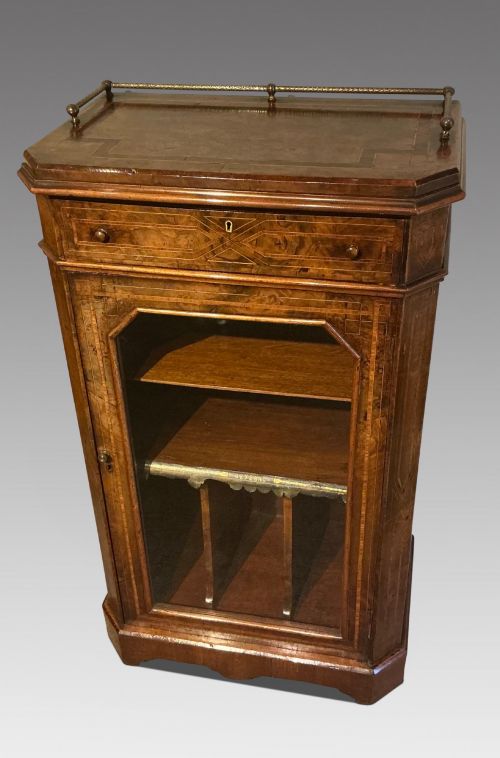
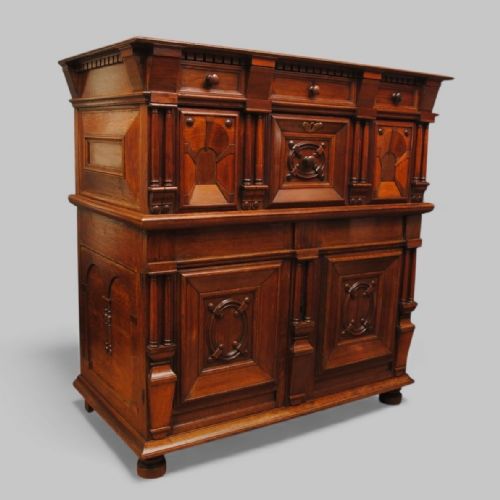
Beyond the standard chests, the selection encompasses specialised storage forms including music cabinets, collectors cabinets and travelling cabinets, demonstrating the wide versatility of walnut as a primary cabinet-making timber across multiple European traditions.
How they were made
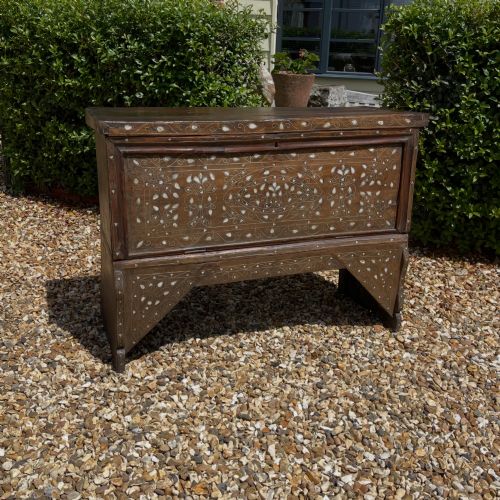
Cabinet-makers utilised figured walnut, burr walnut and oyster veneers laid over secondary timbers like oak and fruitwood, often applying feather-banding to frame the drawer fronts and panels. Marquetry and parquetry patterns incorporated contrasting woods alongside supplemental materials such as brass, mother of pearl and satinwood.
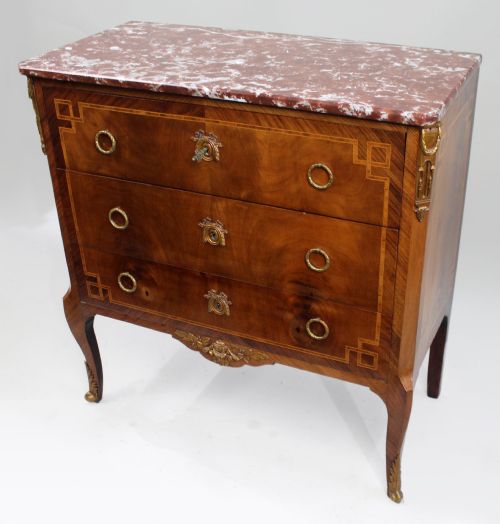
Many formal commodes and cabinets from the later periods integrated heavy rouge or scagliola marble tops, whilst finer surfaces relied on meticulous hand-cut floral or geometric veneer work embedded directly into the solid walnut carcase.
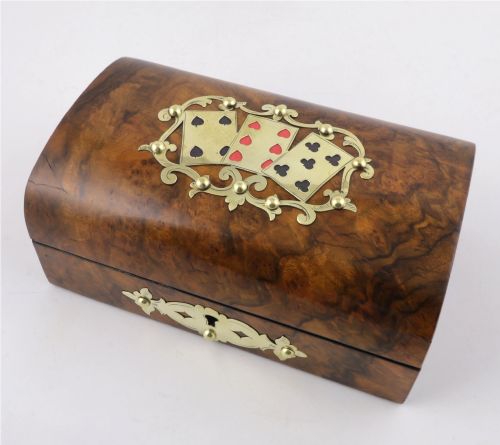
Several games boxes tucked away in the collection are specifically designed for storing poker dice alongside traditional playing cards.
What varies in quality
The standard of a piece rests heavily on the precision of the marquetry cutting and the choice of walnut veneers, with richly figured burr timber and intricate floral or geometric inlays distinguishing finer examples from plainer construction. The integration of secondary materials, such as finely chased ormolu mounts, cast brass hardware and heavy marble slabs, further elevates a piece.
Structural integrity and period accuracy in the drawer linings, dovetailing and overall proportions separate superior workshop execution from later revivals or heavily altered examples.
The Inlaid Walnut Storage Chest Glossary
- Marquetry
- The art of applying decorative pieces of veneer to a structure to form intricate pictorial or floral designs. This technique defines many eighteenth-century Dutch and French pieces.
- Parquetry
- A geometric mosaic of wood pieces used for decorative floors and cabinet surfaces. It relies on angled squares, triangles or other repeating shapes.
- Commode
- A low chest of drawers or cabinet developed in France during the seventeenth century. These frequently feature marble tops and serpentine fronts.
- Tea Caddy
- A small lidded box designed for storing loose tea leaves securely. They often display elaborate parquetry and interior compartments.
- Oyster Veneer
- Small circular or oval slices cut transversely from small branches or roots, arranged to resemble oyster shells. This technique appears on seventeenth-century cabinetry.
- Tallboy
- A tall chest of drawers consisting of one chest stacked on top of another. They maximise vertical storage capacity while maintaining a narrow footprint.
Inlaid Walnut Storage Chest: Frequently Asked Questions
How do I date an inlaid walnut chest?
Dating relies on examining the construction methods, handle hardware, timber choice and the prevailing style of the inlay work. Seventeenth and early eighteenth-century pieces often exhibit distinct walnut veneers and feather-banding, whereas nineteenth-century items frequently adopt French revival motifs.
Secondary woods visible inside the drawers or at the back provide further clues to the period and regional origin of the workshop.
Were these chests used solely in bedrooms?
While many larger chests and linen presses served domestic sleeping quarters for garments and linens, commodes and smaller cabinets frequently occupied reception rooms, salons and hallways. Tea caddies and games boxes sat on parlor tables for daily entertainment and hospitality.
Larger chests of drawers adapted easily across multiple rooms depending on household needs and the social habits of the period.
How do I care for antique walnut furniture?
Maintain stable room humidity and keep wooden surfaces away from direct heat sources and strong sunlight to prevent veneer lifting or timber cracking. Regular dusting with a soft, dry cloth preserves the polished finish without requiring heavy chemical polishes.
Periodic application of appropriate wax feeds the antique timber and maintains its natural lustre safely.
What is the difference between marquetry and parquetry?
Marquetry focuses on pictorial, floral or curvilinear compositions built from various tinted wood veneers to create pictures or organic motifs. It requires precise hand-cutting of complex botanical shapes.
Parquetry employs strict geometric and symmetrical patterns, such as cubes, diamonds or squares, creating an architectural, repeating surface design.