




17th Century Walnut Bureau
A 17th century walnut bureau is a sophisticated writing cabinet offering concealed drawers and a fitted fall-front, prized for rich timber and historic form.
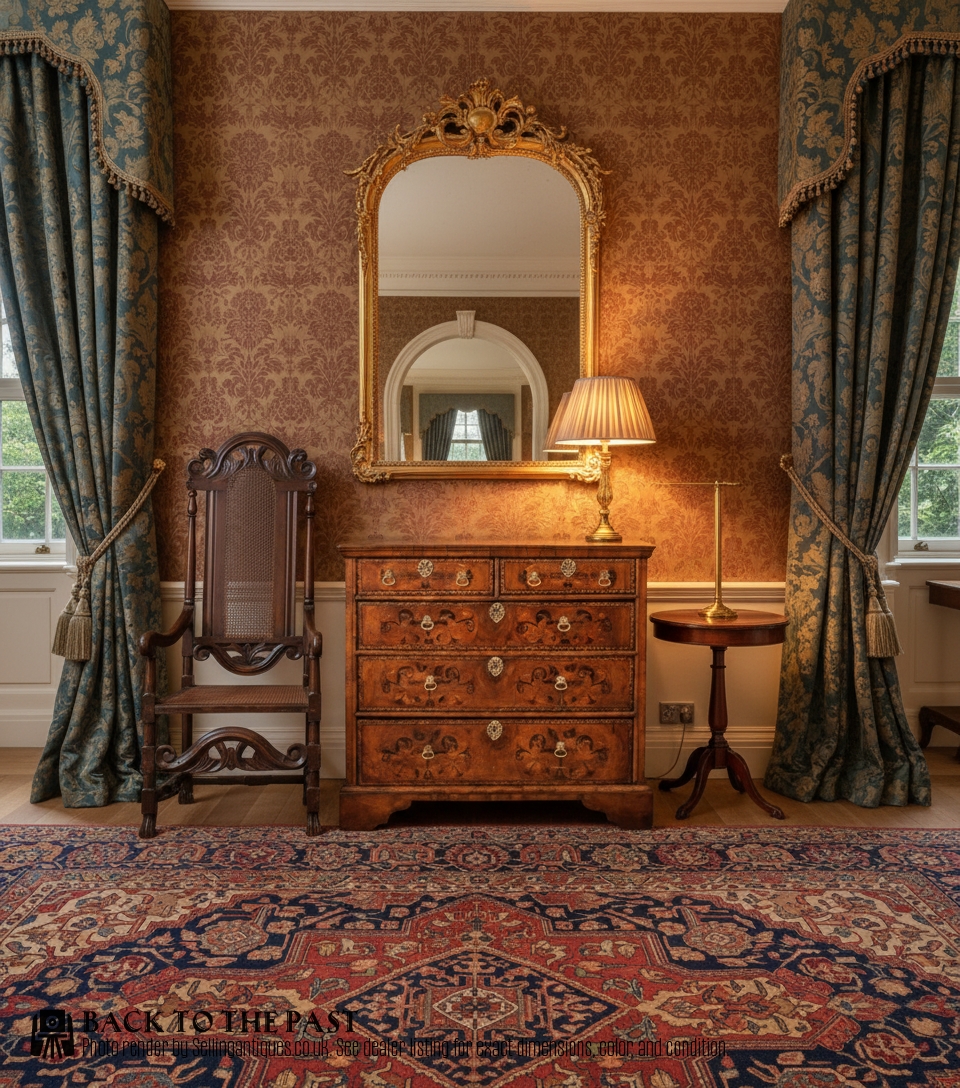
17th Century Walnut Bureau
A 17th century walnut bureau encompasses a specialised form of writing furniture designed with drop-front writing slopes, compartmentalised interiors, and supporting chest bases. These pieces emerge primarily from the William and Mary period, alongside continental variants such as Spanish Renaissance and Baroque styles including the vargueno.
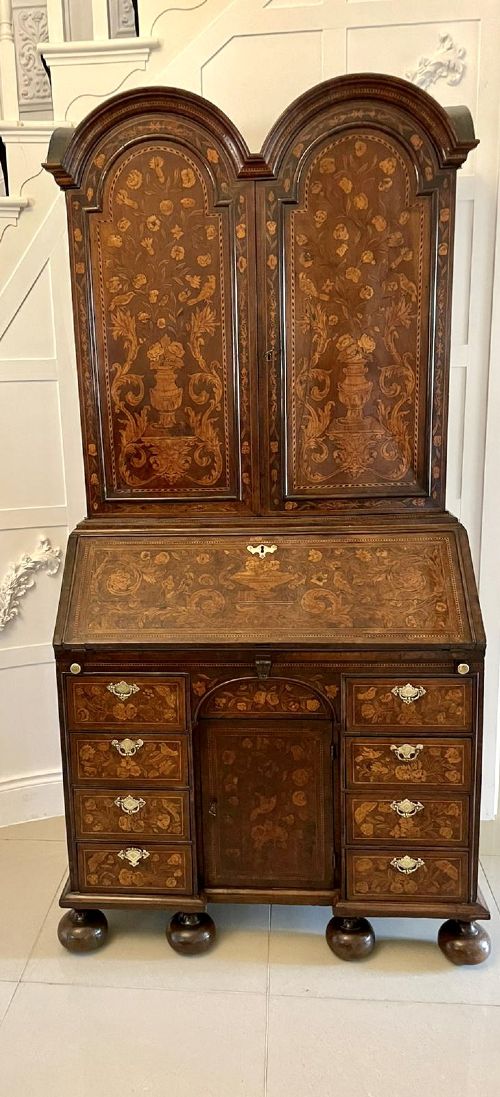
The selection ranges from compact slant-front desks to elaborate escritoires, bureau bookcases, and cabinets on chests. Buyers frequently encounter pieces displaying figured veneers or marquetry work associated with late seventeenth-century cabinet making.
How They Were Made
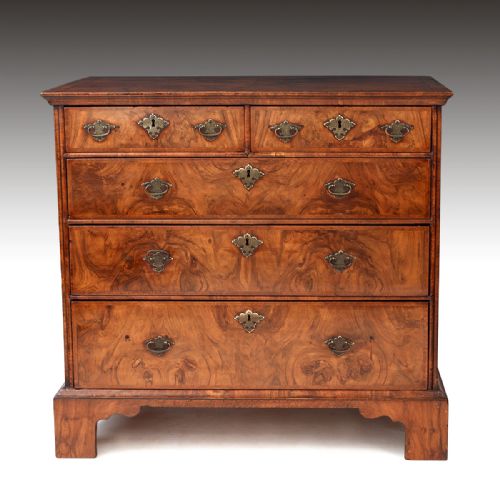
Cabinet makers utilised native and continental timbers, pairing walnut and burr walnut veneers with structural oak, fruitwood, and elm. Decorative surfaces often relied on oyster cutting, where small branches were sliced transversely to produce circular grain patterns.
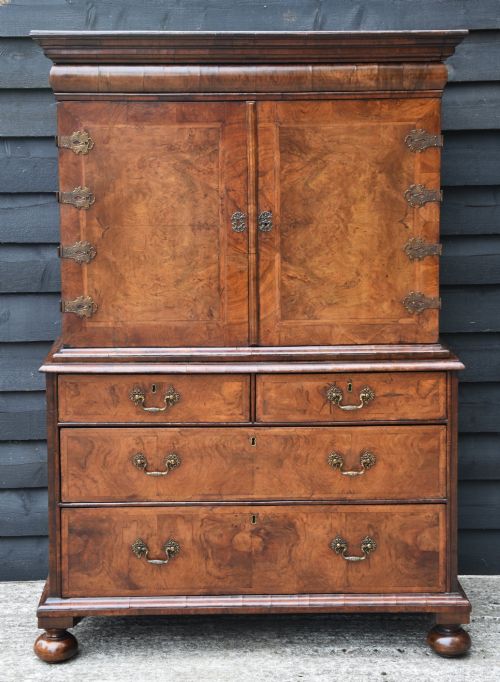
Hardware played an essential structural and decorative role, incorporating cast brasses and wrought iron elements. Marquetry inlay was frequently applied to enrich drawer fronts and writing surfaces with floral or geometric patterns.
Materials recorded across the selection include walnut, burr walnut, oyster walnut veneer, oak, fruitwood, brass, and wrought iron.
What Varies in Quality
The visual strength of a piece relies heavily on the selection of timber, where intensely figured burr walnut or symmetrical oyster veneers distinguish finer examples from plain surfaces. The execution of marquetry details and the crispness of mouldings further separate workshop output.
Structural integrity depends on the preservation of original carcase timbers, interior drawer configurations, and backboards. The integration of period-appropriate brass handles and hinges alongside unaltered fall-front mechanisms governs the standing of an individual bureau.
The 17th Century Walnut Bureau Glossary
- Bureau
- A writing desk featuring a sloping fall-front that opens to reveal internal pigeonholes and small drawers. It often sits atop a chest of drawers or a kneehole frame.
- Escritoire
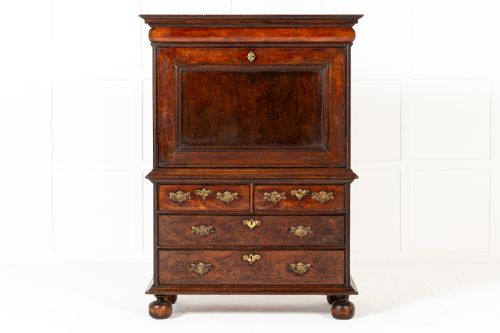
- A tall writing cabinet with a fall-front flap enclosing a fitted interior above lower drawers or a stand. These sophisticated pieces date prominently to the William and Mary era.
- Oyster walnut veneer
- Cross-sections of small branches sliced to create circular, repeating patterns resembling oyster shells. This technique defined late seventeenth-century decorative woodwork.
- Vargueno
- A traditional Spanish cabinet with a drop-front panel concealing numerous small drawers and compartments, typically mounted on a decorative stand. Examples frequently feature ornate wrought iron mounts.
- Marquetry
- Inlays of various woods and other materials applied to furniture surfaces to create pictorial or geometric designs. It adds significant visual complexity to cabinet fronts.
17th Century Walnut Bureau: Frequently Asked Questions
What is a 17th century walnut bureau?
A 17th century walnut bureau is a historical writing cabinet featuring a fall-front writing surface that conceals internal compartments. These pieces range from compact slant-front desks to tall escritoires and bureau bookcases.
They represent a pivotal development in domestic furniture when dedicated writing spaces became fashionable for the elite. Walnut and burr walnut veneers replaced heavier oak as the primary medium for fashionable cabinet work.
How do I identify a William and Mary bureau?
William and Mary bureaux are characterised by geometric veneer patterns, oyster cut details, and elaborate brass hardware. Their proportions are upright and architectural, often incorporating stepped cornices and shaped stands.
Cabinet construction from this era typically employs oak secondary timbers and distinctive dovetailing methods. The presence of marquetry inlay further points toward this specific stylistic period.
How were these desks used historically?
These cabinets served as private writing desks and secure storage for correspondence, ledgers, and valuables. The drop-front flap provided a stable writing surface when lowered.
Internal compartments and secret drawers kept sensitive documents organised and hidden from view. They occupied principal reception rooms or private studies in wealthy households.
Where should I place a walnut bureau?
A walnut bureau suits studies, drawing rooms, or quiet hallways where its historic timber and architectural form can be appreciated. Direct sunlight should be avoided to protect sensitive walnut veneers from fading.
Stable room humidity prevents the timber and historical veneers from shrinking or cracking over time. Placing the piece away from direct heat sources ensures the conservation of the wood.