


English Marquetry Box
An English marquetry box brings together meticulous wood inlay and utilitarian design, offering a tangible piece of historical craftsmanship that holds small treasures.
English Marquetry Box
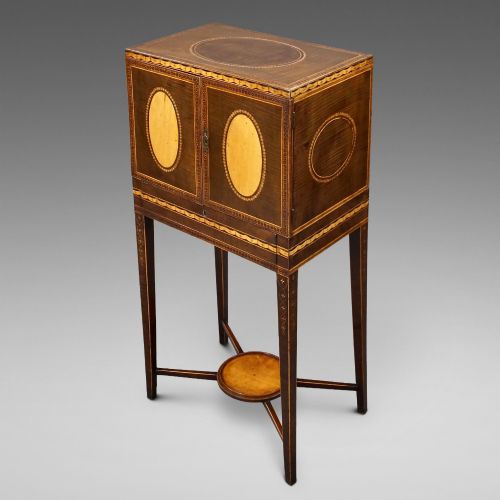
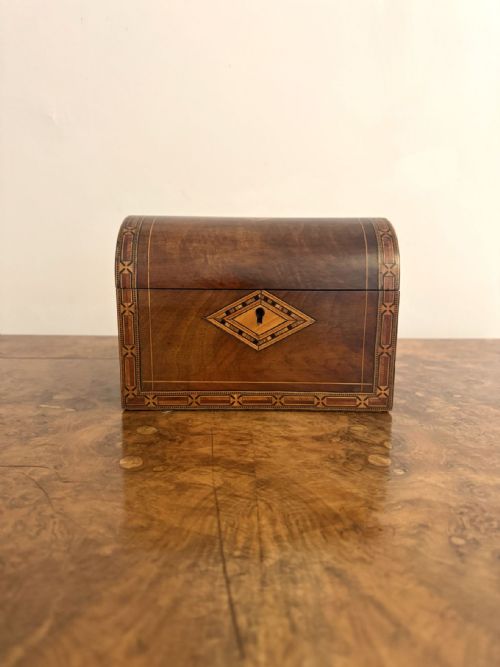
When you search for an english marquetry box, you encounter a variety of forms including tea caddies, trinket boxes, and jewellery boxes intended to store domestic valuables. These items emerge across multiple periods such as the Regency era and the Victorian period, reflecting changing interior tastes.
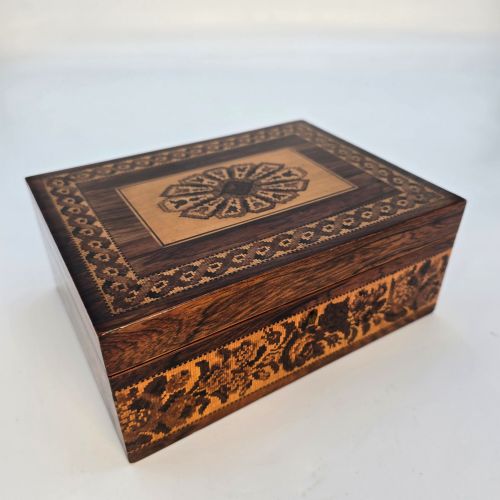
The most common examples on this page are Victorian Tunbridge Ware boxes constructed from rosewood or sycamore. These specific pieces utilise intricate wood mosaics to depict geometric patterns or pictorial scenes upon small caskets and glove boxes.
Beyond the smaller caskets, the selection extends to larger utilitarian items like writing slopes, sewing cases, and desk accessories. Each form was created to serve a specific function on a table or bureau, combining decorative wood inlay with practical storage.
Materials and construction
Cabinet makers utilised a foundation of dense timbers such as rosewood, walnut, mahogany, and oak for the primary structure of each box. These hardwoods provided stability and a dark background that contrasted with lighter decorative elements.
Intricate wood inlay and Tunbridge mosaic employed contrasting timbers including boxwood, holly, sycamore, and harewood, sometimes accented with cut brass or tortoiseshell. Artisans shaped these botanical materials into precise geometric designs or pictorial motifs before applying them to the surfaces.
A tiny wooden box reveals miniature landscapes built from thousands of microscopic timber slices, each one thinner than a fingernail.
Judging quality in marquetry
The standard of an english marquetry box depends largely on the precision of the wood inlay and the complexity of the mosaic work. Pieces featuring tight, seamless geometric assemblies or detailed pictorial representations demonstrate superior craftsmanship from the maker.
Interior fittings and secondary materials also dictate the tier of a piece, with fitted compartments, original brass hardware, and well-preserved linings marking out finer examples. The crispness of the carving and the condition of the underlying rosewood or walnut carcass complete the assessment.
Edmund Nye·Henry Hollamby·Waring and Gillow
The English Marquetry Box Glossary
- Marquetry
- Decorative veneer applied to a wood structure to form intricate patterns or pictures. This technique uses various tinted woods to create pictorial depth.
- Tunbridge Ware
- A type of woodwork originating from Kent, characterised by tiny mosaic tesserae forming detailed geometric or floral designs. Artisans glued thousands of microscopic wood sections together before slicing them into veneers.
- Tea Caddy
- A small box or container originally designed to store dry tea leaves securely. These containers often featured internal lids and lockable compartments.
- Writing Slope
- A desk accessory featuring a sloping hinged lid designed to provide a slanted surface for writing letters. Interiors typically included compartments for inkwells, pens, and stationery.
English Marquetry Box: Frequently Asked Questions
What is an english marquetry box used for?
These boxes served various domestic purposes throughout the eighteenth and nineteenth centuries, primarily housing valuable items like tea, jewellery, and writing materials. Smaller caskets held trinkets or sewing equipment, while larger items functioned as desk accessories.
Today, owners utilise them to store modern keepsakes while displaying the historical woodwork in domestic interiors. Their compartmentalised interiors make them practical for organising small personal belongings.
How do I identify Tunbridge Ware?
Tunbridge Ware is identifiable by its distinctive mosaic surface, constructed from thousands of tiny tinted wood fragments that form geometric or pictorial designs. These patterns often create realistic depictions of flowers, butterflies, or architectural views.
The technique relies on bundling coloured woods together and slicing them across the grain to produce multiple identical mosaic tiles. Rosewood and sycamore bodies frequently support these elaborate decorative bands.
How do I date an antique box?
Dating relies on observing the combination of timber choices, construction techniques, hardware, and stylistic influences present in the piece. Regency pieces often incorporate cut brass inlay on rosewood, while Victorian examples frequently show Tunbridge mosaic work.
Interior fittings, paper linings, and lock types also provide clues to the manufacturing era. Comparing the decorative style to known periods helps narrow the decade of production.
Are these boxes made of solid wood?
Most pieces feature a solid wood carcass of mahogany, walnut, or oak, which is then covered with fine veneers and marquetry inlay. Using a stable base timber prevents the decorative surface veneers from warping or cracking over time.
Some smaller items or specific geometric panels utilise solid blocks of sycamore or rosewood, particularly in specialised mosaic manufacturing. The structural composition varies depending on the specific form and period of the item.