
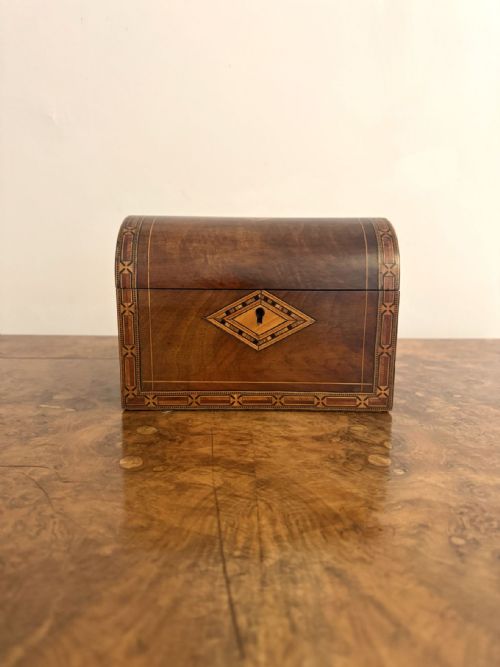
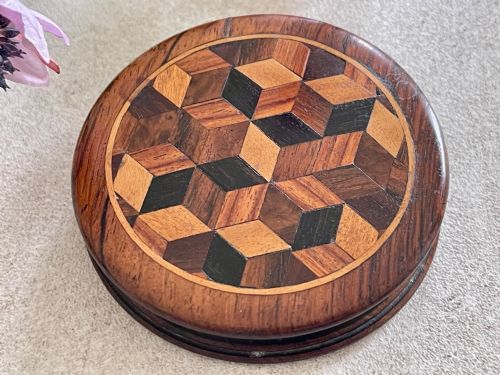


Geometric Marquetry Box
These geometric marquetry box examples bring together intricate wood inlay and practical forms from the nineteenth century onwards.
Geometric Marquetry Box
A geometric marquetry box combines small tessellated wooden tiles and veneers to create complex patterns across surfaces, from tea caddies to desktop caskets. When you search for a geometric marquetry box, you find containers designed to hold tea, sewing implements, writing materials, or games.
The pieces appearing on this page span the Victorian era into the twentieth century, with nineteenth-century examples frequently taking the form of rosewood or walnut tea caddies and needlework boxes. Makers utilised distinct regional styles, ranging from English Tunbridge Ware to Persian Khatamkari and Ottoman revival designs.
Functional items dominate the selection, including games boards, cribbage boxes, and secret safe books alongside traditional storage boxes. Each piece serves as both a practical desktop accessory and a demonstration of meticulous veneer work.
How they were made
Constructed using a solid wood carcass of mahogany, walnut, rosewood, or fruitwood, these pieces rely on precise timber preparation for their structural stability. Artisans applied thin veneers and intricate wood inlay patterns to the exterior surfaces, often combining multiple contrasting timbers.
Specialised techniques such as mosaic work and Tunbridge inlay involve gluing thin rods of various coloured woods together and slicing them across to produce identical geometric tile repeats. Bone and brass details occasionally accent the timber designs, adding linear borders or key escutcheons.
Listings feature nineteenth-century walnut, rosewood, and mahogany alongside twentieth-century Art Deco and Persian designs.
What varies in quality
The standard of a geometric marquetry box rests upon the precision of the veneer alignment and the complexity of the tile work. Tighter joints between individual wood elements and sharper geometric transitions separate finer workshop production from simpler output.
Material selection also defines the tier of a piece, with dense hardwoods like rosewood and kingwood providing stable foundations for delicate mosaic friezes. The integration of fitted interior compartments and original hardware further distinguishes superior examples.
The Geometric Marquetry Box Glossary
- Tunbridge Ware
- A form of British woodwork originating from Kent, characterised by minute mosaic tesserae forming pictorial or geometric motifs. These items often feature floral or architectural borders surrounding central panels.
- Marquetry
- The art of applying pieces of veneer to a structure to form decorative patterns and pictures. Craftsmen cut various woods to fit together precisely within a prepared ground.
- Khatamkari
- A Persian technique of marquetry where geometric patterns are incrustated on wooden articles using thin slices of bone, brass, and various woods. The resulting mosaic creates intricate star and polygon arrangements.
- Tea Caddy
- A container designed originally to store tea leaves securely under lock and key. Victorian versions frequently incorporated multi-compartment interiors and detailed veneer exteriors.
Geometric Marquetry Box: Frequently Asked Questions
What were these boxes used for?
These containers served various domestic functions, holding valuable commodities like tea, writing paper, sewing equipment, or playing cards. Many included fitted compartments and locks to safeguard personal possessions.
Their presence in nineteenth-century parlours combined utility with ornamental display, reflecting the refined tastes of the period.
How do I date a Victorian box?
Dating relies on identifying timber choices, construction methods, and stylistic cues such as Tunbridge mosaic patterns or Art Deco forms. Examining interior linings, hinges, and lock types helps narrow down the decade of manufacture.
Nineteenth-century pieces often display heavier rosewood or walnut carcases with hand-cut dovetails, while later twentieth-century examples show different manufacturing signatures.
What is Tunbridge inlay?
Tunbridge inlay refers to the mosaic woodwork technique developed in Kent, using thousands of tiny wood blocks to create geometric patterns. Craftsmen bundled coloured timbers together before slicing them transversely to produce uniform pattern strips.
These strips formed intricate borders and central motifs on tea caddies, ladies boxes, and writing caskets.
How should I care for wood inlay?
Keep wooden boxes away from direct sunlight and fluctuating heat sources to prevent the dry veneers from lifting or cracking. Gentle dusting with a dry cloth maintains the surface without introducing moisture into the delicate mosaic joints.
Applying occasional conservative wax polishes helps nourish historical hardwoods like rosewood and walnut.