21,165  PAGES BROWSED TODAY PAGES TODAY • 49 ANTIQUES UPLOADED TODAYNEW ARRIVALS
GIFTS
49 ITEMS ADDED TODAY
Sort Order
Items Per Page
Antiques dealer?
Join as a Seller
Browse Categories
Sort order
Relevant Links
Items per page
sold SA1217896
Sorry, but this item has been sold.
Regent Antiques

Regent Antiques

Sellingantiques Verified Since Sep 2016
Browse dealers 639 items
  • About Us
    We specialise in english and continental furniture, silver, porcelain and decorative items.
  • Trade Associations
    Regent Antiques is a registered member of LAPADA  CINOA
Id #SA1217896
SHARE
SAVE

Antique Italian Ormolu & Pietra Dura Jewellery Casket 19th C

19th century
Sold 8 October 2026 · Regent Antiques
This “Antique Italian Ormolu & Pietra Dura Jewellery Casket 19th C” found a buyer.

It was listed by Regent Antiques. Sold pieces stay on Sellingantiques as a record of what has passed through, and the next one is rarely far away.

Description

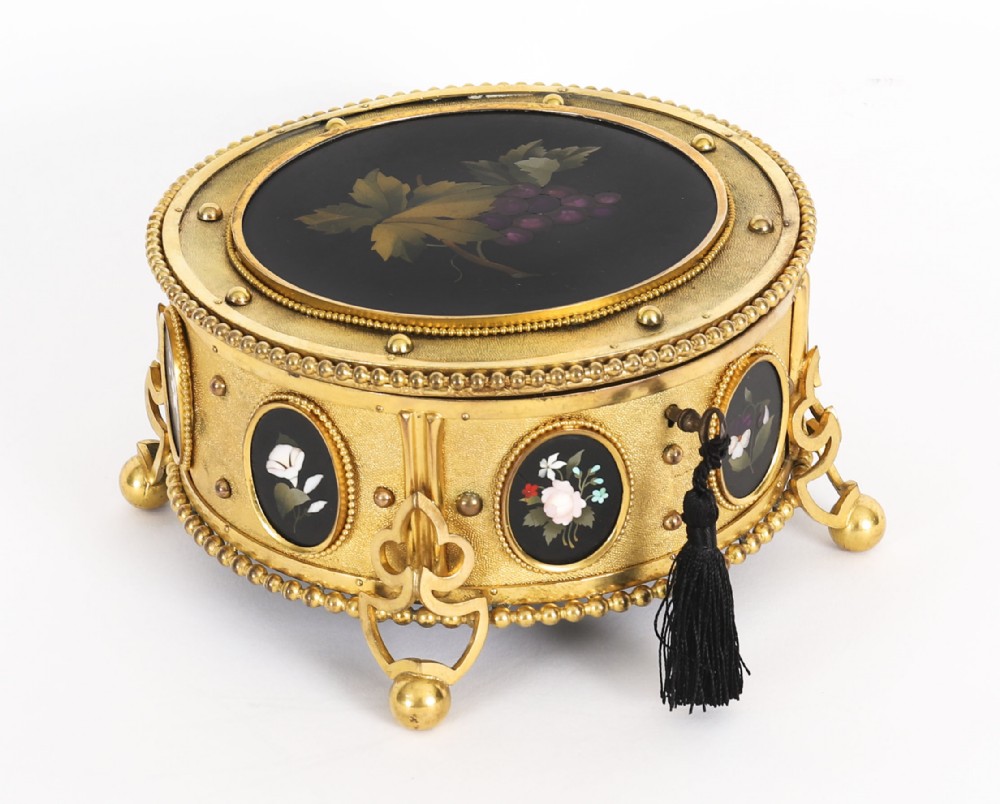
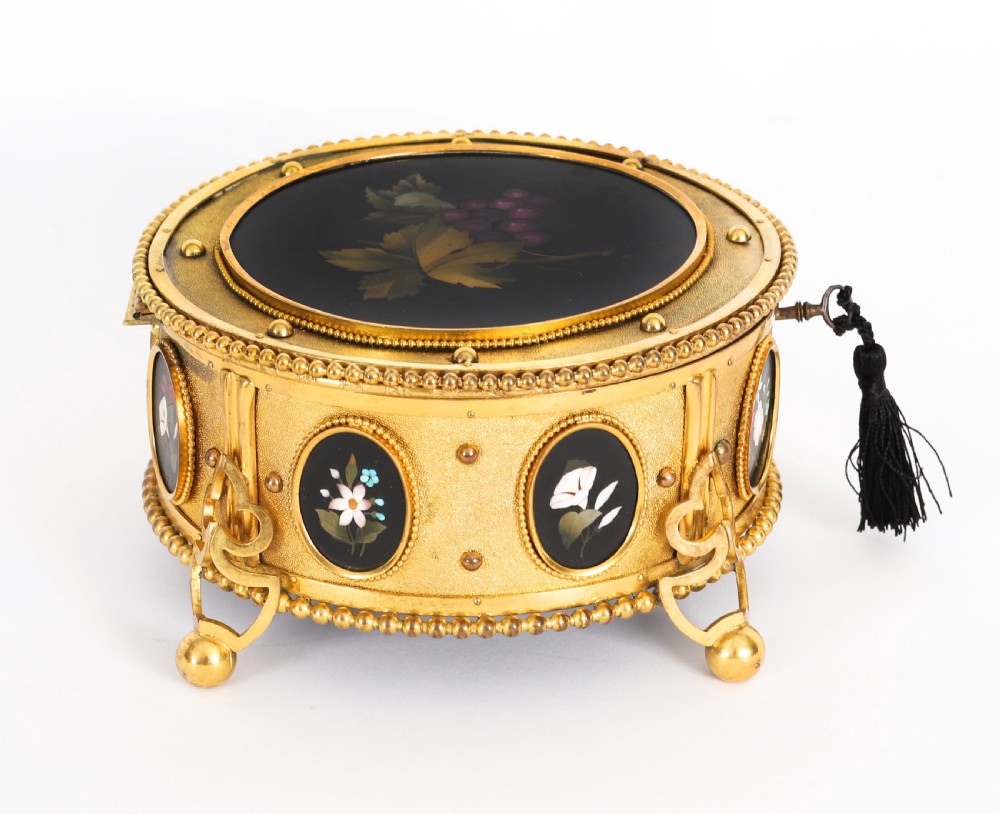
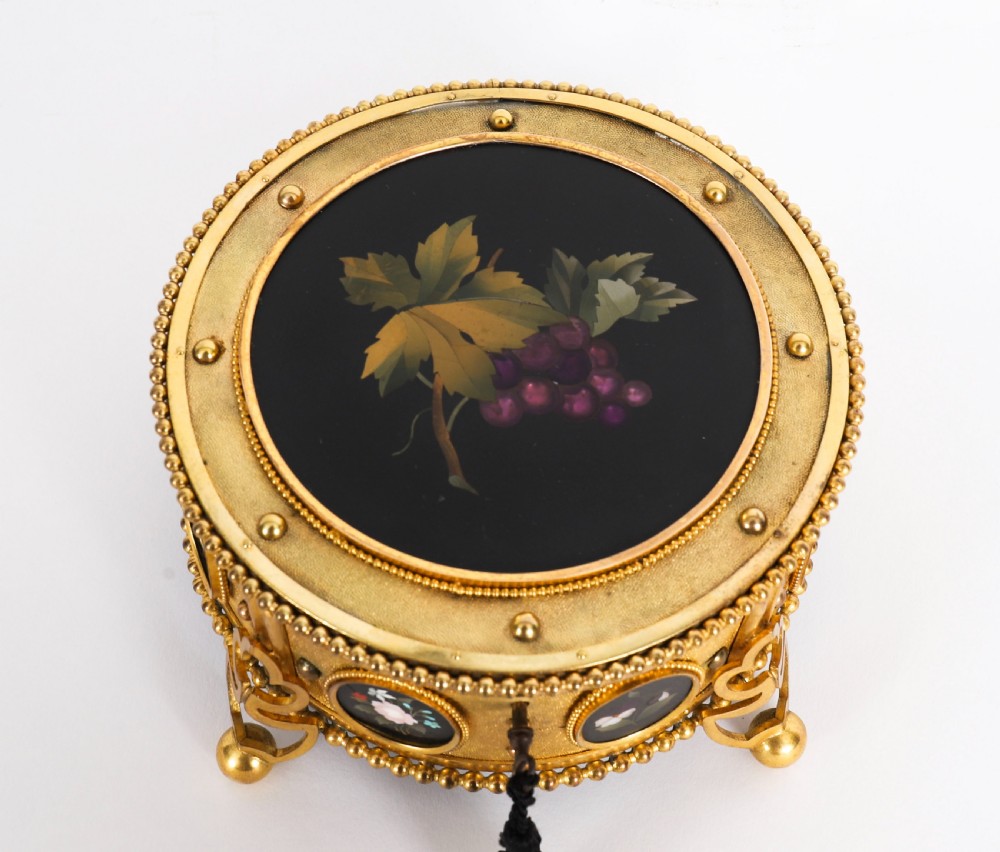
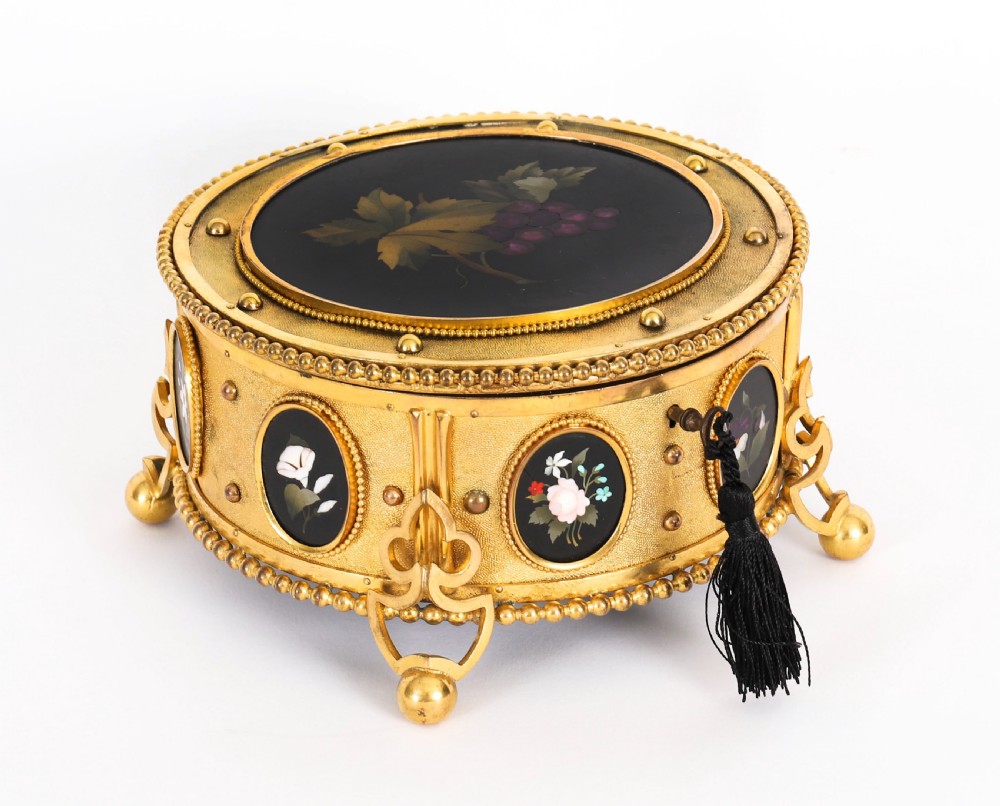
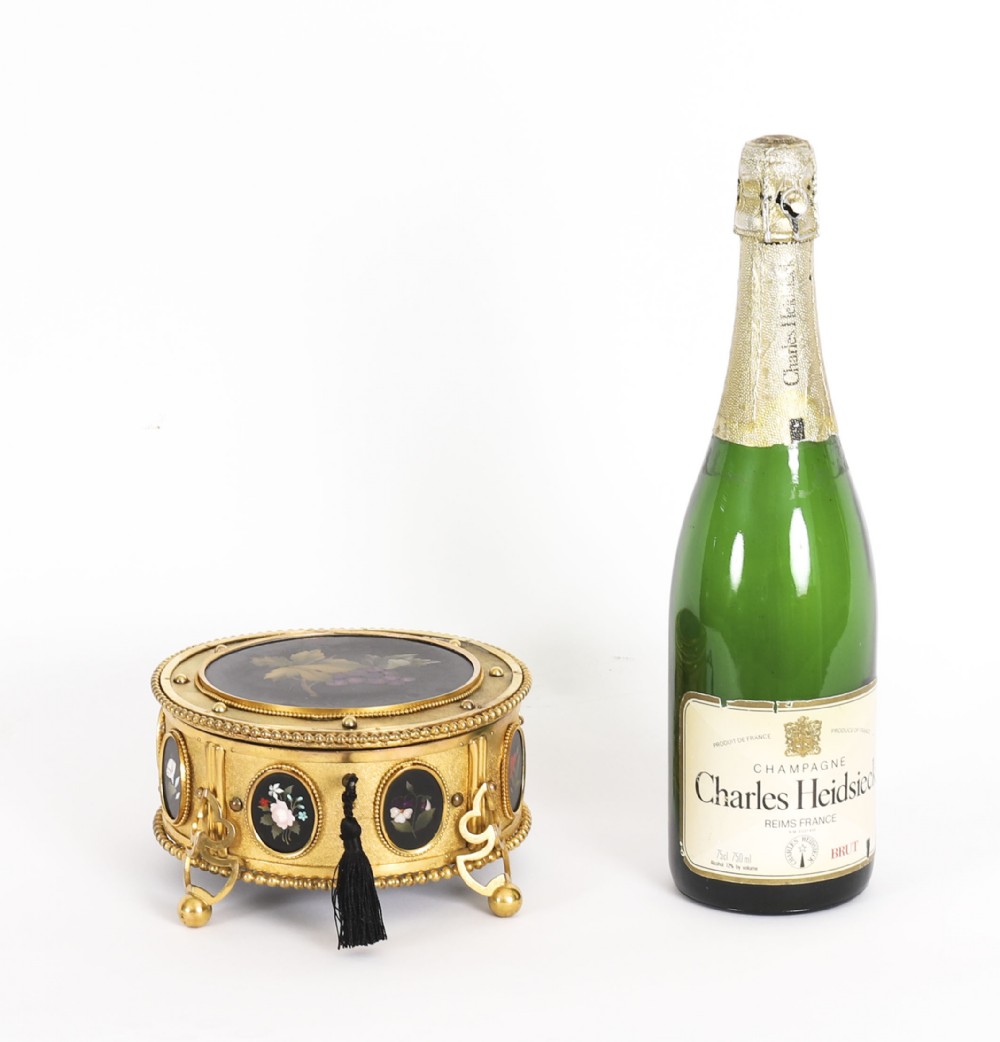
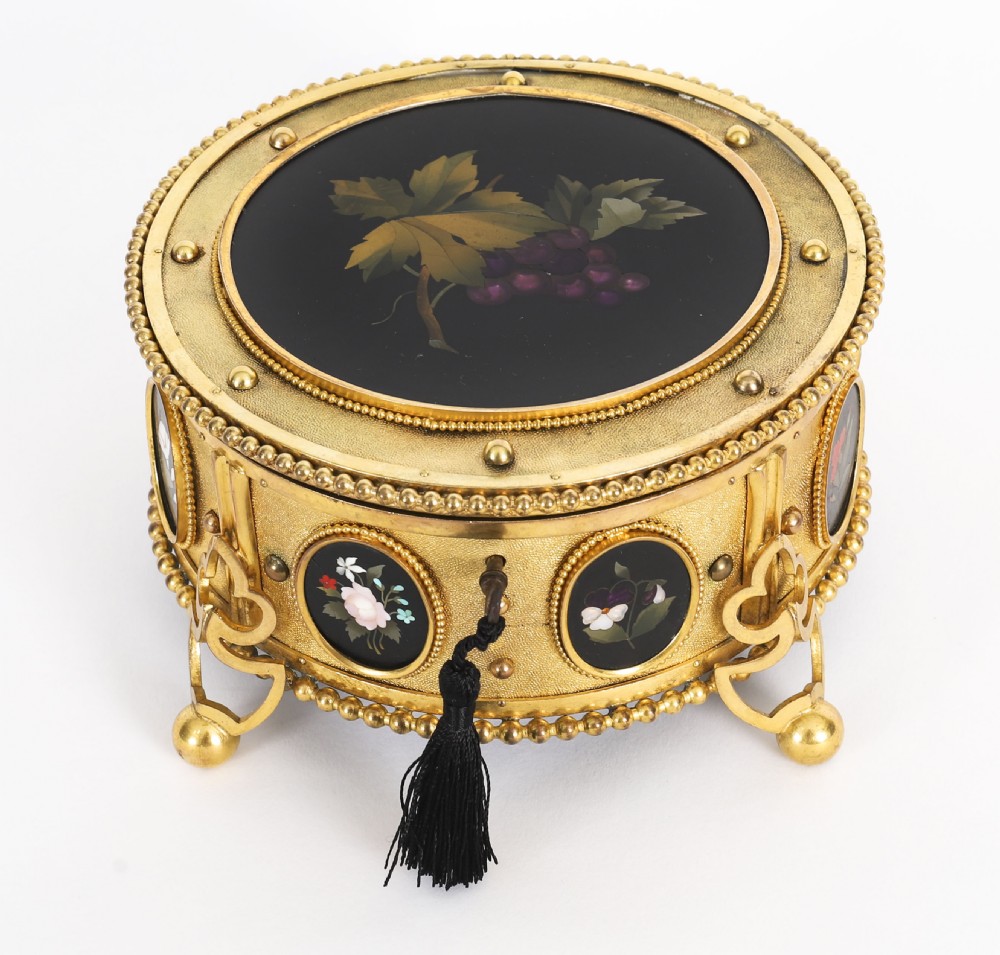
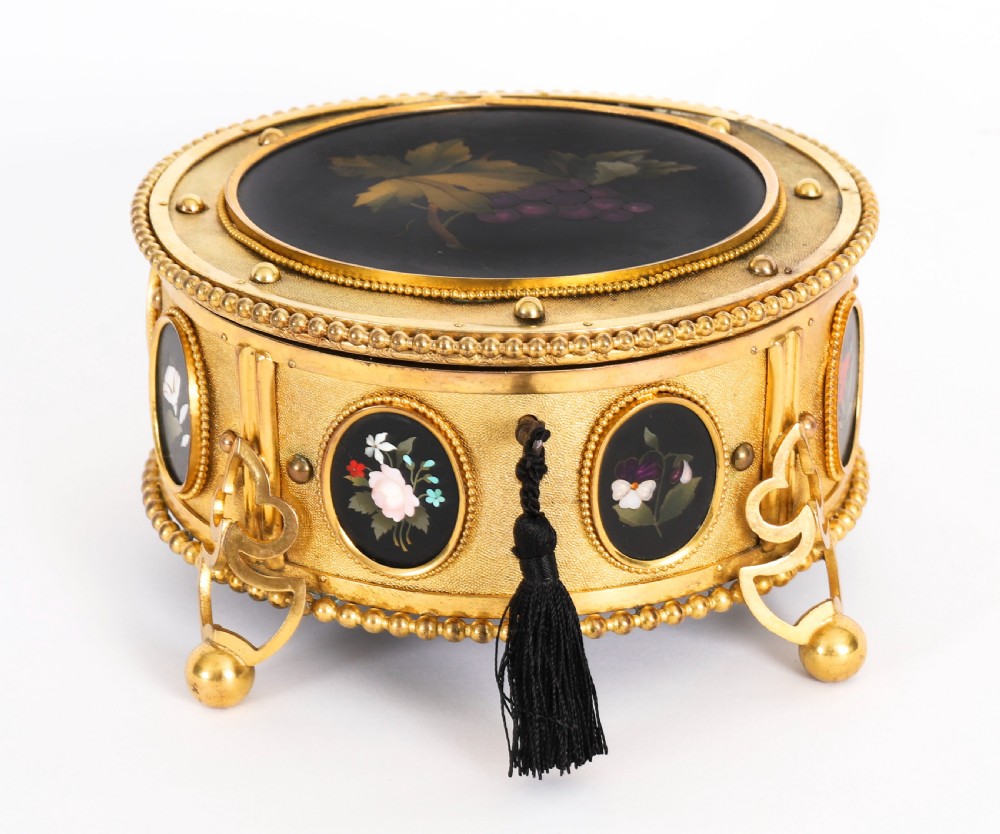
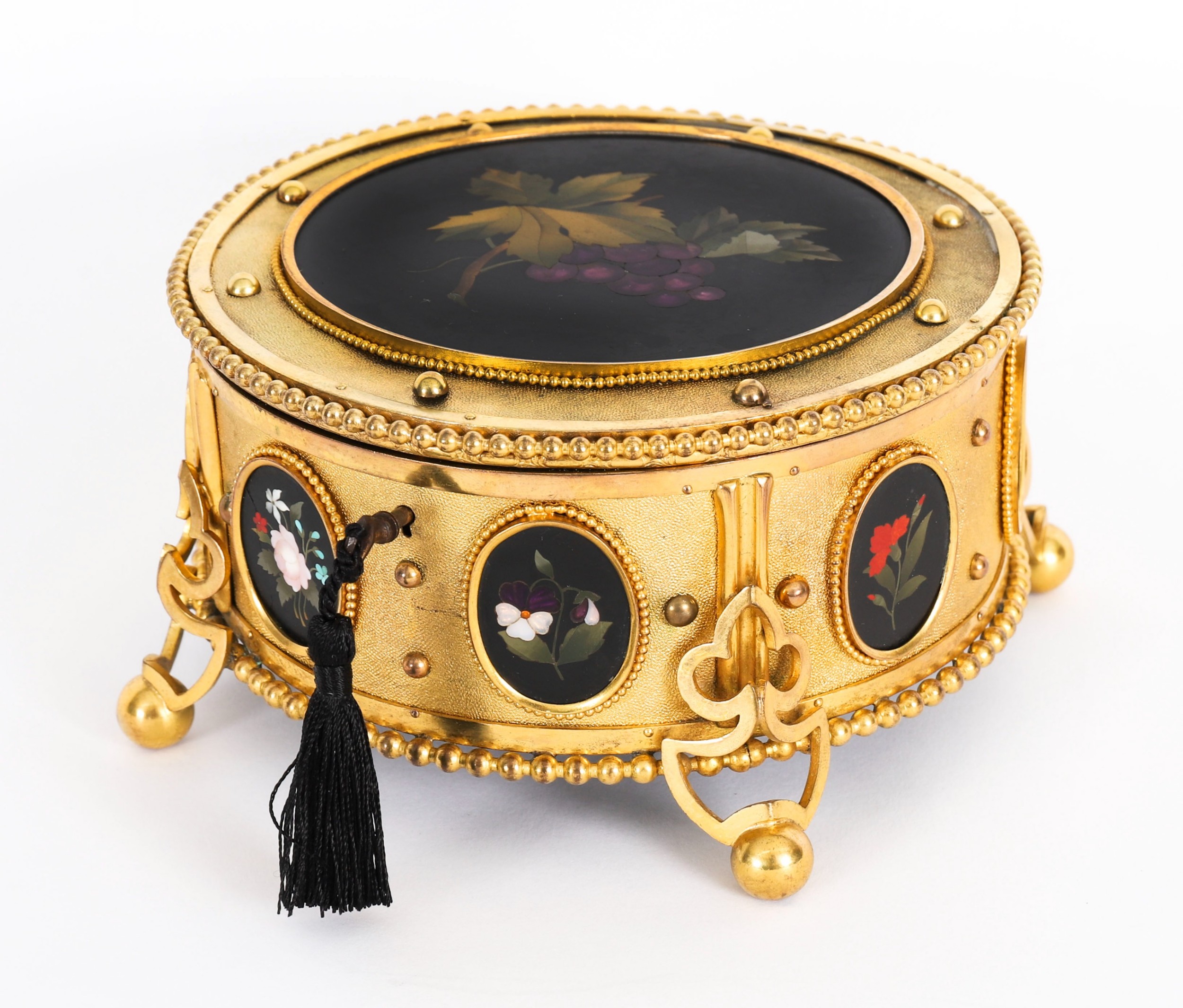
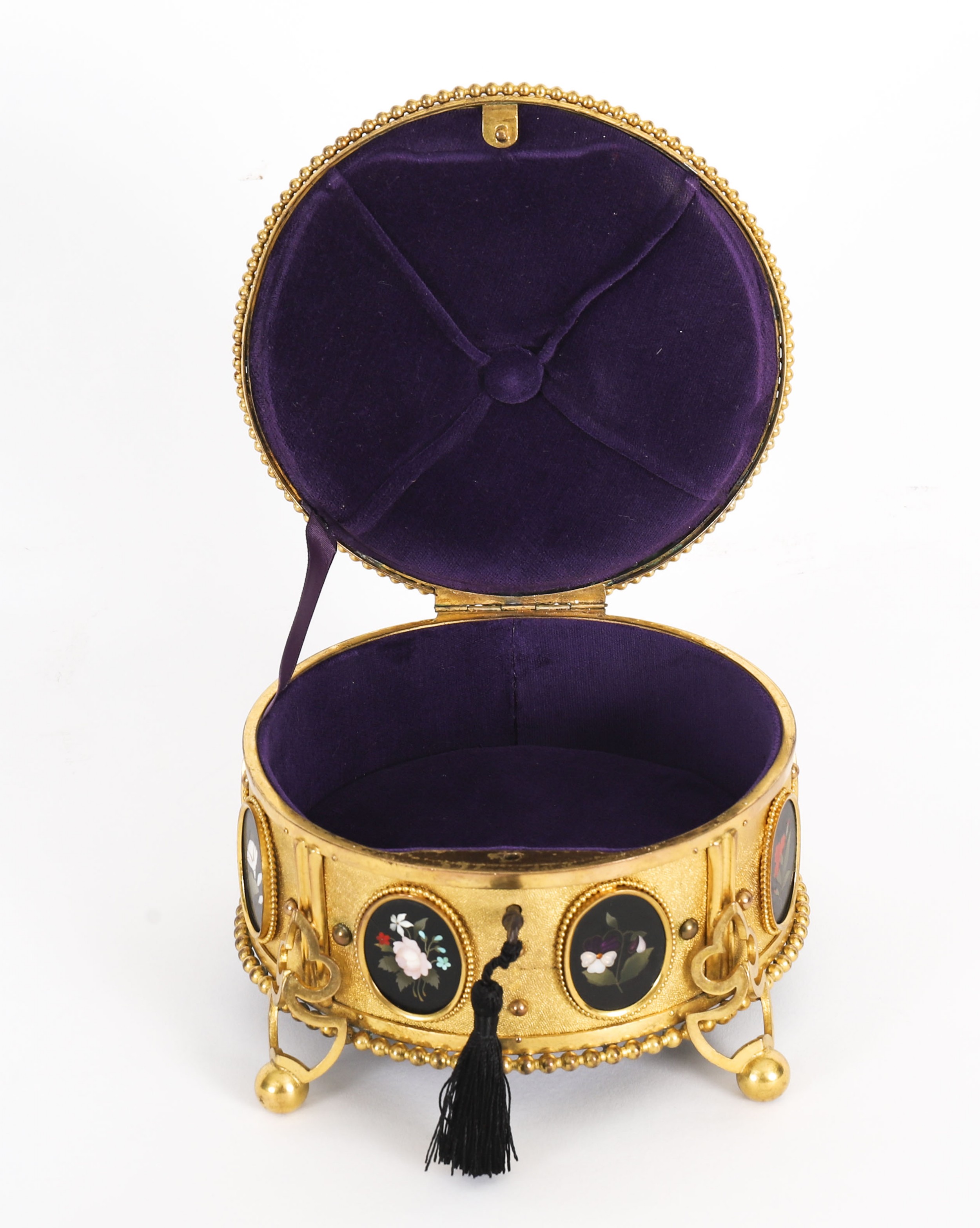
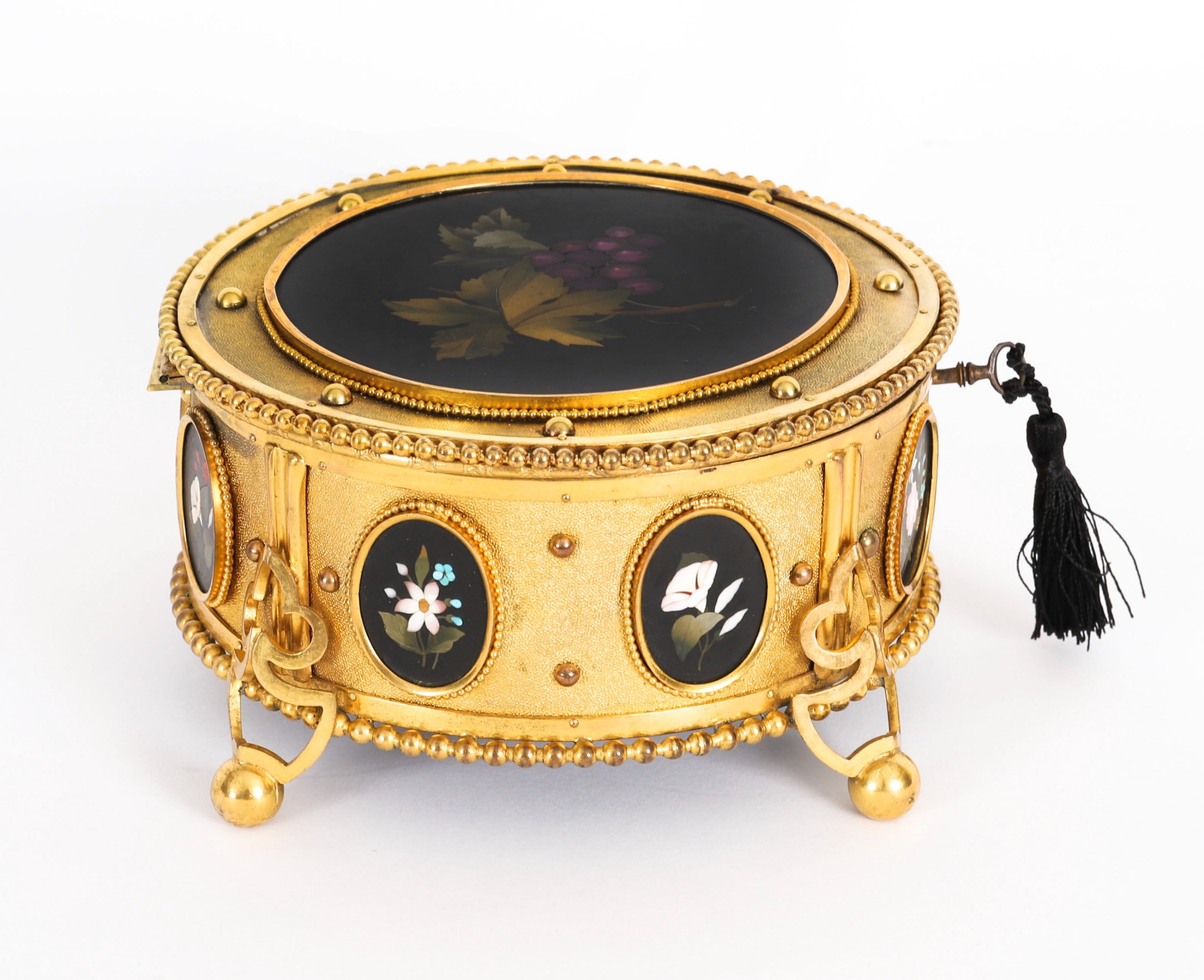
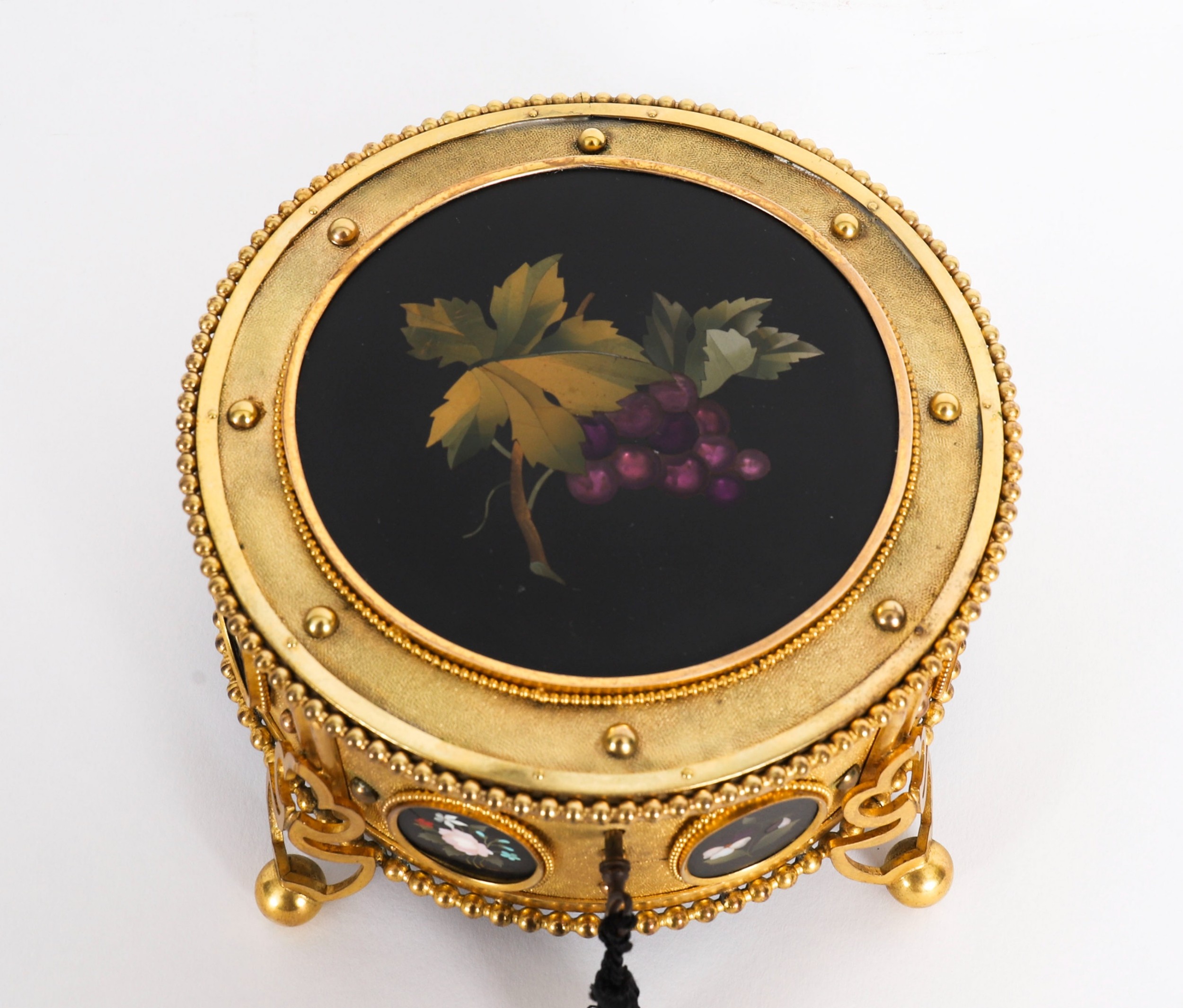
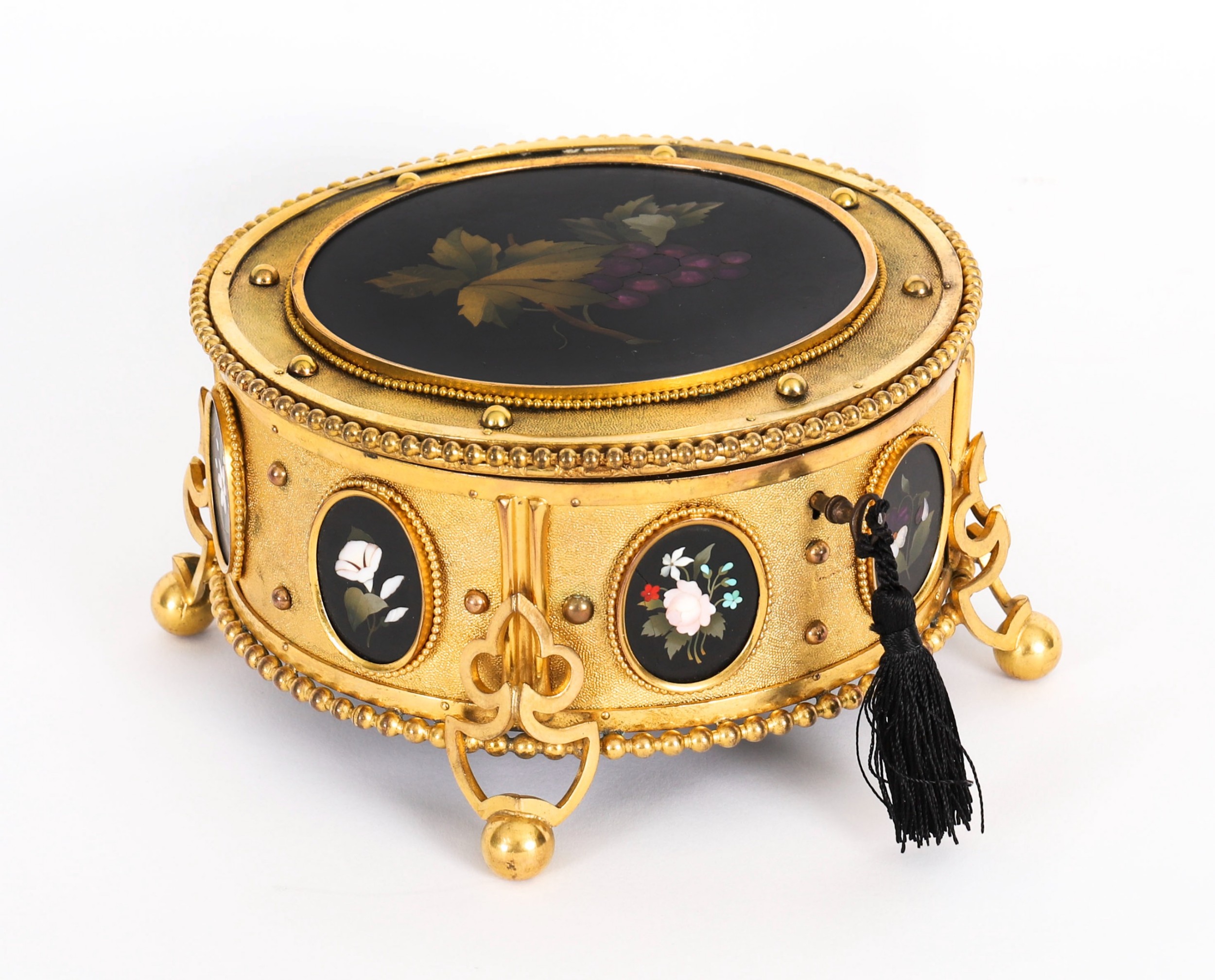
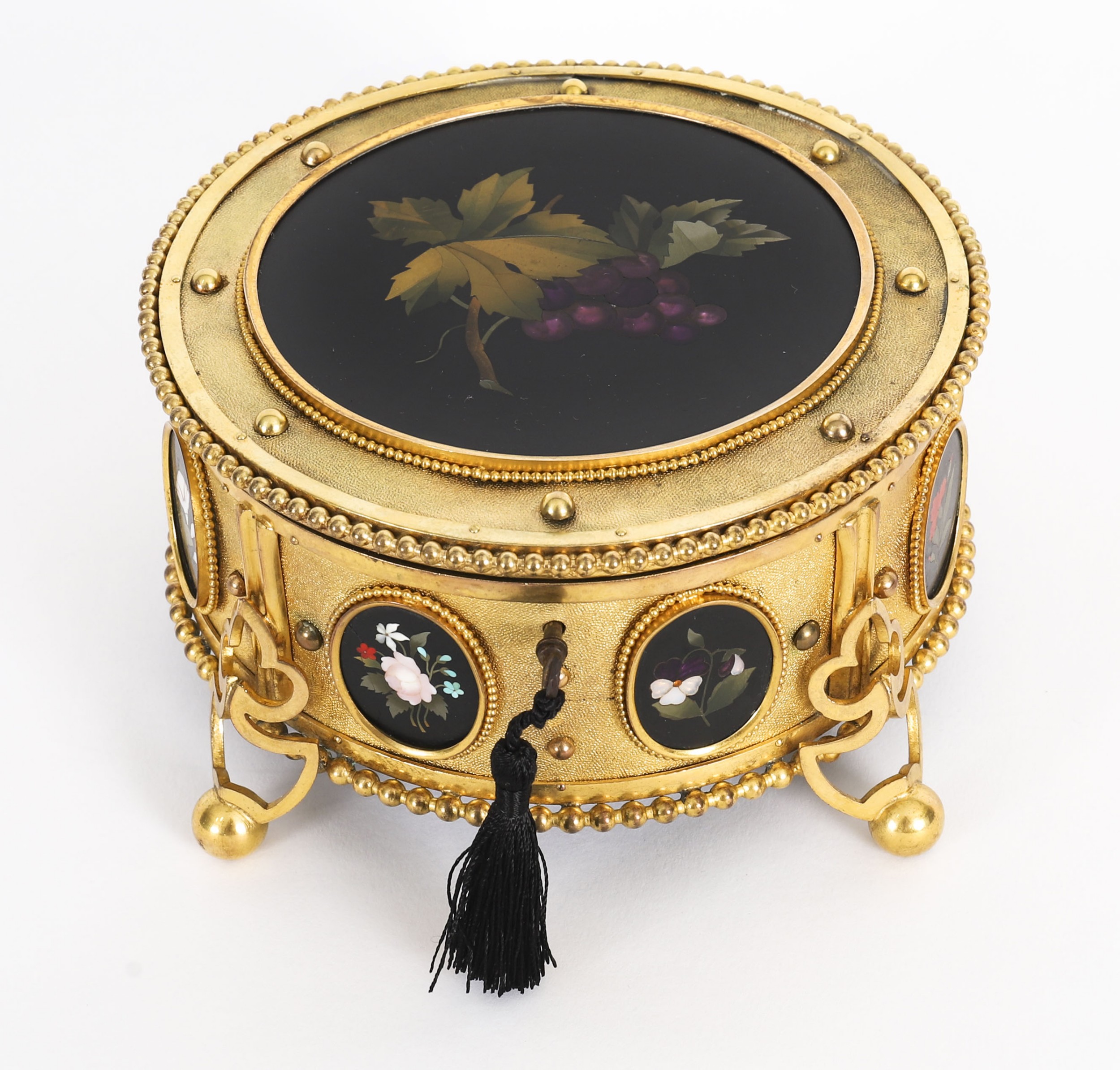
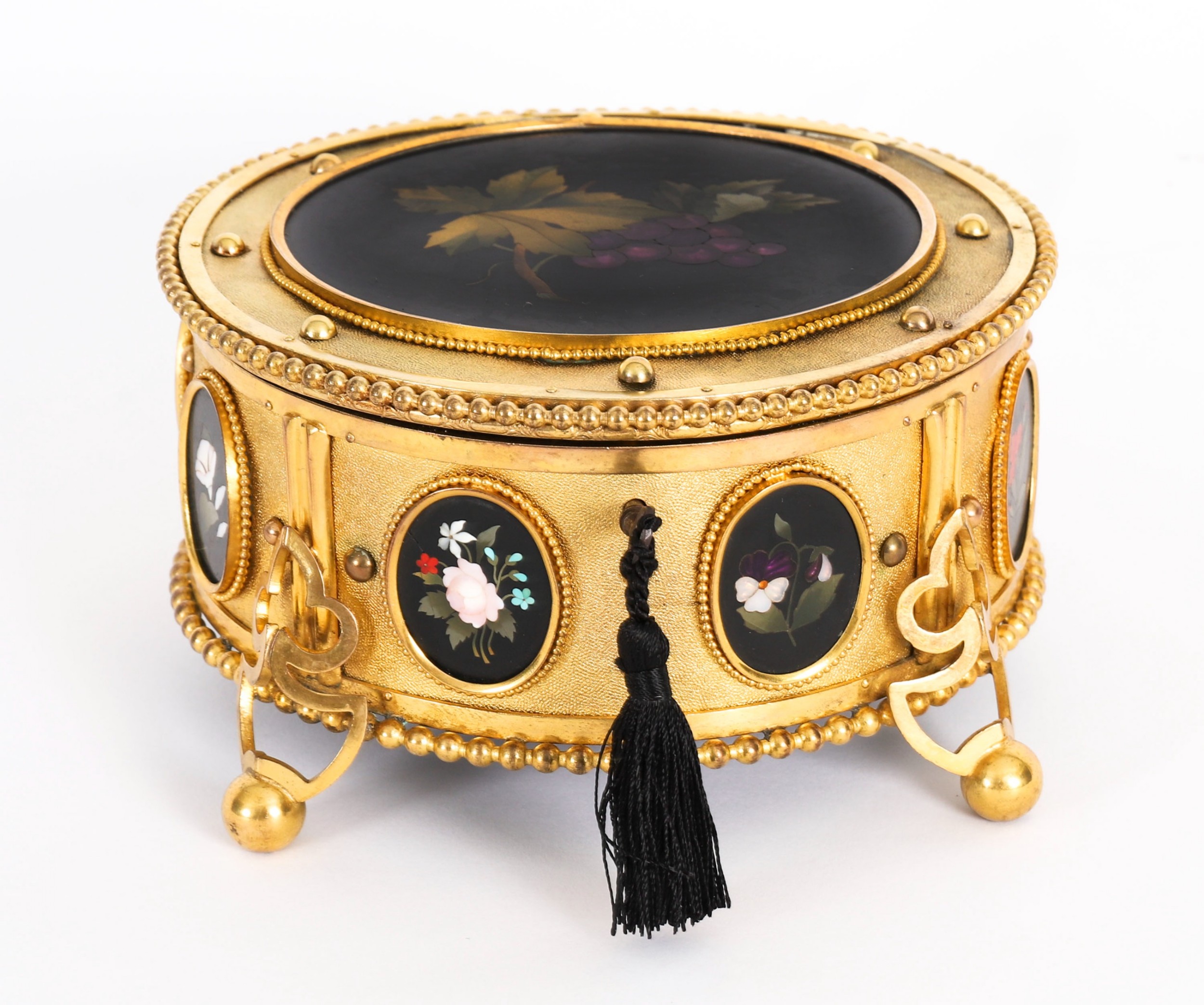
An extravagant Gilt Bronze and Pietra Dura jewellery casket, Circa 1860 in date.

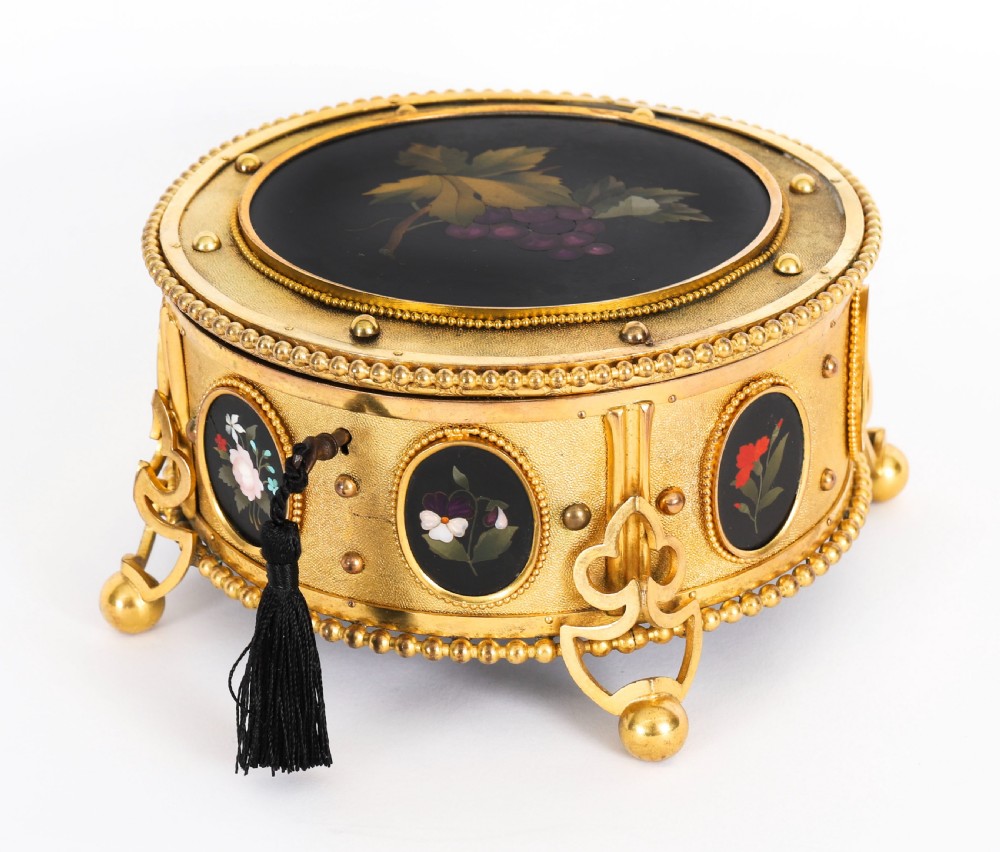
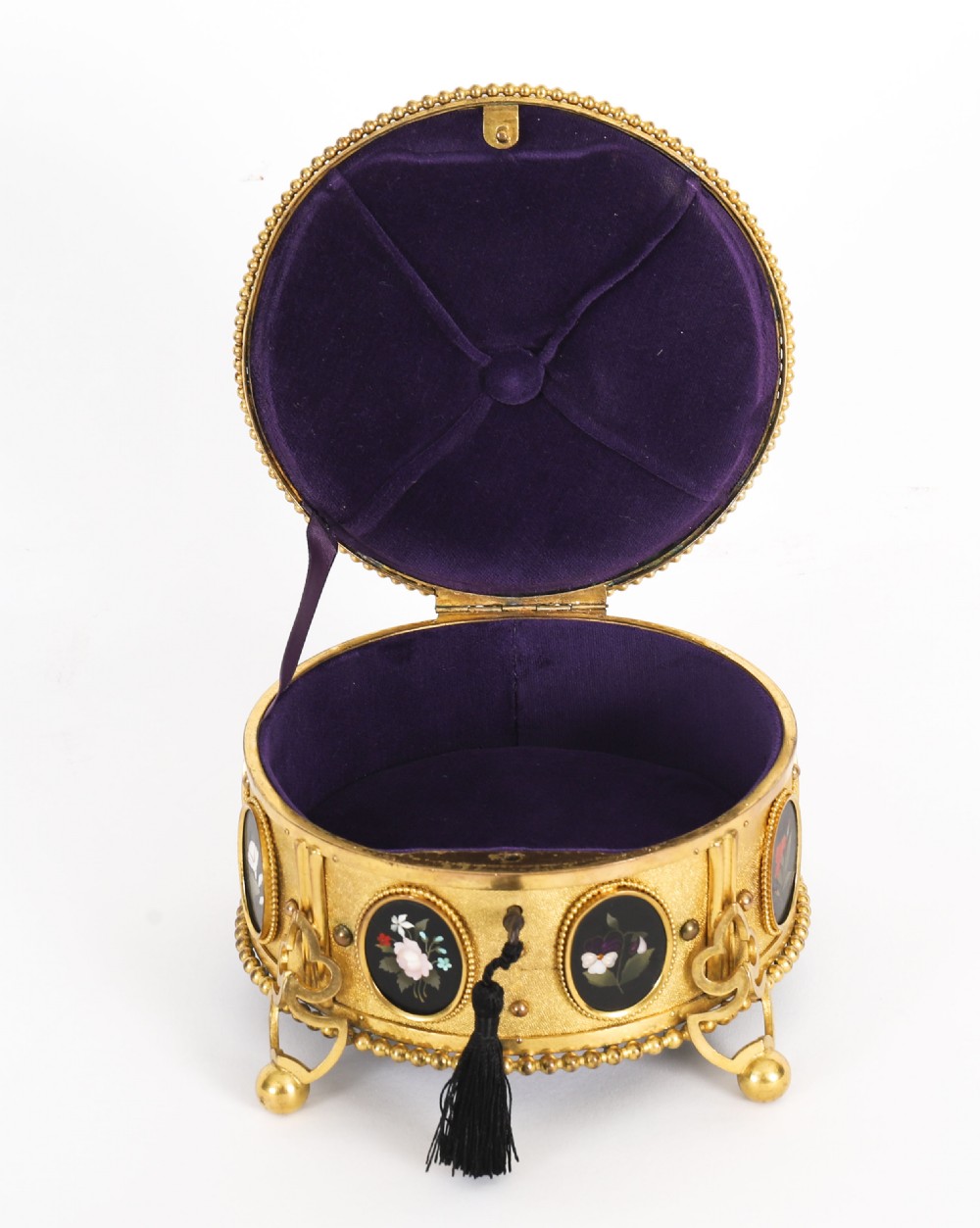
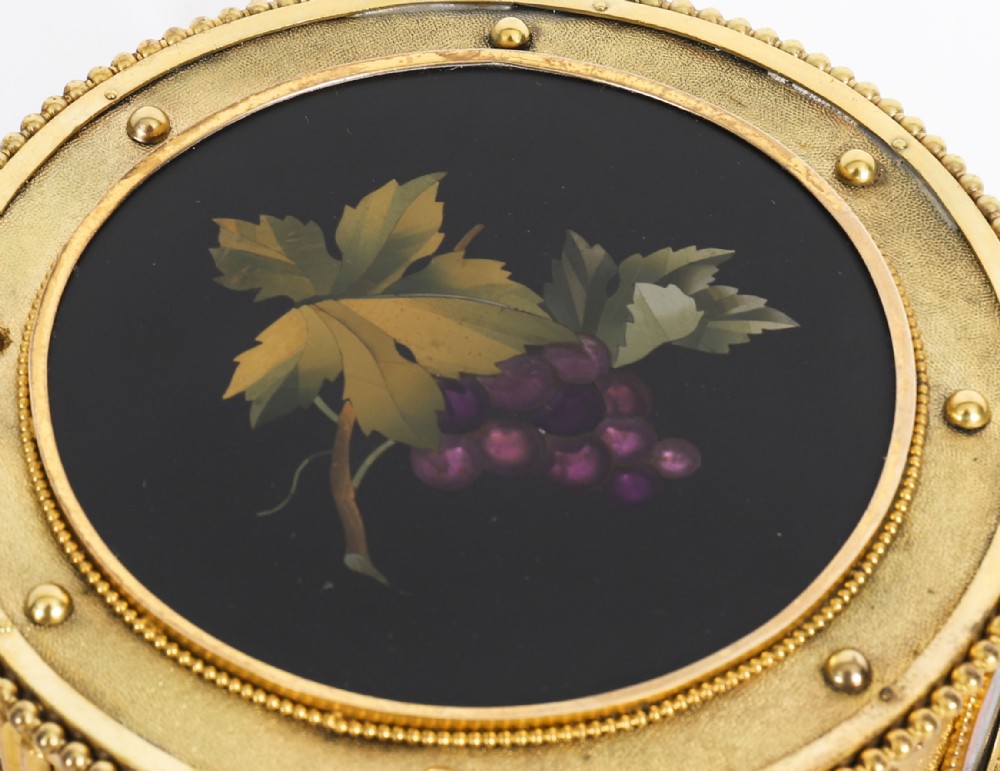
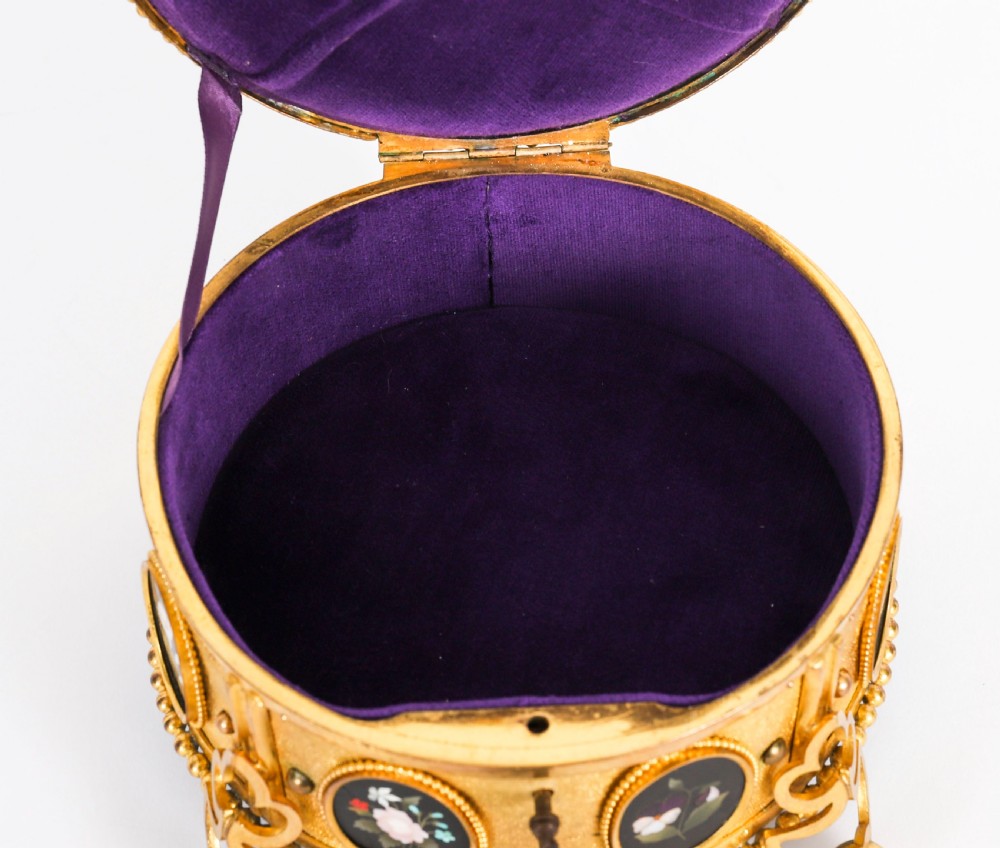
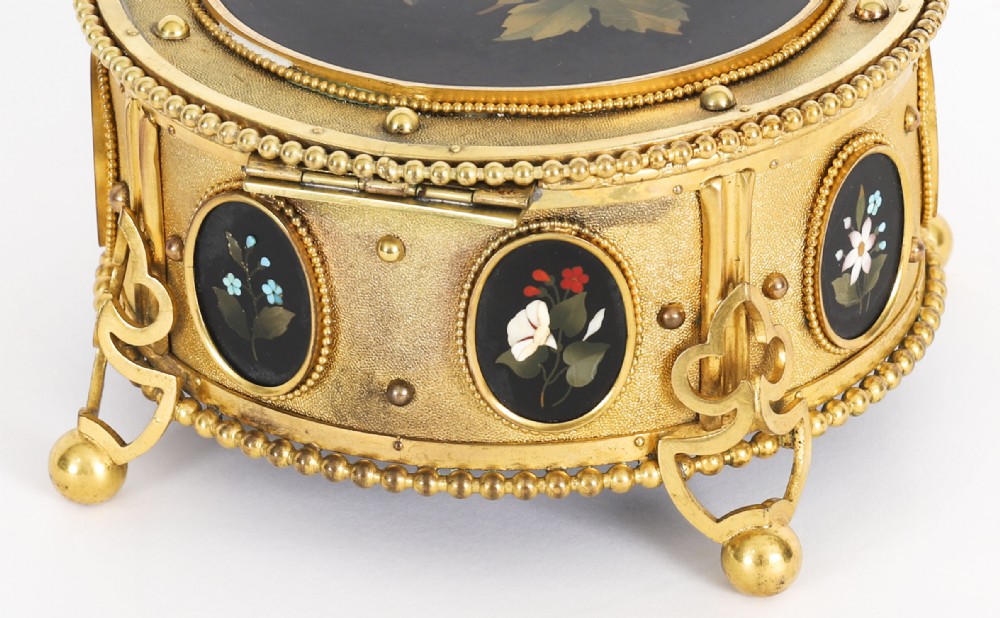
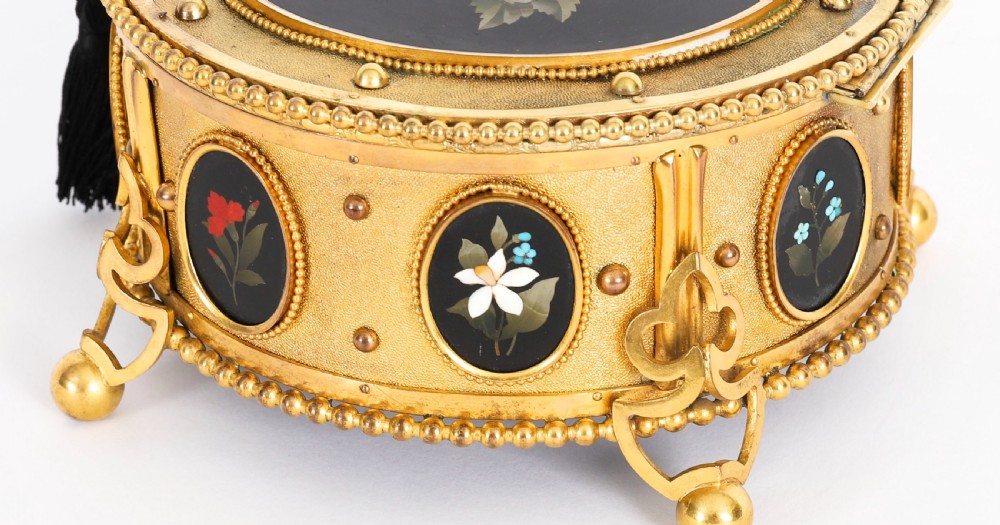
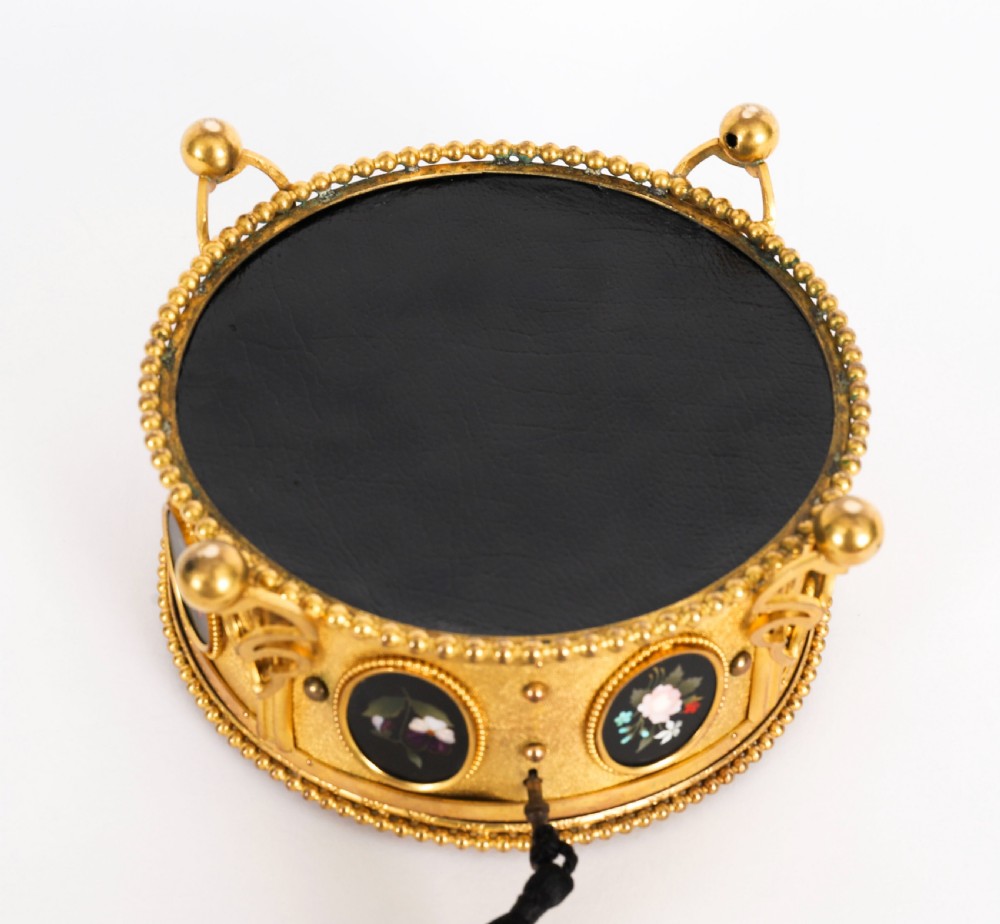
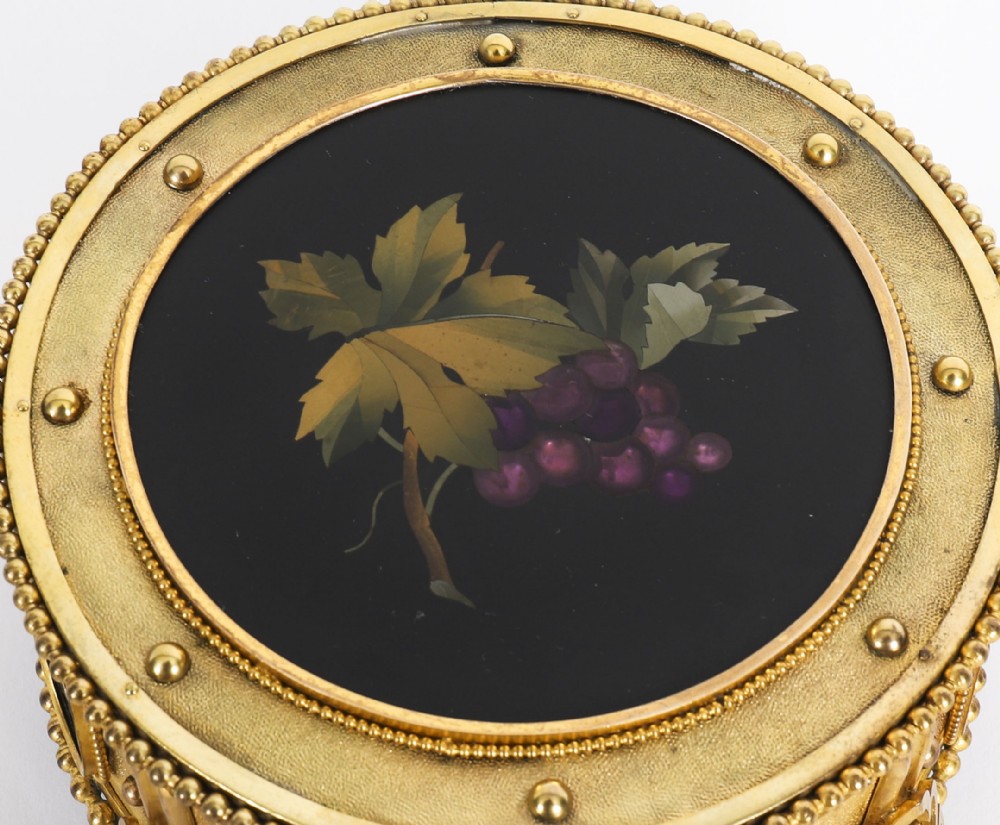
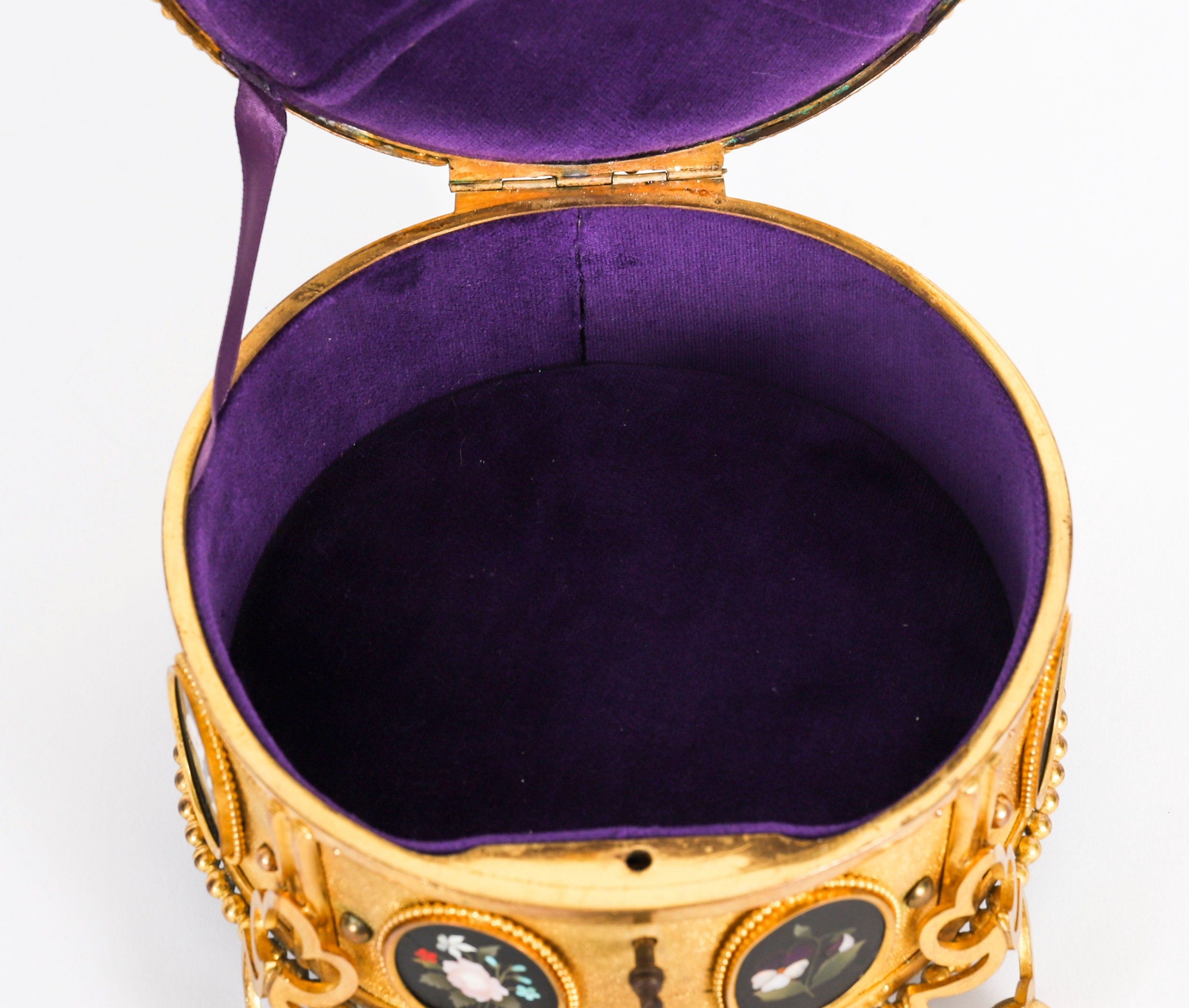
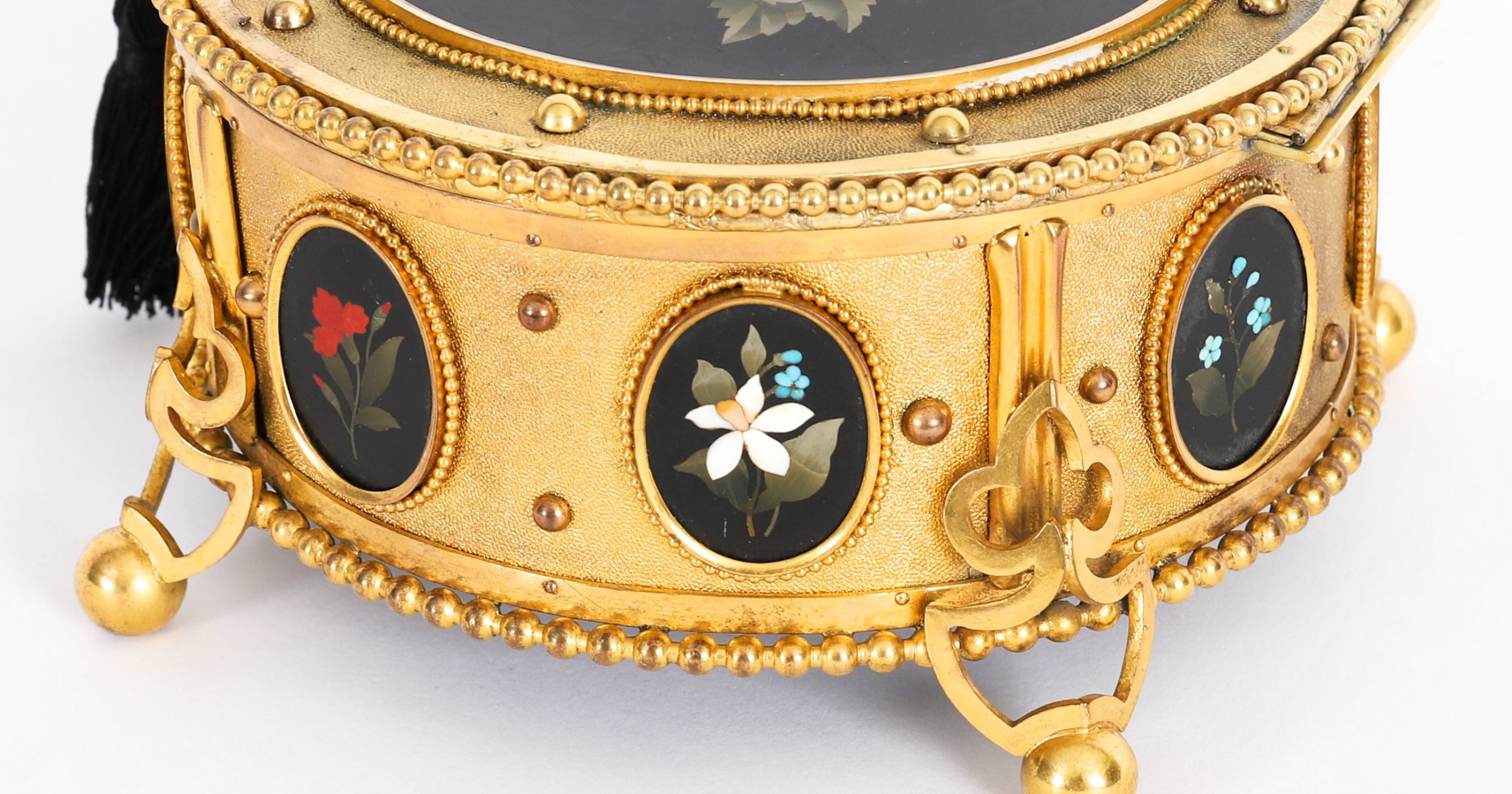
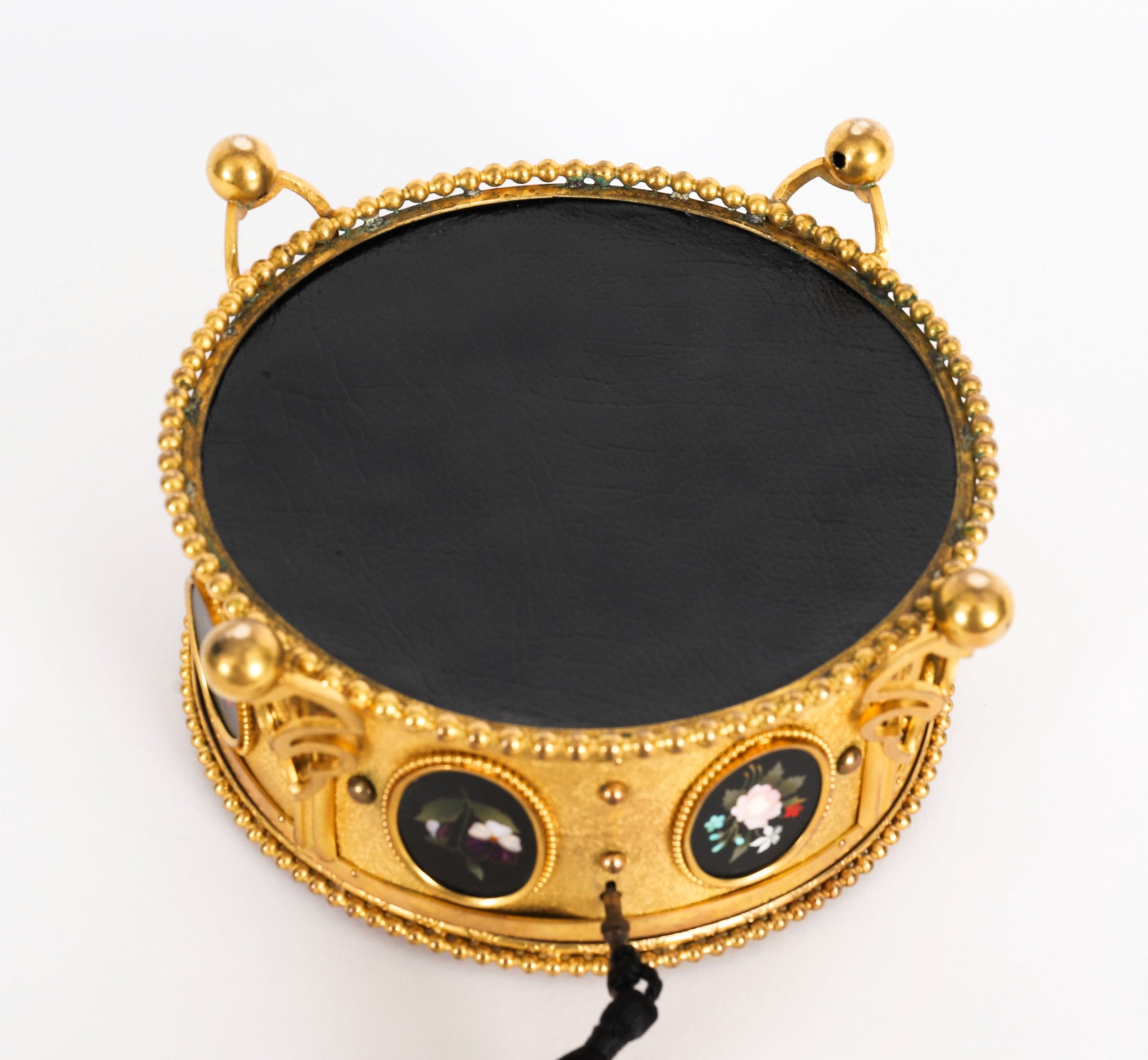
The stunning ormolu casket of circular form, inset with hardstone floral panels and a central plaque depicting a spray of grapes. It opens to reveal a Royal Purple velvet-lined interior and the casket is raised on scroll supports with ormolu ball feet.

Complete with working lock and original key.


Condition:

In really excellent condition, having been beautifully cleaned and waxed, please see photos for confirmation.

Dimensions in cm:

Height 9 cm x Width 17 cm x Depth 17 cm

Dimensions in inches:

Height 3 inches x Width 7 inches x Depth 7 inches

Pietra dura is a term for the inlay technique of using cut and fitted, highly polished coloured stones to create images. It is considered a decorative art.

Pietre dure is an Italian plural meaning "hard rocks" or hardstones; the singular pietra dura is also encountered in Italian. In Italian, but not in English, the term embraces all gem engraving and hardstone carving, which is the artistic carving of three-dimensional objects in semi-precious stone, normally from a single piece, for example, in Chinese jade.

The traditional convention in English has been to use the singular pietra dura just to denote multi-colored inlay work. However, in recent years, there has been a trend to use pietre dure as a term for the same thing, but not for all of the techniques it covers, in Italian.

But the title of a 2008 exhibition at the Metropolitan Museum of Art, New York, Art of the Royal Court: Treasures in Pietre Dure from the Palaces of Europe, used the full Italian sense of the term, probably because they thought that it had greater brand recognition. The material on the website speaks of objects such as a vase in lapis lazuli as being examples of "hardstone carving (pietre dure)."

The Victoria & Albert Museum in London uses both versions on its website, but uses pietra dura. "A method of inlaying coloured marbles or semi-precious stones into a stone base, often in geometric or flower patterns...."

Giovanni Montelatici (1864- 1930) was an Italian Florentine artist whose brilliant work has been distributed across the world by tourists and collectors. Owners of Giovanni's work included Donald Trump.

Ormolu - Gilt Bronze (from French 'or moulu', signifying ground or pounded gold) is an 18th-century English term for applying finely ground, high-carat gold in a mercury amalgam to an object of bronze. The mercury is driven off in a kiln, leaving behind a gold-coloured veneer known as 'gilt bronze'.

The manufacture of true ormolu employs a process known as mercury-gilding or fire-gilding, in which a solution of nitrate of mercury is applied to a piece of copper, brass, or bronze, followed by the application of an amalgam of gold and mercury. The item was then exposed to extreme heat until the mercury burned off and the gold remained, adhered to the metal object.

After around 1830, because legislation had outlawed the use of mercury, other techniques were used instead. Electroplating is the most common modern technique. Ormolu techniques are essentially the same as those used on silver to produce silver-gilt.

Our reference: A5271

Date of Manufacture

Regent Antiques has dated this Pietra Dura Jewellery Casket to the 1860s.

Physical Dimensions
Height
9cm (3.54")
Width
17cm (6.69")
Depth
17cm (6.69")
Reference Numbers
Sellingantiques Reference
SA1217896
Dealers Internal Reference
A5271
A circular 19th-century ormolu jewellery casket featuring fine Pietra Dura floral and fruit stone inlays set into gilt bronze with a key and tassel.Detail view 1Detail view 2Detail view 3Detail view 4Detail view 5Detail view 6Detail view 7Detail view 8Detail view 9Detail view 10Detail view 11Detail view 12Detail view 13Detail view 14
SOLD8 OCT 26
1 / 15
1860s · SA1217896
Antique Italian Ormolu & Pietra Dura Jewellery Casket 19th C
Sorry, but this item has been sold.
Description
An extravagant Gilt Bronze and Pietra Dura jewellery casket, Circa 1860 in date.

The stunning ormolu casket of circular form, inset with hardstone floral panels and a central plaque depicting a spray of grapes. It opens to reveal a Royal Purple velvet-lined interior and the casket is raised on scroll supports with ormolu ball feet.

Complete with working lock and original key.


Condition:

In really excellent condition, having been beautifully cleaned and waxed, please see photos for confirmation.

Dimensions in cm:

Height 9 cm x Width 17 cm x Depth 17 cm

Dimensions in inches:

Height 3 inches x Width 7 inches x Depth 7 inches

Pietra dura is a term for the inlay technique of using cut and fitted, highly polished coloured stones to create images. It is considered a decorative art.

Pietre dure is an Italian plural meaning "hard rocks" or hardstones; the singular pietra dura is also encountered in Italian. In Italian, but not in English, the term embraces all gem engraving and hardstone carving, which is the artistic carving of three-dimensional objects in semi-precious stone, normally from a single piece, for example, in Chinese jade.

The traditional convention in English has been to use the singular pietra dura just to denote multi-colored inlay work. However, in recent years, there has been a trend to use pietre dure as a term for the same thing, but not for all of the techniques it covers, in Italian.

But the title of a 2008 exhibition at the Metropolitan Museum of Art, New York, Art of the Royal Court: Treasures in Pietre Dure from the Palaces of Europe, used the full Italian sense of the term, probably because they thought that it had greater brand recognition. The material on the website speaks of objects such as a vase in lapis lazuli as being examples of "hardstone carving (pietre dure)."

The Victoria & Albert Museum in London uses both versions on its website, but uses pietra dura. "A method of inlaying coloured marbles or semi-precious stones into a stone base, often in geometric or flower patterns...."

Giovanni Montelatici (1864- 1930) was an Italian Florentine artist whose brilliant work has been distributed across the world by tourists and collectors. Owners of Giovanni's work included Donald Trump.

Ormolu - Gilt Bronze (from French 'or moulu', signifying ground or pounded gold) is an 18th-century English term for applying finely ground, high-carat gold in a mercury amalgam to an object of bronze. The mercury is driven off in a kiln, leaving behind a gold-coloured veneer known as 'gilt bronze'.

The manufacture of true ormolu employs a process known as mercury-gilding or fire-gilding, in which a solution of nitrate of mercury is applied to a piece of copper, brass, or bronze, followed by the application of an amalgam of gold and mercury. The item was then exposed to extreme heat until the mercury burned off and the gold remained, adhered to the metal object.

After around 1830, because legislation had outlawed the use of mercury, other techniques were used instead. Electroplating is the most common modern technique. Ormolu techniques are essentially the same as those used on silver to produce silver-gilt.

Our reference: A5271
Date1860s
Height9cm (3.54")
Width17cm (6.69")
Depth17cm (6.69")
ReferenceSA1217896
Dealer's referenceA5271
Regent Antiques
Regent AntiquesSellingantiques verified since Sep 2016

We specialise in english and continental furniture, silver, porcelain and decorative items.

Member of LAPADA CINOA

SHARE
SAVE
Archive I A circular 19th-century ormolu jewellery casket featuring fine Pietra Dura floral and fruit stone inlays set into gilt bronze with a key and tassel. SOLD8 OCT 26

Antique Italian Ormolu & Pietra Dura Jewellery Casket 19th C

Archive II A circular 19th-century ormolu jewellery casket featuring fine Pietra Dura floral and fruit stone inlays set into gilt bronze with a key and tassel. View II
Archive III A circular 19th-century ormolu jewellery casket featuring fine Pietra Dura floral and fruit stone inlays set into gilt bronze with a key and tassel. View III
Archive IV A circular 19th-century ormolu jewellery casket featuring fine Pietra Dura floral and fruit stone inlays set into gilt bronze with a key and tassel. View IV
Archive V A circular 19th-century ormolu jewellery casket featuring fine Pietra Dura floral and fruit stone inlays set into gilt bronze with a key and tassel. View V
Archive VI A circular 19th-century ormolu jewellery casket featuring fine Pietra Dura floral and fruit stone inlays set into gilt bronze with a key and tassel. View VI
Archive VII A circular 19th-century ormolu jewellery casket featuring fine Pietra Dura floral and fruit stone inlays set into gilt bronze with a key and tassel. View VII
Archive VIII A circular 19th-century ormolu jewellery casket featuring fine Pietra Dura floral and fruit stone inlays set into gilt bronze with a key and tassel. View VIII
Archive IX A circular 19th-century ormolu jewellery casket featuring fine Pietra Dura floral and fruit stone inlays set into gilt bronze with a key and tassel. View IX
Archive X A circular 19th-century ormolu jewellery casket featuring fine Pietra Dura floral and fruit stone inlays set into gilt bronze with a key and tassel. View X
Archive XI A circular 19th-century ormolu jewellery casket featuring fine Pietra Dura floral and fruit stone inlays set into gilt bronze with a key and tassel. View XI
Archive XII A circular 19th-century ormolu jewellery casket featuring fine Pietra Dura floral and fruit stone inlays set into gilt bronze with a key and tassel. View XII
Archive XIII A circular 19th-century ormolu jewellery casket featuring fine Pietra Dura floral and fruit stone inlays set into gilt bronze with a key and tassel. View XIII
Archive XIV A circular 19th-century ormolu jewellery casket featuring fine Pietra Dura floral and fruit stone inlays set into gilt bronze with a key and tassel. View XIV
Archive XV A circular 19th-century ormolu jewellery casket featuring fine Pietra Dura floral and fruit stone inlays set into gilt bronze with a key and tassel. View XV
Enlarged Archival View
Location
Manor Warehouse
318 Green Lanes
London
N4 1BX
United Kingdom
Verified Since Sep 2016
Items For Sale 639
Items Sold 2,756
Regent Antiques
Regent Antiques
Verified Since Sep 2016
View Dealer Info
Location: Manor Warehouse, 318 Green Lanes, London, N4 1BX, United Kingdom
Verified
Sep 2016
For Sale
639
Sold
2,756
A circular 19th-century ormolu jewellery casket featuring fine Pietra Dura floral and fruit stone inlays set into gilt bronze with a key and tassel.
Antique Italian Ormolu & Pietra Dura Jewellery Casket 19th C
Ref: SA1217896
A circular 19th-century ormolu jewellery casket featuring fine Pietra Dura floral and fruit stone inlays set into gilt bronze with a key and tassel.
Detail View 1
Detail View 2
Detail View 3
Detail View 4
Detail View 5
Detail View 6
Detail View 7
Detail View 8
Detail View 9
Detail View 10
Detail View 11
Detail View 12
Detail View 13
Detail View 14
Archival Detail
Every single antique dealer on our platform is individually approved by our internal team. We verify their professional trade history, ethical standards, and photographic quality to ensure a secure, high-standard buying environment. Upon joining, every dealer agrees to a strict 9-point code of conduct. While issues can occasionally arise, our dealers typically resolve them swiftly and directly with the buyer. In fact, since our founding in 2002, Sellingantiques has only had to step in to help resolve an issue on roughly five occasions—a true testament to the quality of our dealers and their dedication to your happiness.
Our dealers are highly experienced in packing and shipping fragile, high-value antiques. Because you are in direct contact with the dealer, you will be able to easily go through all available shipping and insurance options together to ensure your item arrives safely.
Antiques are the ultimate green purchase. By choosing historical pieces over newly manufactured goods, you completely eliminate the carbon footprint of modern mass production while preserving exceptional, timeless craftsmanship.
Written by Sellingantiques from the dealer’s photographs and listing
  • ObjectJewellery Caskets
  • Period19th century
  • Style19th Century Italian
  • MaterialOrmolu, Pietra Dura, Marble, Slate
  • ColourGold
  • MotifsPietra dura floral inlay, Beaded borders, Scroll supports, Ball feet
  • SizeH 9 cm (4 in) x W 17 cm (7 in) x D 17 cm (7 in)

This 19th-century Italian jewellery casket dates from 1860 and takes a circular form constructed from ormolu, pietra dura, marble, and slate with a gold finish. The exterior displays fine pietra dura floral and fruit stone inlays, including a central plaque depicting a spray of grapes, complemented by beaded borders, scroll supports, and ball feet. A key with a black tassel hangs from the working lock. Measuring 9 cm high, 17 cm wide, and 17 cm deep, the container holds a royal purple velvet-lined interior. In a modern home, this piece functions well on a sideboard top to store small valuables and trinkets. The gilt bronze surfaces present detailed decorative mouldings and textured patterns around the inset stone plaques, while the cast metal feet raise the body securely off flat surfaces.

Dust surfaces gently with a soft microfibre cloth, avoiding harsh chemicals, abrasive polishes, or moisture, as liquids can damage the stone adhesives and alter the aged patina of the gilded metalwork.

An antique casket functions as an accent piece on a sideboard, dressing table, or mantelpiece, where its gilded texture and stone inlay contrast against minimalist surfaces or complement traditional decor.

Authentic 19th-century pieces display precise seam lines between hand-cut natural stones, authentic casting wear or patination on the gilding, period-appropriate lock mechanisms, and often depict classic Florentine floral or fruit motifs.

These caskets were crafted by cutting thin slices of coloured stones to shape, fitting them tightly into carved stone panels to form floral or geometric imagery, and securing them into mercury-gilded bronze or brass frames finished with detailed chasing.

A pietra dura jewellery casket is a decorative storage box featuring hardstone marquetry where highly polished coloured stones, marbles, and semi-precious gems are inlaid into slate or marble substrates, often mounted within gilded bronze or brass frames.
items
Add keywords to the filter
Price
£100
£250000
Era
Period
Style
Material
Origin
Stock Location
Recently Added
Online Payments
Categories