



Ormolu Jewellery Box
An ormolu jewellery box brings heavy cast metal mounts and glass, porcelain or timber together to safely hold small treasures on a dressing table.
Ormolu Jewellery Box
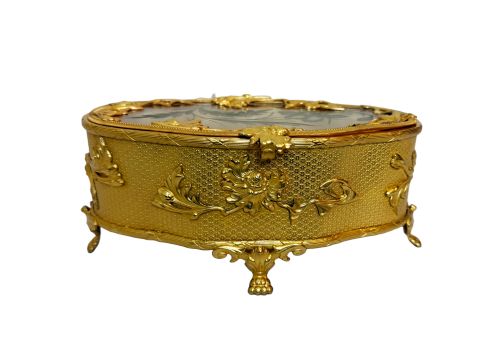
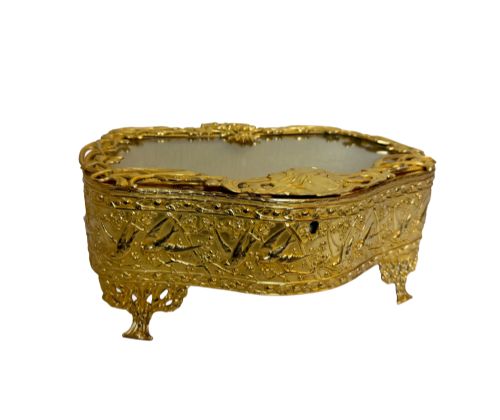
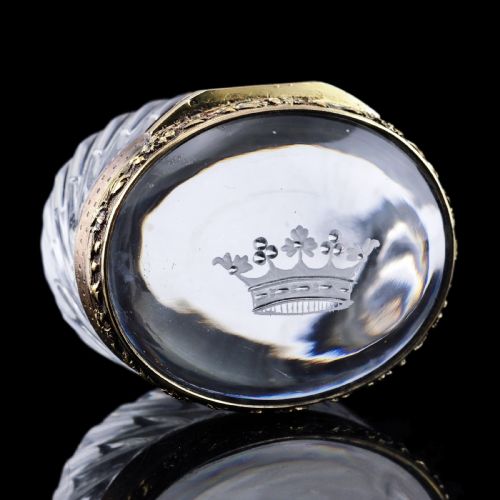
An ormolu jewellery box is a receptacle designed for precious trinkets, combining cast metal mounts with panels of glass, porcelain, marble, hardstone or timber. The most common form on this page is the nineteenth century French casket, often styled in the manner of Louis periods or the Second Empire.
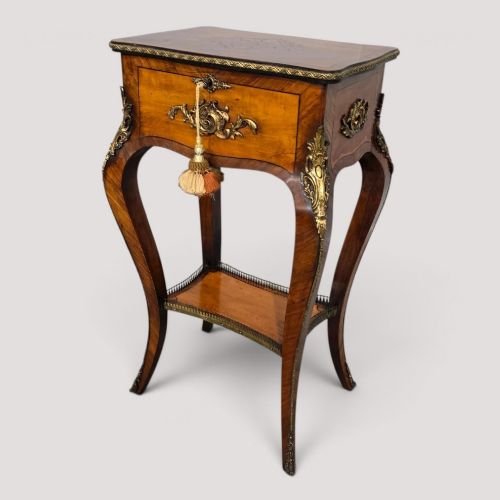
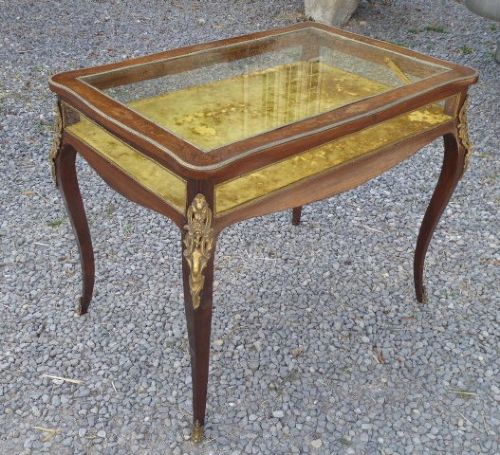
Beyond standard tabletop boxes, the selection encompasses bijouterie display tables on slender legs, miniature chests of drawers, and glass caskets with glazed panels for viewing contents. These pieces draw on French nineteenth century design vocabulary, utilising revival styles from Rococo to Art Nouveau.
Origins lean heavily toward French workshops of the eighteen-hundreds, alongside Victorian English interpretations utilising similar gilded mounts. They range from compact trinket boxes intended for a single ring to large display pieces lined in velvet.
How they were made
The characteristic golden mounts are produced from cast bronze that receives a mercury gilding or modern electrogilding finish, known as ormolu, creating crisp chased detail around edges, hinges and feet. These heavy metal frames secure fragile panels of bevelled glass, Sevres or Limoges porcelain, and Baccarat crystal.
Carcase structures employ dense timbers like mahogany, rosewood, kingwood and walnut, frequently accented with marquetry inlays or mounted directly onto marble and onyx bases. Interiors are typically lined with plush silk or velvet to cushion valuables.
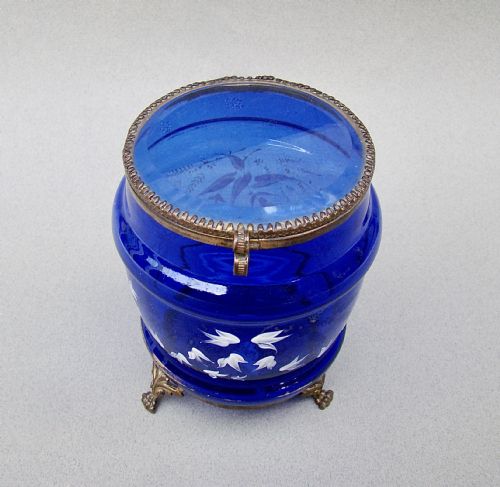
Specialised techniques include pietra dura stone inlay, blue enamel work, and banded carnelian agate hardstone assemblies held together by tiny brass and ormolu pins.
Ormolu Jewellery Box Retail Price Guide 2026
Typical asking prices for ormolu jewellery box among the pieces listed under this phrase on Sellingantiques today, from the lower quarter to the upper quarter. They describe what is for sale here now, not the wider market.
Object forms span jewellery caskets, display tables, trinket boxes, miniature chests of drawers and bijouterie tables.
What varies in quality
Quality rests primarily in the crispness of the bronze casting and the depth of the subsequent chasing on the ormolu mounts, where superior examples exhibit sharp, hand-finished foliage and figural scenes rather than soft, blurred edges. The weight and thickness of the glass panels or porcelain plaques also dictate the substance of the piece.
The joinery of the timber carcase and the precision with which the metal mounts fit the glass or stone panels separate master workshops from mass production. Original velvet linings, working locks with matching keys, and intact hand-painted porcelain or enamel plaques elevate an individual box.
The Ormolu Jewellery Box Glossary
- Ormolu
- Gilded bronze, used extensively for decorative mounts on furniture and decorative boxes throughout the nineteenth century. The term derives from the French for ground gold.
- Bijouterie table
- A glass-topped display table designed specifically for showcasing small valuable objects and jewellery. These stands often feature slender cabriole legs and hinged lids.
- Sevres
- A famous French porcelain manufactory whose painted plaques frequently appear mounted into the lids and sides of nineteenth century caskets. These inserts typically display floral motifs or figural scenes against rich blue grounds.
- Pietra dura
- An artistic technique of inlaying cut and fitted polished coloured stones to form picturesque images. It is commonly found on Italian caskets from the nineteenth century.
- Napoleon III
- A French design period spanning the mid to late nineteenth century, characterised by eclectic revivals of Louis styles, heavy proportions and lavish ornamentation.
Ormolu Jewellery Box: Frequently Asked Questions
What were ormolu jewellery boxes used for?
These caskets were kept on dressing tables and parlour surfaces to hold rings, brooches, small keepsakes and precious trinkets. Glazed display versions allowed owners to exhibit their collections of miniature paintings and curiosities without handling them constantly.
In grander nineteenth century interiors, they functioned as decorative objects in their own right, matching the gilt bronze clocks and candelabras of the room.
How do I clean ormolu mounts?
Ormolu requires gentle dusting with a soft, dry brush to prevent dirt settling into the recessed chased details of the bronze. Avoid abrasive metal polishes or harsh chemical cleaners, which can strip away the historic gilding.
If the metal requires more attention, a damp cloth with mild soap followed by immediate drying is generally as much intervention as a sensitive surface tolerates.
Are these boxes fragile?
Many examples incorporate bevelled glass panels, delicate porcelain plaques or thin crystal lids that demand careful placement away from high-traffic edges. The heavy bronze mounts can also loosen from wood or glass carcases if the box is lifted incorrectly by the lid hinge alone.
Supporting the base during transport protects both the structural joints and the internal velvet or silk linings.
How can I tell nineteenth century pieces apart?
Dating relies on stylistic shifts from the heavier architectural mahogany and marble pieces of the early eighteen-hundreds to the ornate Rococo revival caskets of the mid-century. Later Victorian and Art Nouveau examples introduce flowing organic lines, simpler glass construction and lighter bronze frames.
Materials also shift across decades, with Sevres-style porcelain plaques dominating the mid-nineteenth century and transparent crystal or glass panels prevailing toward nineteen-hundred.