


French Glass Jewellery Box
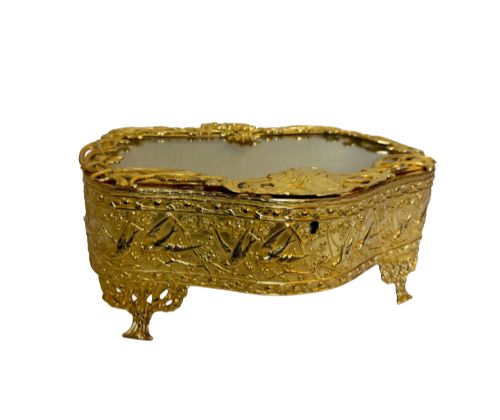
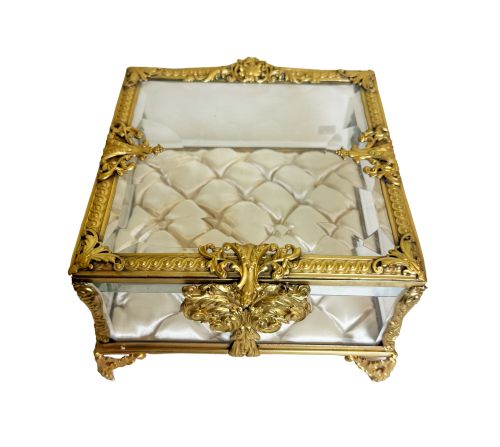
A french glass jewellery box holds personal treasures behind bevelled panels and ornate metal mounts, combining practical storage with desktop display.
French Glass Jewellery Box
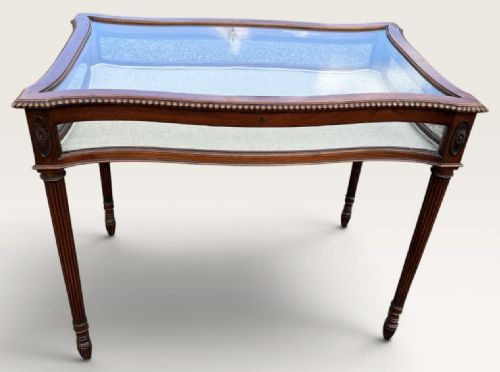
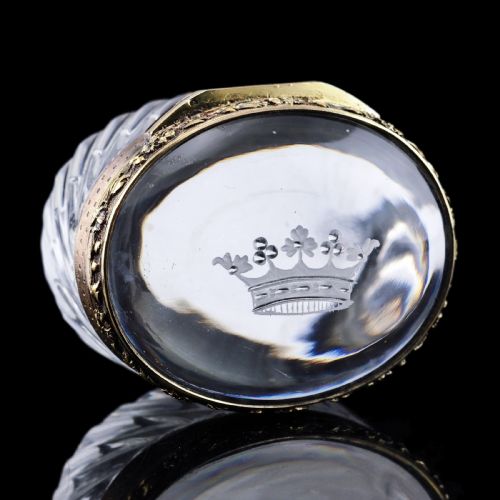
A french glass jewellery box encompasses everything from small tabletop trinket containers and powder boxes to larger freestanding bijouterie tables and cabinets designed for display. These pieces span the nineteenth century, the Victorian and Edwardian eras, and into the art deco period.
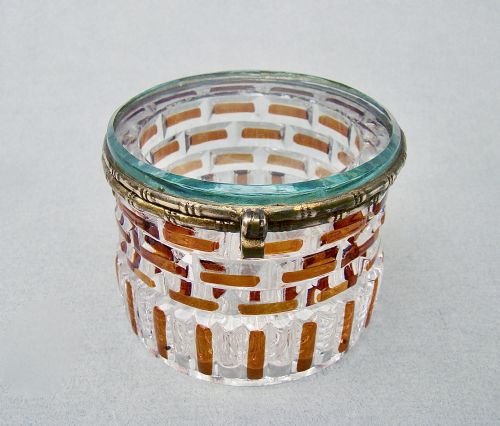
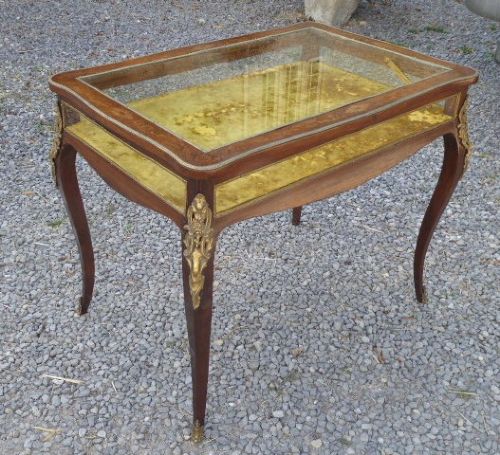
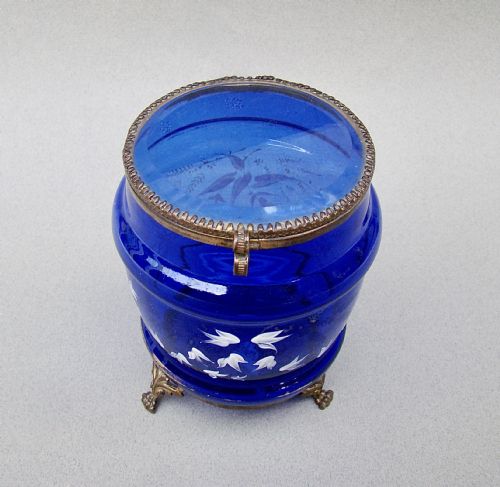
Buyers most frequently encounter ormolu-mounted glass caskets, amber or blue glass vessels with gilt frames, and mahogany or rosewood bijouterie tables featuring glazed tops. The selection ranges from Palais Royal novelty carriage boxes to substantial serpentine display tables.
Origins trace directly to French workshops and related continental makers, utilising styles that encompass Louis XV and Louis XVI revivals, Napoleon III grandeur, and Belle Epoque elegance.
Materials and construction
Makers combined heavy cast ormolu, gilt bronze, and brass mounts with transparent, amber, Bristol blue, or opaline glass panels. Cabinets and tables incorporated timber frames of mahogany, walnut, rosewood, and kingwood, often enhanced with marquetry inlay.
Interiors typically relied on textile linings such as velvet or fabric cushions to protect contents. Glass sections utilised bevelled edges secured within metal frames by skilled metalworkers and cabinet makers.
Listings demonstrate a strong presence of nineteenth-century French craftsmanship, dominated by ormolu frames, mahogany structures, and Baccarat crystal.
Distinctions in craftsmanship
Quality reveals itself in the weight and crispness of the gilt bronze or ormolu mountings, where sharply chased foliage and figures supersede flat, uniform castings. The thickness and clarity of the cut crystal or bevelled glass panes also separate standard receptacles from exceptional caskets.
Structural refinement in the timber carcases, precision of the marquetry, and the integration of specialised glass such as Baccarat crystal determine the standing of each piece.
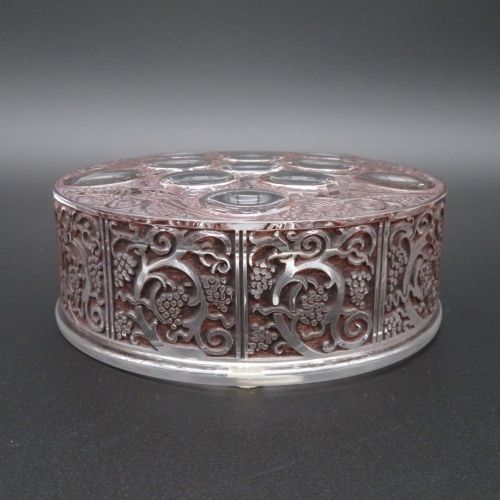
Baccarat·Lalique
The French Glass Jewellery Box Glossary
- Bijouterie table
- A display table with a glazed top and sides specifically designed to exhibit small ornaments, medals, and jewellery.
- Ormolu
- Gilded bronze used extensively for mounts and decorative frames on nineteenth-century French furniture and caskets.
- Bristol blue
- A deep cobalt blue glass popular for decorative boxes and scent bottles during the Victorian era.
- Baccarat
- A renowned French crystal manufacturer whose high-quality glass pieces frequently appear in antique caskets.
- Palais Royal
- A historic shopping district in Paris associated with novelty boxes, miniature carriages, and luxury souvenirs.
French Glass Jewellery Box: Frequently Asked Questions
What is a French glass jewellery box?
A French glass jewellery box is a decorative container made with glazed panels, often supported by gilt bronze or ormolu mounts. They were produced in various forms from small trinket caskets to large display tables.
These pieces served to store and display personal adornments, medals, and small keepsakes on dressing tables and in drawing rooms.
How do I date a French glass jewellery box?
Dating relies on stylistic clues, such as Napoleon III ornamentation, Victorian proportions, or Art Deco crystal designs. The evolution of metal casting techniques and timber choices also helps place pieces into specific decades like the 1880s or 1900s.
Examining the construction of the glass panels and the type of interior fabric provides additional chronological markers.
Where were these boxes used?
Original placement was typically in upper-class domestic interiors, specifically boudoirs, dressing rooms, and formal drawing rooms. Bijouterie tables stood in reception spaces to showcase decorative items to visiting guests.
Smaller trinket boxes rested on dressing chests for daily access to rings, brooches, and pocket watches.
How should I care for my box?
Maintenance requires gentle cleaning of the glass with appropriate solutions while avoiding harsh chemicals on the gilt bronze or ormolu mounts. Velvet and fabric interiors benefit from careful dusting with a soft brush.
Placing the box away from direct sunlight preserves the timber frames and prevents fading of the interior textiles.