


Bristol Blue Glass
When you search for bristol blue glass, you enter a deep pool of vibrant cobalt vessels spanning the Georgian and Victorian eras.
Bristol Blue Glass
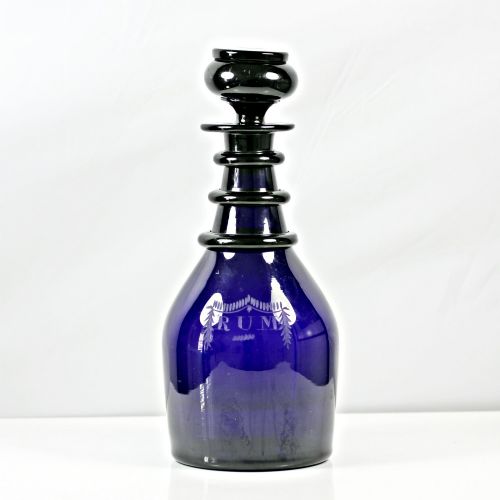
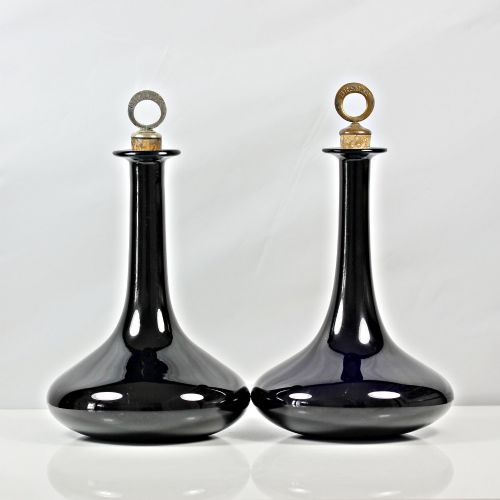
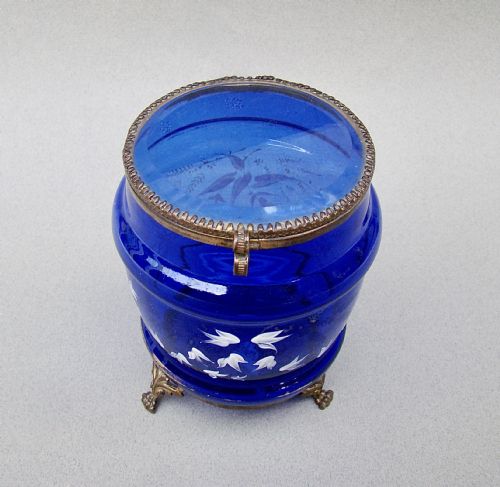
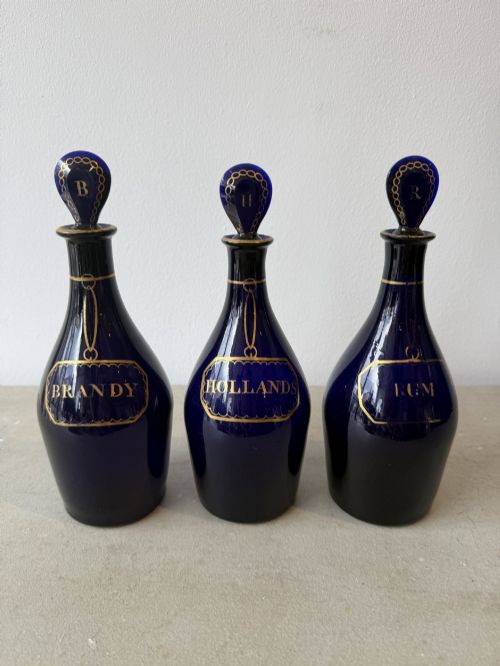
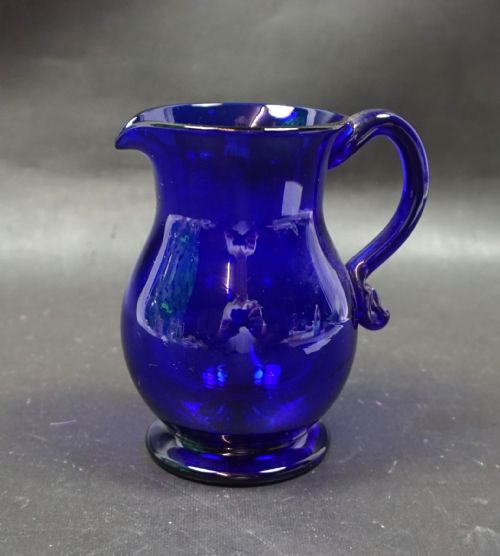
When buyers search for bristol blue glass, they encounter an array of deep cobalt items ranging from Georgian decanters and cream jugs to Victorian apothecary bottles and scent jars. The pieces met most frequently on this page include three-ring and mell decanters alongside nineteenth-century French jewellery and trinket boxes mounted in ormolu or enamel. These functional and decorative objects serve as striking table service items or dressing table accessories.
The material spans the eighteenth, nineteenth, and early twentieth centuries, capturing domestic and apothecary uses across England and continental Europe. Buyers also find smaller domestic objects such as egg cups, wine rinsers, rummers, and serving bottles alongside larger hanging lanterns and lamps. Each form demonstrates the intense saturation of cobalt glass that defined the aesthetic of the period.
Assessing quality in the range
Quality in these pieces depends on the depth and evenness of the cobalt colour alongside the precision of the hand-blowing technique. Sharply defined moulding on decanter rings and clean execution of hand-painted enamel separate finer examples from standard production.
The integration of secondary materials dictates the upper tier of the range, where heavy silver mounts, stamped hallmarks, or cast ormolu frames elevate simple glassware into luxury items. Pristine gilding and intact stoppers further distinguish the most desirable survivals.
One historical record preserves the portrait of a glass maker pictured as a young child in the late eighteenth century.
Charles May·Mappin and Webb·Griffith and Co·Sampson Mordan
The Bristol Blue Glass Glossary
- Cobalt glass
- Glass coloured deep blue through the introduction of cobalt oxide during the melting process. This material forms the foundation of all pieces associated with the search phrase.
- Mell decanter
- A mallet-shaped decanter with a broad base and tapered neck designed to hold spirits securely. These feature prominently among Georgian and Victorian table wares.
- Ormolu
- Gilded bronze or brass used for mounts, feet, and hinges on nineteenth-century French trinket boxes and dressing table jars. It adds a decorative metallic framework to the blue glass.
- Apothecary bottle
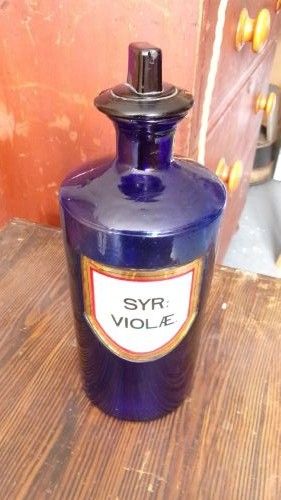
- A utilitarian container used by chemists and druggists, often fitted with a lollipop stopper and enamel label. Surviving examples frequently retain their original white labels.
- Rummer
- A large drinking glass on a short stem used for wine or ale during the Georgian and Victorian periods. They appear in deep cobalt tones alongside standard clear metal.
Bristol Blue Glass: Frequently Asked Questions
How do I date bristol blue glass?
Dating relies on the form of the object, pontil marks, and accompanying metal mounts or hallmarks. Georgian pieces generally display heavier pontils and simpler silhouettes compared to later moulded variants.
Victorian and Edwardian examples often incorporate silver mounts with legible assay office marks and dates. French nineteenth-century pieces typically feature ormolu frames and delicate enamel work.
Were all these items made in Bristol?
Many pieces originated in Bristol potteries and glasshouses, but the term broadened over time to describe cobalt glass made elsewhere. Bohemian makers also produced significant quantities of blue overlay glass.
Continental workshops in France created many of the mounted trinket boxes and dressing table jars found in this category. The designation now refers more to the colour and style than a strict geographical origin.
How were decanters used originally?
Decanters served to store and pour wine, rum, or spirits at the dining table. The deep blue tint protected sensitive liquids from direct light exposure.
Servants brought them to the table filled with port, sherry, or whiskey after meals. The heavy glass rings on the neck helped ensure a secure grip during pouring.
How do I care for antique glass?
Wash pieces gently by hand using lukewarm water and mild soap without abrasive sponges. Avoid sudden temperature changes to protect the old glass from thermal shock.
Take care around gilded surfaces and enamel decoration, as harsh scrubbing removes delicate highlights. Remove silver or ormolu mounts before cleaning if they detach easily.