
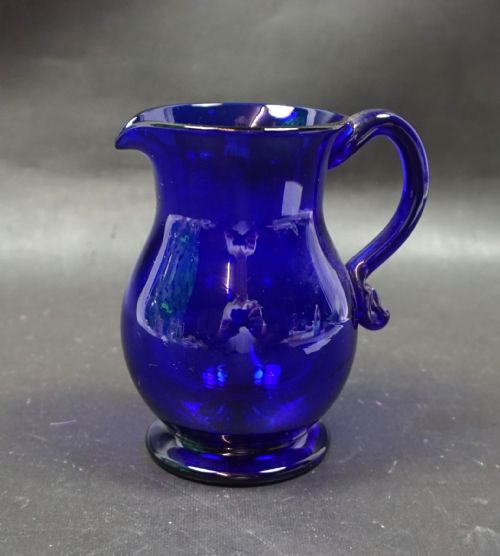


Antique Glass Creamer
An antique glass creamer brings the colour and light of the Georgian and Victorian table straight to your morning tea.
Antique Glass Creamer
An antique glass creamer is a small jug designed to hold milk or cream for the tea service, appearing across the Georgian, Victorian, and Edwardian periods. These pieces range from simple clear tableware to richly coloured vessels intended for display as much as use.
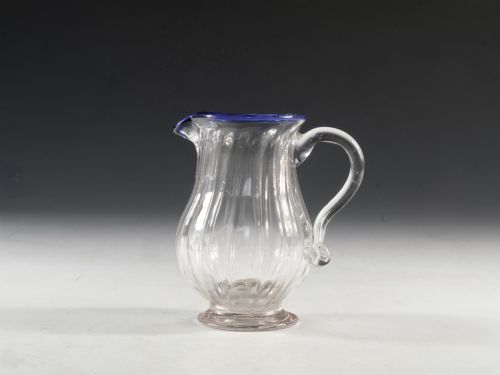
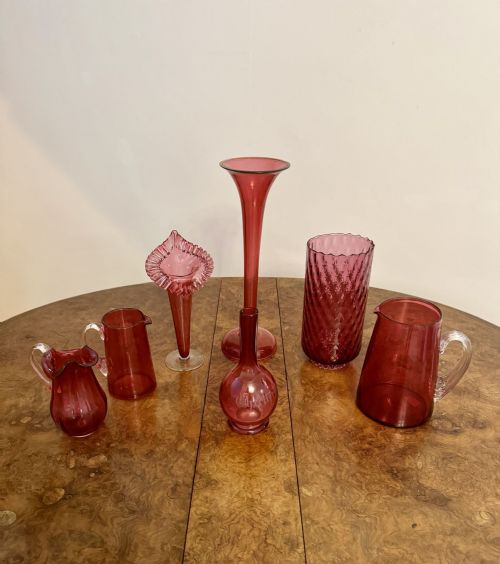
On this page, you are most likely to meet 19th-century examples in vibrant cranberry glass or deep cobalt blue, alongside earlier Georgian pieces featuring wrythen moulding or delicate blue rims. Forms vary from straightforward cream jugs to novelties with silver-plated mounts.
Makers and manufacturers produced these creamers in various regional glasshouses, utilising techniques that defined British and European tablewares of the eighteenth and nineteenth centuries. Each piece reflects the domestic habits and dining customs of its era.
How they were made
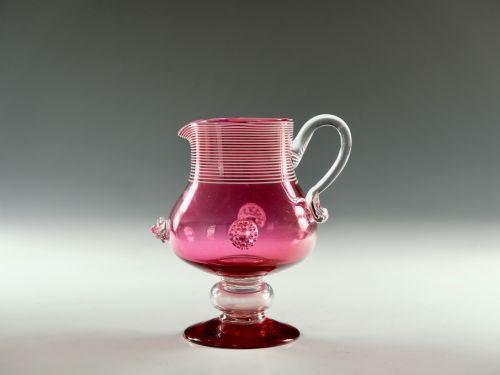
Makers fashioned these creamers using lead glass, clear glass, and specialist coloured compositions achieved through mineral additives like gold in cranberry glass. Glassmakers blew the molten material into shape, often applying contrasting glass threads or rims while the metal remained hot.
Pressing machinery also came into use during the nineteenth century, allowing workshops to produce patterned pieces efficiently. Other examples combine blown glass bodies with silver-plated mounts or handles, uniting two distinct craft traditions.
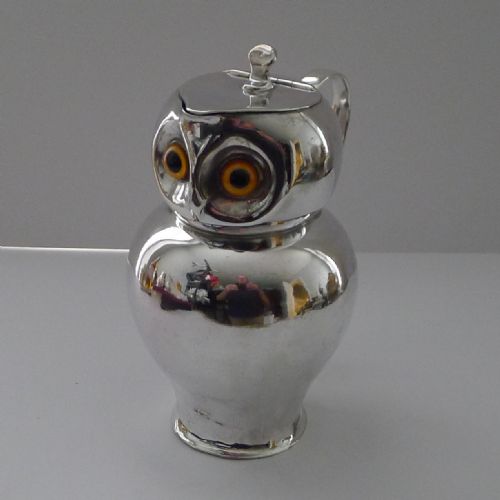
An owl with glass eyes watches over the tea service, serving as a reminder that Victorians loved their creamers with a touch of character.
What varies in quality
The quality of an antique glass creamer rests upon the depth of the metal's colour, the balance of its form, and the crispness of any applied decoration like white piping or gadrooning. Superior pieces display smooth, even coloration throughout the body without distracting internal flaws.
The refinement of the handle and the finish of the rim distinguish finer work from standard production. Vessels that retain their original silver plating or display unusual optical effects command greater appreciation among collectors.
The Antique Glass Creamer Glossary
- Cranberry glass
- A rich red-pink transparent glass coloured with a gold salt additive. It became immensely popular during the Victorian period for decorative tableware.
- Bristol blue
- A deep cobalt glass traditionally associated with West Country glasshouses around Bristol. This strong blue tone often appeared on Georgian and 19th-century cream jugs.
- Wrythen
- A twisted optical pattern formed in the glass while hot. It creates a spiral effect that catches the light as the vessel turns.
- Gadroon
- A decorative carved or moulded ornamental band of parallel convex curves. It frequently edges the foot or rim of silver-plated and glass vessels.
- Lead glass
- A heavy glass composition containing lead oxide for increased brilliance and weight. It provides the clarity and ring expected in fine antique tablewares.
Antique Glass Creamer: Frequently Asked Questions
What is an antique glass creamer?
An antique glass creamer is a small pouring vessel made to serve milk or cream during tea service. These pieces date from the Georgian, Victorian, and later periods.
They appear in various forms, from simple clear blown glass to richly coloured cranberry and cobalt wares adorned with applied threads or silver-plated mounts.
How do I date an antique glass creamer?
Dating relies on observing the material composition, colour, form, and manufacturing technique of the vessel. Georgian pieces often display wrythen optical twists or delicate blue rims, while Victorian examples frequently showcase vibrant cranberry glass or pressed patterns.
Secondary elements, such as the style of any silver-plated mounts or handles, also offer clear chronological clues.
How were coloured glass creamers made?
Makers added specific minerals to the molten batch during the glassmaking process to achieve distinct colours. Cranberry glass required gold salt additives, whereas cobalt produced the deep blue seen in Bristol wares.
Additional decorative elements, such as white glass piping or applied rims, were worked onto the vessel by hand while the glass remained malleable.