




Cranberry Glass Jug
A cranberry glass jug brings rich colour and vibrant warmth to a table, combining intense glass hues with practical Victorian form.
Cranberry Glass Jug
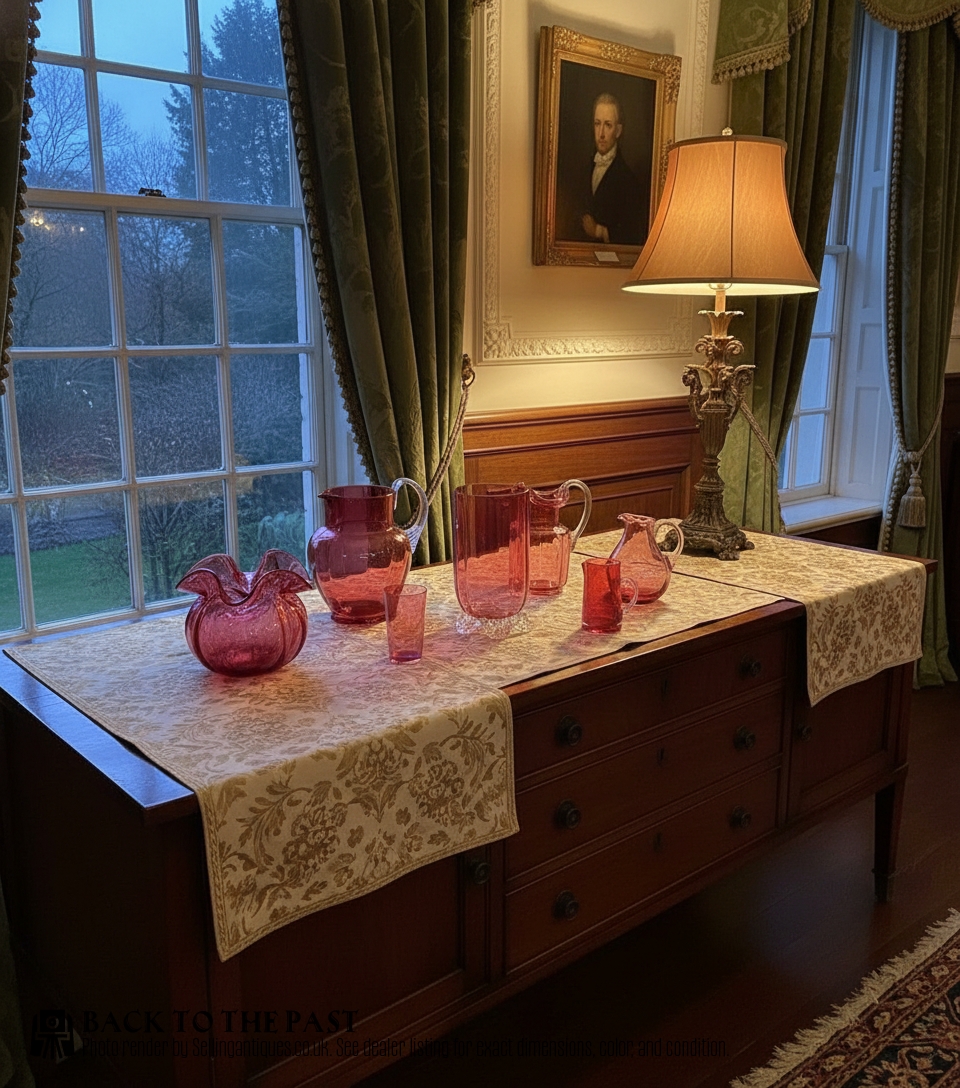
A cranberry glass jug is a serving vessel shaped for cream, water, or wine, rendered in distinctively rich pink-red glass. These pieces emerge predominantly from the nineteenth and early twentieth centuries, spanning the Victorian and Edwardian eras.
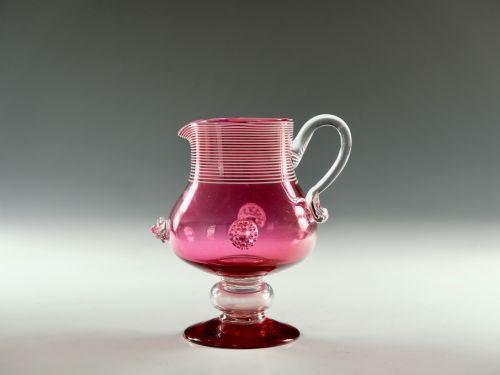
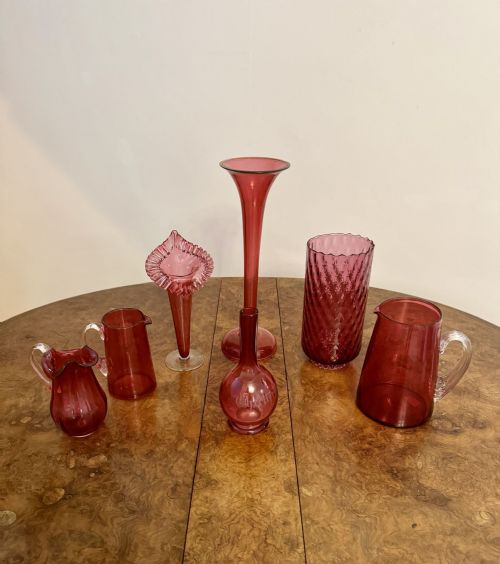
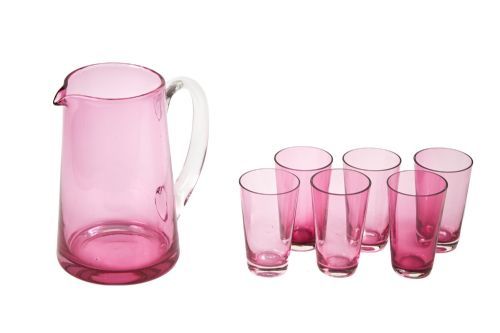
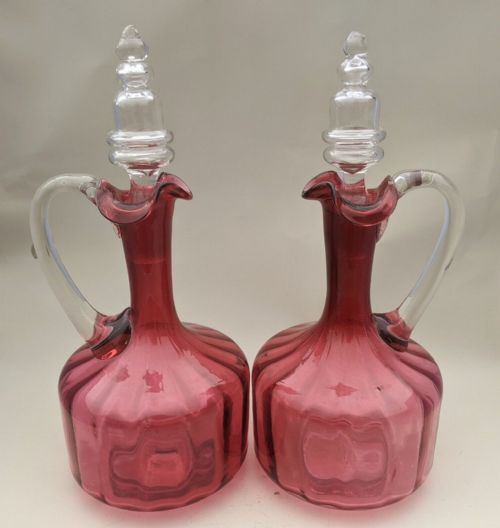
The most frequent examples encountered on this page are Victorian water jugs, cream jugs, and decanters. Many retain clear glass handles, stoppers, or applied white piping, while others appear alongside matching glasses and bowls in coordinated sets.
Makers produced these items in various scales, from small cream jugs to large water pitchers. Collectors also find specialised pieces incorporating silver plate mounts, frames, or lids.
Materials and methods
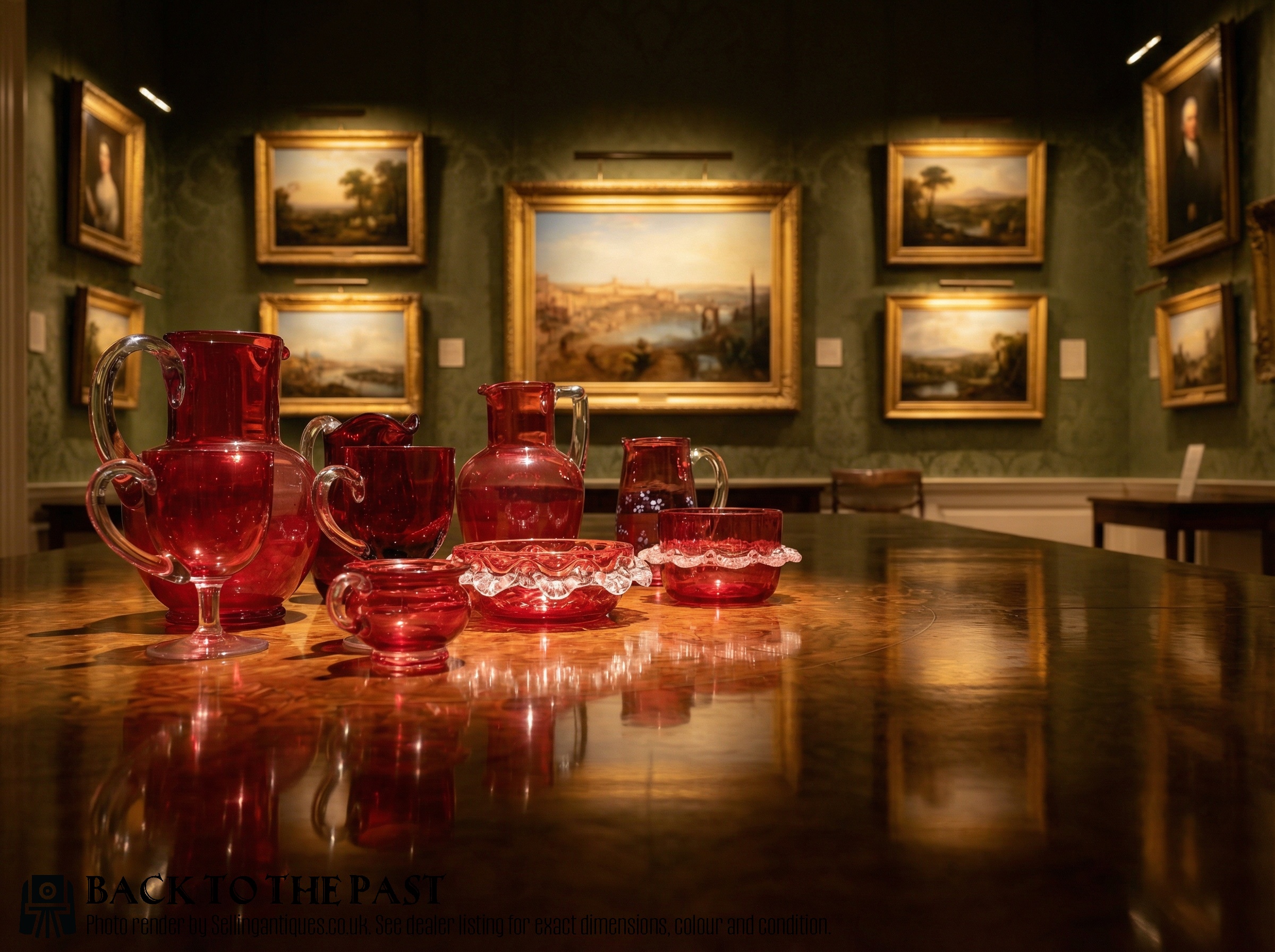
The characteristic colour of a cranberry glass jug stems from the inclusion of a gold salt additive within the molten glass batch. Artisans shaped the hot metal by hand, producing tactile variations such as overshot surfaces or crackle glass textures.
Makers often combined the pink-red glass with clear glass handles, feet, or stoppers to create contrast. Some vessels received additional embellishment through wheel engraving, enamel decoration, or applied white glass piping.
Certain jugs were mounted in silver plate, featuring structural frames, spouts, or hinged lids produced by specialised silversmiths and metalworkers.
Cranberry Glass Jug Retail Price Guide 2026
Typical asking prices for cranberry glass jug among the pieces listed under this phrase on Sellingantiques today, from the lower quarter to the upper quarter. They describe what is for sale here now, not the wider market.
Some Victorian water jugs wear textured overshot glass coats like tiny, frosty wool jumpers.
Evaluating craftsmanship
The depth and saturation of the pink-red tone dictate much of the visual appeal, reflecting the precise proportion of gold salt used in the glass mix. Superior vessels display an even, glowing colour without dull patches or muddy opacity.
Form and proportion set finer pieces apart, particularly in hand-blown items where symmetry and handle application demand high skill. The crispness of applied elements like white piping or the precision of wheel-engraved fruiting vines indicate superior workshop standards.
The integration of metalwork also affects distinction, where fully hallmarked silver plate mounts or intact original stoppers elevate a jug above standard utilitarian examples.
Gorham Sterling Silver
The Cranberry Glass Jug Glossary
- Cranberry Glass
- A transparent pinkish-red glass coloured by the addition of gold chloride to the molten batch. It became widely popular during the Victorian period for decorative tableware.
- Overshot Glass
- A decorative glass technique where fine threads of hot glass are rolled over the surface of a blown vessel. This creates a rough, frosted texture that catches the light.
- Crackle Glass
- Glass intentionally plunged into cold water while hot to produce a network of fine internal cracks. The piece is then reheated slightly and partially re-blown to seal the surface.
- Silver Plate
- A base metal, often Britannia metal or brass, coated with a thin layer of silver. Many Victorian claret jugs and frames utilise this technique for decorative effect.
- Decanter
- A stoppered glass vessel used for holding and serving wine or spirits. Victorian examples often feature deep ruby or cranberry colouring paired with matching stoppers.
Cranberry Glass Jug: Frequently Asked Questions
What is a cranberry glass jug used for?
These vessels served various functions at the dining table, depending on their specific size and shape. Smaller forms acted as cream jugs for tea service, while larger pitchers held water or lemonade.
Tall vessels with stoppers functioned as decanters for wine or claret. Many were also made as part of matching drinkware sets complete with tumblers.
How do I date a cranberry glass jug?
Dating relies heavily on stylistic cues, manufacturing techniques, and any accompanying mounts or markings. Victorian pieces frequently exhibit rich gold-infused colour, applied clear handles, or intricate overshot textures.
Edwardian examples often display lighter forms or distinct decorative engraving. Silver-plated mounts and frames can sometimes provide a more precise timeline through manufacturer stamps.
How should I clean my cranberry glass?
Wash these pieces gently by hand using warm water and mild liquid soap. Avoid abrasive sponges or harsh chemical detergents that might scratch the surface or harm applied details.
Dry the vessel thoroughly with a soft lint-free cloth to prevent water spots. Take particular care with jugs featuring silver-plated mounts or delicate applied glass handles.
Why is it called cranberry glass?
The name derives from the distinct pinkish-red hue of the material, which closely resembles the colour of stewed cranberries. This vibrant shade was achieved through precise chemical recipes involving gold.
Victorian glassmakers refined the technique to produce various tones, ranging from pale pink to deep ruby red.