
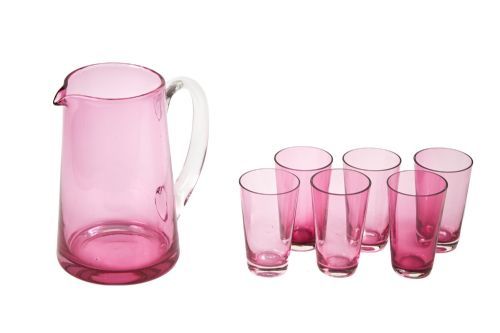
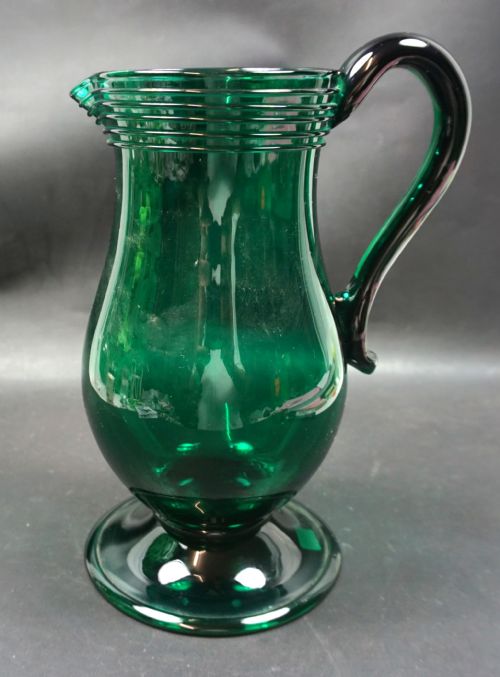


Hand Blown Glass Jug
These hand blown glass jug examples range from Georgian cream jugs to Mid-Century Modern lemonade pitchers, offering tactile charm for the table.
What they are
A hand blown glass jug brings centuries of fluid design to the table, spanning compact creamers to large water pitchers. When searching for a hand blown glass jug, collectors encounter utilitarian tableware shaped by free-blowing, moulding and cutting.
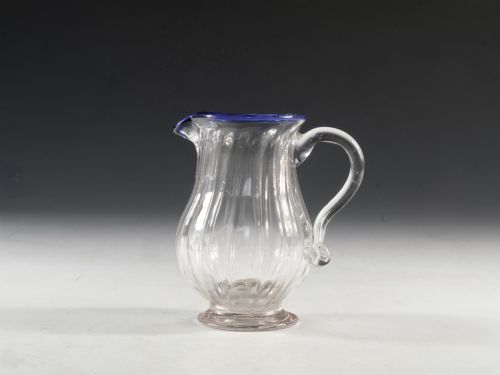
The pieces on offer encompass Georgian, Victorian and Mid-Century Modern eras. Domestic forms include small cream jugs for tea service alongside larger vessels intended for lemonade or water.
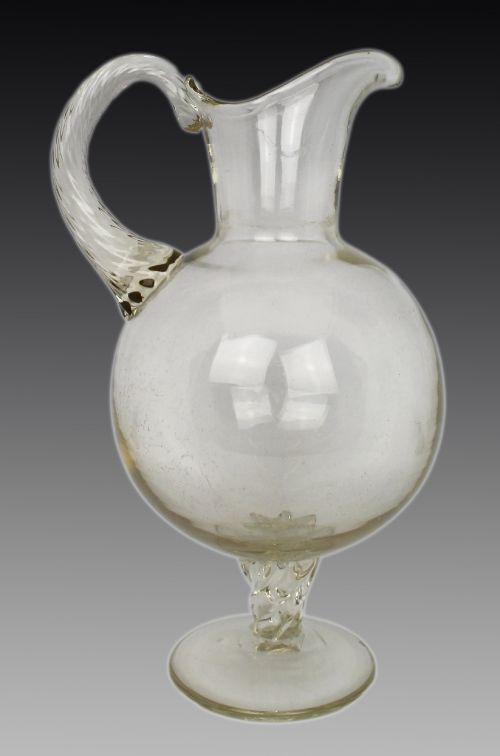
Origins stretch from English workshops to Anglo-Irish glasshouses. Buyers frequently meet pieces featuring applied rims, twisted optical patterns and rich colour palettes.
How they were made
Molten metal was gathered on a blowpipe and shaped by hand manipulation, often utilising moulds to create wrythen ribs or gadrooned surfaces. Craftsmen applied handles separately while the glass remained malleable, sometimes finishing the rims with applied coloured threads of glass.
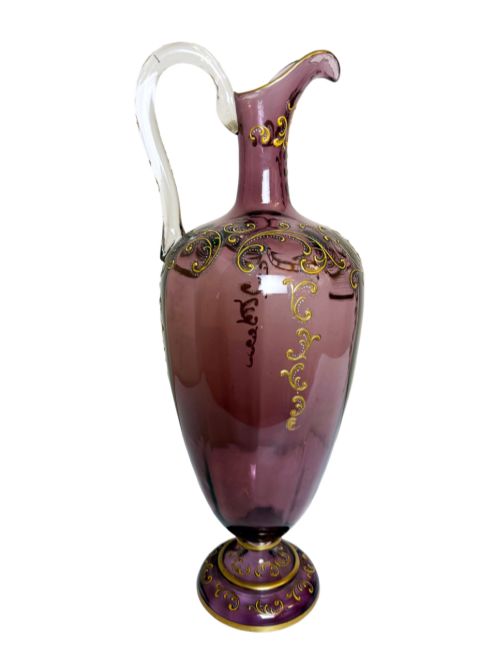
Makers worked with lead glass, clear metal and distinct colour batches including cranberry, cobalt, amber and pale amethyst. Surface embellishment relied upon cutting techniques and gilding applied after initial cooling.
Retail Price Guide 2026
Typical UK retail prices for hand blown glass jug, calculated from the Sellingantiques database of over a million retail prices indexed since 2003. This retail price guide relies exclusively on Sellingantiques data; no external sources or auction records are used, so the figures do not describe the wider market.
The listings here include Georgian, Victorian and Mid-Century Modern pieces in lead glass, cranberry glass, cobalt glass, amber glass and clear glass.
What varies in quality
Quality rests upon the balance of the vessel, the weight of the metal and the precision of the hand-formed handle and rim. Superior examples display clarity in the glass and purposeful execution in optical twists or cut facets.
The distinction between modest domestic wares and finer display pieces lies in the crispness of the applied decoration and the absence of distracting surface ripples. Heavier lead glass specimens generally demonstrate greater depth in the polished facets.
The Hand Blown Glass Jug Glossary
- Wrythen
- A decorative spiral or twist formed in the glass while hot. This optical effect catches the light as the vessel turns.
- Gadrooned
- An ornamental pattern of convex curves or flutes moulded onto the body. It provides a textured grip and visual weight.
- Cranberry glass
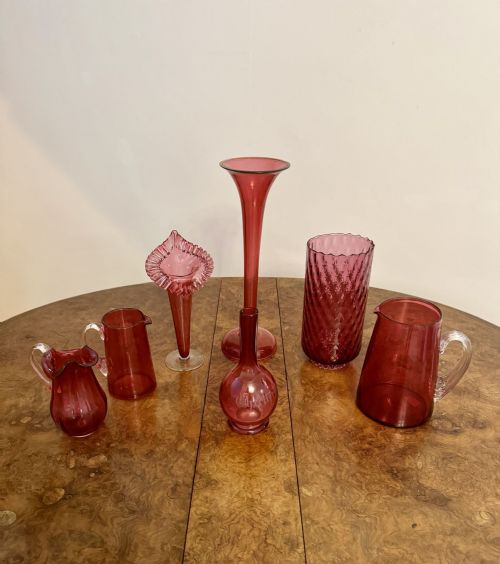
- A transparent red glass coloured with gold chloride. It gained popularity during the nineteenth century for tableware.
- Lead glass
- Glass containing lead oxide, which increases brilliance and weight. It allows for sharper wheel cutting than standard soda glass.
Frequently Asked Questions
How do I date an old glass jug?
Dating relies upon examining pontil marks, handle application styles and the overall colour palette of the metal. Georgian pieces often display distinct pontil scars and heavier proportions.
Later Victorian and Mid-Century Modern examples introduce brighter chemical colourations and cleaner base finishes. Comparing the form to documented regional styles helps confirm the period.
Are these jugs safe for daily use?
Most historic glass jugs function adequately for serving liquids at the table. However, thermal shock from boiling water should be avoided.
Hand washing in warm soapy water preserves delicate applied handles and any historical gilding. Modern dishwashers can etch old glass surfaces permanently.
What is cranberry glass?
Cranberry glass is a pinkish-red material produced by adding gold to the molten batch. It became a staple of Victorian table settings.
Shades vary from pale pink to deep ruby depending on the concentration of the gold solution. It frequently appears on creamers and pitchers.