




Ruby Glass Pitcher
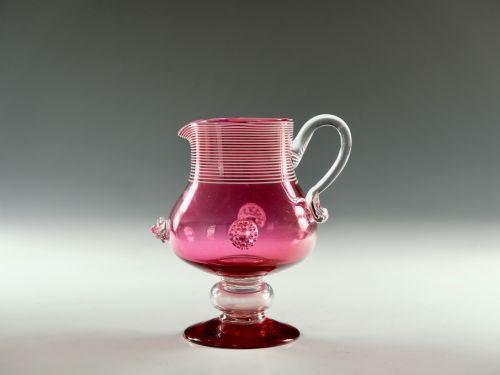
A ruby glass pitcher brings a striking splash of deep red to the table, prized for its intense colour and rich Victorian or Edwardian character.
Ruby Glass Pitcher
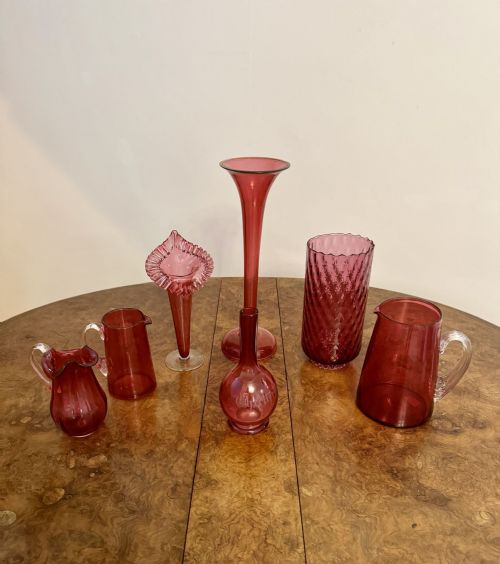
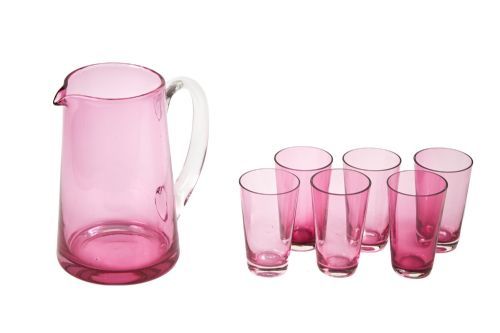
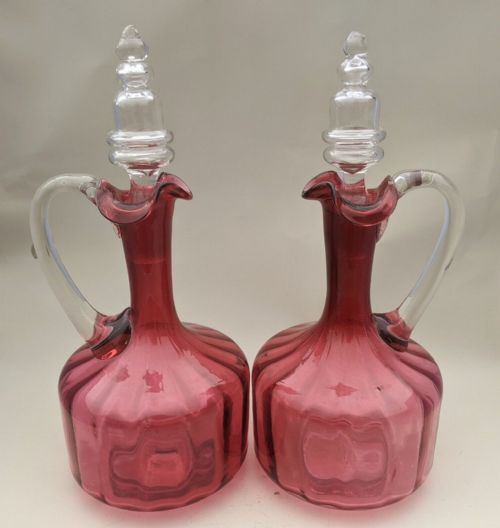
When you search for a ruby glass pitcher, you encounter a variety of serving vessels designed to hold liquids such as wine, cream, or water. The selection includes individual jugs, decanters, and matched sets complete with glasses, spanning the nineteenth and early twentieth centuries.
The versions most frequently met on this page are Victorian and Edwardian cranberry glass jugs, often shaped with applied clear glass handles and bases. English examples from around eighteen-sixty to nineteen-ten dominate the offerings, showing both plain bodies and engraved decoration.
Makers and manufacturers utilised specific mineral additives to achieve the signature red tone, creating items that functioned as both practical tableware and decorative ornaments. Collectors find these pieces grouped among broader glassware collections and claret jugs.
How they were made
The production of a ruby glass pitcher relies on glass containing a gold salt additive to achieve the distinctive deep red or cranberry coloration. Craftsmen shaped the molten material by hand, frequently combining ruby glass with clear glass for handles, stoppers, and rims.
Many vessels feature surface ornamentation applied through wheel engraving, depicting motifs such as fruiting vines. Some pieces incorporate enamel details, while mounts of silver plate provide functional collars and spouts on wine decanters.
Gold makes the red: ancient glassmakers literally laced their pots with precious metal to turn clear batches into cranberry.
What varies in quality
The distinction between standard utility items and finer display pieces rests in the depth of the ruby colour and the skill of the glassblower. Richer hues achieved through heavier gold salt additives create a more vibrant appearance than paler tones.
Hand-engraved detail, such as intricately cut fruiting vines, marks out superior craftsmanship compared to plain blown vessels. Additionally, the inclusion of matching crystal glasses or silver-plated mounts elevates the overall execution of the set.
The Ruby Glass Pitcher Glossary
- Cranberry glass
- A type of transparent red glass coloured with gold salts. It became immensely popular during the Victorian era for tableware and decorative items.
- Decanter
- A vessel used for holding and serving wine or other liquids. These often feature stoppers and ornamented glass bodies.
- Claret jug
- A specialised pouring pitcher designed specifically for serving claret or red wine. They frequently incorporate silver plate mounts and handles.
- Gold salt additive
- The metallic compound mixed into the molten batch to produce the characteristic red or cranberry shade. Its presence dictates the richness of the final colour.
- Enamel
- Opaque glass paste applied to the surface of the vessel for decoration. It is fired to fuse with the underlying glass.
Ruby Glass Pitcher: Frequently Asked Questions
What is cranberry glass?
Cranberry glass is a specific type of transparent red glassware produced by adding gold salts to the molten batch during manufacturing. This technique creates the rich, deep pinkish-red hue seen across Victorian tableware.
The colour saturation varies depending on the amount of gold used and the skill of the glasshouse. It remains the defining material for this category of pitcher.
How do I date a jug?
Dating a pitcher involves examining the manufacturing style, the shape of the handle, and any accompanying engraving. Victorian pieces often display distinct bulbous forms with applied clear glass, while Edwardian examples show refined proportions.
English pieces from the nineteenth century frequently exhibit pontil marks on the base where they were snapped off the blowpipe. Reference marks and stylistic clues help narrow the period down to specific decades.
Were these used for wine?
Many of these vessels served as wine decanters or claret jugs, particularly the larger pieces fitted with stoppers or silver-plated mounts. They sat on dining tables to hold and pour wine during meals.
Smaller pitchers functioned as cream jugs for tea service or simply as decorative items within a glassware collection. Their dual purpose made them a staple of the Victorian dining room.
How do I clean ruby glass?
Cleaning these antique pieces requires gentle hand washing in lukewarm water with mild soap. Avoid abrasive sponges or harsh detergents that could scratch the surface or damage engraved details.
Sudden temperature changes should be avoided to prevent thermal shock, which can crack old glass. Allow them to air dry on a soft cloth to protect the rim and base.