


Cranberry Glass Tableware
Cranberry glass tableware brings striking rich colour to the table through vibrant Victorian and Edwardian serving pieces and table accessories.
Cranberry Glass Tableware
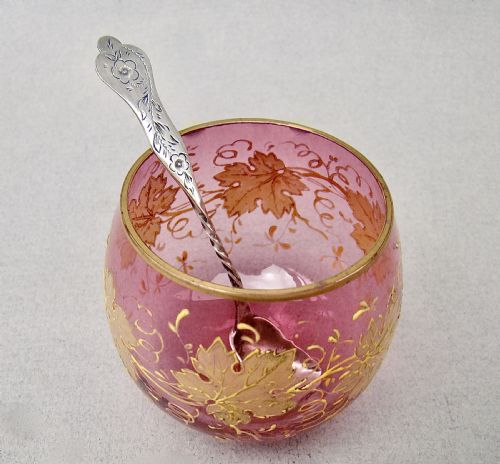
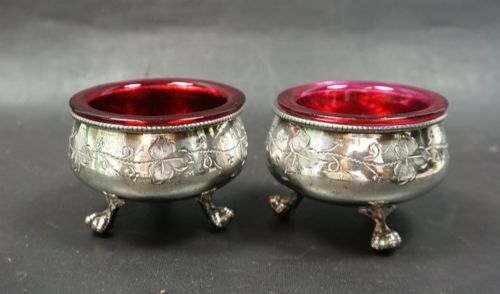
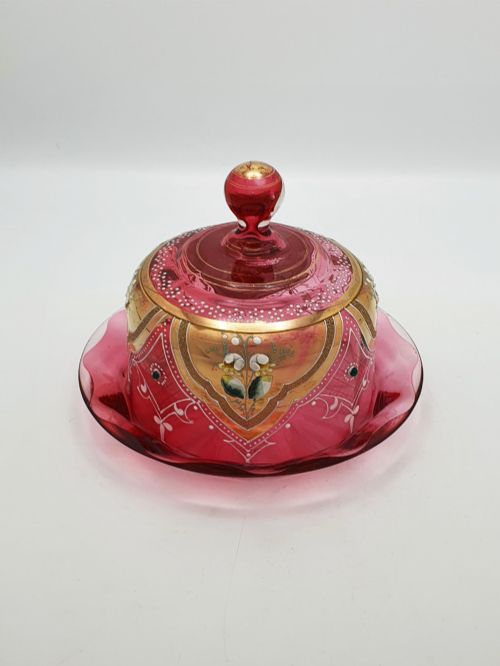
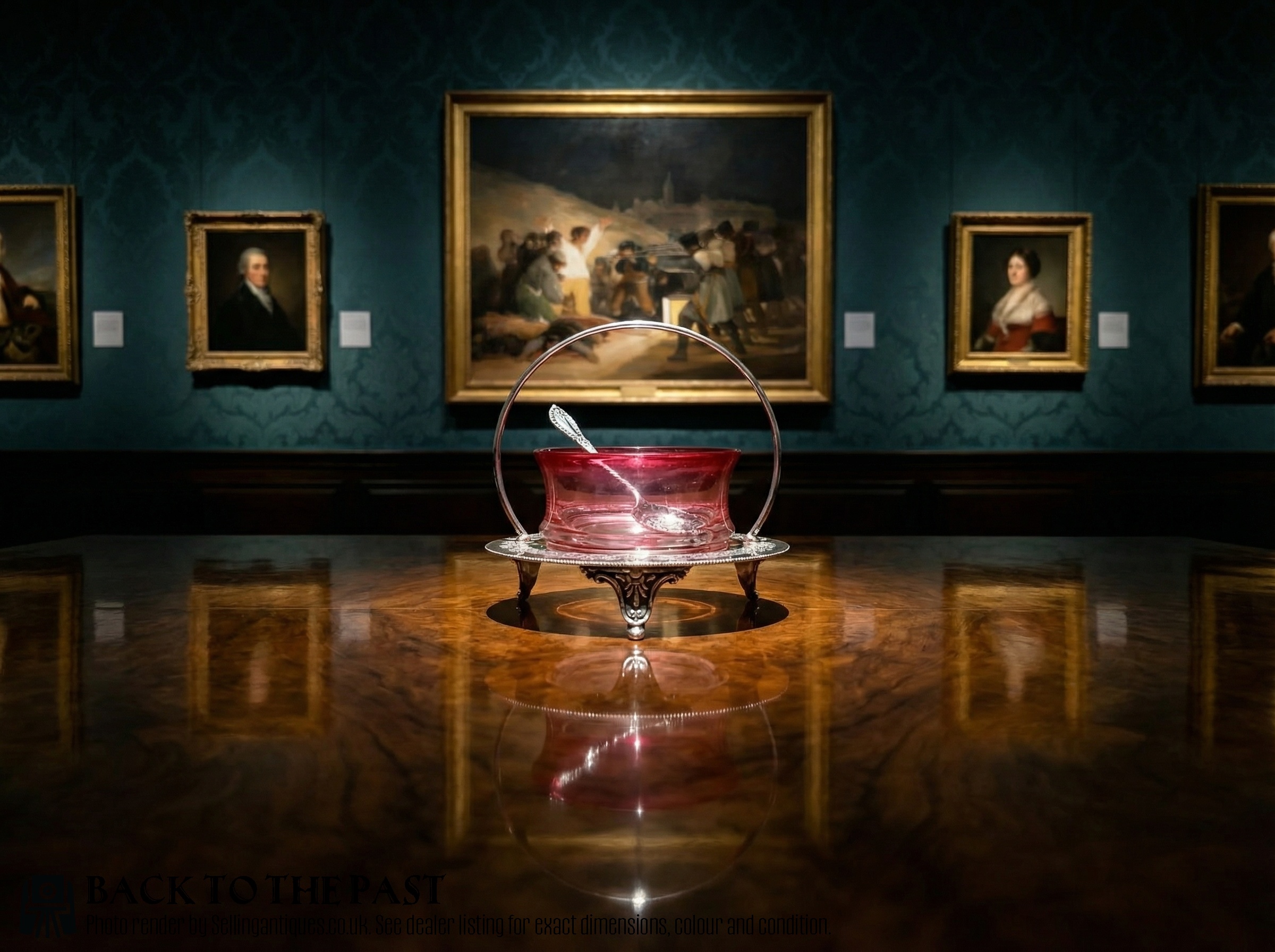
When you search for cranberry glass tableware, you encounter a distinct array of serving pieces designed for the Victorian and Edwardian dining table. These items combine deep translucent pinkish-red glass with contrasting mounts and stands made from silver plate, silver gilt, and clear glass.
The pieces appearing on this page span from the late nineteenth century into the early twentieth century, encompassing utilitarian and decorative forms alike. You will regularly find functional table accessories such as salt cellars, preserve dishes, cheese dishes, butter dishes, and biscuit barrels.
Origins represented across the selection include English workshops and Continental makers, alongside documented names such as Moser. The overarching Victorian and Edwardian aesthetic prioritises functional elegance, pairing rich glass hues with elaborate metalwork.
How they were made
The defining characteristic of cranberry glass tableware lies in the use of gold chloride mixed into the molten glass batch to achieve the distinct red-pink colour. Artisans then shaped these vessels through traditional glassblowing techniques, sometimes incorporating applied clear glass handles, rims, or feet.
Metal components were manufactured separately, utilising silver plate, solid silver, and silver gilt to create pierced baskets, mountings, and hinged covers. Certain items feature additional ornamentation including enamel decoration and gold leaf highlights applied to the glass surface.
Cranberry Glass Tableware Retail Price Guide 2026
Typical asking prices for cranberry glass tableware among the pieces listed under this phrase on Sellingantiques today, from the lower quarter to the upper quarter. They describe what is for sale here now, not the wider market.
Victorian diners enjoyed their condiments served from vessels containing actual gold.
What varies in quality
Quality in cranberry glass tableware rests upon the depth and evenness of the glass colour, which depends on the precise proportion of gold used in the batch. Superior examples exhibit a rich, saturated tone throughout the body without muddy patches or heavy imperfections.
The standard of associated metalwork plays a significant role in the overall quality of the piece, particularly where silver-plated mounts or pierced silver gilt stands are involved. Finely executed piercing, substantial metal weight, and intact gilding distinguish finer service items from standard production pieces.
Moser
The Cranberry Glass Tableware Glossary
- Cranberry Glass
- A type of glass coloured by the addition of gold, producing hues ranging from pale pink to deep ruby red. It was widely utilised for decorative tableware during the Victorian era.
- Silver Plate
- A base metal coated with a thin layer of silver, commonly used for the mounts, hinged lids, and carrying stands of nineteenth-century serving vessels.
- Salt Cellar
- A small open vessel or covered container placed on the dining table to hold salt for individual or communal use, frequently lined with coloured glass.
- Biscuit Barrel
- A covered container designed to hold dry biscuits or crackers at the tea or dining table, often fitted with a ceramic or glass body and a metal handle.
- Silver Gilt
- Silver that has been coated with a thin layer of gold on its surface, providing a rich yellow-gold appearance to baskets and mounts.
- Preserve Dish
- A small bowl or dish intended for serving jams, jellies, or preserves, occasionally accompanied by a matching spoon or a fitted metal stand.
Cranberry Glass Tableware: Frequently Asked Questions
What is cranberry glass tableware used for?
These pieces were originally created to serve various condiments, sweets, and baked goods during formal Victorian and Edwardian meals. Items such as preserve dishes, butter dishes, and salt cellars added both utility and vibrant colour to the dining table.
Today, collectors utilise these items as decorative display pieces or repurpose them for modern entertaining. Their distinct colour makes them focal points within a traditional table setting.
How do I date cranberry glass items?
Dating relies heavily on the stylistic characteristics of the glass form combined with the design of any associated metal mounts. Victorian pieces often display heavier silver plating and ornate pierced decoration, whereas Edwardian examples can feature lighter framing.
Contextual clues such as hallmarks on silver mounts or documented maker signatures provide more precise chronological markers. Comparing the overall silhouette to documented nineteenth-century forms also aids in establishing the period.
Are these pieces made of real gold?
The rich pink-red colour of cranberry glass is achieved by adding gold chloride to the molten glass mixture during production. This traditional technique is what gives the material its characteristic depth and value.
Additionally, some pieces feature silver gilt components, which consist of a silver base coated in a thin layer of gold. This combination of gold in the glass and gold on the metalwork was a hallmark of quality production.
How should I clean and care for cranberry glass?
Careful handling is essential due to the age and delicate nature of nineteenth-century glass and associated silver-plated mounts. Hand washing in warm water with a mild detergent is recommended, avoiding abrasive sponges that could scratch the surface or damage applied enamel.
Silver mounts and stands should be polished separately with a suitable silver cloth, taking care not to get polish onto the glass. Storing pieces away from direct sunlight helps preserve the integrity of both the glass and any delicate gilding.