




Victorian Ruby Glass Jug
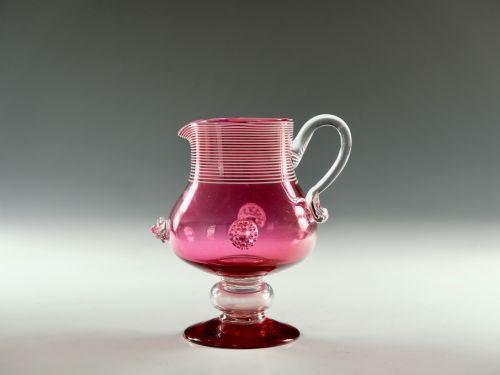
A victorian ruby glass jug brings warmth and rich colour to a table, combining intense hues with nineteenth-century decorative glasswork.
Victorian Ruby Glass Jug
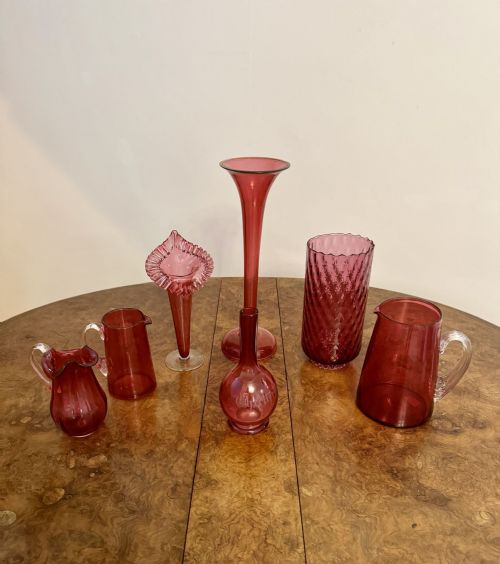
A victorian ruby glass jug encompasses vessels intended for wine, water, cream, and decanting, produced during the nineteenth and early twentieth centuries. The pieces on this page span the Victorian and Edwardian eras, capturing a period of domestic glassware that relied heavily on cranberry and ruby glass production.
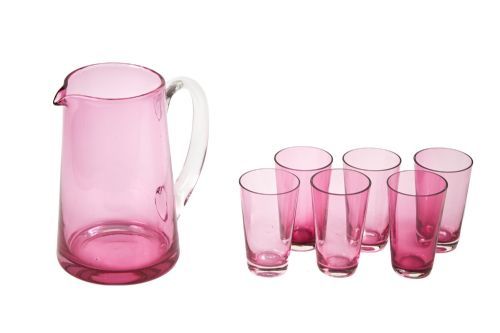
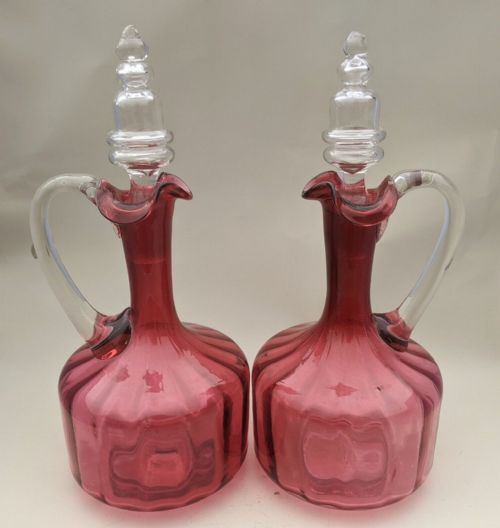
Forms range from small cream jugs to large decanters and complete drinkware sets with matching tumblers. Many pieces combine the rich red glass body with clear glass handles or stoppers, while others incorporate silver plate mounts and enamel detailing.
The aesthetic leans towards decorative utility, appearing either as standalone pitchers or as part of larger glassware collections. Buyers most frequently encounter nineteenth-century examples featuring blown ruby glass bodies alongside decanters and claret jugs.
How they were made
The creation of ruby and cranberry glass relies upon the addition of gold salt to the molten glass batch during the colouring process. This chemical interaction produces the distinct red and pinkish tones characteristic of the period.
Vessels were typically free-blown or mould-blown, often finished with applied clear glass handles, rims, or feet. Artisans then decorated the cooled surfaces using techniques such as wheel engraving, depicting motifs like fruiting vines, or adding delicate enamel work.
The listings on this page span the Victorian and Edwardian periods, recording materials such as cranberry glass, clear glass, crystal, and silver plate.
What varies in quality
Quality in a victorian ruby glass jug rests upon the depth and uniformity of the glass colour, which is dictated by the precise balance of the gold salt additive. Superior pieces display a rich, even saturation throughout the body without muddy patches or pale streaks.
The crispness of hand-engraving and the finesse of applied clear glass details distinguish finer examples from standard production. Additionally, the presence of original silver plate mounts and matching stoppers elevates the overall integrity of the piece.
The Victorian Ruby Glass Jug Glossary
- Cranberry Glass
- A transparent pink-red glass coloured with gold chloride. It became immensely popular during the Victorian era for tableware and decorative items.
- Ruby Glass
- A deep red glass category that includes cranberry shades. It is achieved through specific metallic oxide additives during the melting process.
- Claret Jug
- A specialised pouring vessel designed for serving red wine. These often feature elaborate silver plate mounts and handle assemblies.
- Silver Plate
- A thin layer of silver applied to a base metal foundation. It frequently frames the lips and handles of nineteenth-century jugs.
- Gold Salt Additive
- The chemical compound introduced to the molten batch to create ruby hues. Its successful suspension determines the clarity of the red tone.
Victorian Ruby Glass Jug: Frequently Asked Questions
What is a cranberry glass jug used for?
These vessels served various domestic functions at the dining table, from pouring cream and water to decanting wine and claret.
Today, they function both as decorative display items and as usable pitchers for modern dining.
How do I clean a ruby glass jug?
Wash these pieces gently in warm water using a mild detergent, avoiding abrasive sponges that might scratch the surface.
Silver plate mounts require separate, careful polishing with a suitable metal cleaner to prevent tarnish accumulation.
Are these jugs made from real gold?
Gold salt acts as the chemical agent responsible for producing the characteristic cranberry and ruby colour within the glass.
While gold is part of the manufacturing recipe, the final material is glass rather than solid precious metal.
How can I tell Victorian glass from Edwardian glass?
Victorian pieces often display heavier decorative engraving and bolder forms, reflecting mid-to-late nineteenth-century tastes.
Edwardian examples tend towards lighter, refined silhouettes while maintaining the traditional cranberry colour palette.