


Antique Glass Preserve Jar
These antique glass preserve jars and related vessels bring everyday period dining to the modern table with practical charm.
Antique Glass Preserve Jar
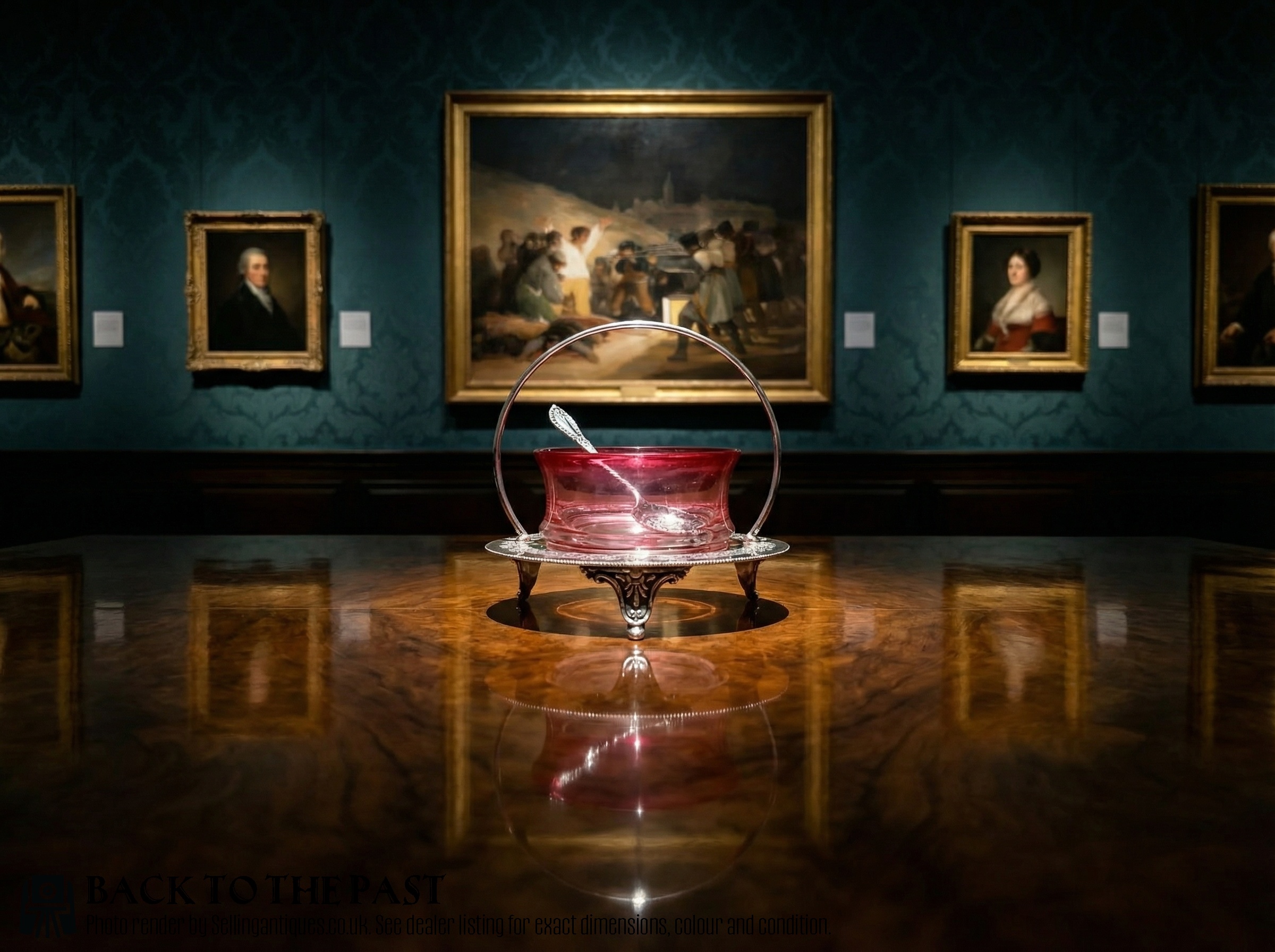
An antique glass preserve jar combines blown or cut glass vessels with metal mounts, often designed for the breakfast or dining table to hold jams, honey, butter, or condiments. The selection spans utilitarian pickling vessels from the eighteenth century alongside refined silver-mounted table jars from the Victorian, Edwardian, and Art Deco periods.
Buyers will encounter various forms, ranging from simple French green glass pickling jars to elaborate lead crystal pots fitted with sterling silver or silver-plate spoons and stands. Specialised iterations include apple-shaped pots and cranberry glass dishes that reflect the changing domestic habits of the eighteenth, nineteenth, and early twentieth centuries.
How They Were Made
Makers utilised free-blown and mould-blown techniques to shape the glass bodies, frequently employing lead crystal or cranberry glass for rich colour and weight. Skilled artisans then applied deep wheel-cut geometric patterns to the exterior surfaces of the glass to catch the light.
Metalworkers fashioned mounts, lids, and stands from sterling silver and silver plate, sometimes incorporating ebonised wood or specialised finials. These components were cast and soldered to secure the glass vessels while adding decorative contrast to the transparent material.
The listings demonstrate a strong representation of nineteenth-century and early twentieth-century production, spanning Victorian, Edwardian, and Art Deco design periods.
What Varies in Quality
The clarity and weight of the glass set the foundation for quality, with heavy lead crystal and deep hand-cut facets representing superior craftsmanship over thin, plain glass. The crispness of the cutting and the absence of cloudiness in the material indicate better production standards.
The integration of the metal mounts dictates the refinement of the piece, particularly where hallmarked sterling silver replaces silver-plate. Maker attribution, intact original spoons, and well-fitted hinged lids or stands elevate the desirability of a jar.
Hukin and Heath·Asprey and Co·Walker and Hall·George Unite·Martin and Hall
The Antique Glass Preserve Jar Glossary
- Lead crystal
- Glass containing a high proportion of lead oxide, which increases weight, brilliance, and softness for deep cutting. It gives preserve jars a clear, resonant ring when tapped.
- Silver plate
- A base metal, such as copper or Britannia metal, coated with a thin layer of silver through electroplating or older manufacturing methods. It provided an accessible alternative to solid sterling silver for domestic tablewares.
- Bocal
- A traditional French term for a large glass jar, often used historically for pickling or food storage. These utilitarian vessels typically feature blown glass construction with simple rolled rims.
- Finial
- The decorative knob or handle attached to the lid of a preserve pot or jar. They take various forms, including floral bouquets and abstract shapes, designed for lifting the cover.
Antique Glass Preserve Jar: Frequently Asked Questions
How do I date an antique glass preserve jar?
Dating relies on a combination of manufacturing marks, glass characteristics, and accompanying metal mounts. Silver components often bear hallmarks and date letters that pinpoint the exact year of production.
Stylistic cues also help narrow the period. Georgian and Regency examples tend toward heavy cut crystal, while Edwardian and Art Deco pieces introduce coloured cranberry glass and streamlined geometric mounts.
Were these jars only used for jam?
While primarily designed for jams, jellies, and preserves, these versatile vessels served multiple roles on the dining table. Historical records and accompanying spoons show they held honey, mustard, butter, and pickles.
Different forms accommodated specific contents, such as wide-mouthed tubs for butter or deep cylindrical bodies for honey and pickles. Lidded designs protected the contents from dust and insects during dining.
How should I clean and care for silver and glass?
Wash the glass vessel gently in warm, soapy water using a soft cloth, avoiding abrasive pads that might scratch the surface. Dry thoroughly to prevent water spots on the clear or coloured material.
Polish the silver mounts with a specialised cloth, taking care to keep cleaning agents away from the glass. Avoid soaking silver-plated or mounted pieces in liquid dips, which can damage adhesives or underlying base metals.
What is cranberry glass and how is it made?
Cranberry glass is a transparent red or pink glass produced by introducing gold oxide into the molten glass batch. The intensity of the shade depends on the precise chemical mixture and the temperature of the furnace.
This technique gained immense popularity during the Victorian era and Edwardian periods for decorative tableware. It appears frequently in preserve dishes and biscuit barrels from those decades.