

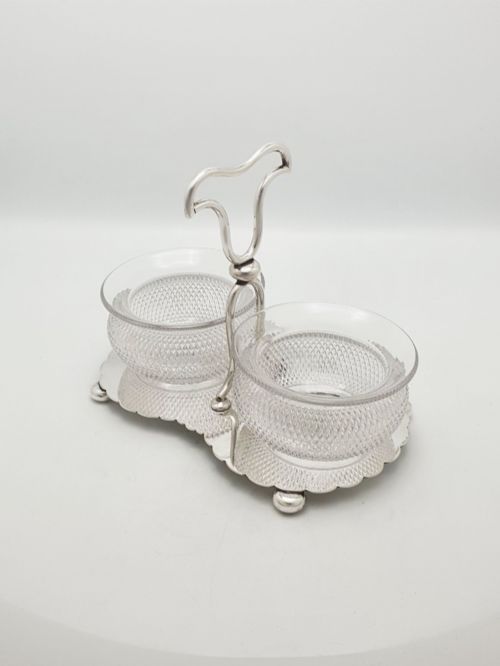


Antique Glass Jam Bowl
These antique glass jam bowl pieces bring rich colour and refined table service to the dining room.
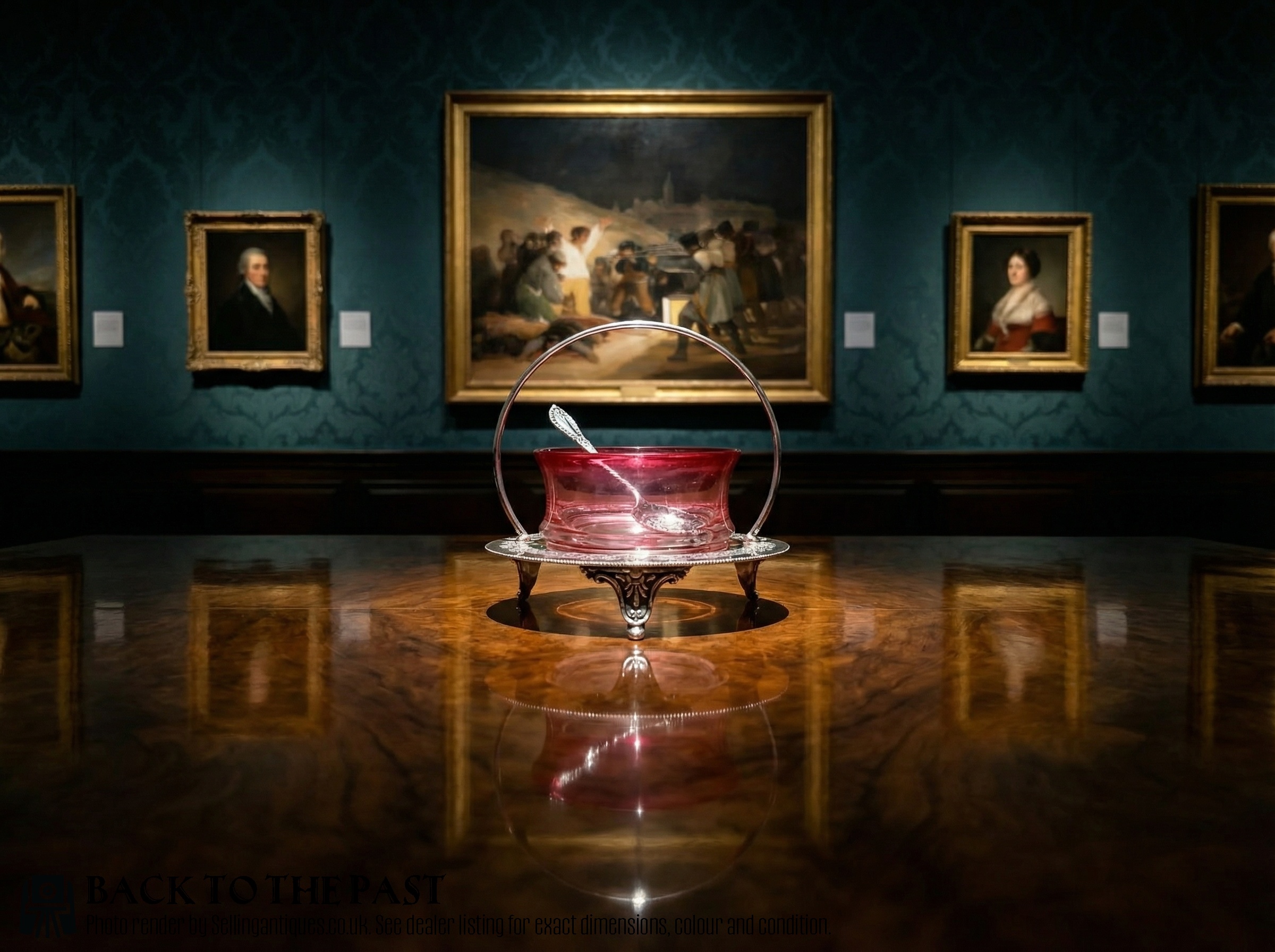
Antique Glass Jam Bowl
An antique glass jam bowl is a traditional table accessory designed for serving preserves, spreads, and condiments at the table. These vessels appear in forms such as preserve dishes, condiment jars, and lidded butter dishes, often accompanied by dedicated stands.
The versions most commonly met on this page belong to the Victorian and Edwardian periods, alongside earlier Georgian and Regency examples. They frequently pair pressed or blown glass bodies with silver plated or silver gilt mounts.
Makers produced these serveware pieces to meet the demands of formal dining tables. They survive today as both decorative objects and functional tableware.
How they were made
Glassmakers utilised lead crystal and coloured glass types such as cranberry glass and vaseline glass, shaping them through cutting and blowing techniques. These methods produced heavy, refractive surfaces and vibrant hues.
Metalworkers fabricated matching stands and mounts from silver plate and silver gilt to hold the delicate glass bowls securely. The combination of bright metalwork and rich glass created high contrast for the dining table.
Antique Glass Jam Bowl Retail Price Guide 2026
Typical asking prices for glass jam bowl among the pieces listed under this phrase on Sellingantiques today, from the lower quarter to the upper quarter. They describe what is for sale here now, not the wider market.
Listings span the nineteenth and early twentieth centuries, featuring Victorian, Edwardian, Georgian, and Regency periods.
What varies in quality
The crispness of the cutting across the glass surface marks the difference between standard production and superior craftsmanship. Deeper, sharper facets catch the light more effectively than shallow or soft pressing.
The proportion and weight of the silver plated or silver gilt stands also influence the standing of a piece. Substantial mounts with detailed casting demonstrate a higher standard of manufacture than lighter, plain frames.
The Antique Glass Jam Bowl Glossary
- Cranberry Glass
- A rich red transparent glass coloured with gold chloride during production. It remains a defining feature of nineteenth-century tablewares.
- Silver Plate
- A base metal coated with a thin layer of silver to provide a bright finish. This technique allowed makers to produce ornate stands at a lower cost than solid silver.
- Vaseline Glass
- A yellowish-green glass containing uranium dioxide that produces a distinct glow under ultraviolet light. It appears frequently in decorative serving pieces from the Victorian era.
- Lead Crystal
- Glass containing lead oxide to increase weight, clarity, and brilliance. It is heavier than standard glass and rings clearly when struck.
- Preserve Dish
- A small open bowl designed specifically for holding fruit jams or jellies on the dining table. They are often paired with matching spoons and stands.
Antique Glass Jam Bowl: Frequently Asked Questions
What were antique glass jam bowls used for?
These vessels served jams, preserves, and butter at formal breakfast and dining tables.
They sat within metal stands alongside matching spoons for convenient guest service.
How do I date an antique jam bowl?
Dating relies on identifying the style of the glass cutting, the colour, and the mount.
Victorian and Edwardian pieces often feature vibrant cranberry glass and silver plated frames, while Georgian examples show heavier hand-cut crystal.
How do I clean and care for them?
Wash the glass gently in warm soapy water using a soft cloth to protect the surface.
Avoid abrasive cleaners and keep silver plated stands polished with a suitable metal cream.
Are all jam bowls mounted in silver plate?
Many bowls feature silver plated or silver gilt stands, but others exist as standalone glass pieces.
Some Edwardian and Victorian examples were produced entirely in glass without metal mounts.