


Edwardian Glass Preserve Pot
These edwardian glass preserve pot examples bring rich coloured glass and bright mounts to the table, offering a functional centrepiece for breakfast service.
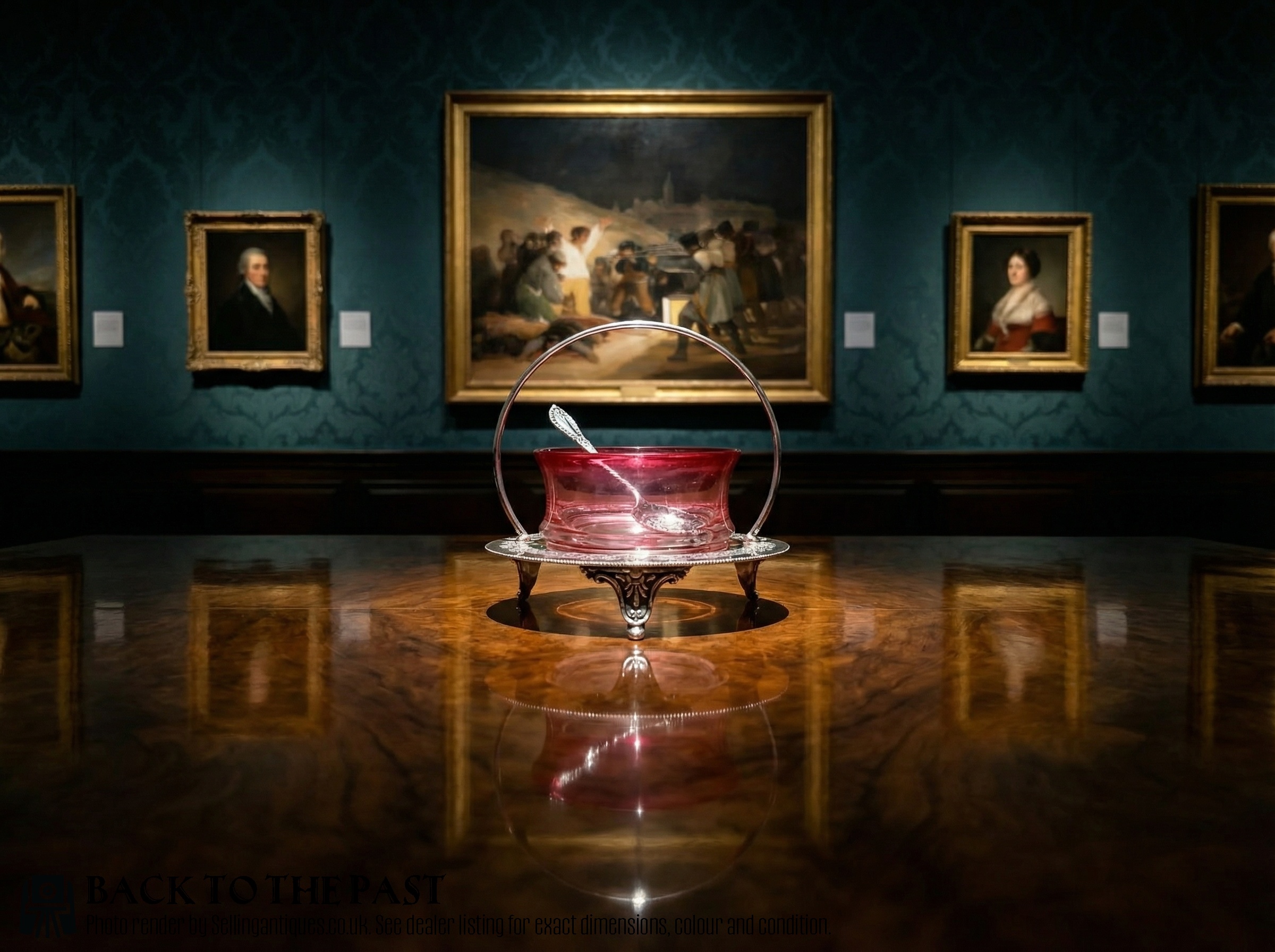
Edwardian Glass Preserve Pot
When you search for an edwardian glass preserve pot, you look at vessels designed to hold jam, marmalade or honey on the dining table. The pieces on this page span the Edwardian era, alongside related items from the late Victorian period and the early 1920s.
You meet various forms on this page, from single jars with silver-plated stands to twin cranberry bowls and novelty shapes like an apple. Condiment sets and biscuit barrels also appear, showing how makers expanded these domestic glass designs.
Origins and styles cluster around Edwardian taste, complemented by Victorian influences and later Art Deco touches. These vessels combine clear cut glass or rich cranberry glass with silver mounts, sterling silver, or silver plate.
Materials and construction
Makers combined blown or moulded glass with metal mounts, utilising silver plate and sterling silver for lids, swing handles, and stands. Cranberry glass and cut glass provide the body of the vessel, catching the light on the table.
Silver mounts and plated frames were engineered to secure the glass liners safely while providing a decorative silhouette. Spoon slots in the lids and fitted stands demonstrate the attention paid to practical daily dining.
Edwardian Glass Preserve Pot Retail Price Guide 2026
Typical asking prices for edwardian glass preserve pot among the pieces listed under this phrase on Sellingantiques today, from the lower quarter to the upper quarter. They describe what is for sale here now, not the wider market.
Materials recorded across the inventory include cranberry glass, cut glass, sterling silver, and silver plate.
Judging quality in these vessels
Quality rests in the depth of colour in the cranberry glass and the crispness of the cutting in clear glass vessels. Substantial silver plate or solid sterling silver mounts elevate the weight and balance of the piece.
Novelty forms and fitted stands with matching spoons demonstrate higher ambition from the maker. Complete sets with original glass liners and matching hardware command greater attention from collectors.
Hukin and Heath
The Edwardian Glass Preserve Pot Glossary
- Cranberry glass
- A rich red-pink transparent glass created by adding gold chloride to the molten batch. It defines many Edwardian tabletop serving pieces.
- Silver plate
- A base metal, often copper or nickel brass, coated with a thin layer of pure silver. It allowed makers to produce bright mounts at a lower cost than solid silver.
- Sterling silver
- An alloy containing a high proportion of pure silver mixed with other metals for strength. It bears hallmarks indicating the assay office and year of manufacture.
- Biscuit barrel
- A covered ceramic or glass container used for storing dry biscuits. Examples often share the silver-plated mounts and swing handles seen on preserve pots.
- Condiment stand
- A fitted metal frame designed to hold multiple glass jars for sauces, preserves or relishes. These stands keep the table organised during formal meals.
Edwardian Glass Preserve Pot: Frequently Asked Questions
What is an edwardian glass preserve pot used for?
These vessels held jam, marmalade, or honey for the morning breakfast table. They kept the sticky contents covered and neat while remaining accessible with a small spoon.
Over time, many found alternative uses as decorative pieces or small storage jars around the home. Their bright glass colours make them easy to display on open shelving or sideboards.
How can I tell if a piece is Edwardian?
Edwardian items often display light, graceful forms reflecting the optimism of the early twentieth century. Look for registration numbers, maker marks, or hallmarks that point to the reign of King Edward VII.
Compare the style with late Victorian designs, which tend to be heavier and more ornate. Art Deco influences begin to appear in pieces from the 1920s with cleaner geometric lines.
Are original spoons usually included?
Some surviving examples retain their matching small spoons, designed specifically to rest in the lid notch or hang from the stand. Finding a piece with its original spoon adds completeness to the set.
Many pots lose their spoons over decades of use, so replacements are common. Collectors often look for matched silver or plated condiment spoons to complete the display.