

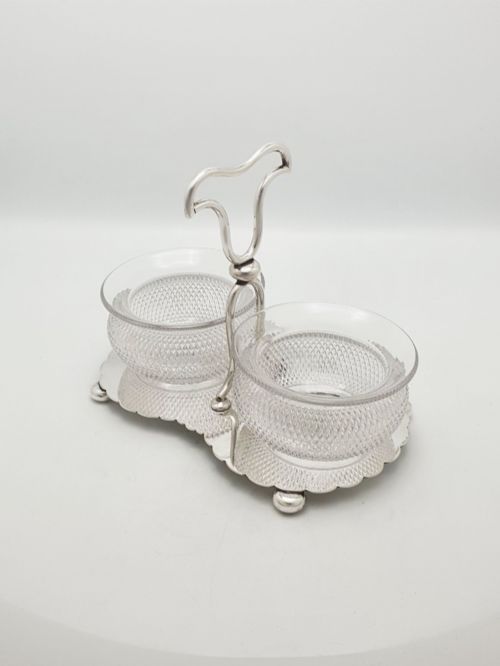
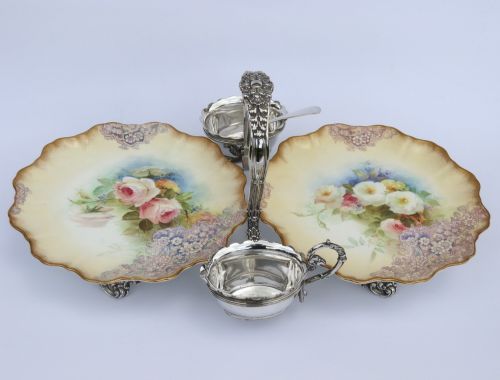


Silver Plated Jam Stand
A silver plated jam stand is a bright table centrepiece combining metalwork and glass, prized for bringing Victorian and Edwardian colour to breakfast and tea.
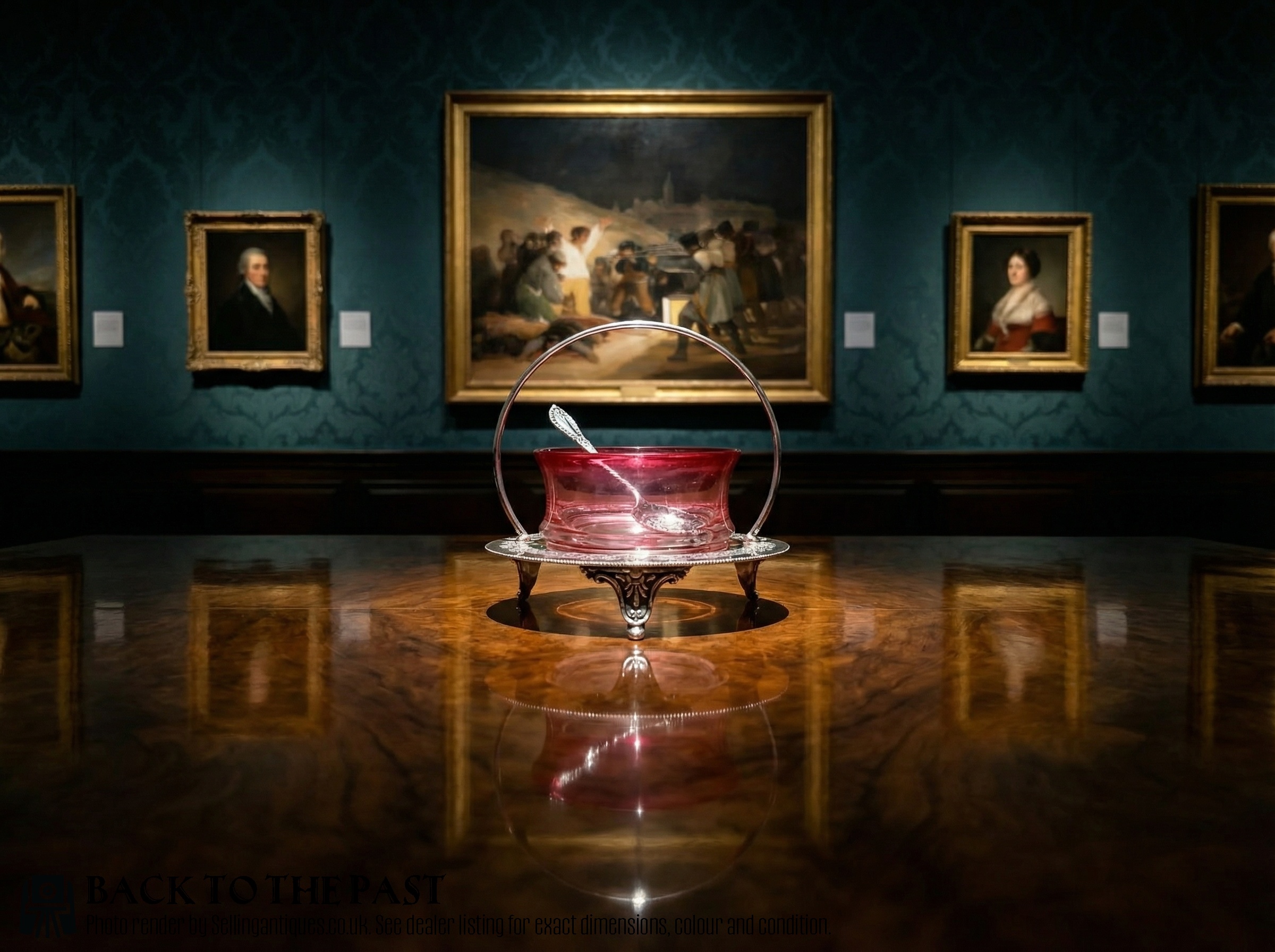
Silver Plated Jam Stand
When you search for a silver plated jam stand, you are looking at tablewares designed to hold preserves, honey, and relishes for formal dining and afternoon tea. These pieces combine a metal framework with fitted glass bowls, relish caddies, or jars to serve sweet spreads elegantly.
On this page, you are most likely to meet Edwardian and circa 1900 examples, alongside pieces from the 1920s. These range from twin cranberry preserve bowls and single jam pots with spoons to larger condiment stands and dessert sets.
The forms originate from Victorian and Edwardian domestic traditions where table service required dedicated vessels for preserves. Makers utilised silver plate for durability and shine, pairing it with coloured glass inserts to create visual contrast on the dining table.
How they were made
The construction relies on a base metal foundation coated in a thin layer of silver through plating techniques, providing the reflective finish characteristic of these tablewares. Frameworks are shaped to securely cradle removable glass vessels, incorporating handles, feet, and dedicated rests for spoons.
The glass elements are produced in various forms, including cut glass, hand-painted porcelain, and coloured glass such as cranberry and vaseline glass. These inserts are mouth-blown or moulded, sometimes featuring faceted cuts to catch the light alongside the silver plated metal.
Silver Plated Jam Stand Retail Price Guide 2026
Typical asking prices for silver plated jam stand among the pieces listed under this phrase on Sellingantiques today, from the lower quarter to the upper quarter. They describe what is for sale here now, not the wider market.
Listings feature Edwardian and circa 1900 periods, utilising silver plate, cranberry glass, vaseline glass, and cut glass in preserve dishes and condiment stands.
What varies in quality
Quality in these pieces is dictated by the crispness of the metalwork's casting and the weight of the silver plating over the base metal. Finer stands display well-defined mounts, balanced proportions, and robust construction that holds glass inserts securely without wobble.
The distinction also lies in the glass quality, where heavy, clear-cut glass or rich, deeply saturated cranberry and vaseline glass elevate the piece. Maker attribution, such as work by Walker and Hall, adds a layer of distinction through superior finishing and coordinated design.
Walker and Hall·James Dixon and Sons·James Deakin·James Shaw and Fisher·Doulton Burslem
The Silver Plated Jam Stand Glossary
- Silver Plate
- A base metal coated with a thin layer of silver to give the appearance of solid silver tableware. This technique allowed domestic households to afford bright, reflective serving pieces during the Victorian and Edwardian periods.
- Cranberry Glass
- A rich red-pink glass coloured by the addition of gold chloride during manufacture. It became popular in Victorian and Edwardian tableware for preserve dishes and dessert sets.
- Vaseline Glass
- A transparent or translucent yellow-green glass containing uranium dioxide, which glows under ultraviolet light. It appears frequently in late Victorian and Edwardian condiment stands and jam dishes.
- Condiment Stand
- A metal framework designed to hold multiple small jars, bottles, or bowls for sauces, relishes, and preserves. These stands often incorporate a central carrying handle for table service.
- Preserve Dish
- A small bowl specifically shaped to hold jams, marmalades, or fruit preserves, often paired with a dedicated silver plated stand and spoon.
Silver Plated Jam Stand: Frequently Asked Questions
What is a silver plated jam stand?
A silver plated jam stand is a decorative table accessory consisting of a metal frame and a glass bowl designed for serving preserves.
These pieces date primarily from the Victorian and Edwardian eras, combining bright metalwork with coloured glass inserts.
How were jam stands used?
Jam stands were placed on the dining table during breakfast or afternoon tea to serve preserves, honey, and relishes.
Pooled spreads were served directly from the glass bowls using dedicated spoons provided with the stand.
How do I date a silver jam stand?
Dating relies on stylistic clues such as Edwardian restraint, Victorian ornamentation, or 1920s geometric forms, alongside any maker marks.
The presence of cranberry or vaseline glass typically points towards the period around 1900, while simpler lines often suggest later decades.
Can I use an antique jam stand today?
Yes, these stands remain practical for serving jams, honey, and condiments during meals or special gatherings.
Care should be taken to hand wash the glass inserts gently and avoid harsh abrasives on the silver plated surfaces.