



Antique Glass Butter Dish
An antique glass butter dish brings practical elegance to the table, combining clear or coloured crystal with polished mounts for everyday service.
Antique Glass Butter Dish
An antique glass butter dish serves as a refined vessel for table presentation, combining a glass liner or base with a fitted cover. These pieces originate from the nineteenth and twentieth centuries, spanning periods from the Victorian era through to Art Deco and Mid-Century Modern designs.
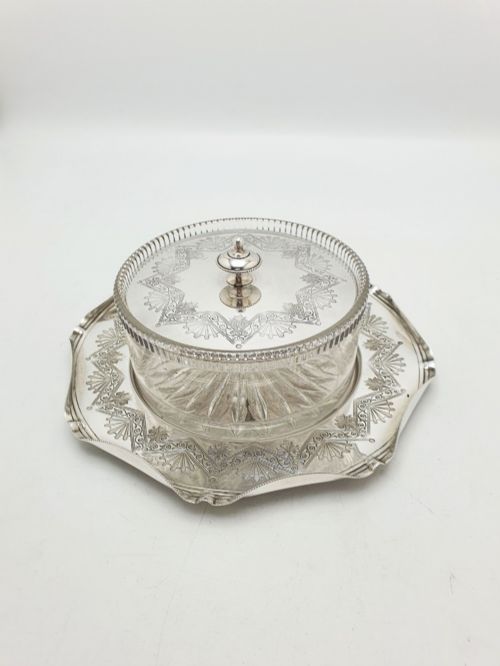
Buyers seeking an antique glass butter dish will frequently encounter Victorian examples featuring silver-plated stands alongside cut glass inserts. Formats range from traditional lidded dishes to cheese dishes, preserve dishes, and revolving mechanisms designed for dining tables.
Materials and construction
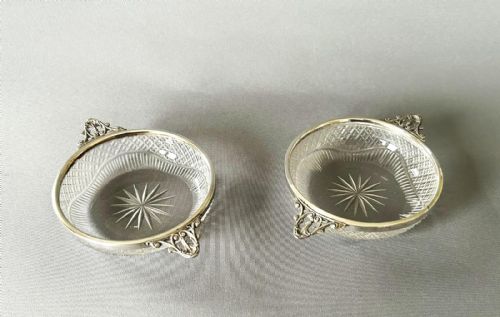
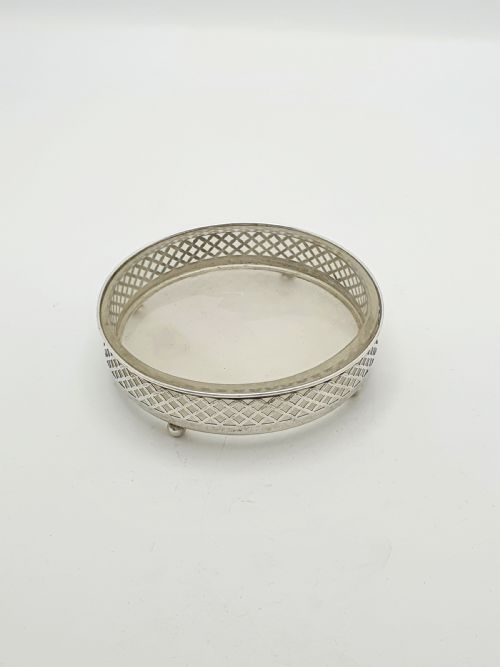
The construction typically pairs heavy cut glass or moulded glass inserts with mounts of silver plate, sterling silver, or Sheffield plate. Makers utilised techniques such as deep wheel cutting for the glass vessels and pierced or cast work for the surrounding metal frames.
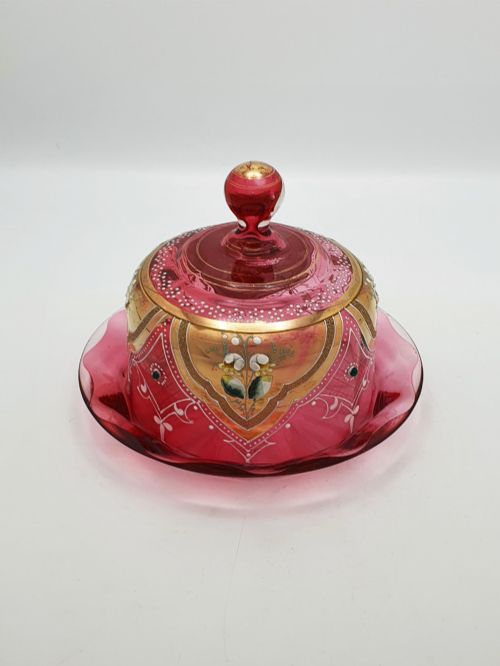
Coloured glass variations, including cranberry glass, Bristol blue, and green opaline glass with gold leaf details, appear alongside standard clear cut glass. Metal mounts frequently incorporate decorative elements such as cow finials, fern engravings, and ornate handles.
Materials range from sterling silver and silver plate to cranberry glass, Bristol blue, and green opaline glass.
Factors determining quality
Quality separates through the weight and clarity of the glass, where deeply faceted cut glass displays superior light refraction compared to plain moulded alternatives. The crispness of the wheel-cut patterns and the thickness of the glass liner indicate the standard of manufacture.
Metalwork execution defines the upper tier, distinguishing solid sterling silver or substantial silver plate from lighter bases. Maker attribution, through recognised marks by firms such as Walker and Hall, Elkington, Martin Hall, or Adie Brothers, elevates the standing of a piece.
ADIE BROTHERS·ELKINGTON·MARTIN HALL·WALKER AND HALL
The Antique Glass Butter Dish Glossary
- Glass Liner
- A removable glass dish that sits inside the outer metal stand to hold the butter safely. It protects the silver or plated metal from direct contact with dairy fats and acids.
- Silver Plate
- A base metal, often copper or Britannia metal, coated with a thin layer of silver through electroplating. This technique allowed makers to produce ornate dining wares at a more accessible cost.
- Cranberry Glass
- A rich red or pink transparent glass coloured by the addition of gold chloride during melting. It was widely utilised for decorative tableware throughout the Victorian period.
- Finial
- The small decorative knob or handle positioned on top of the lid. They are frequently cast in distinct shapes, including animal figures such as cows.
- Sheffield Plate
- An early method of fusing a thin sheet of sterling silver to a thicker copper core by heat and pressure. It predates standard electroplating and is identified by subtle copper showing at exposed edges.
Antique Glass Butter Dish: Frequently Asked Questions
What is an antique glass butter dish?
An antique glass butter dish is a covered vessel created to hold and present butter on the dining table. It typically consists of a clear or coloured glass insert paired with a protective metal stand and matching lid.
These table wares date from the nineteenth and twentieth centuries, reflecting changing domestic styles from the Victorian era to Art Deco. They provide both functional storage and decorative appeal for modern dining spaces.
How do I clean an antique glass butter dish?
Clean the glass liner using warm water and mild washing liquid with a soft cloth to avoid scratching the surface. Dry it thoroughly before placing it back into the metal mount.
Polish the silver or silver-plated mount separately using a dedicated silver cloth, taking care not to expose the glass or enamel to harsh chemical polishes. Store the dish in a dry environment to prevent tarnishing.
Are these dishes safe for daily use?
Most pieces remain robust enough for regular dining service, provided they are handled with care and washed by hand. The thick glass liners safely hold dairy products without absorbing odours or staining.
Avoid exposing antique glass to sudden temperature changes, such as boiling water or direct heat, to prevent cracking. Silver-plated mounts should avoid dishwashers to preserve the protective metal coating.
How do I date an antique butter dish?
Dating relies on stylistic clues, registration marks, and maker hallmarks stamped onto the metal mounts. Victorian pieces often feature ornate floral engraving, heavy cut glass, and figural finials like cows.
Later Edwardian and Art Deco examples tend to feature cleaner geometric lines, lighter pierced silver work, or distinct maker stamps. Hallmarks on sterling silver pieces provide exact assay office years.