




Antique Red Glass Dish
An antique red glass dish brings rich colour and light to a table, combining vibrant glass with silver and gilt work.
Antique Red Glass Dish
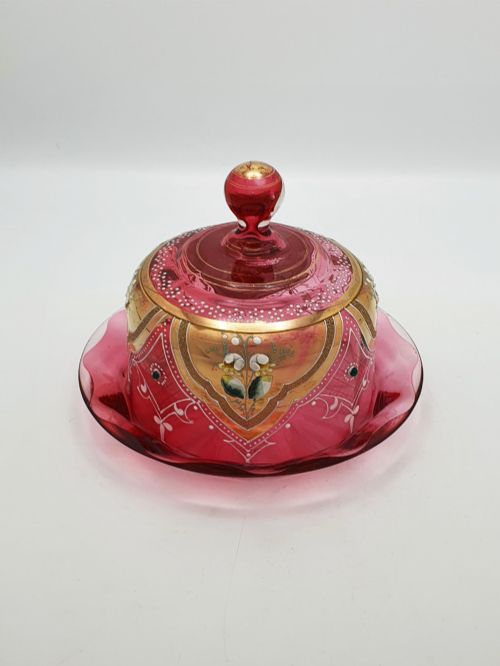
When you search for an antique red glass dish, you encounter a variety of tablewares and display pieces spanning the Victorian, Edwardian, and early twentieth-century periods. These items range from sugar baskets and preserve dishes to tazzas, centrepiece bowls, and covered cheese dishes, often paired with metal mounts.
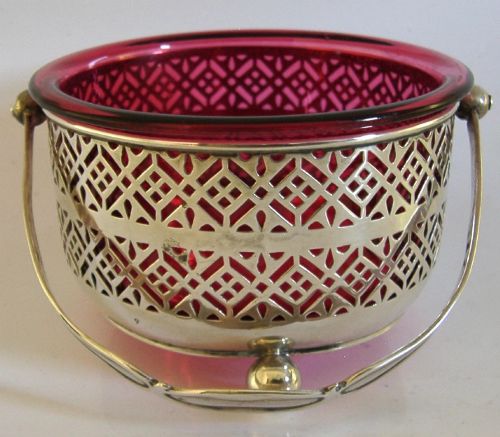
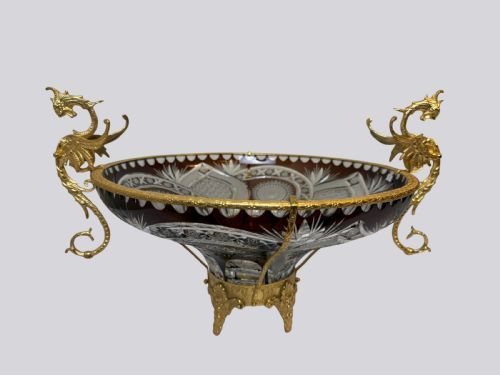
The most common versions on this page are cranberry glass and ruby glass pieces, frequently fitted into silver gilt or silver-plated pierced baskets. You will also find items featuring enamel, gilt bronze, or pewter mounts, reflecting styles from Victorian and Edwardian designs through to Art Nouveau.
Objects span domestic dining and dressing table use, including trinket boxes, butter dishes, and salt cellars alongside larger display bowls. Continental and English workshops produced these items, utilising moulded crystal, cut glass, and cameo glass techniques.
How they were made
Glassmakers created the characteristic red tones using gold chloride for cranberry glass or copper in ruby glass formulations. Workers shaped the hot metal through blowing and moulding, producing honeycomb patterns or smooth vessels ready for mounting.
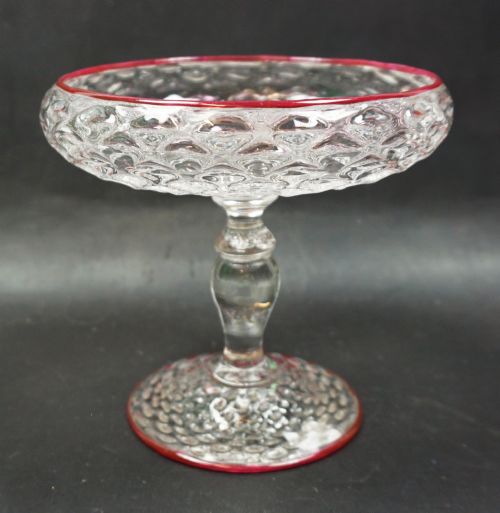
Craftsmen paired the glass bodies with sterling silver, silver gilt, silver plate, or gilded pewter. Metalwork components involved piercing, casting, and engraving, alongside applied enamel decoration and red cane details integrated into crystal tazzas.
Listings feature items from the Victorian, Edwardian, and Belle Epoque periods, utilising Cranberry glass, ruby glass, sterling silver, and silver gilt.
What varies in quality
Quality rests in the depth and uniformity of the red glass colour alongside the crispness of any moulding or cutting. Superior examples display harmonious proportions between the glass vessel and its metal mount, whether silver gilt, pierced plate, or gilded bronze.
The refinement of accompanying metalwork distinguishes finer items, seen in the delicacy of pierced silver baskets, the precision of enamel work, and the structural integrity of swing handles or fitted lids. Maker attribution and hallmarking add distinction to the piece.
George Fox·Orivit
The Antique Red Glass Dish Glossary
- Cranberry glass
- A transparent pinkish-red glass made by adding gold to the molten batch. It appears frequently in Victorian and Edwardian tableware.
- Ruby glass
- A deep red glass typically coloured with copper oxide. It provides a rich, dark tone seen in nineteenth-century tazzas and bowls.
- Tazza
- An elevated ornamental cup or shallow bowl set on a foot and stem. These pieces often serve as centrepieces or display dishes.
- Silver gilt
- Silver coated with a thin layer of gold on the surface. This technique gives mounts a warm yellow-gold appearance alongside the red glass.
- Pierced basket
- A metal container worked with openwork patterns through piercing or fretwork. These frames hold glass liners for sugar, preserves, or fruit.
Antique Red Glass Dish: Frequently Asked Questions
How do I clean an antique red glass dish?
Wash the glass gently in lukewarm water using mild soap, avoiding harsh abrasives that might damage the surface or any applied gilding.
Keep metal mounts dry and polish silver or gilt components separately with an appropriate cloth to preserve the finish.
What is the difference between cranberry and ruby glass?
Cranberry glass uses gold in the melting process to create a lighter, transparent pinkish-red hue.
Ruby glass relies on copper or other metals to achieve a deeper, more saturated dark red colour.
How are silver baskets attached to the glass liners?
Silver or silver-plated baskets are usually custom-formed to cradle the shaped glass body securely without adhesives.
Some designs utilise swing handles or rims that lock the removable glass liner gently into position within the metal frame.
Where were these glass dishes made?
Production centres included English workshops in cities like Birmingham alongside continental European makers.
Many pieces reflect regional glassmaking traditions combined with domestic metalworking specialties of the nineteenth and early twentieth centuries.