




18th Century Table Glass
These pieces of 18th century table glass bring the refined sparkle of Georgian dining rooms straight to your home, offering genuine historical utility.
18th Century Table Glass
When you search for 18th century table glass, you encounter drinking vessels, cruet bottles, cream jugs, and small display stands used in domestic settings. The pieces span periods from Queen Anne through to the reign of George III, reflecting the changing tastes of dining and dressing tables. Most examples on this page consist of lead glass vessels or small accessories such as patch stands and mustard pots.
The objects serve specific functions on the Georgian table, from holding condiments to serving wine. Forms include plain stem goblets, cruet sets with bottles and casters, and cut glass bowls. These items demonstrate the domestic habits of the period, when table settings required specific vessels for sauces, oils, and spirits.
Materials and production methods
Makers utilised lead glass to achieve greater clarity, weight, and brilliance than standard soda glass permitted. This heavier metal allowed artisans to execute deeper facet cutting and shape intricate stems for goblets and cruet bottles. The addition of lead oxide transformed British glassmaking during this period.
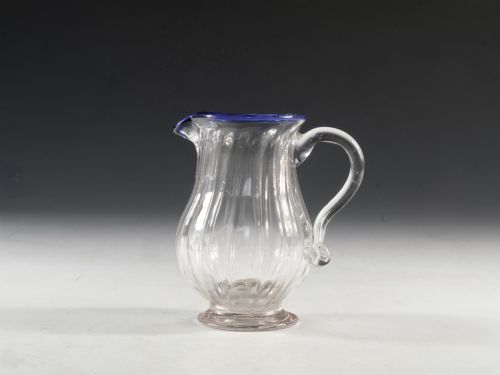
Craftsmen shaped these items by free-blowing and mold-blowing, often finishing details by hand on a wheel. Cutting and polishing created the geometric patterns seen on bowls and cruet bottles, while applied threads and blue rims provided subtle contrast on cream jugs and similar tableware.
Factors that determine quality
The clarity and weight of the lead glass set the baseline for a piece's merit, indicating the purity of the metal mixture. Superior items show crisp cutting without wobble, cloudiness, or excessive bubbles trapped within the substance. Balance and proportion in the stem and foot of a goblet or cruet bottle reveal the maker's skill.
Condition remains paramount, particularly the absence of chips along rims, feet, and cut facets where wear naturally occurs. Originality of accompanying components, such as matching stoppers in cruet bottles or complete cruet sets with original casters, elevates an example above composite assemblies.
Hester Bateman
The 18th Century Table Glass Glossary
- Lead glass
- Glass containing lead oxide, introduced to increase brilliance, weight, and malleability for cutting. This material defines much of the better British tableware from the period.
- Patch stand
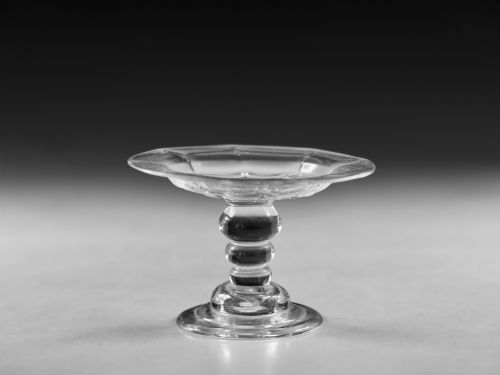
- A small glass dish used to hold cosmetic patches worn on the face during the Georgian era. These miniature vessels often rest on a pedestal foot.
- Cruet set
- A matched group of bottles, jars, or casters held in a frame for dispensing vinegar, oil, mustard, and spices at the table. Sets frequently combine glass bottles with silver or wooden frames.
- Plain stem
- A straight, unornamented glass stem supporting the bowl of a drinking vessel. This form is typical of mid-Georgian goblet construction.
- Cut glass
- Glass decorated by grinding facets or patterns into the surface using a wheel. This technique enhances the refraction of light through lead glass.
18th Century Table Glass: Frequently Asked Questions
What is 18th century table glass?
These items are domestic glass objects produced in Britain during the Georgian era, including drinking vessels, cruet bottles, and small condiment containers.
They reflect the dining and dressing habits of households from the early 1700s through the end of the century.
How were plain stem goblets used?
Plain stem goblets functioned as drinking vessels for wine, beer, or cider during formal and informal meals.
Their simple form represents a standard style of British glassware before more elaborate facet cutting became dominant.
How do I care for antique glass?
Wash these items strictly by hand in warm water using a mild detergent, avoiding harsh scrubbing and sudden temperature changes.
Store them securely on stable surfaces away from high-traffic edges where accidental knocks might occur.
How do I identify the period?
Dating relies on examining the metal composition, pontil mark characteristics, form, and cutting techniques recorded in the piece.
Comparing the vessel shape to documented examples from reigns such as George II or George III helps narrow the date of manufacture.