



Glass Mustard Pot
A glass mustard pot brings the sparkle of cut glass and coloured liners to the dining table.
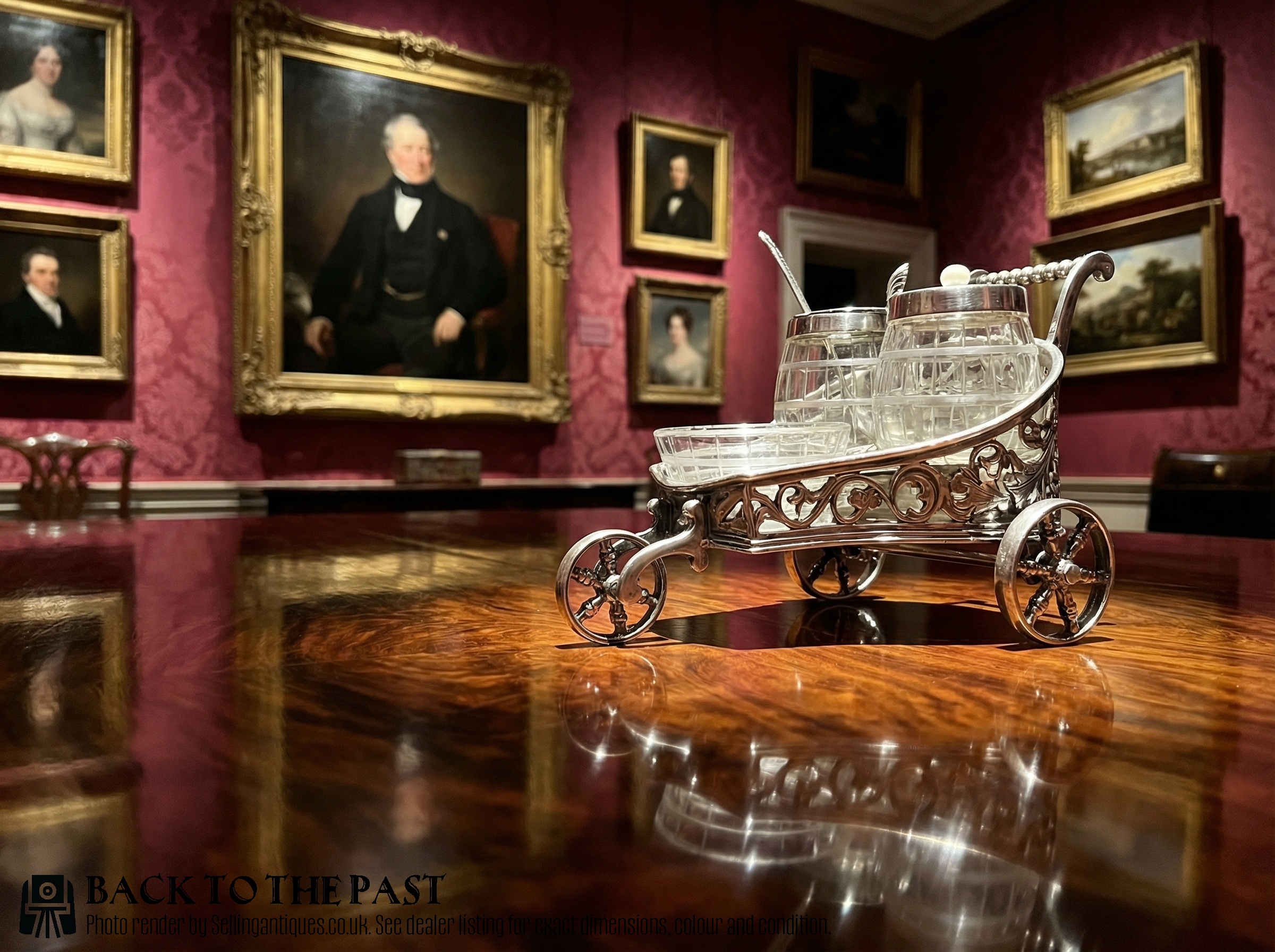
Glass Mustard Pot
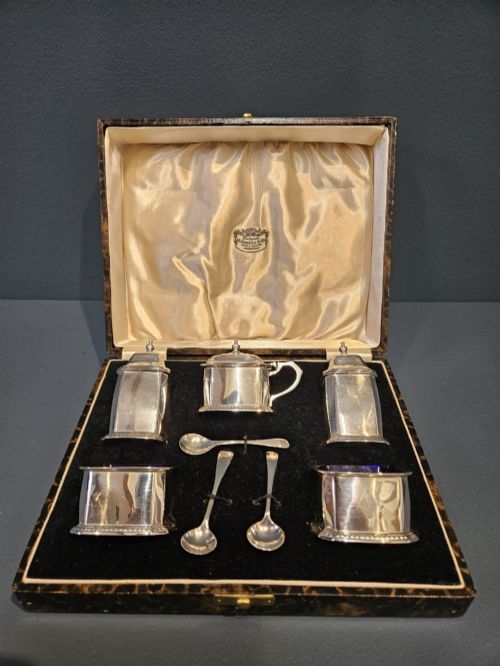
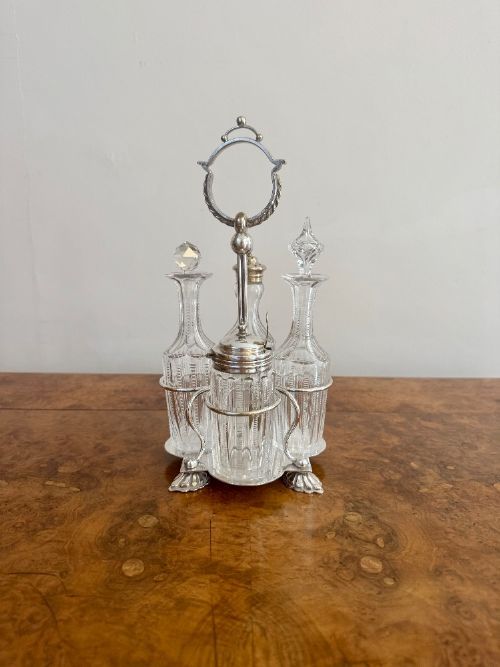
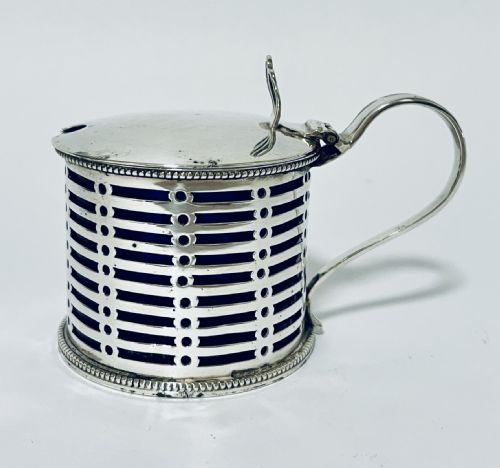
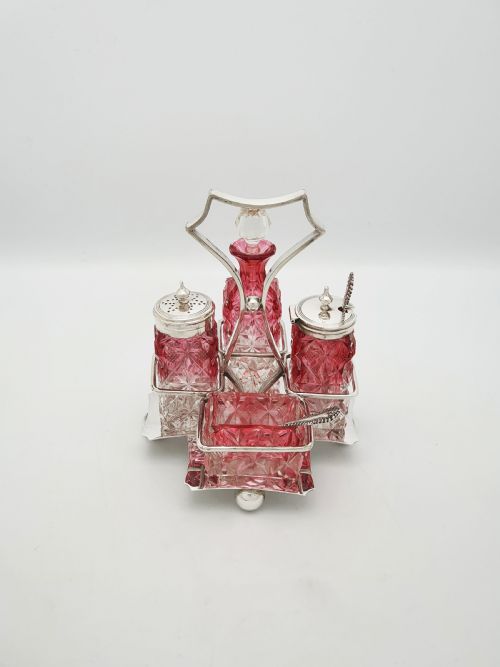
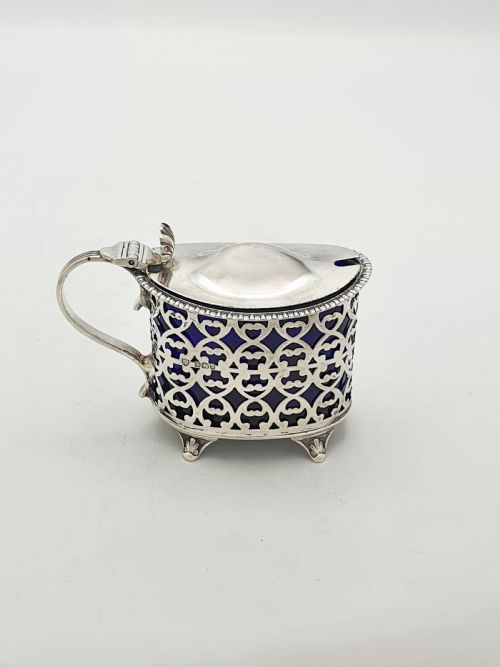
A glass mustard pot combines a clear, cut, or coloured glass body with a fitted mount, handle, and hinged lid, often accompanied by a small spoon. The pieces seen here span the Victorian, Edwardian, and Art Deco periods, alongside Georgian and mid-century examples.
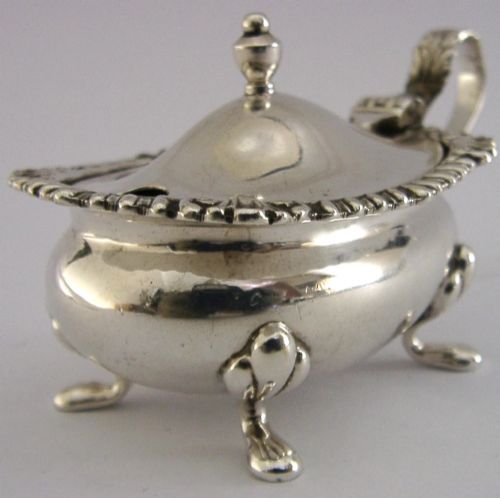
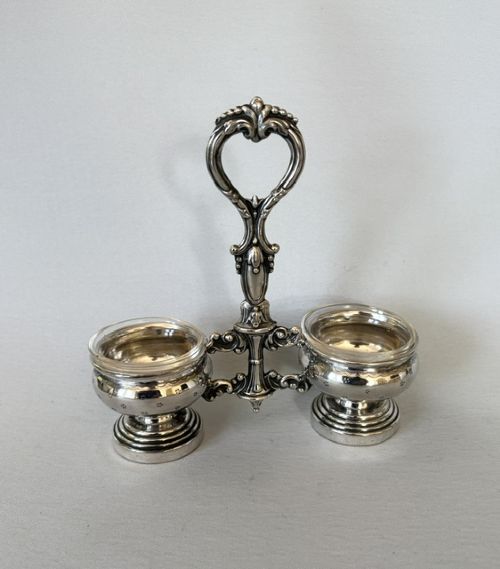
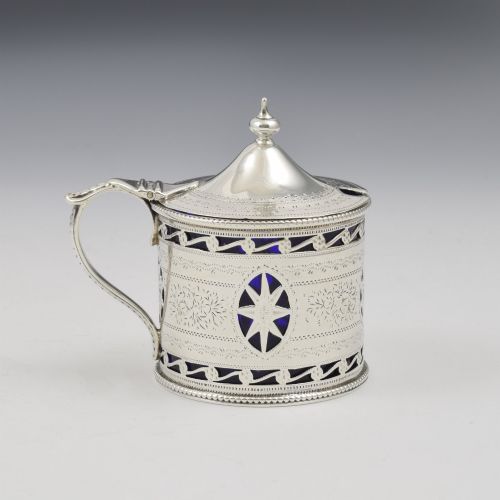
Most frequent among these are cylindrical drum pots and oval shapes in sterling silver or silver plate, paired with liners in cobalt blue, cranberry, or ruby red glass. Some examples arrive as part of larger cruet sets or condiment stands rather than standing alone.
Makers ranged from specialist silversmiths to larger manufacturing firms, producing both plain utilitarian vessels and pierced novelty designs featuring cherubs, carriage motifs, or figural legs.
How they were made
The glass bodies were formed using techniques such as heavy cutting, flashing, and press-moulding to create faceted or coloured vessels, including distinctive uranium and Bristol blue glass containers.
Metal mounts, hinged lids, and handles were fashioned from sterling silver or silver plate, utilising processes like piercing, engraving, and casting to secure the glass securely within the frame.
Some mustard pots stand on figural devil legs or take the shape of carriages and owls.
What varies in quality
Quality rests in the crispness of the glass cutting and the weight of the silver mount, where thicker gauge metal and precise hinge action elevate the piece.
The presence of an original matching glass liner, particularly in saturated cobalt or cranberry tones, distinguishes standard utility ware from finer workshop production.
Nathan and Hayes·William Neale·Mappin Brothers·Charles Stuart Harris·Walker and Hall·Omar Ramsden·Levi and Salaman·George Fox
The Glass Mustard Pot Glossary
- Cruet set
- A collection of small condiment bottles or pots held together on a stand for table service.
- Drum mustard pot
- A cylindrical container with straight vertical sides, popular during the nineteenth century.
- Liner
- The removable glass insert that sits inside a metal mustard pot to protect the silver from corrosion.
- Silver plate
- A base metal coated with a thin layer of silver through electroplating or older fusing methods.
- Pierced work
- Metal decorated by cutting intricate openwork patterns through the surface.
Glass Mustard Pot: Frequently Asked Questions
What is a glass mustard pot used for?
These vessels held prepared mustard on the dining table, protecting the condiment and keeping it accessible for meals.
They allowed diners to serve portions using a small spoon while displaying decorative glass and precious metal.
How do I know if the glass liner is original?
An original liner fits the interior contours precisely without excessive movement or protruding awkwardly above the metal rim.
Colour and glass weight should match the manufacturing standards of the period indicated by the hallmarks on the mount.
How should I clean a silver mounted mustard pot?
Wash the removable glass liner in warm soapy water, taking care to dry it thoroughly before replacing it in the metal frame.
Polish the silver mount gently with a specialist cloth, avoiding contact between cleaning agents and the glass body.
Can I use these pots for modern dining?
These pieces function well for serving condiments or small preserves during dinner parties and family meals.
Careful handling ensures the antique glass and delicate silver hinges remain protected during everyday use.