



Vintage Condiment Caddy
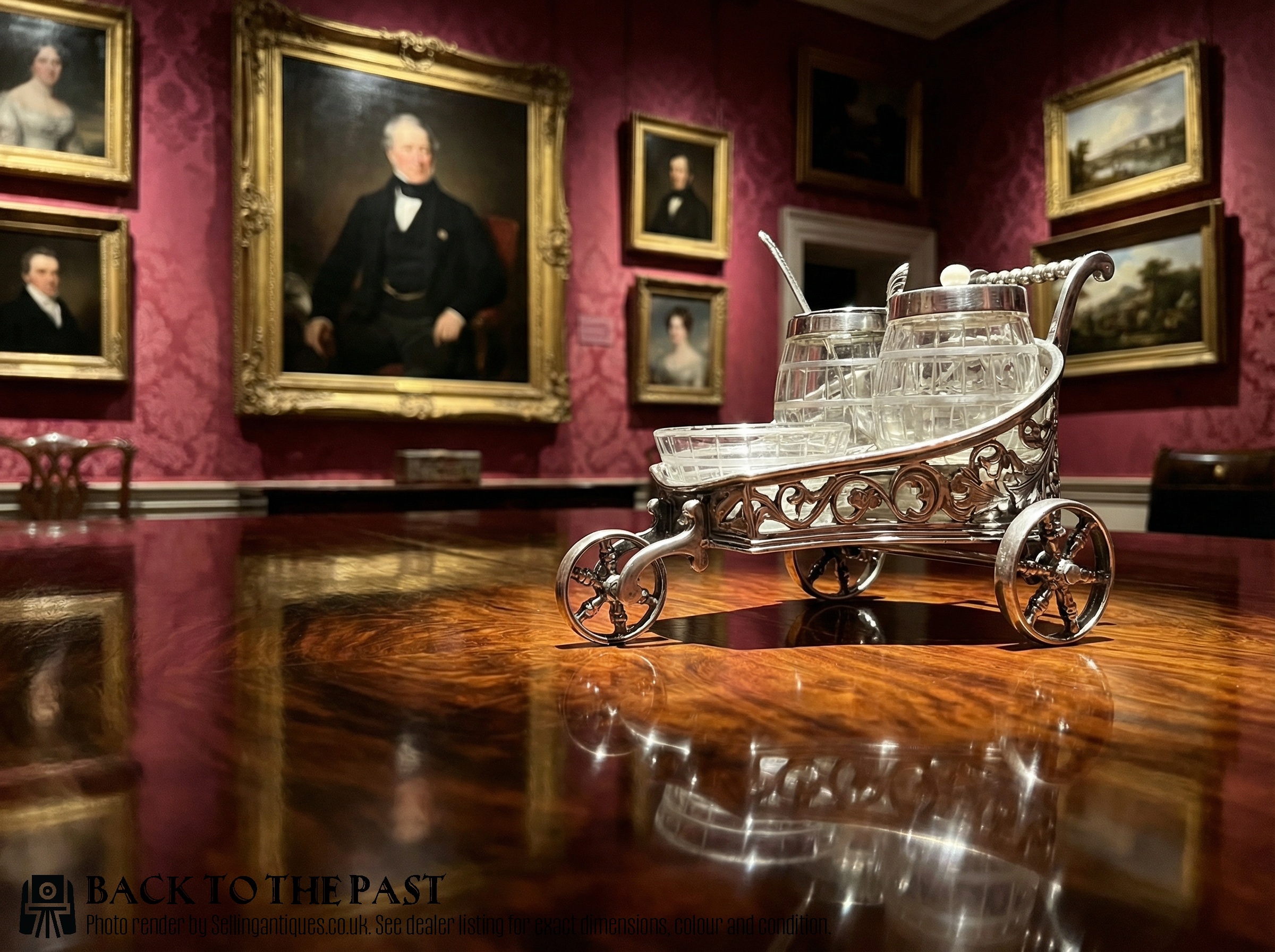
A vintage condiment caddy brings dining table organisation into domestic spaces, holding bottles and jars within easy reach.
Vintage Condiment Caddy
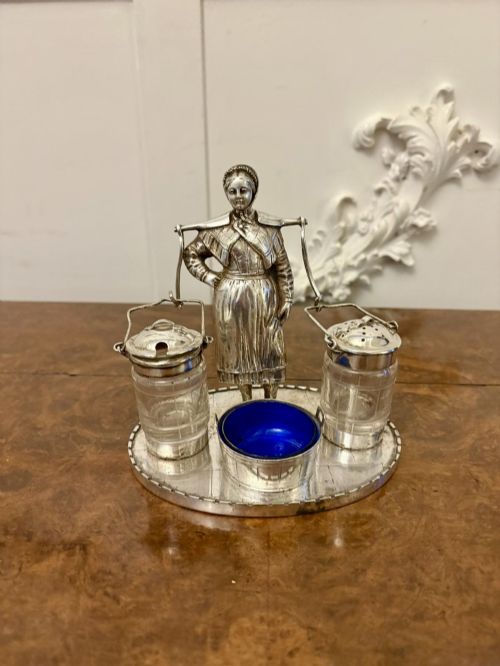
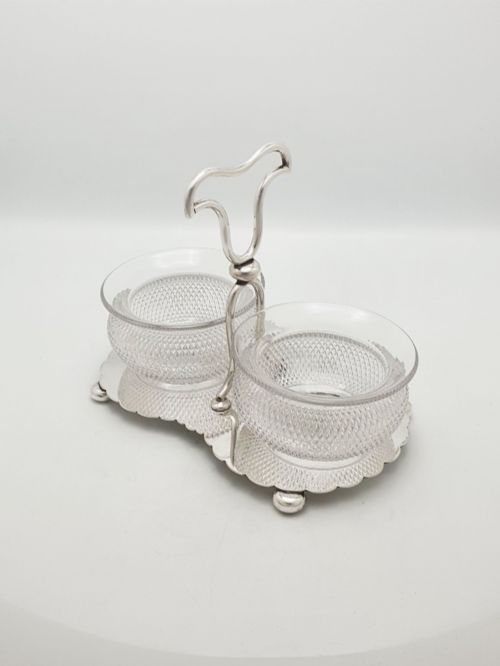
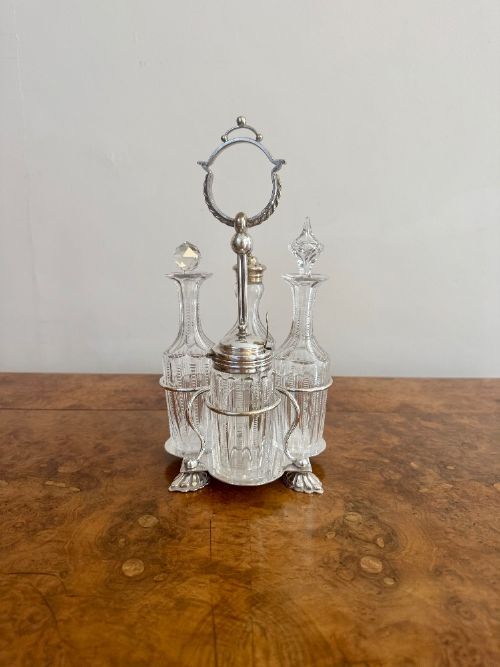
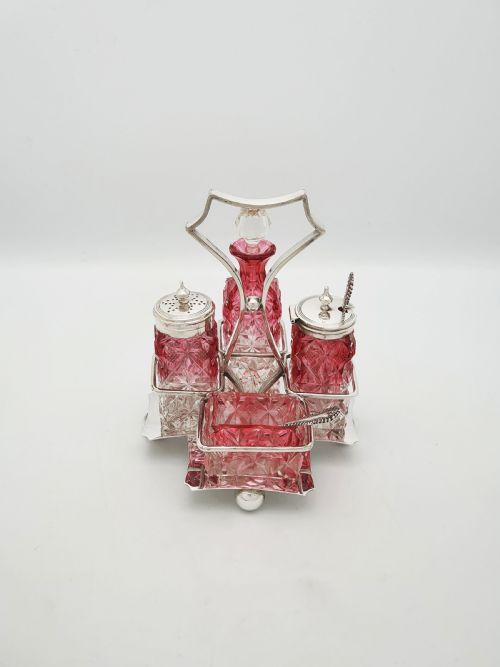
The version you are most likely to meet on this page is the Edwardian silver plated cruet set, often fitted with cut glass or cranberry glass bottles. These frame options range from simple twin glass bowl stands up to large six bottle or eight piece arrangements.
What varies in quality
The distinction between tiers rests upon the weight of the metal framework, the integrity of the silver plating, and the clarity of the cut glass. Complete sets retaining their original matching bottles command greater interest than assembled groupings.
Workmanship shows in the crispness of applied decorative borders, the thickness of the silver coating, and the hand-cut facets upon the glass bottles and jars.
Vintage Condiment Caddy Retail Price Guide 2026
Typical asking prices for vintage condiment caddy among the pieces listed under this phrase on Sellingantiques today, from the lower quarter to the upper quarter. They describe what is for sale here now, not the wider market.
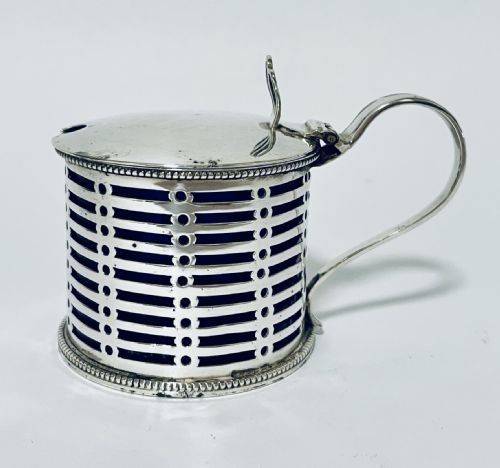
Materials recorded across the inventory include sterling silver, silver plate, mahogany treen, crystal, and cranberry glass.
Wade Wingfield Wilkins
The Vintage Condiment Caddy Glossary
- Cruet set
- A matched collection of small bottles, jars, and pots for holding condiments like oil, vinegar, mustard, and pepper, usually fitted into a metal frame or stand.
- Silver plate
- A thin layer of silver fused or electroplated onto a base metal foundation such as brass, copper, or nickel silver.
- Cranberry glass
- A rich red glass produced by adding gold chloride to the molten glass batch, often seen in Edwardian cruet bottles.
- Open salt
- A small cellar or dish used for holding loose salt on the dining table, typically utilised before the invention of the shaker.
- Caster
- A small jar or pot with a pierced lid used for sprinkling sugar, pepper, or other dry seasonings over food.
Vintage Condiment Caddy: Frequently Asked Questions
What fits inside a condiment caddy?
These stands hold a combination of glass bottles for liquids like oil and vinegar, alongside small pots or cellars for mustard, salt, and pepper. Many configurations also incorporate casters for dry seasonings.
The specific assortment depends on the period and size of the stand, ranging from twin bowl arrangements to complex six and eight piece frames.
How were cruet sets used at the table?
Dining companions used them to hold essential seasonings and condiments in a central location so that guests could serve themselves during meals. The handle on top allowed servants or diners to pass the entire stand around the table.
They sat directly upon the dining surface as functional tableware during formal and everyday meals throughout the eighteenth, nineteenth, and early twentieth centuries.
How do I identify an Edwardian cruet set?
Edwardian stands frequently feature silver plate frames paired with cut glass or cranberry flashed glass bottles. The styling tends towards decorative Edwardian tastes prevalent around the opening years of the twentieth century.
Examining the weight of the frame and the specific glass cutting patterns helps distinguish these pieces from earlier Georgian or later Art Deco examples.
What is the difference between a caddy and a cruet?
The terms are often used interchangeably on the market, though a cruet specifically designates a set designed for liquids like oil and vinegar alongside seasonings. A caddy or stand encompasses a broader range of holders including relish caddies and bottle stands.
Both serve the primary purpose of keeping tabletop condiment containers organised and portable.