


Hand Blown Cranberry Glass
Hand blown cranberry glass brings deep crimson colour and vibrant warmth to a room, offering striking tableware and decorative objects shaped by nineteenth-century makers.
Hand Blown Cranberry Glass
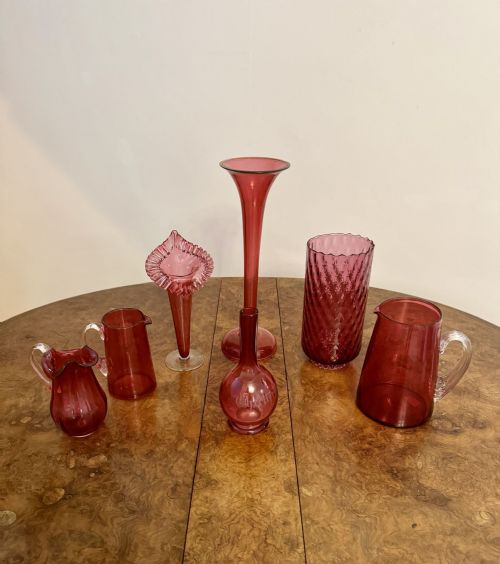
Hand blown cranberry glass comprises nineteenth-century tableware and display pieces, spanning the Victorian and Edwardian eras. When collectors search for hand blown cranberry glass, they encounter items ranging from wine glasses and jugs to elaborate epergnes and vases.
The pieces on this page heavily feature Victorian origins, often dating from the 1860s through to 1900. Domestic forms such as bowls, decanters and sets of wine glasses dominate the selection alongside decorative lampshades and jack in the pulpit vases.
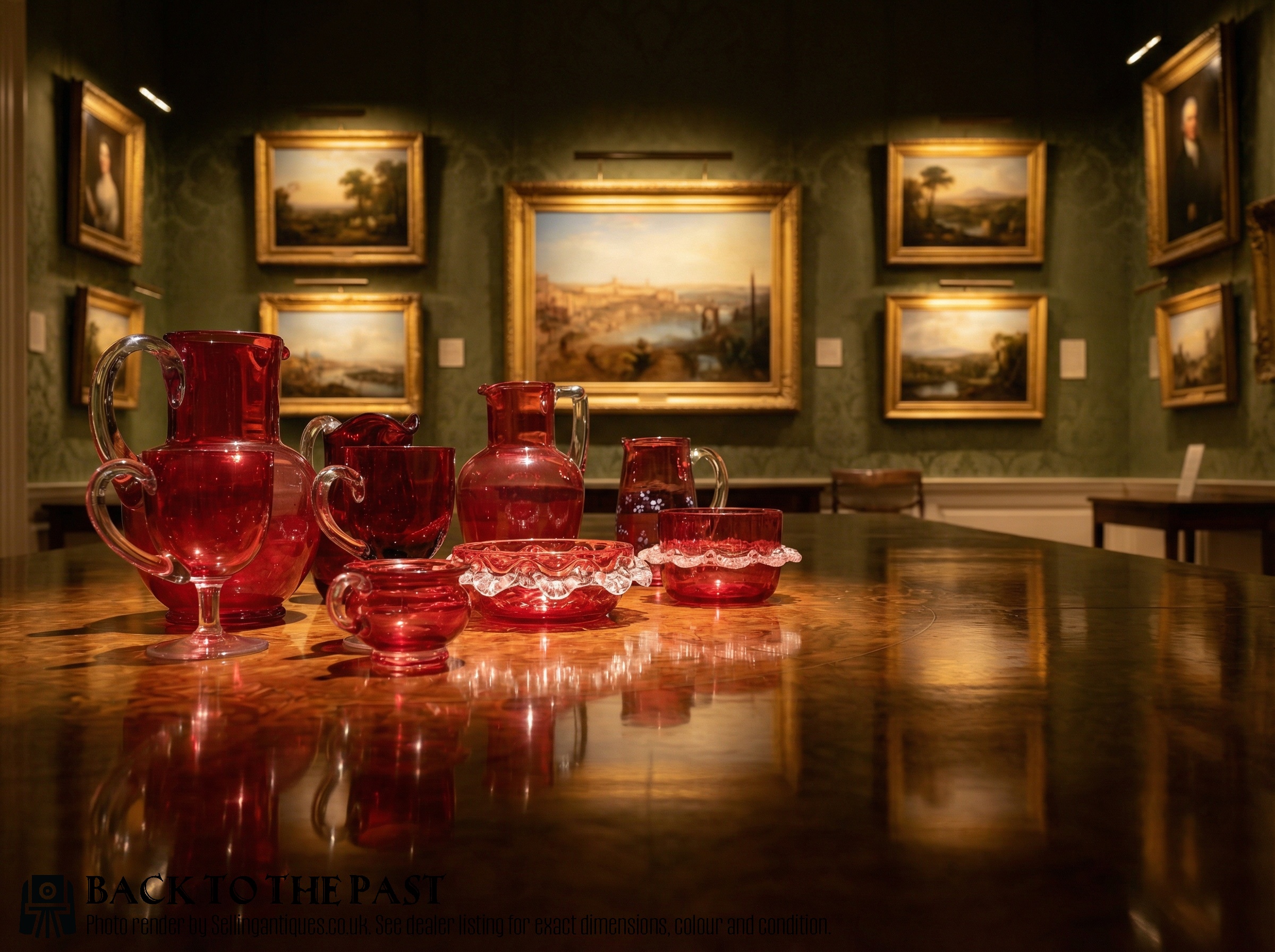
How they were made
These items rely on glass blown by hand, incorporating gold chloride into the molten mixture to achieve the characteristic pink to deep crimson hue. Artisans combined this coloured glass with clear glass, enamel, or silver plate mounts to finish pieces like jugs, biscuits jars and epergnes.
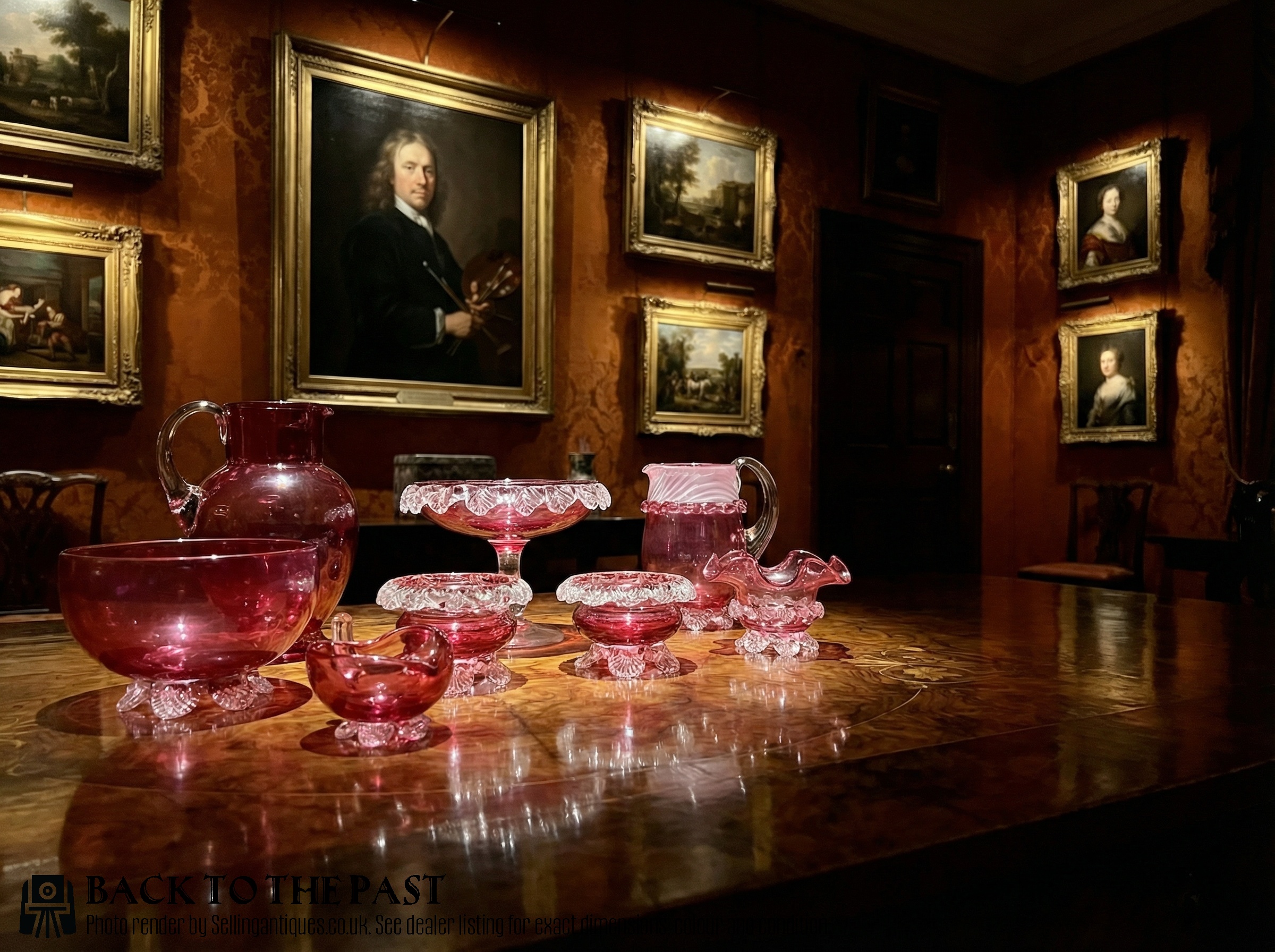
Techniques varied from free-blowing vessel bodies to fashioning complex multi-trumpet epergnes and delicate threaded glassware. Clear glass was frequently utilised for handles, feet and rims to contrast against the rich body colour.
Hand Blown Cranberry Glass Retail Price Guide 2026
Typical asking prices for hand blown cranberry glass among the pieces listed under this phrase on Sellingantiques today, from the lower quarter to the upper quarter. They describe what is for sale here now, not the wider market.
Listings feature Victorian and Edwardian pieces, incorporating materials like cranberry glass, clear glass, enamel, and silver plate.
What varies in quality
Quality in these items rests upon the depth and consistency of the cranberry colour achieved within the glass body. Superior examples display an even tone and skilful combination with clear glass or silver plate elements.
Form and complexity dictate the standing of a piece, separating simple utilitarian vessels from elaborate moulded cornucopia vases, multi-piece epergnes and matched sets of wine glasses.
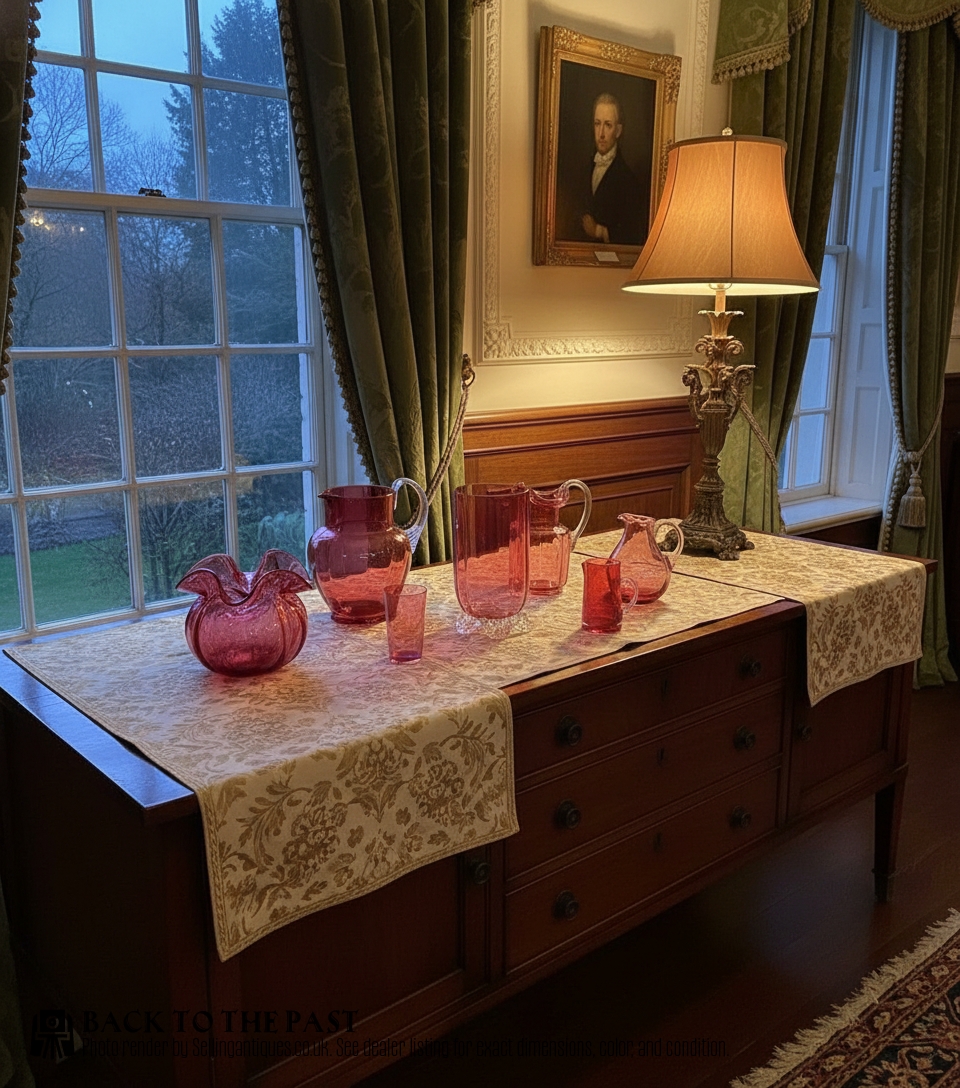
The Hand Blown Cranberry Glass Glossary
- Cranberry Glass
- A type of transparent glass coloured with gold, yielding shades from pale pink to deep red. It gained popularity during the Victorian period for tableware and decorative objects.
- Epergne
- A large table centrepiece featuring multiple arms or trumpets for holding fruit, flowers or sweetmeats. Victorian examples in cranberry glass often incorporate central bowls with hanging baskets.
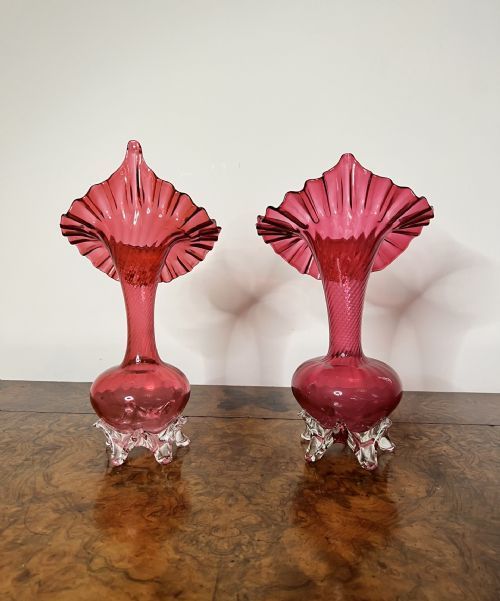
- Jack in the Pulpit Vase
- A nineteenth-century vase style with a flared, ruffled rim resembling a flower spathe. Makers frequently shaped cranberry glass with clear glass edgings for these dramatic display pieces.
- Over Crystal
- A technique involving a layer of coloured glass cased over a clear crystal core. This method creates depth and allows artisans to cut away portions to reveal the clear layer underneath.
- Silver Plate
- A thin coating of silver applied to a base metal, commonly utilised for mounts, lids, handles and pierced spoons accompanying nineteenth-century glass jugs and bowls.
Hand Blown Cranberry Glass: Frequently Asked Questions
What is hand blown cranberry glass?
Hand blown cranberry glass is nineteenth-century glassware coloured using gold chloride during the melting process. Items range from everyday wine glasses and jugs to ornamental epergnes and vases.
Most pieces date from the Victorian and Edwardian eras, showcasing diverse forms shaped by skilled glassblowers using clear glass and enamel accents.
How do I care for antique glass?
Wash antique glass gently by hand using lukewarm water and mild soap, avoiding sudden temperature changes that can crack old material. Dry pieces carefully with a soft cloth to preserve the surface.
Keep items out of direct sunlight for extended periods and handle silver plate mounts or delicate applied handles with caution.
Are these pieces genuinely Victorian?
The pieces listed span the nineteenth century, including specific dates from the 1840s through to 1900. Victorian items often feature hand-blown stemware, ewers and cornucopia vases characteristic of the period.
Stylistic markers such as ruffled rims, applied clear glass trails and silver plate fittings help anchor these items in the Victorian and Edwardian eras.
What items are included in sets?
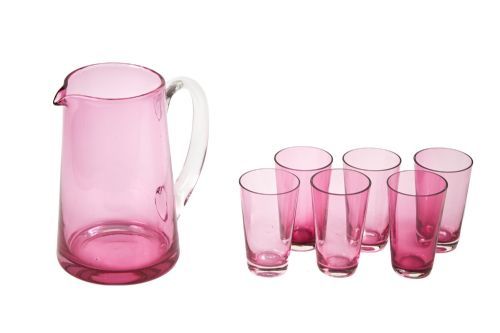
Sets typically comprise matched wine glasses, drinkware collections or jugs paired with matching bowls. These groupings reflect nineteenth-century dining and entertaining habits.
Some listings combine cranberry glass jugs with matching glasses or pair ewers with bowls for serving use.