




19th Century Cranberry Glass
These rich, pink-tinted vessels span the Victorian era, offering everything from delicate wine glasses to grand oil lamps.
19th Century Cranberry Glass
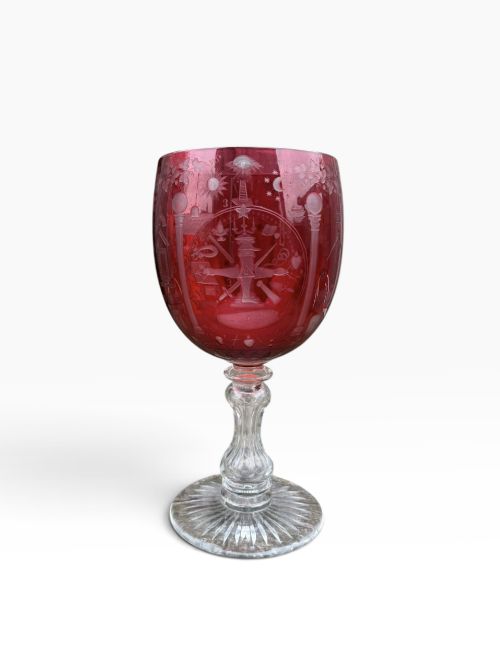
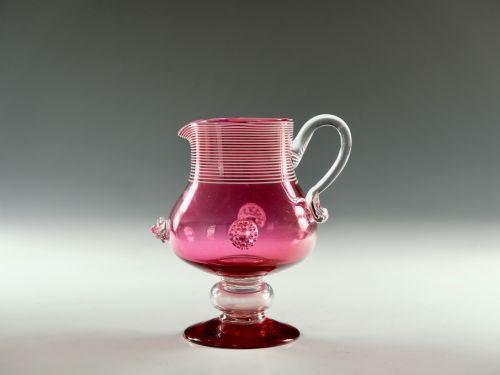
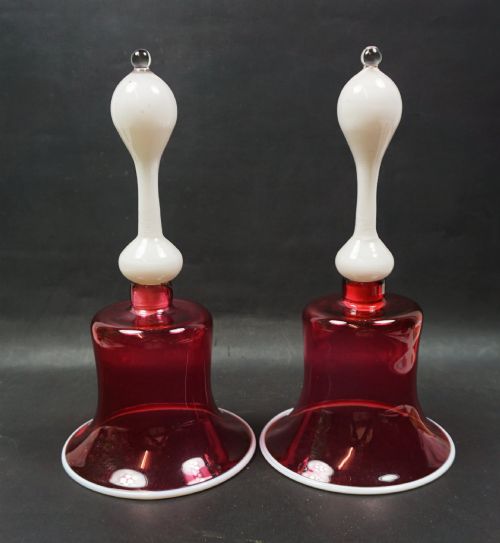
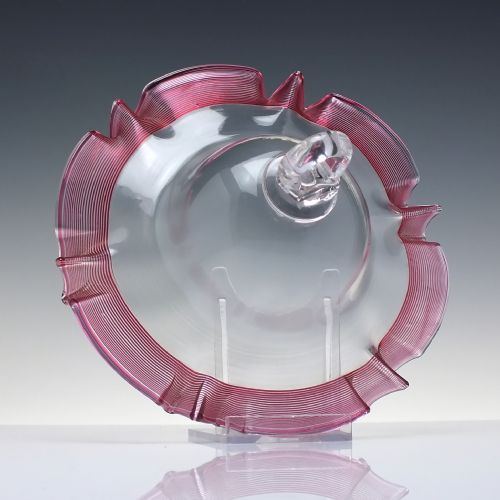
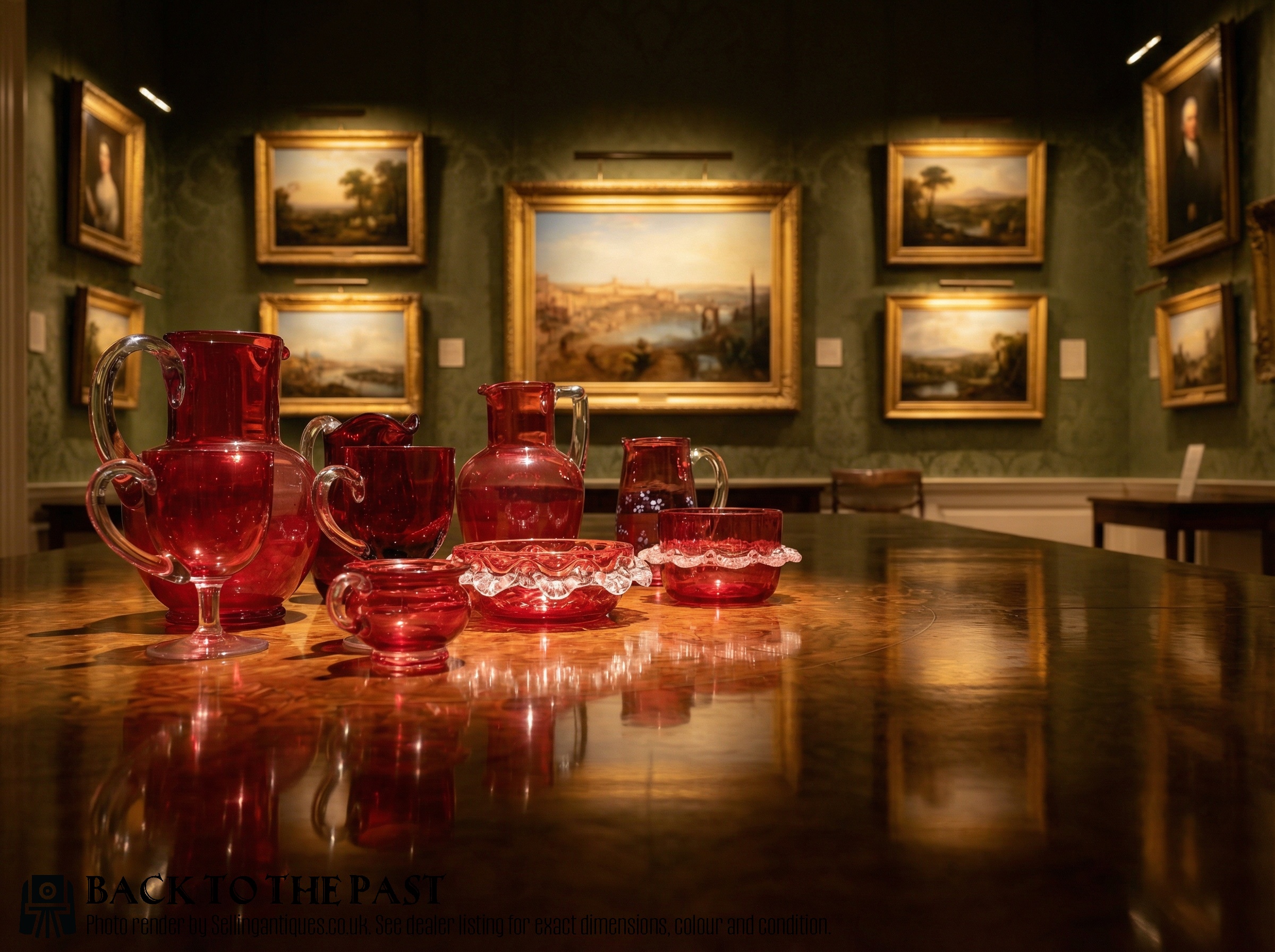
19th century cranberry glass encompasses a vibrant range of domestic and decorative objects produced primarily during the Victorian period. Wine glasses, jugs, oil lamps, and vases dominate the selection, often shaped with distinctive white glass rims or handles.
The objects derive from English, French, and Bohemian workshops, reflecting diverse regional tastes in domestic display. Pieces vary from simple tableware sets to elaborate items featuring brass mounts, crystal overlays, and hand-blown details.
Buyers frequently encounter matching sets of wine glasses alongside functional items like decanters and butter dishes. Tableware and decorative items sit alongside utilitarian household objects such as scent bottles and floor-standing oil lamps.
Materials and Techniques
Makers achieved the distinctive pink and ruby coloration by adding gold chloride to the molten glass mixture. Artisans combined this coloured material with clear glass, crystal, or white glass elements to create layered effects and contrasting handles or rims.
Many items incorporate surface decoration such as hand-applied gold leaf gilding, enamel work, and detailed wheel-engraving depicting vines and floral motifs. Metal fittings in brass and copper frequently support larger items like oil lamps and hanging lanterns.
19th Century Cranberry Glass Retail Price Guide 2026
Typical asking prices for 19th century cranberry glass among the pieces listed under this phrase on Sellingantiques today, from the lower quarter to the upper quarter. They describe what is for sale here now, not the wider market.
Listings feature items from the nineteenth century, incorporating Victorian, Georgian, and 1880 periods across glass, brass, and gold leaf materials.
Assessing Quality and Execution
Quality reveals itself in the depth and evenness of the glass coloration, which ranges from a delicate blush to a deep ruby hue. Superior examples display crisp wheel-engraving and precise application of gold leaf or enamel details rather than plain surfaces.
The complexity of the form dictates distinction, separating simple utilitarian vessels from elaborate handled epergnes, lustres, and overlaid scent bottles. Matching sets of tableware demand higher regard due to the survival rate of complete groups over time.
French Baccarat
The 19th Century Cranberry Glass Glossary
- Cranberry Glass
- Transparent glass coloured with gold oxide to produce shades from pale pink to deep red. It gained popularity during the Victorian era for tableware and decorative items.
- Nailsea Glass
- Glassware characterised by looped or splashed patterns of white enamel embedded in a coloured ground. It often took the form of flasks, rolling pins, and bellows.
- Tazza
- A shallow ornamental chalice or saucer mounted on a stem and foot. These pieces were utilised for serving sweetmeats or displaying fruit on dining tables.
- Lustre
- A mantel ornament featuring a bowl hung with cut glass prisms. The reflective pendants caught the flickering light of nineteenth-century rooms.
- Epergne
- A large, multi-vased centrepiece used for table decoration. Victorian examples frequently combined central trumpets with smaller hanging baskets in coloured glass.
19th Century Cranberry Glass: Frequently Asked Questions
What is cranberry glass?
Cranberry glass is a transparent pink or ruby-red material produced by adding gold chloride to the molten glass batch. It became a staple of Victorian interior decoration and dining.
Artisans shaped the material into drinking vessels, lighting components, and ornamental tableware, frequently pairing it with clear crystal or contrasting white glass.
How do I date these pieces?
Dating relies on stylistic markers, manufacturing techniques, and documentation associated with specific forms like oil lamps and wine glasses. Victorian pieces often display registration marks or typical period decorative motifs.
Comparing the weight, pontil marks, and engraving styles helps distinguish mid-nineteenth-century items from later productions towards the turn of the century.
Were these items used daily?
Many items served practical functions in nineteenth-century homes, including wine glasses, decanters, butter dishes, and oil lamps that provided essential interior lighting. Dining customs of the era required specialised glassware for different courses and beverages.
Other forms, such as lustres, epergnes, and scent bottles, served primarily decorative purposes in drawing rooms and dressing areas.
How should I display them?
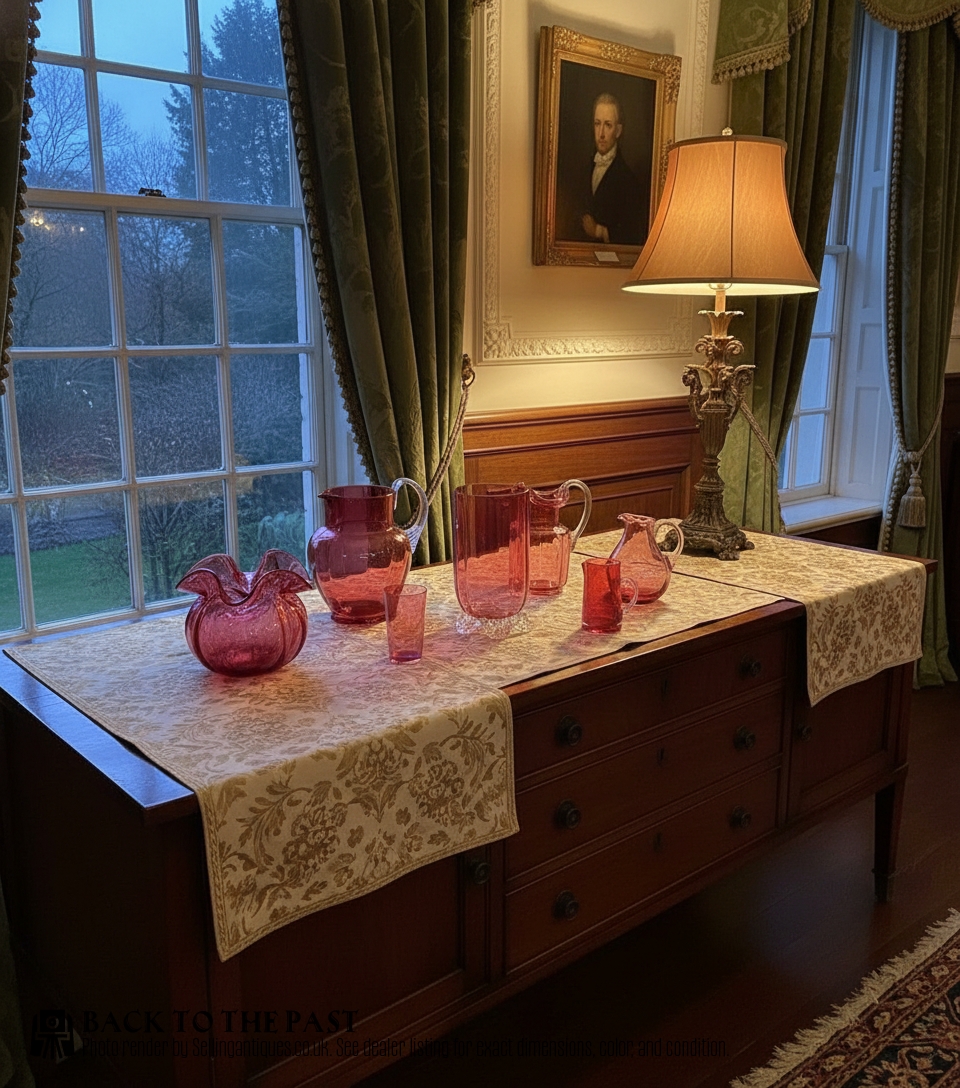
Displaying these pieces near natural light highlights the rich coloration and transparency of the glass. Placing them on mantelpieces, sideboards, or within cabinets allows the material to catch and refract illumination.
Combining different forms, such as pairing wine glasses with decanters or placing oil lamps on side tables, creates a balanced historical arrangement.