

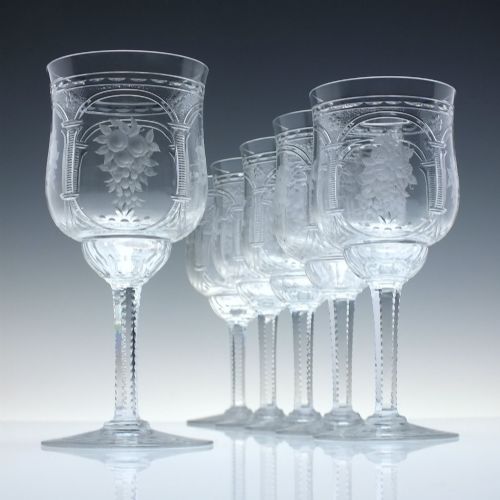




Red Glass Goblets
These red glass goblets bring deep colour and artisanal weight to a table, offering striking visual presence through rich cranberry hues and ruby tones.
Red Glass Goblets
When you search for red glass goblets, you encounter drinking vessels and stemware spanning the Georgian, Victorian, and later periods. The selection on this page relies heavily on Victorian cranberry glass wine glasses, alongside Bohemian pieces, Georgian twists, and Art Deco tango liqueur glasses.
Most examples take the form of wine glasses, sets of stemware, or individual goblets intended for display and occasional use. These objects range from large Masonic vessels to delicate cordials, reflecting diverse table traditions from the eighteenth century through the twentieth century.
How they were made
Makers shaped these vessels using traditional hand-blowing techniques, working molten lead glass and clear glass while incorporating metallic oxides to achieve deep red colourations. Skilled artisans then applied hand-cut facets, delicate enamel decoration, or overlaid layers of glass to create complex surface textures.
Engraving and colour-twisting formed part of the repertoire for earlier pieces, notably during the Georgian era. Later Victorian and Bohemian workshops favoured free-blown forms and heavy cut crystal, balancing structural durability with intense chromatic depth.
Red Glass Goblets Retail Price Guide 2026
Typical asking prices for red glass goblets among the pieces listed under this phrase on Sellingantiques today, from the lower quarter to the upper quarter. They describe what is for sale here now, not the wider market.
Listings feature items from the Georgian, Victorian, and 1930s periods, utilising cranberry glass, cut crystal, and overlay techniques.
What varies in quality
Quality rests on the depth and evenness of the colour distribution within the glass body, as well as the precision of any hand-cut facets or enamel work. Superior examples display crisp lines, balanced proportions, and minimal optical distortion in the bowl and stem.
The integrity of the metal, whether lead crystal or standard glass, determines the overall weight and resonance of the goblet. Sets that maintain uniform colour and matching dimensions across every piece naturally command greater consideration.
The Red Glass Goblets Glossary
- Cranberry glass
- A type of transparent red glass produced by adding gold chloride to the molten batch. It gained immense popularity during the Victorian era for tableware and decorative items.
- Lead glass
- Glass containing lead oxide, which increases the weight, refractive index, and clarity of the material. This composition allows for sharper hand-cutting and deeper ringing tones.
- Colour twist
- A decorative stem technique found in Georgian glassware where opaque or coloured glass threads are drawn through the stem in a spiral pattern. These threads create intricate internal optical effects.
- Overlay glass
- A method where a layer of coloured glass is fused over a base of clear or contrasting glass. Artisans then cut through the outer layer to expose the contrasting colour beneath.
Red Glass Goblets: Frequently Asked Questions
Are these goblets safe to use?
Most antique drinking vessels of this type function primarily as decorative objects or collector pieces rather than daily tableware. Hand-washing in lukewarm water protects the fragile historic glass from thermal shock and mechanical damage.
Harsh detergents and modern dishwashers can damage delicate enamel decoration and dull the polished surface of older lead glass over time.
How do I date cranberry glass?
Dating relies on combining the manufacturing technique, the depth of the hue, and the form of the stem or base. Victorian examples often feature simple hand-blown bowls fused to clear stems, while Georgian pieces show distinct tool marks and different compositional weights.
Examining the pontil scar on the underside provides further clues regarding workshop practices and the age of the vessel.
What is Bohemian glassware?
Bohemian glass originates from the historic regions of Bohemia, now part of the Czech Republic, renowned for exceptional glassmaking traditions. Workshops there specialised in rich colours, heavy cutting, and elaborate overlays that influenced European design.
Pieces from this tradition often display robust forms and vibrant hues that stand out within any collection.
How should I display red glass?
Positioning these vessels near natural light allows the rich red tones and transparent qualities to project across the room. Cabinets with glass shelves and interior lighting enhance the visual depth of cut crystal and cranberry surfaces.
Keeping them away from direct, intense sunlight prevents potential fading or thermal stress to the antique material.